Category: FEATURES

  • Delcy Morelos: Ombligo at MOCA

    Delcy Morelos: Ombligo at MOCA

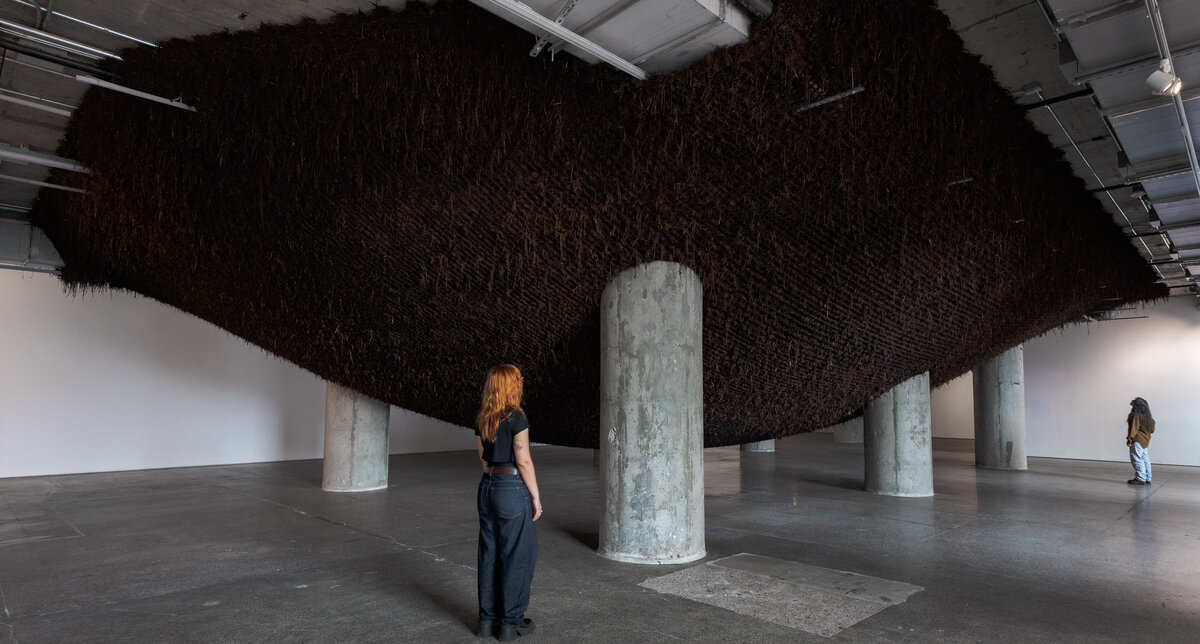
    Delcy Morelos’ Ombligo doesn’t ask us to rethink our relationship with the natural world as much as it wants us to feel as though nature has given us everything from which we come from. It forces a physical reaction to the smell, texture and size of its form that places us at the mercy of mother nature, whether she is presented as a safe shelter or a trapped web.

    Engulfed by the scent of a sharp natural musk, it is almost impossible not to feel transported to a different environment when first approaching this threatening presence that dominates the entire second floor of the gallery space. It initially feels invasive, curving to the forms of the concrete pillars and surrounding them as part of a larger circular structure. Its material seems untouched as if an exterior force of nature has accessed the space and invaded it over the course of several hundred years, molding to its architecture and slowly encroaching on every corner of its open space.
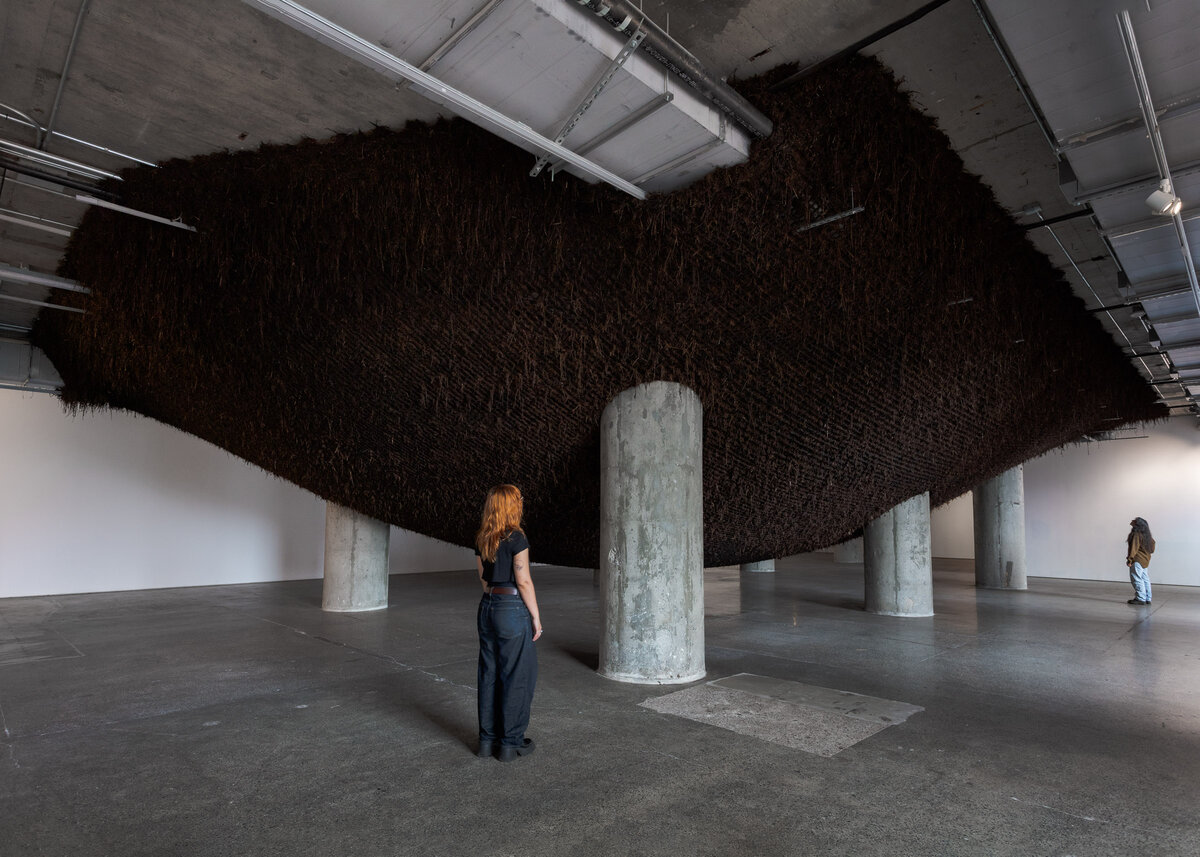
    With a closer look, one that requires you to crouch down or slightly bend to the side, we start to understand its materiality and its conceptual ideals. The physicality of our interaction is within itself the embodiment of Ombligo, a reduction of the viewer to a smaller self that is at the mercy of a natural force. It at once asks us to think about our interaction with natural resources and what it really means to extract them from the earth while slowly grappling with our own natural source, birthed from the life-giving quality of our mothers. The structure’s woven fabric made of long strands of sisal rope treated with soil and corn roots harvested in the city, also recalls the strength and flexibility of these natural sources. One must wonder how methodical Morelos’ approach must’ve been to create such a daunting form within a relatively contained area.
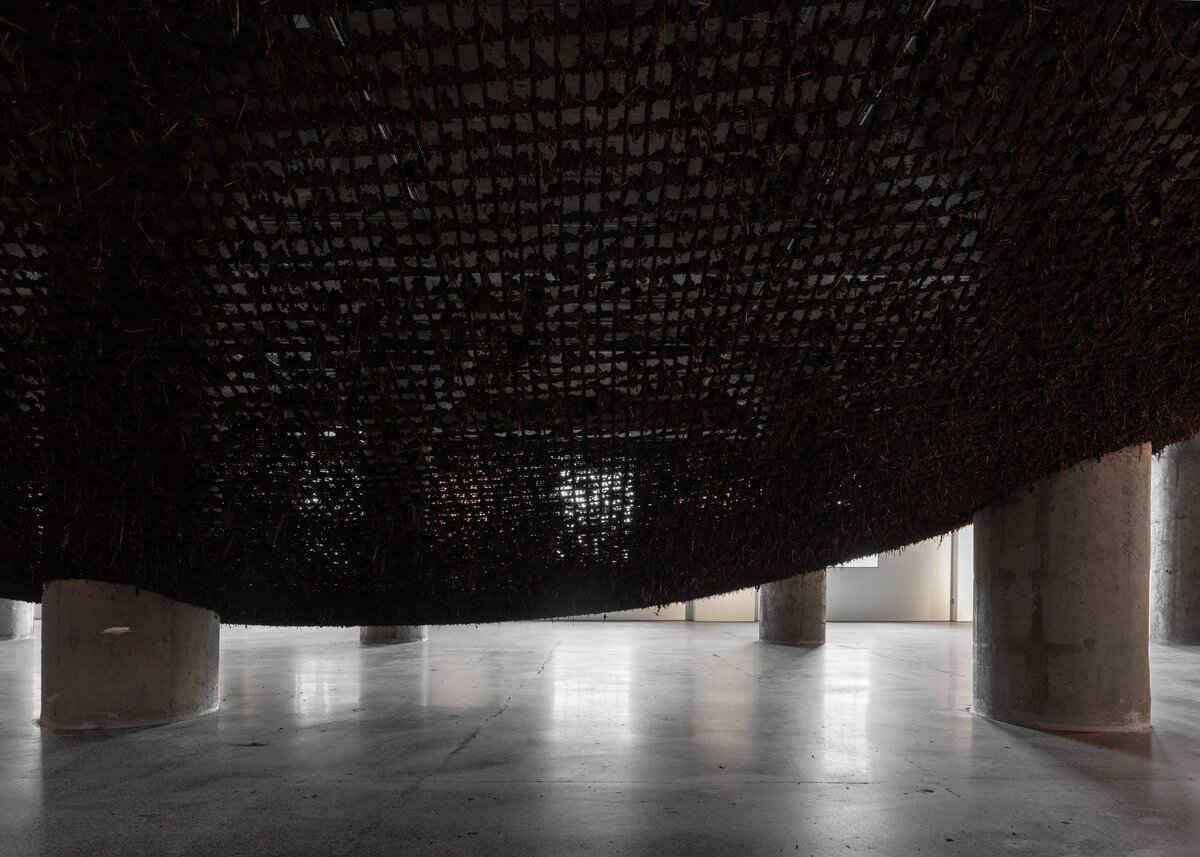
    With Morelos’ practice stemming from her Emberá heritage and a deep connection to Colombian land, we see her approach to materiality and focus on earth’s regenerative strength as a focal point found in many of her large-scale installations. Working with the materials of the earth and local production, she naturally activates our sense of memory through sensorial experiences that confront us with questions of extraction and restoration. Ombligo keeps building on this practice while actively rethinking the spatial immersion of the viewer and completely flipping it upside down. Moving beyond a physical surrounding, it allows the viewer to encircle its structure, inverting the dynamics between environment and those experiencing it firsthand.
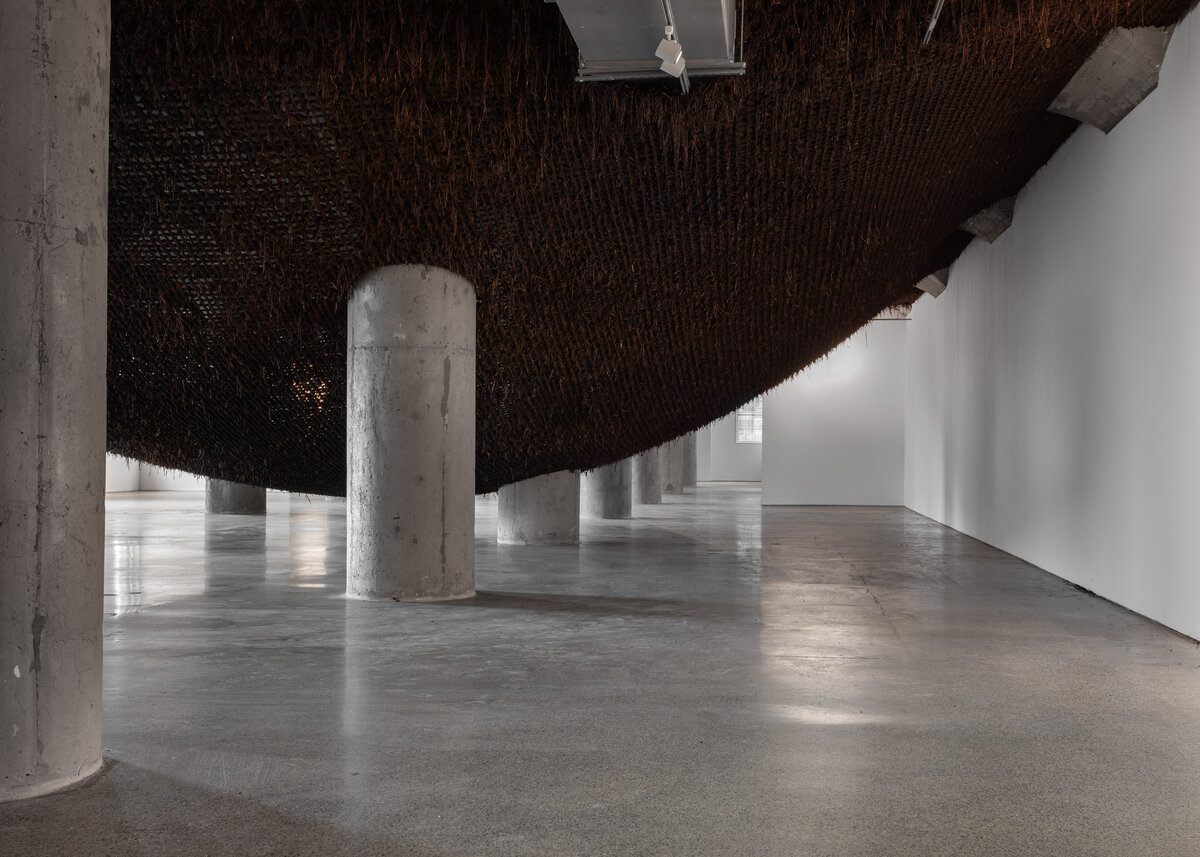
    After spending some time in the space and seeing different vantage points, we start to embrace the serenity of the work that moves beyond the initial threat of entrapment posed by its size and presence. The natural fragrances become familiar, and we begin to wonder what the space ever looked like without this perfectly fitted form attached to its central pillars. The defined curvature becomes discernible as the globe shape of the earth or that of a womb, a space that provides sustenance and ultimately brings us to our closest inner selves. Ombligo then becomes a completely different work, understood and interpreted through the themes of extraction and ritual that re-occur in Morelos’ work. It is only by spending a certain amount of dedicated time with this installation that we start to connect with it beyond its formal qualities, a beautiful by-product of work that is deeply researched and meticulously constructed.
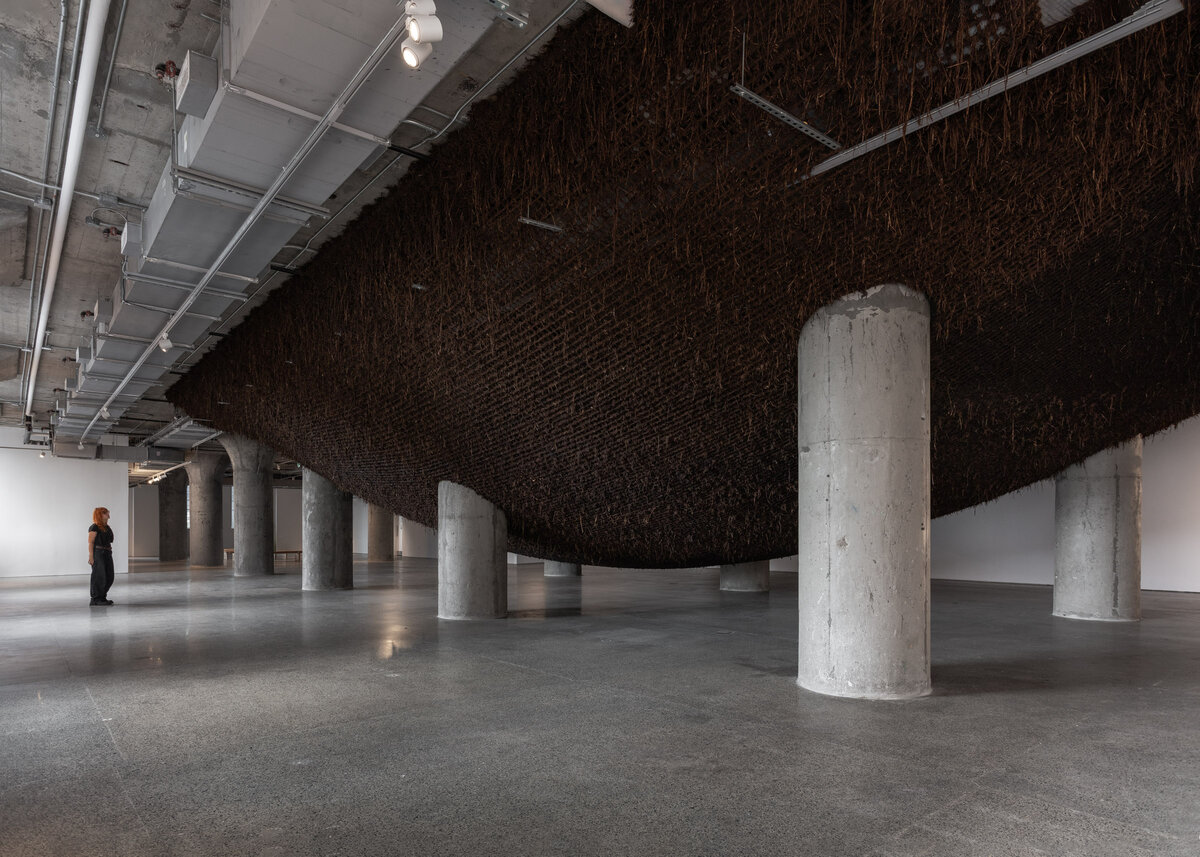
    What allows Ombligo to move beyond the casual installations of contemporary artists attempting to work with grandeur (often falling short of confronting larger questions of spatial experience) is the delicate line that Morelos’ draws between full immersion and observation. Through deliberate organization of space and the help of Mexican based architecture studio Tamat, the work reads as intentional as does its methodical planning and execution. 

    Ombligo is beautiful, it is serene, but it is also dismaying. In it lies a complex confrontation that none of us can quite surmount. It asks us to live within fear for a short moment, allowing us to return to a smaller version of ourselves where everything appears giant and ominous. It comforts us, bringing us back to the earth and back to nature as a place where we once felt secure in our own powerlessness.

    Marina Diolaiti

    All images are Delcy Morelos, Ombligo, installation view, MOCA Toronto, 2026. Photo: LF Documentation.

    *Exhibition information: Delcy Morelos, Ombligo, October 4, 2026 — February 14, 2027, MOCA,158 Sterling Rd, Toronto. Museum hours: Wed – Thurs & Sat – Sun 11 am – 5  pm, Friday 12 – 8 pm.
  • Interview with Gabriella Gerbasi

    Interview with Gabriella Gerbasi

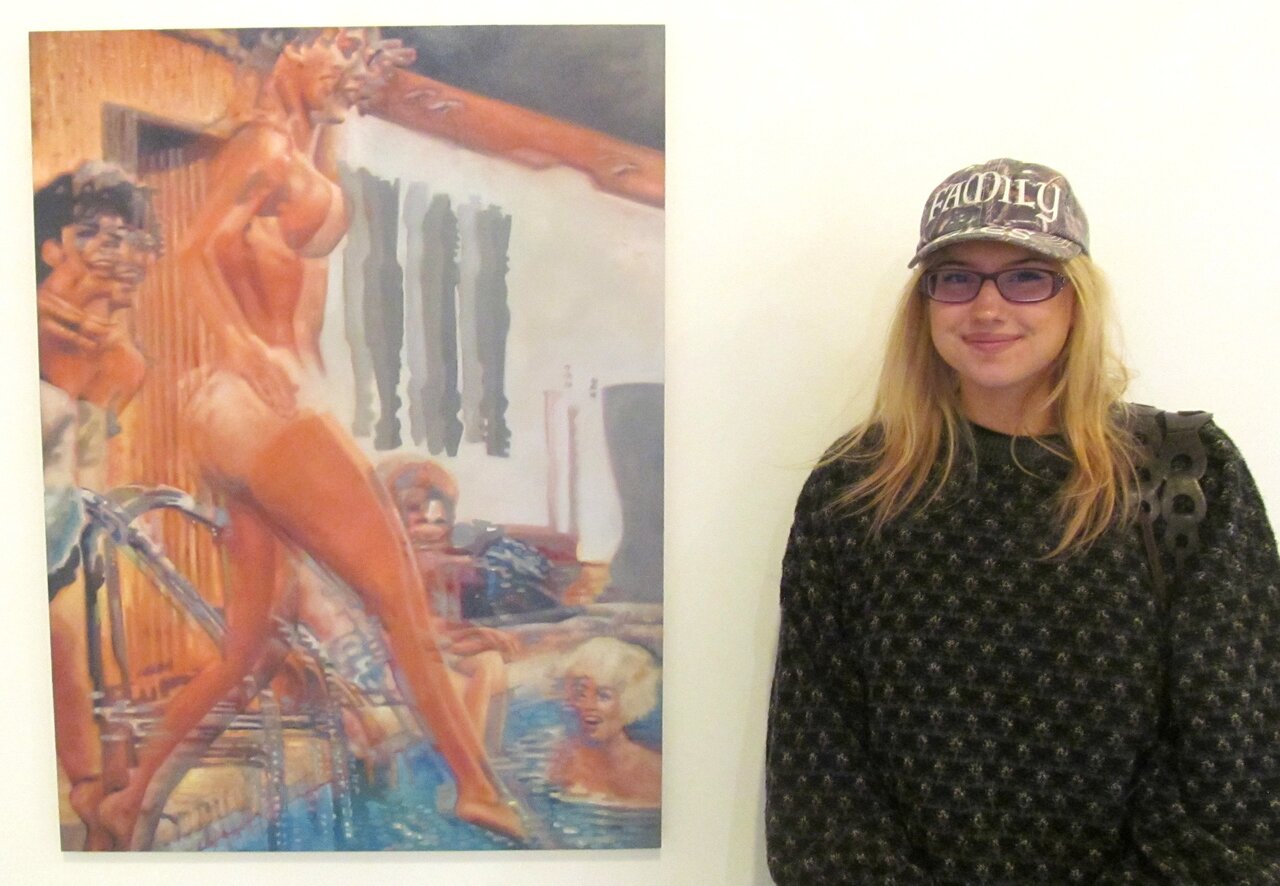
    Interview with Gabriella Gerbasi (GG) by Phil Anderson (PA)

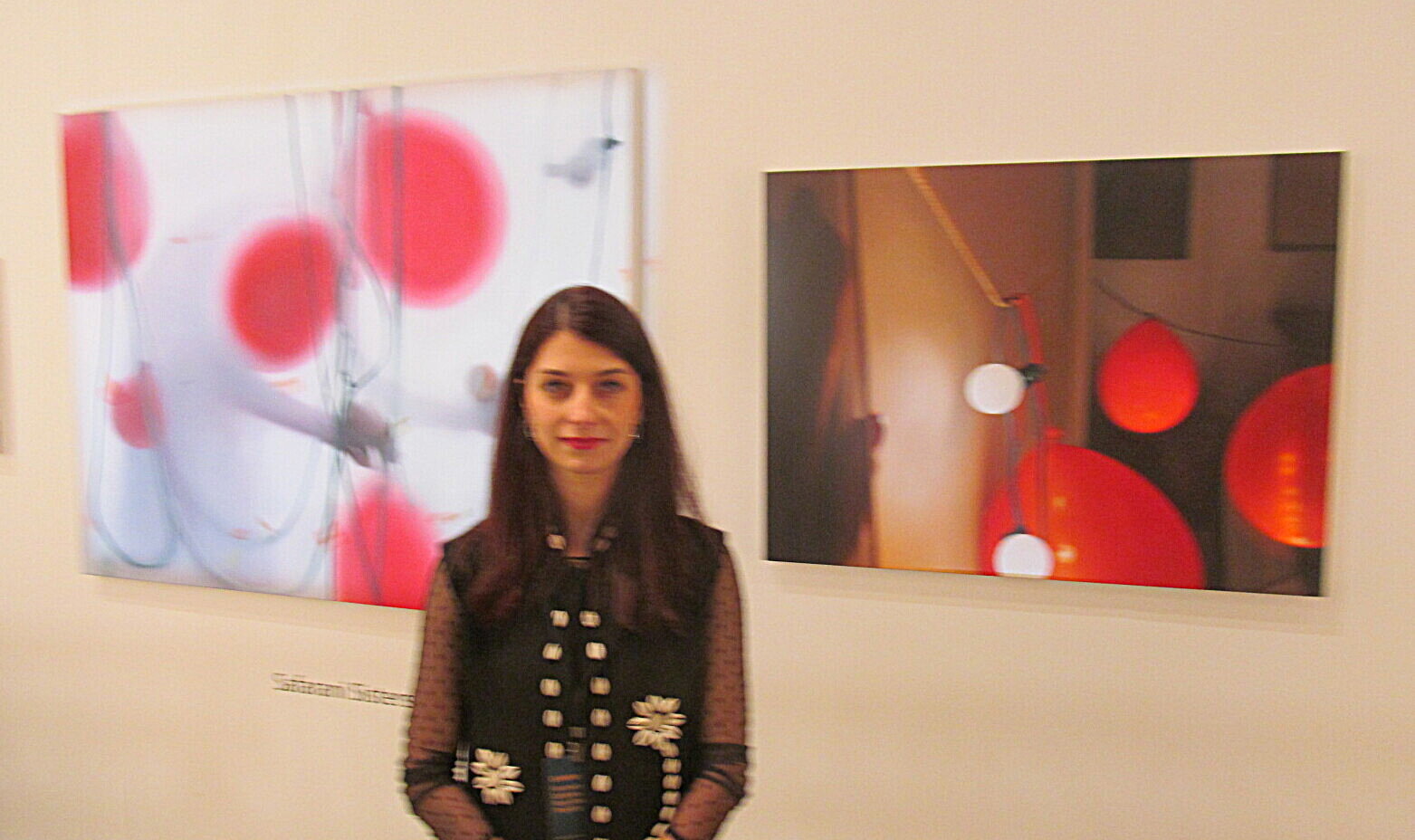
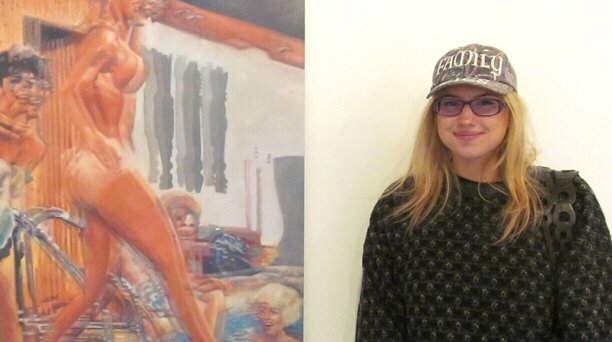
    Gabriella Grebasi at her show at Gallery 1313. Photo: Phil Anderson

    GG: Since I was young, I was always drawing, and I knew I wanted to be an artist. I always had a sketchbook with me and loved to create my own characters and world. It was around senior year of high school that I started to oil paint and instantly fell in love with the medium.

    GG: I originally attended NSCAD for my first year of university. I was only 17 when I graduated and thought it would be best if I stayed closer to home for my first year. I later transferred to OCAD for my second year. I always knew I was going to go to Toronto, as I wanted to live in a city, and that’s where my parents originally lived before moving to Cape Breton.

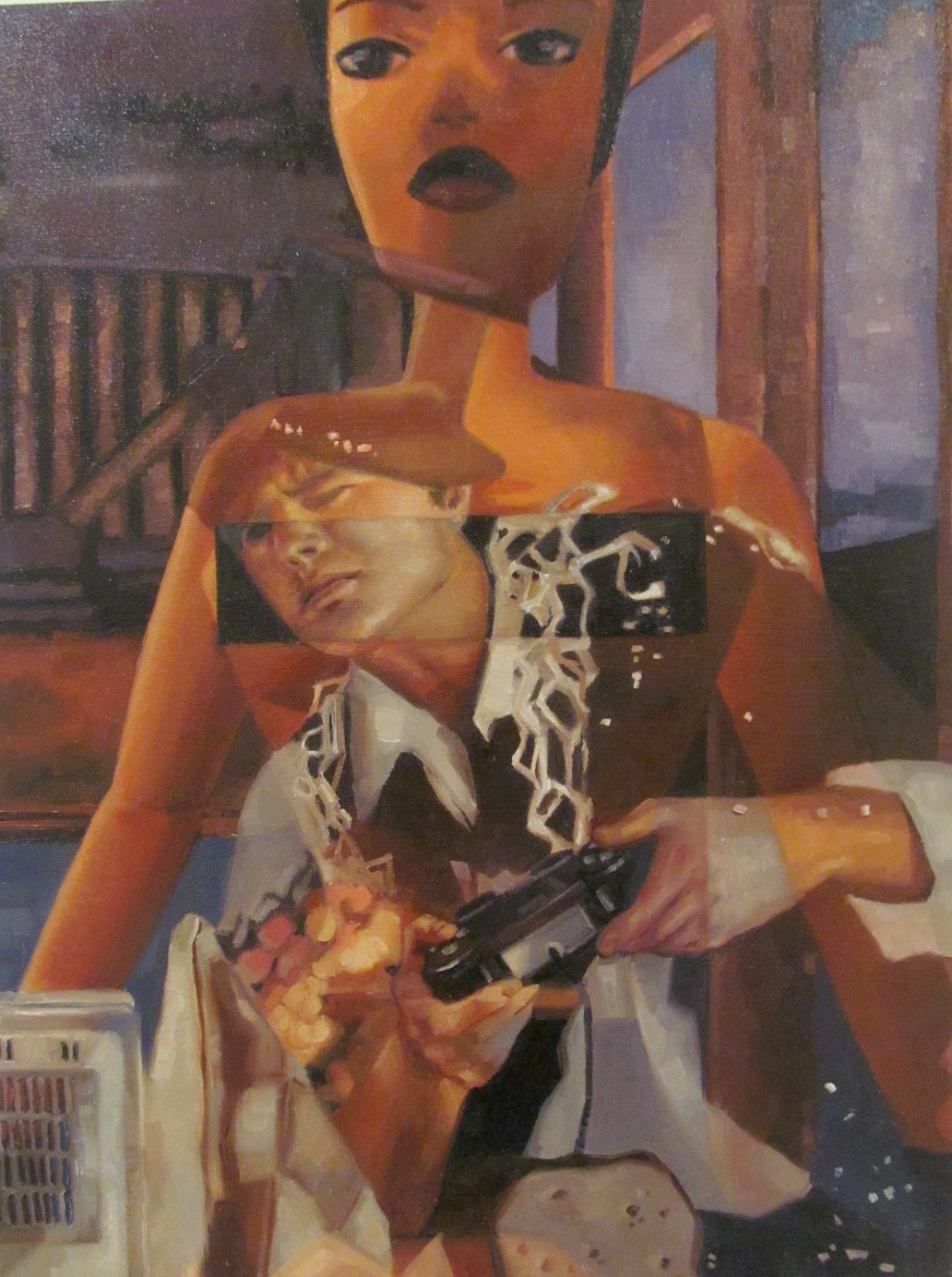
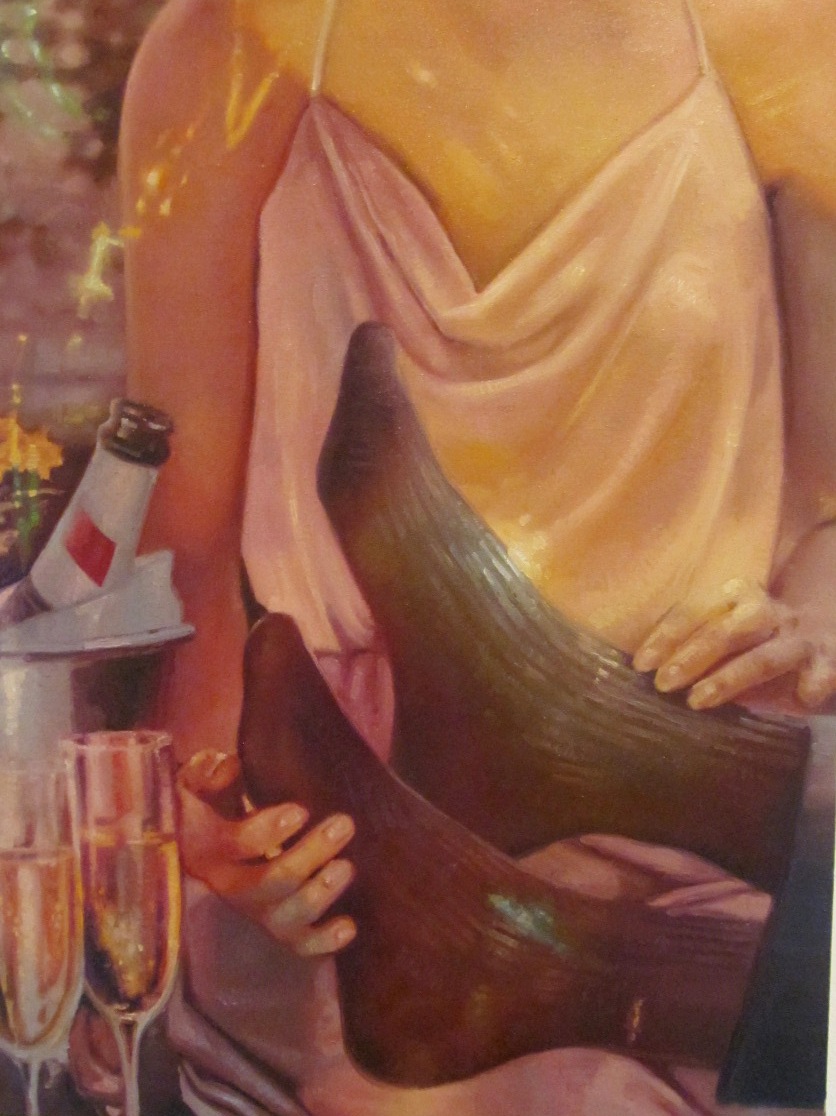
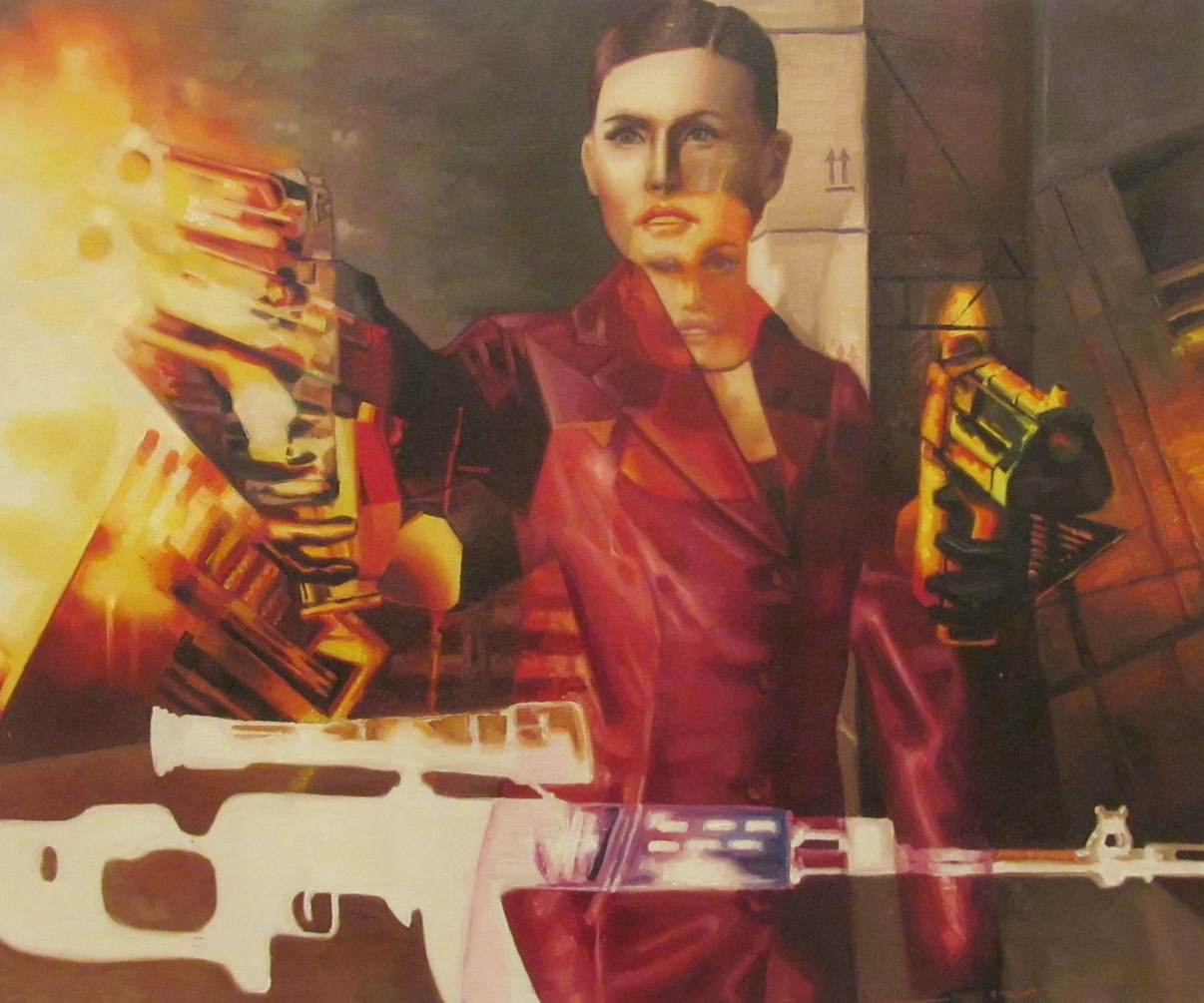
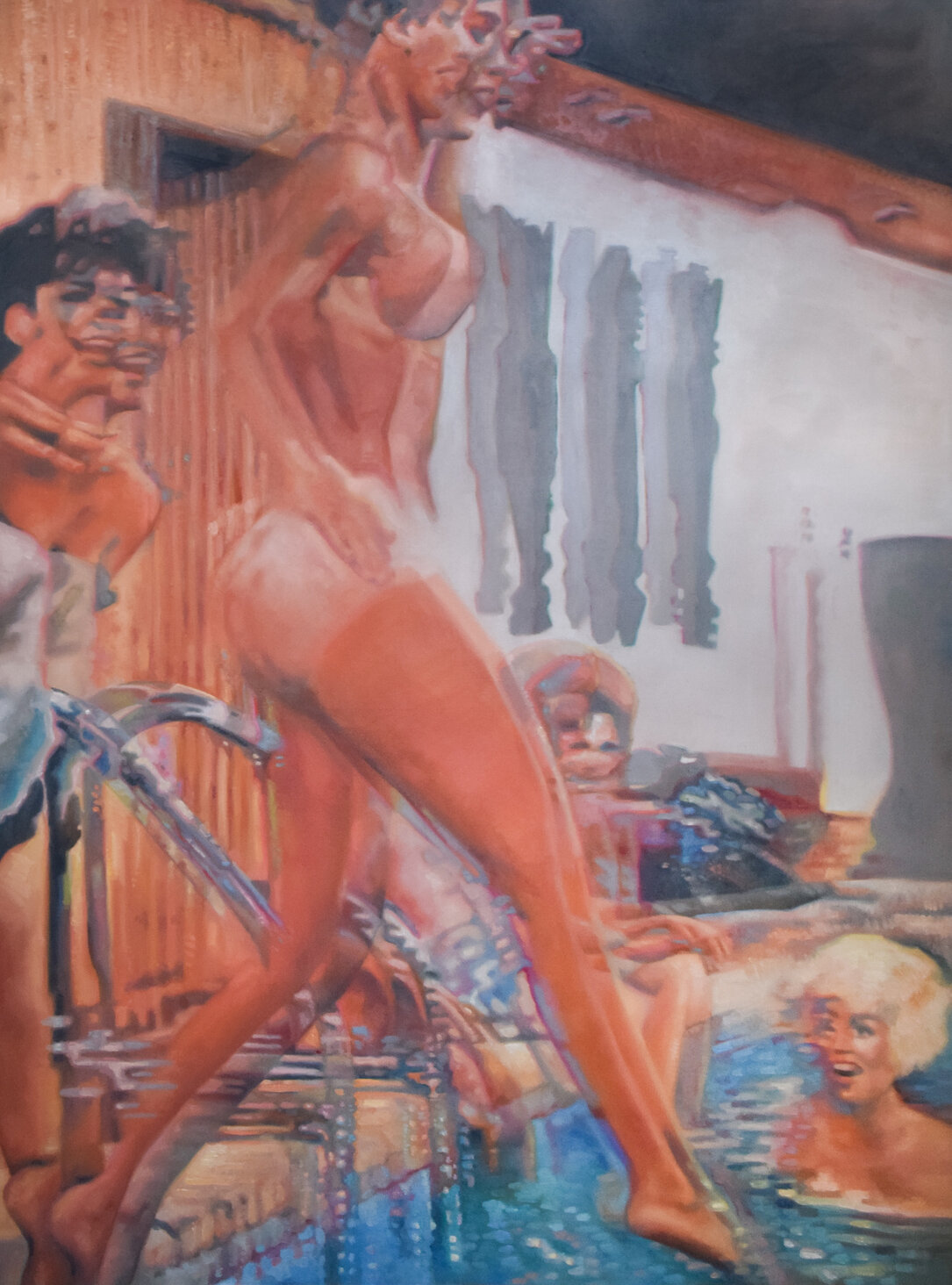
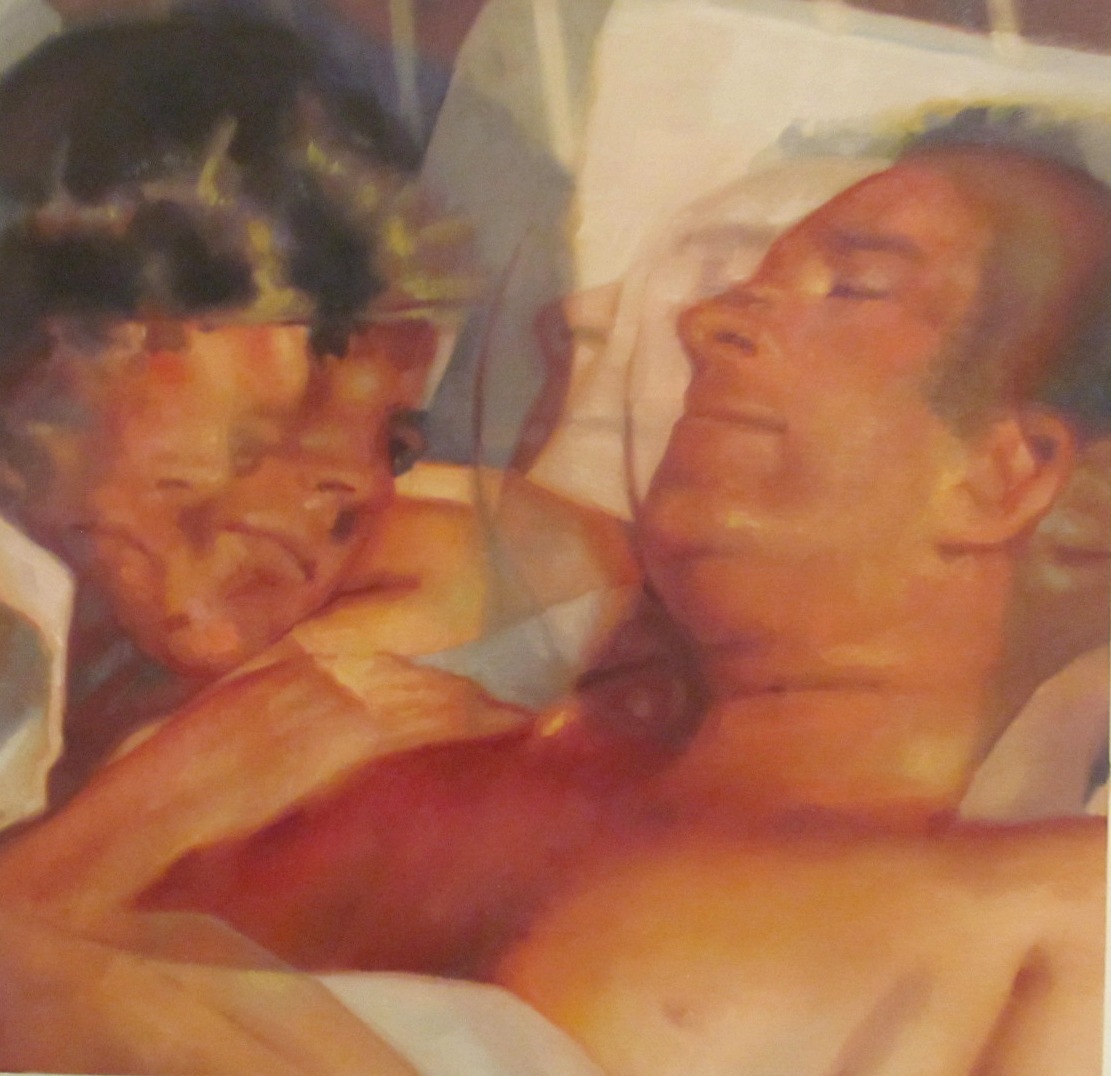
    GG: The body of work I’ve recently been focusing on primarily surrounds topics related to the female body. I pull a lot from playboy magazines as well as videogames. I like to re-imagine the portrayal of female figures within these mediums and explore different ways of viewing them, creating images that resist easy digestion. Through the overlay of multiple imagery, I want to allow sustained and shifting encounters with the subject that can sometimes be hard to read, while subverting the original material.

    Nuderaider, Oil on wood, 2025, 16” x 12”

    GG: The subject in my work that relates the most to youth culture would probably be the videogames. It’s something that is not typically digested through oil painting and is a point of relation for a lot of people my age who grew up with digital imagery.

    GG: My original body of work sourced from Playboy and video games, primarily focused on how female characters in video games were represented. Within this research, Playboy served as supporting material to establish a connection between the sexualized representation of women in video games and the porn industry.

    Holding on, 2026, oil on wood, 6” x 12”

    Moving forward I focused more on how the magazines themselves depicted the female form through consumerist tropes. The newer work feels like an extension of my earlier research, it just shifts away from video game culture. It continues to investigate how images of women are constructed in relation to male desire, consumption, and idealized femininity. Constant throughout these works is the obstructed overlays that disrupt the view of pleasure, instead interrogating how these images are constructed.

    Mona, 2026, oil on wood, 20″ x 24″

    GG: The work I did for this show, Nue, was inspired by Marcel Duchamp’s Nu Descendant un Escalier No.2. A friend showed me that work during my thesis year and I find that this and similar cubist works have a lot of the same overlaying qualities that I look to achieve. In contemporary practice I would say that Louise Giovanelli is one of my favourite painters. Her use of colour and luminosity within paintings is something I admire.

    Nue, 2026, oil on wood, 30” x 40”

    GG: Most of my thesis class and peers have extremely strong work. I look up to a lot of them; their work is constantly evolving. I feel fortunate to be able to watch that and grow alongside them.

    GG: My work has changed a lot since I started school. I used to do a lot of still life, portraits, and then more surrealist imaginative works that involved the human form.

    Milk, 2026, oil on wood, 16” x 16”

    GG: I’ve been working on some new work with a friend of mine that I’m excited about. Besides that, I’ve just been applying to everything that interests me.

    GG: I would like to eventually do a masters I think. Now I’m enjoying not being in school and just exploring what Toronto has to offer.

    *Images are courtesy of the artist

  • Land. Sea. Sugar. Salt. at The Art Museum at UofT

    Land. Sea. Sugar. Salt. at The Art Museum at UofT

    Land, Sea, and the Afterlives of Colonialism: Reconsidering Caribbean Histories Through Contemporary Art

    (more…)

  • Art Toronto 2026 through an artist’s eyes

    Art Toronto 2026 through an artist’s eyes

    As an artist, one has a slightly different perspective at an art show than a collector. Beyond the pleasure of engaging with the work, an artist is also looking for new ideas and inspiration. And, perhaps most importantly, the artist wants to know: how is it made? With this in mind, I’ll focus on just a few artworks that might offer technical or process inspiration to other artists.

    Inspired by Pixels

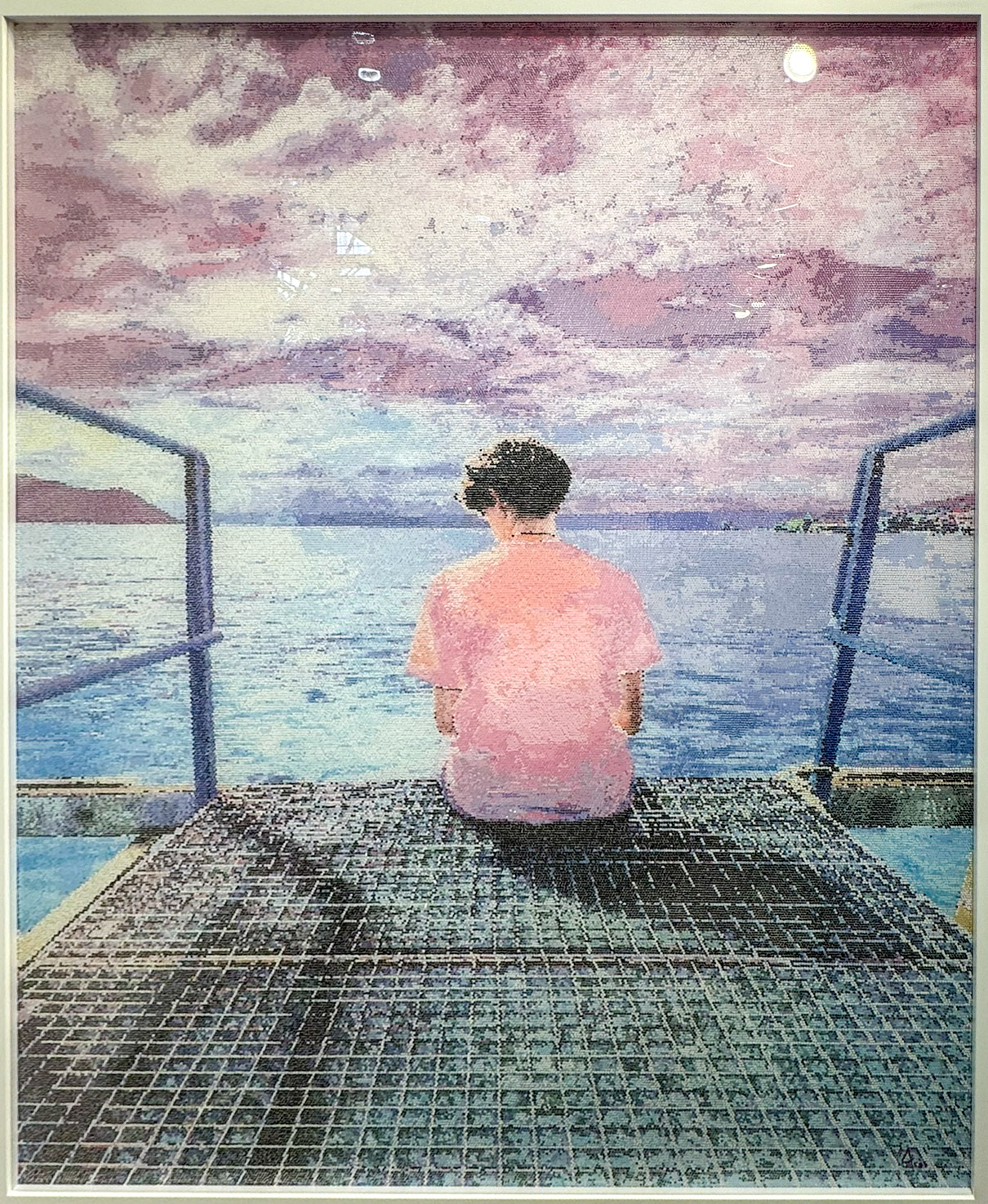
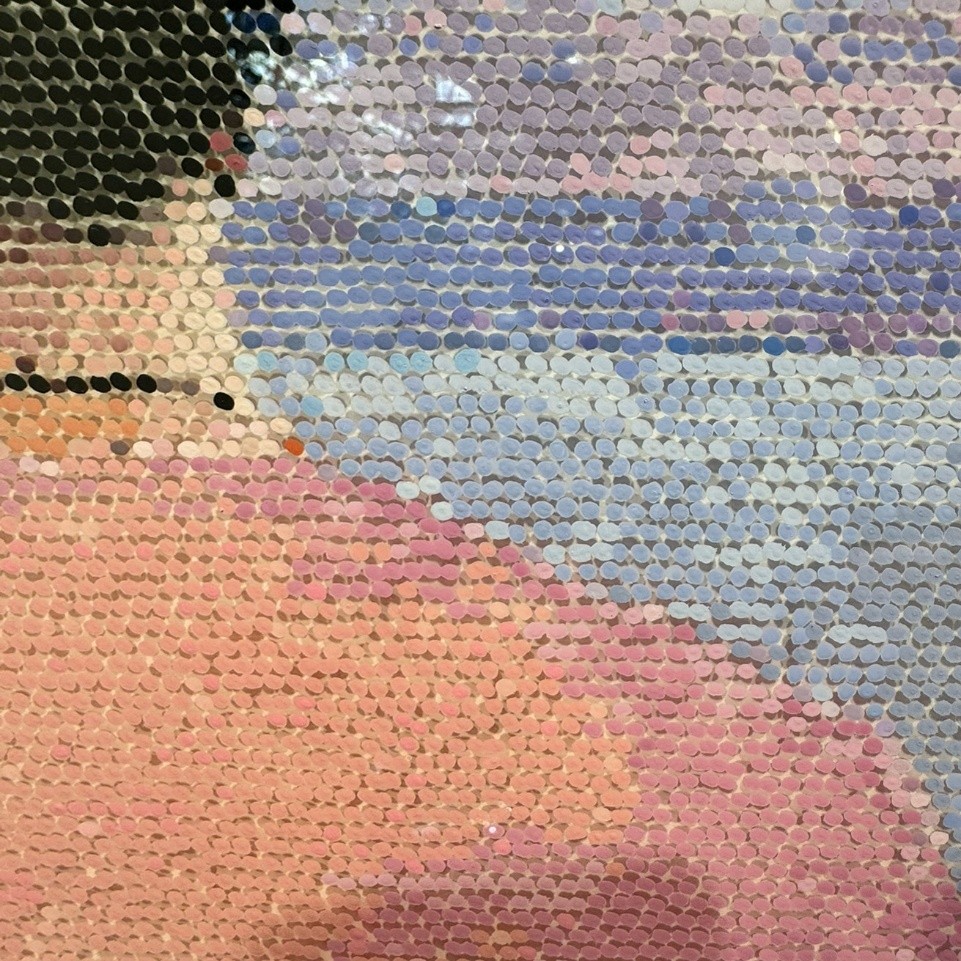
    Pixels are a form of pointillism, and we saw a couple of artists playing with this idea. François Arès’s paintings have an unusual shimmer to them. Up close, you discover that they are made up of tiny dots of paint applied to transparent Plexiglas. The works are framed so that the dots cast tiny shadows on the surface behind them.

    François Arès, Montreux, 2026, acrylic on plexiglas 64” x 68”, Galerie Robertson Arès

    François Arès, Montreux, Detail

    Brandon Dalmer also explores the idea of pixels in his work. His painting is reminiscent of an old colour television screen, where individual red, green and blue pixels were visible. A pattern of these three coloured shapes comes together to create an image when viewed from a distance but breaks down into its component pixels as you move closer.

    Brandon A. Dalmer, Buck Lake, 2026, acrylic on panel, 60” x 36”, De Montigny Gallery

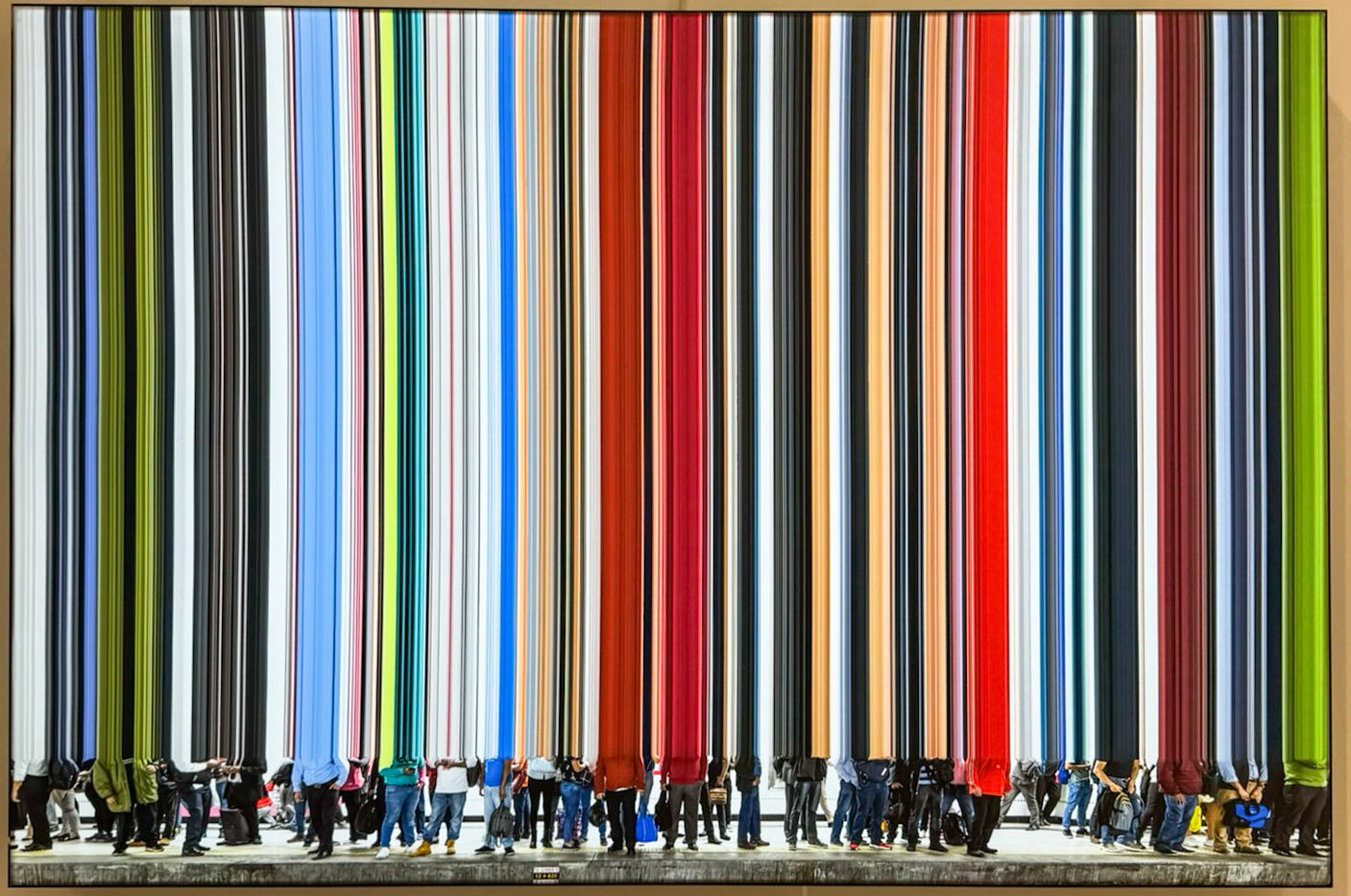
    Filipe Lavin exploits the digital grid in a different way. At first glance, the work appears to be an abstract pattern of coloured vertical lines. Then you notice the legs and feet along the bottom edge. Lavin has taken a horizontal strip of pixels from around the middle of an image of a crowd and repeated, or stretched, it upwards to fill the rest of the composition.

    Felipe Lavin, Desvanecidos – CDMX XII, photomontage and lightbox, 40” x 60”, Galerie LeRoyer

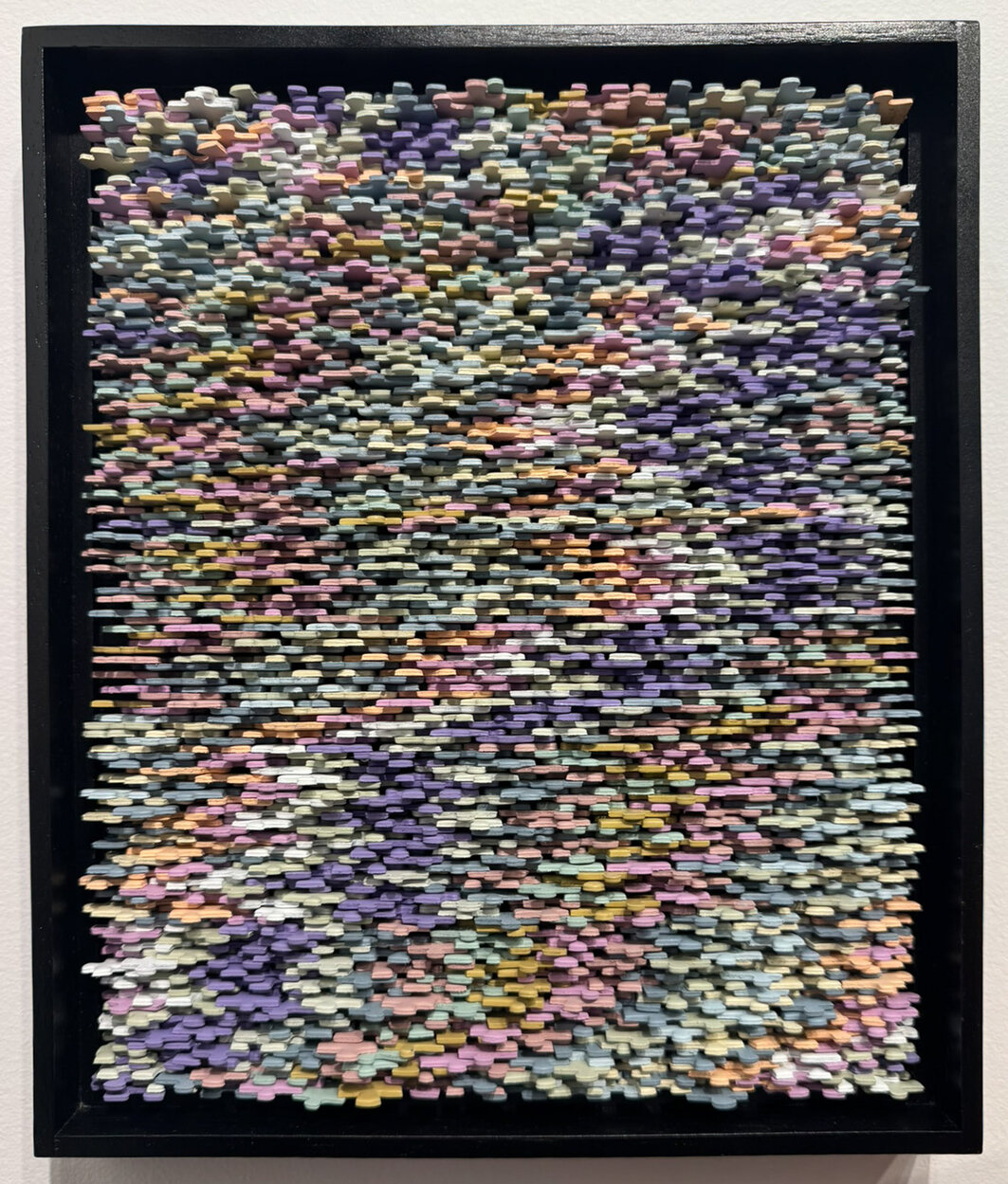
    Michael Stecky’s pieces initially look like digital static. Their three-dimensional quality is apparent, but it’s only when you look more closely that you discover what they’re made of: stacks of multi-coloured puzzle pieces. It’s a delightful surprise.

    Michael Stecky, Satie Vexations #1, 11” x 13”, Drey Gallery,

    Moves with You

    We tend to think we can fully experience everything through a screen, but some artworks require your physical presence to be appreciated. You have to move closer, walk around them, and see how they change with your point of view.

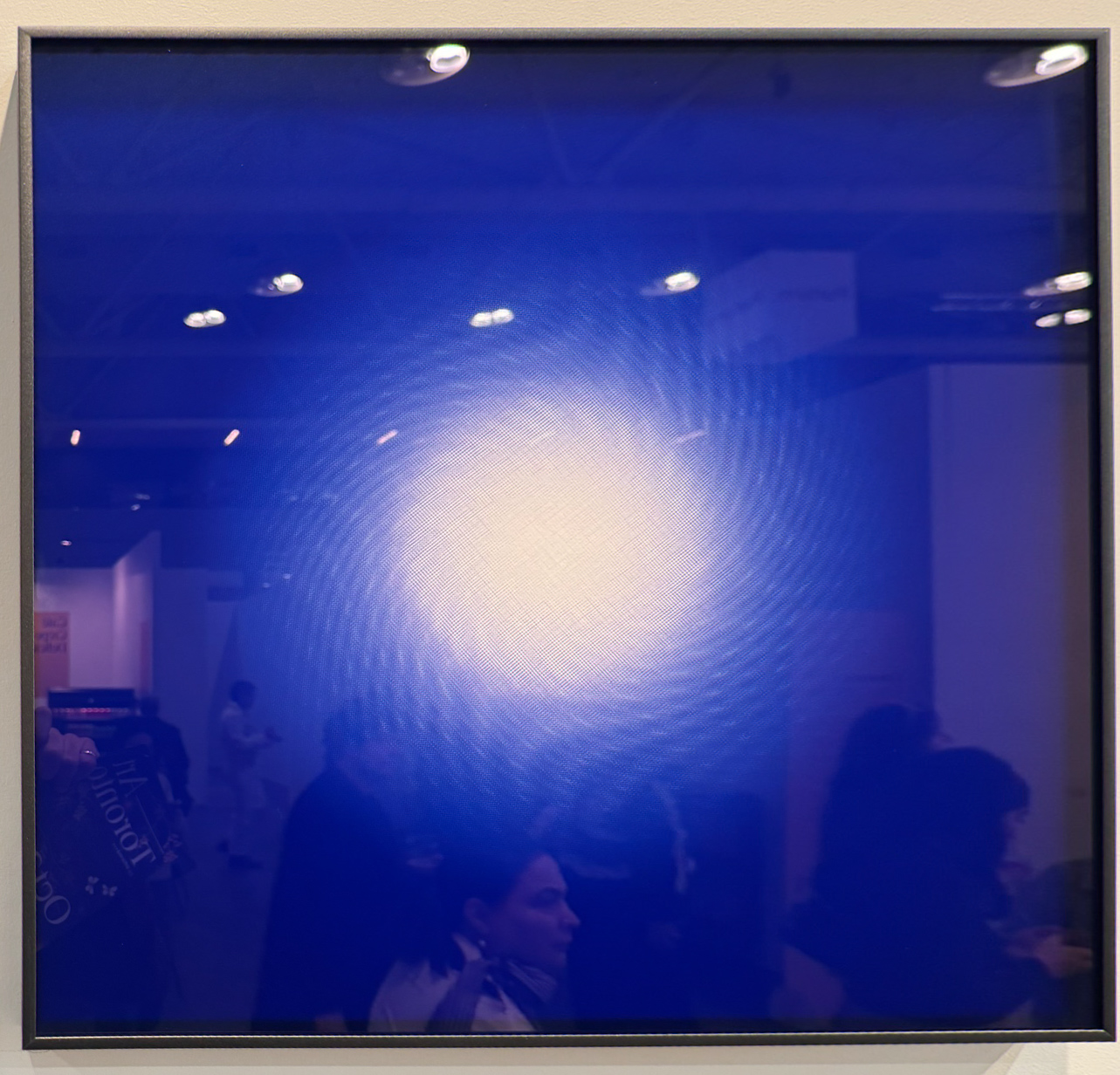
    Arturo Fermandois’s Aster X does not translate easily into photography. The image below looks static, but in person the work moves and shimmers. Graphics are printed on glass, with another pattern on paper behind it. As you move around the piece, different patterns emerge, creating an effect of movement and shifting light.

    Arturo Fermandois,  Aster X, UV print on glass, over paper print, 22” x 22”, Aninat Galería

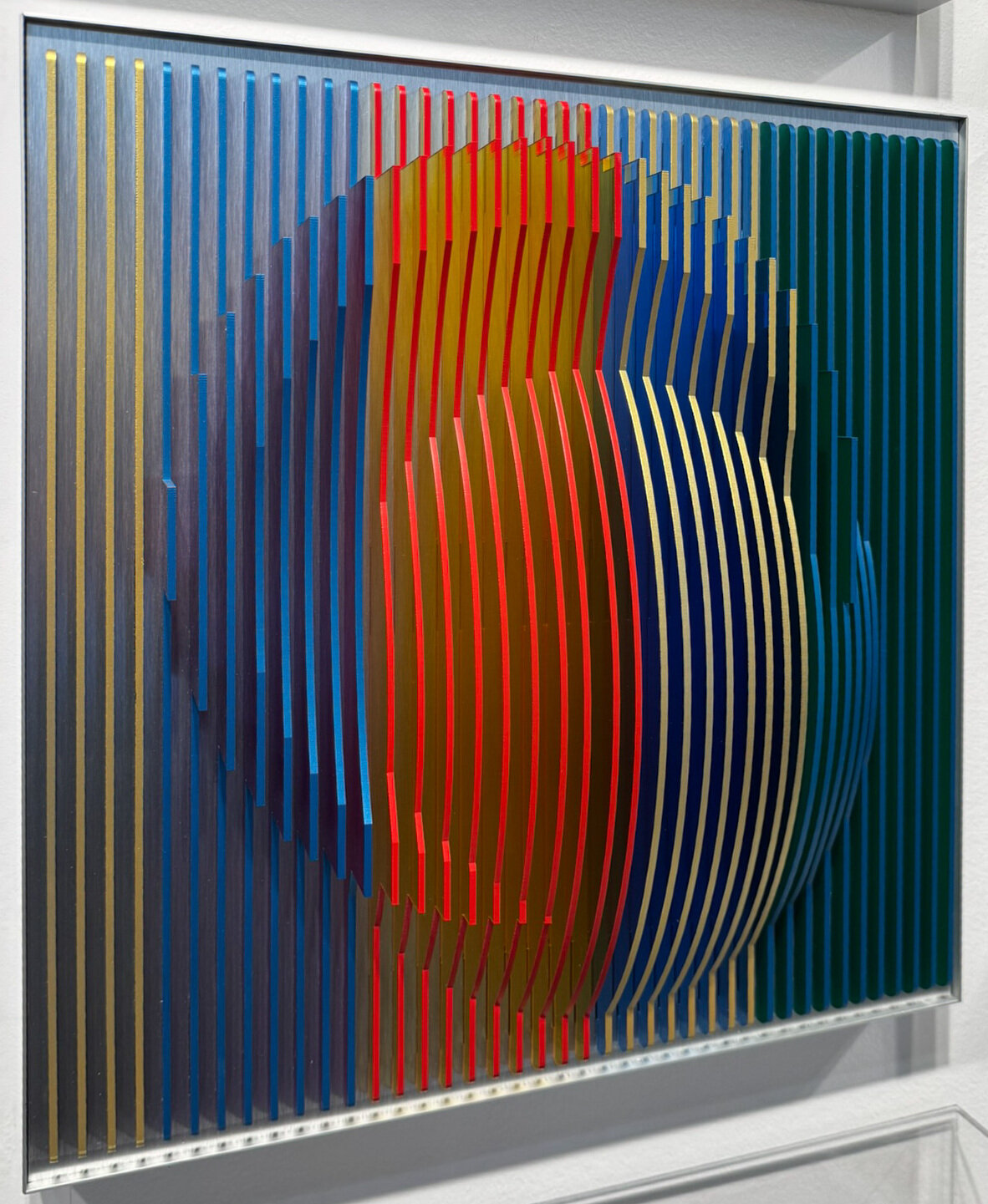
    J. Margulis’s Portholes also changes with your viewing angle. Seen straight on, the work appears to be nothing more than vertical lines of colour. But the lines are actually formed by a series of shaped fins. As you move around the piece, their three-dimensional geometry becomes apparent, and the image continually changes.

    J. Margulis, Porthole, plexiglas, aluminum, automotive and acrylic paint, 16” x16” x 3”, Galerie de Bellefeuille

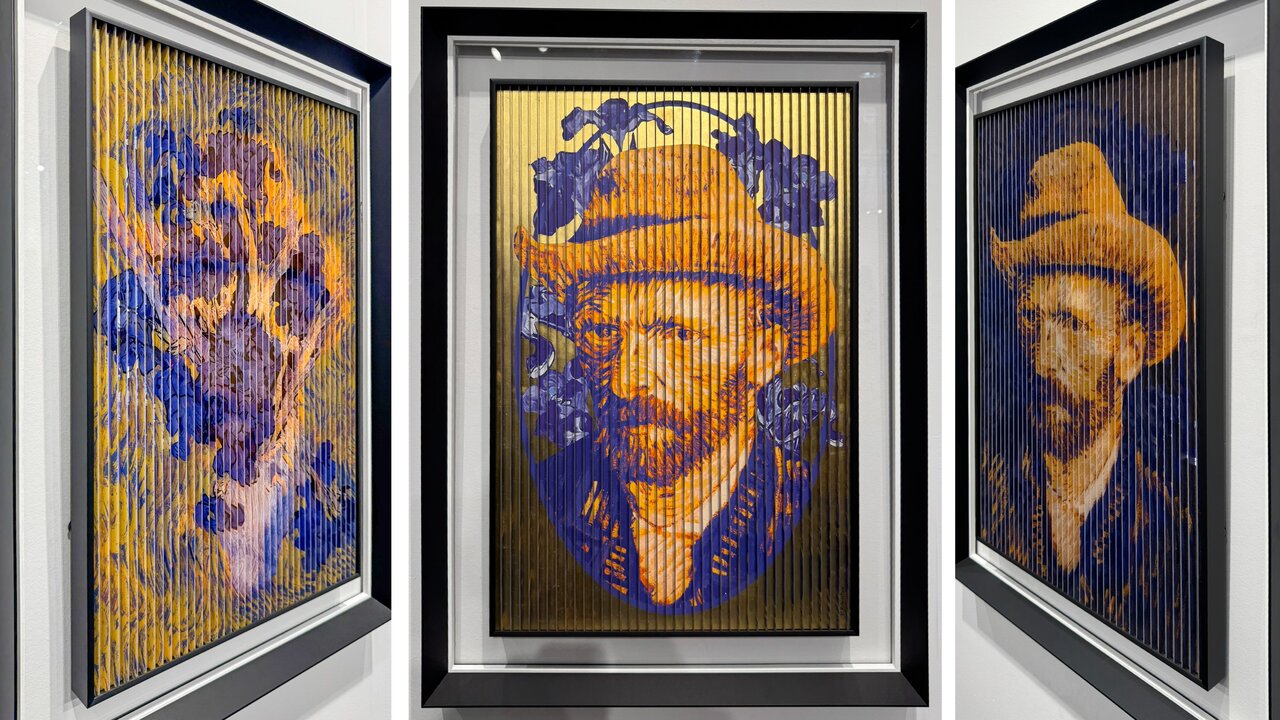
    Patrick Rubenstein’s Les iris de Vincent changes dramatically depending on your viewing angle. The back surface carries a composite image of the portrait and flowers. In front, a series of vertical fins have been printed with one image on each side. Move to the left and you see the flowers; move to the right and the portrait appears. The two images alternate as you move around the work.

    Patrick Rubenstein, Les iris de Vincent, gold leaf on mixed media, 30” x 19”, Galerie de Bellefeuille

    In Reverse

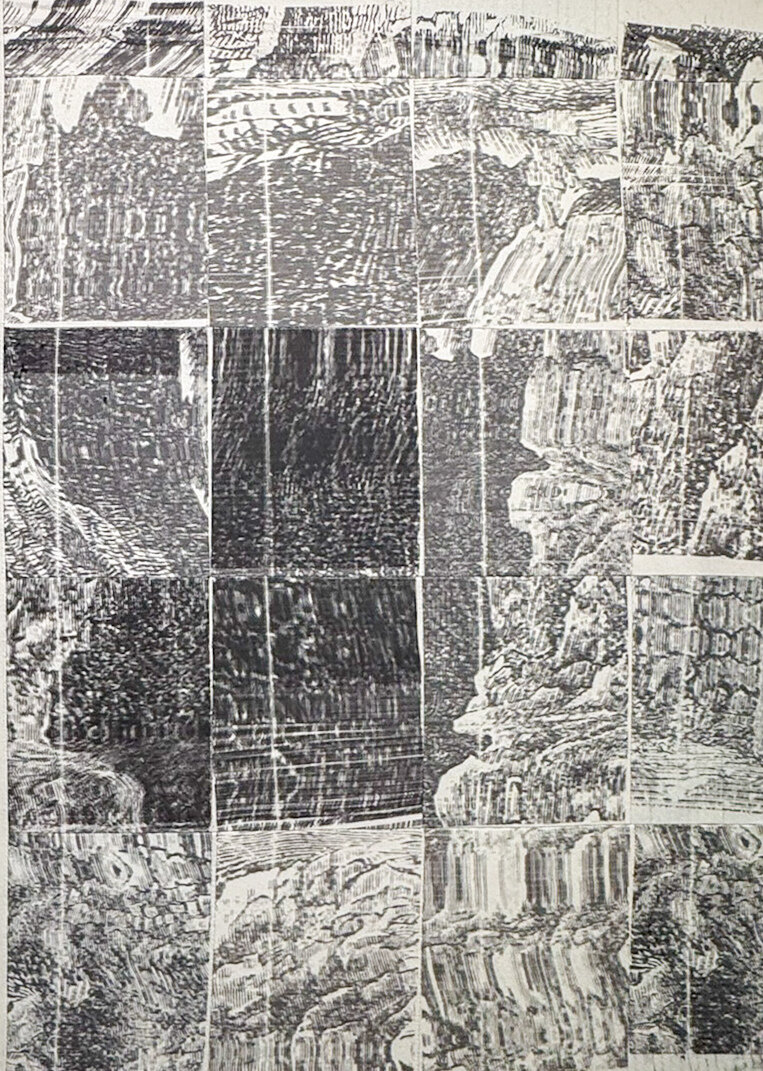
    Normally, you stretch the canvas before painting, but Malachi Wilson reverses the process. In Cave I, small sections of canvas are first printed with an inkjet, then stitched together and only afterwards mounted over a stretcher. The process creates interesting distortions in the image.

    Malachi Wilson, Cave I, inkjet on canvas, 52” x 48”, Janey Gallery

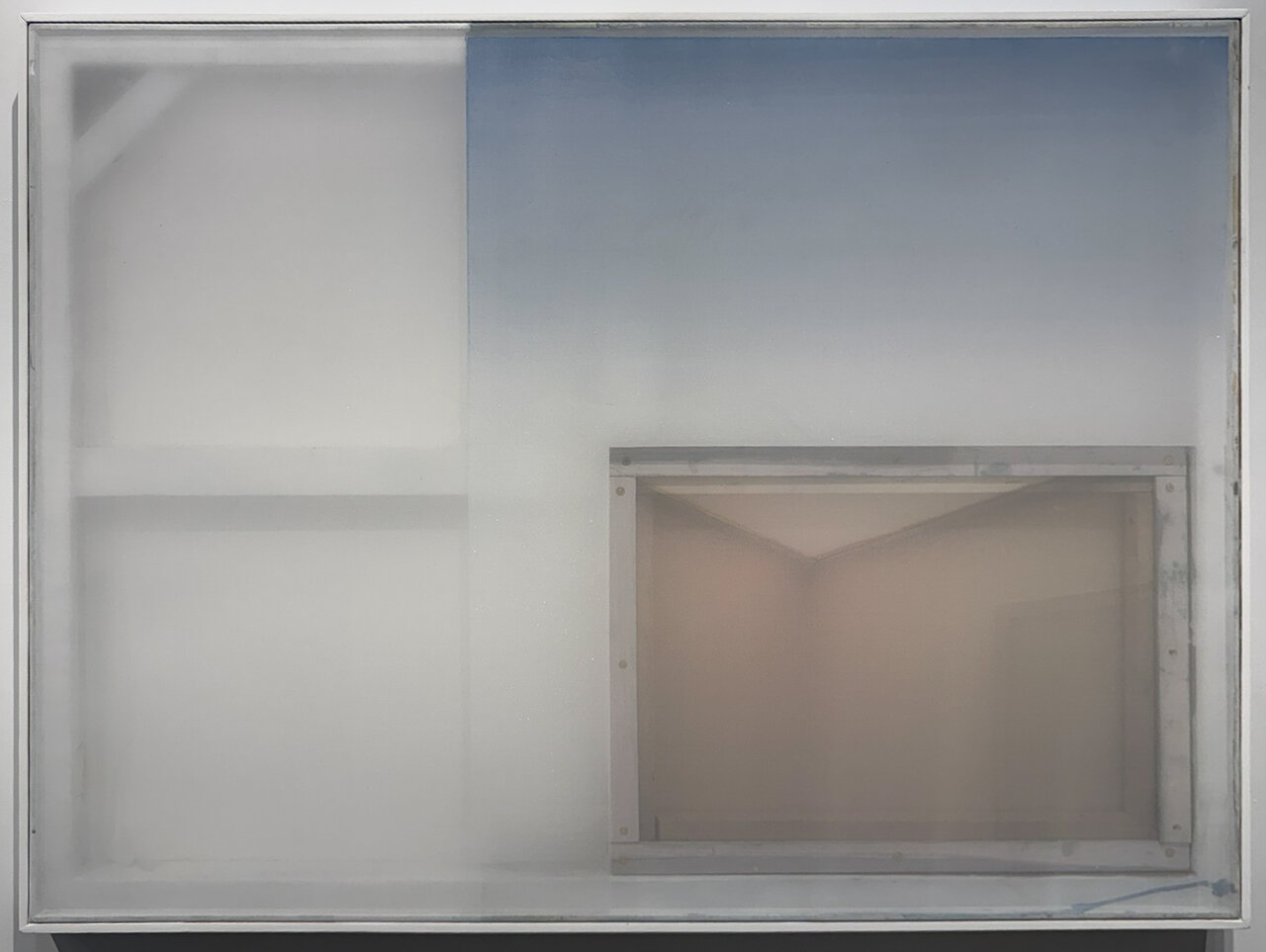
    Paul Hardy uses scrims and printed fabric to reveal the underlying structure of a painting. The frame and internal bracing become part of the composition, alongside the translucent prints and fabric. Rather than concealing the structure, Hardy makes it an integral part of the work.

    Paul Hardy, Untitled, Acrylic, oil, inkjet impression on fabrics, 76 x 102 cm, Galeries Bellemare Lambert

    Doing It the Hard Way

    Digital technology has made image-making so much easier. There are plenty of shortcuts available, but some artists prefer to take the more difficult path. There is something about the effort and labour involved that connects us to the work.

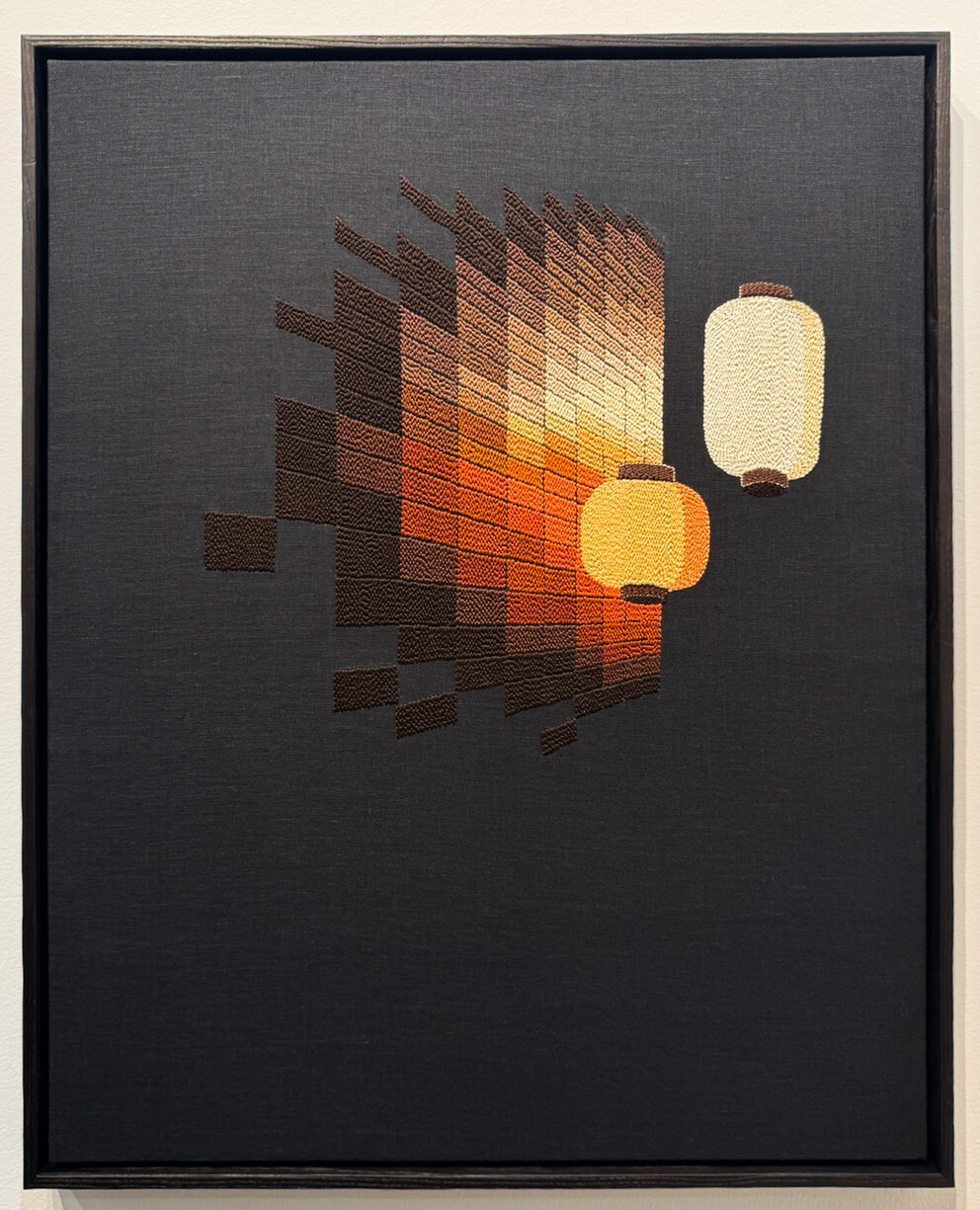
    Adrianna Matzeg’s Pontocho Alley initially looks like a digital image of two lamps reflected on a gridded wall. But the beauty of the piece emerges when you discover that the image is created through the painstaking stitching of coloured cotton thread.

    Adiranna Matzeg, Pontocho Alley, Cotton and linen, 24” x 30”, Abbozzo Gallery

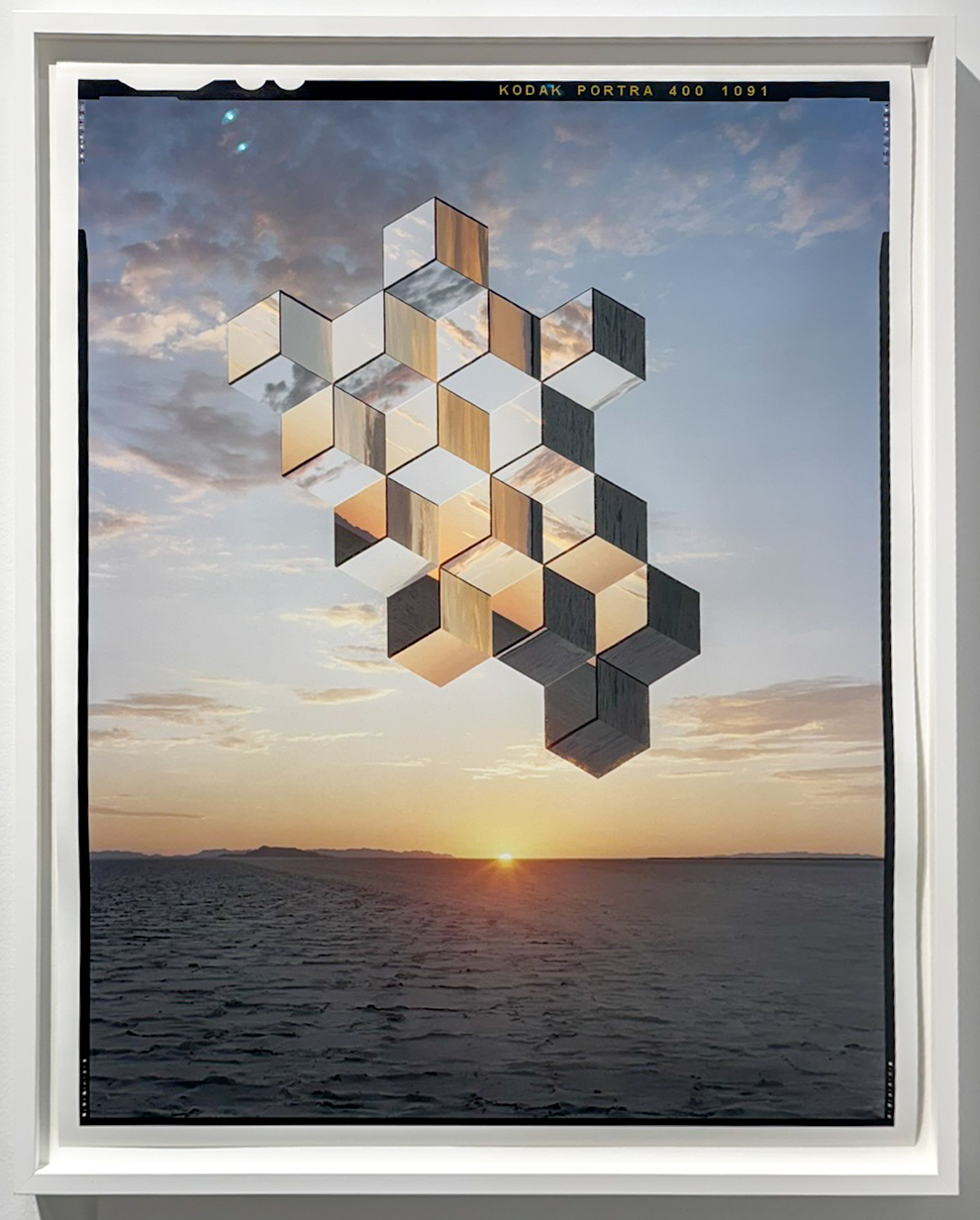
    James Nizam creates elegant geometric works that look digital but are entirely analogue. These desert landscapes are overlaid with abstract, floating geometries. They are made using a film camera, multiple exposures, and custom filters and masks that the artist creates and inserts into the camera in front of the film. In his large prints, Nizam has included the film frame to emphasize the analogue process. If there’s an easy way and a hard way to create an image, Nizam seems to choose the hard way!

    James Nizam, Sigil, photograph, 39.5” x 32”, Galley Jones

    Ultimately, these works remind us that there is often much more to an artwork than meets the eye. What initially catches our attention may be the image, but looking more closely reveals the ingenuity of the process, the unexpected use of materials, or the way a work changes as we move around it. Understanding how something is made can add another dimension to our appreciation of it. And while photographs can give us a sense of what a work looks like, they can rarely convey the full experience of seeing it in person. Sometimes, the most interesting part of an artwork is discovering what lies beneath the surface.

    Text and photo: Mikael Sandblom

  • Art Toronto 2026

    Art Toronto 2026

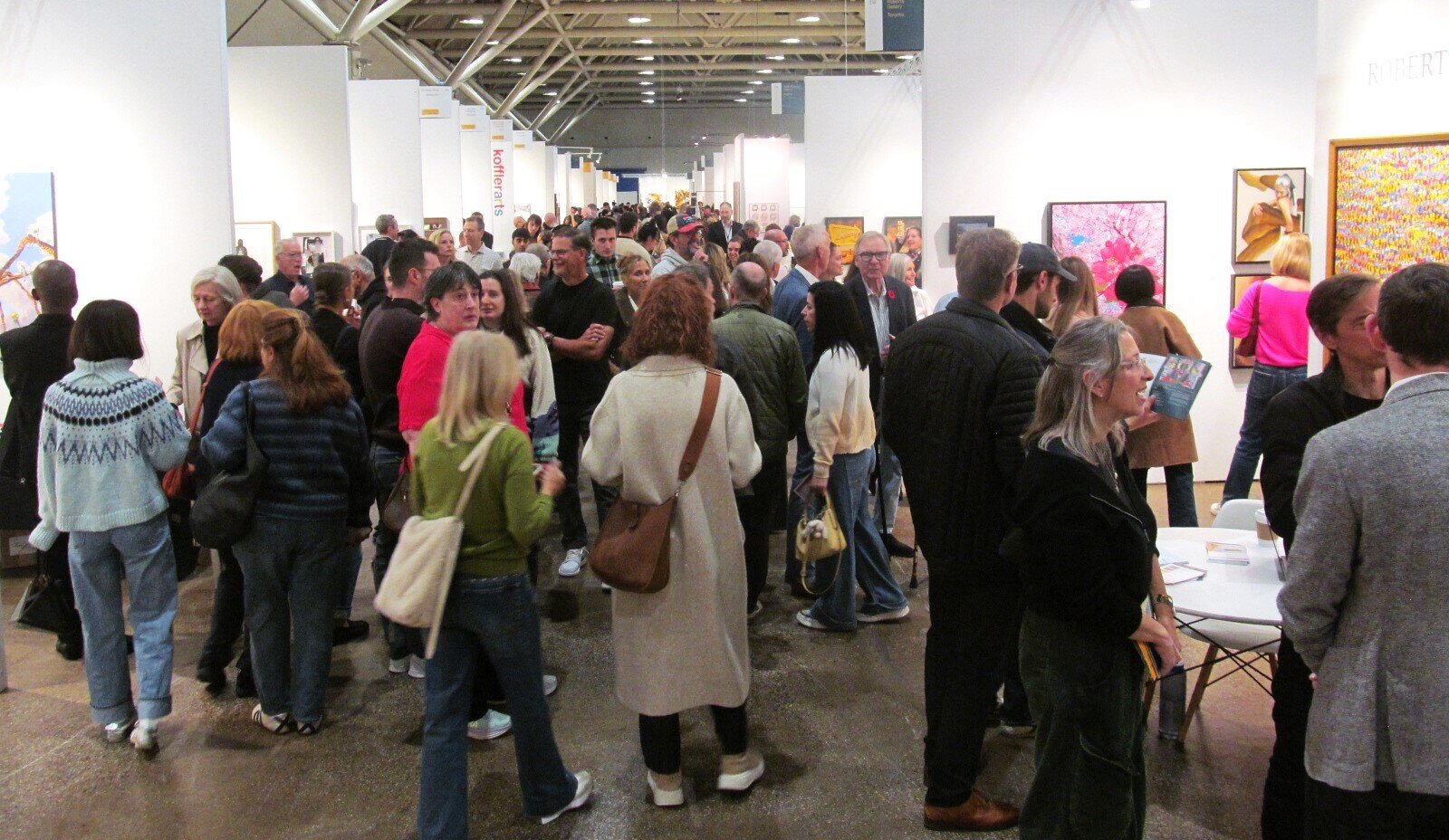
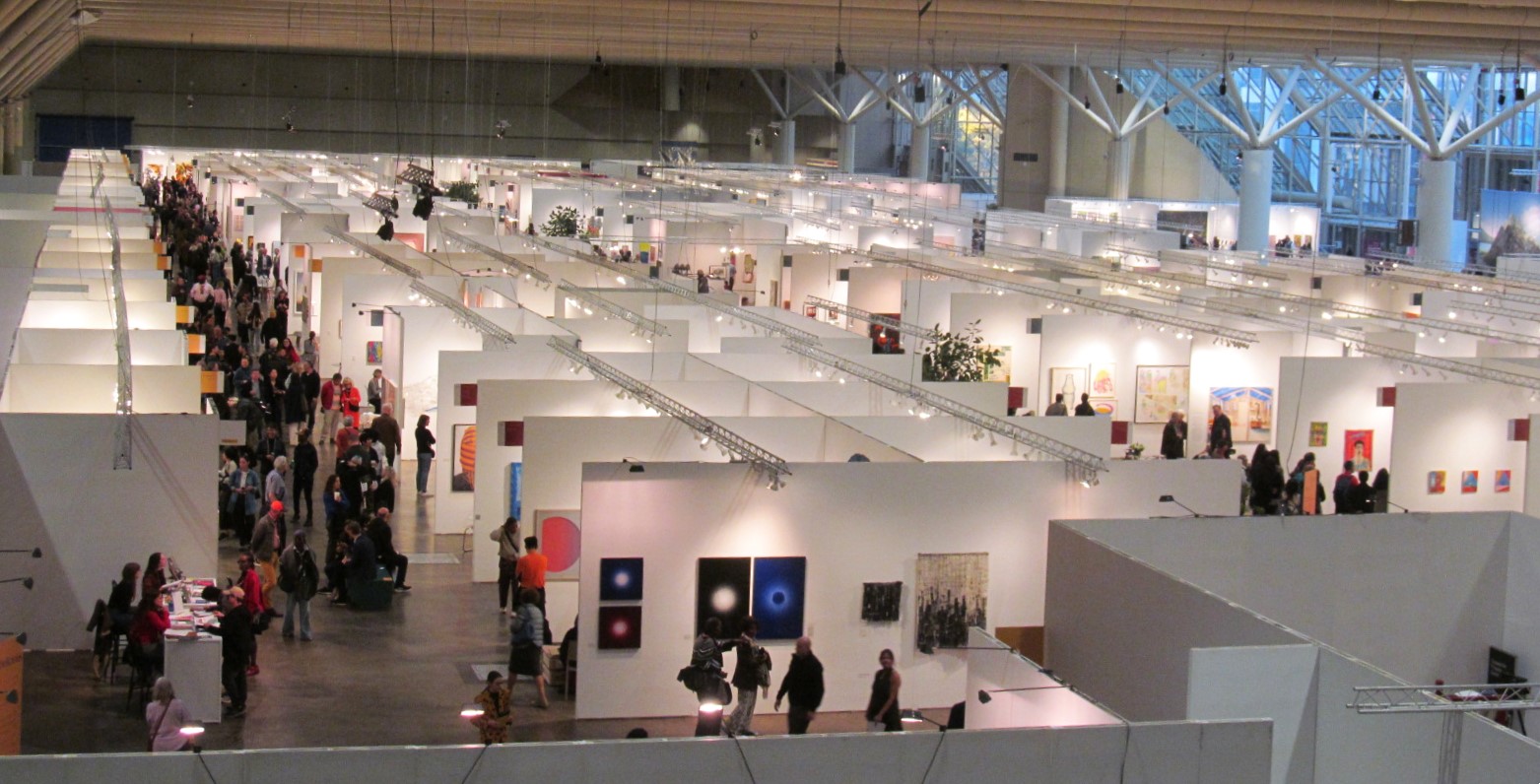
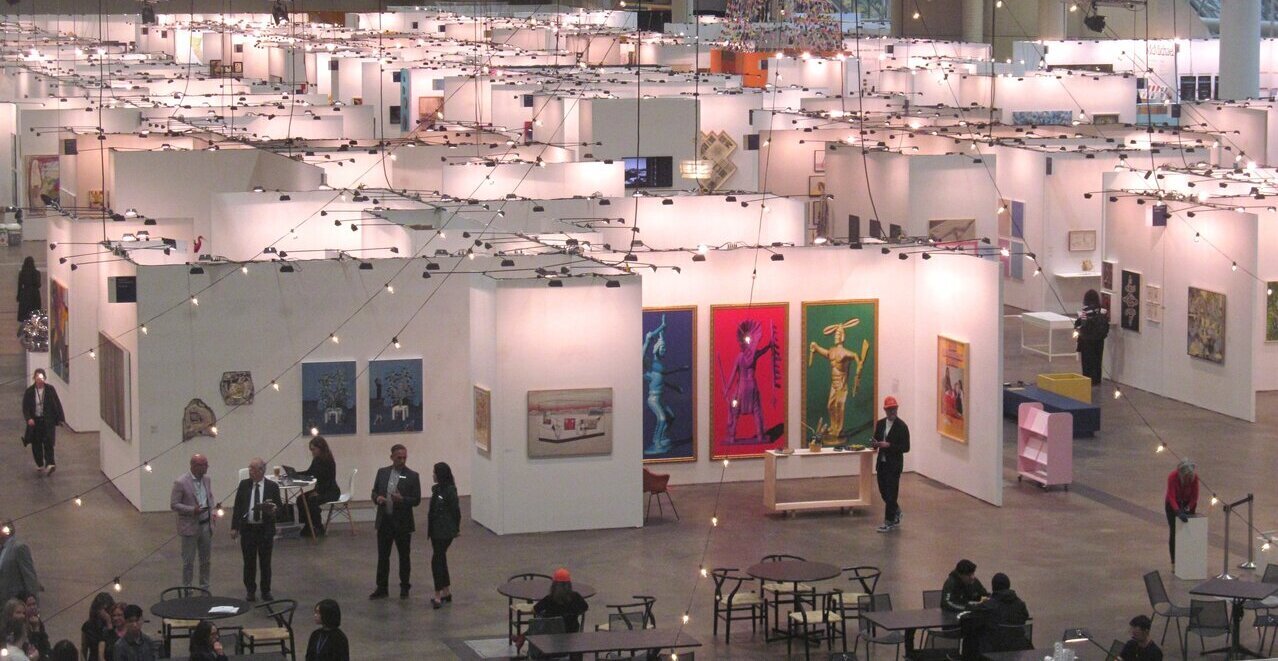
    Installation view of Art Toronto 2026

    This year’s 27th Art Toronto was a hive of activity on a busy Saturday with 100+ Galleries and a lot of art loving attendees. New Director of the Fair Emily-Jean Alexander admitted that participation in this year’s fair was down 10% but despite a faltering economy had done well. She said other Fairs south of the border had not all done as well. A new addition at this year’s Fair was a section where collectors could talk to advisors to help them seek art works that would work best for them. It is important to develop new collectors in Canada. According to many gallery directors I talked to, there were plenty of sales and the evening preview party went well. Alexander has not been shy about lending her voice on the need for government support for the arts.

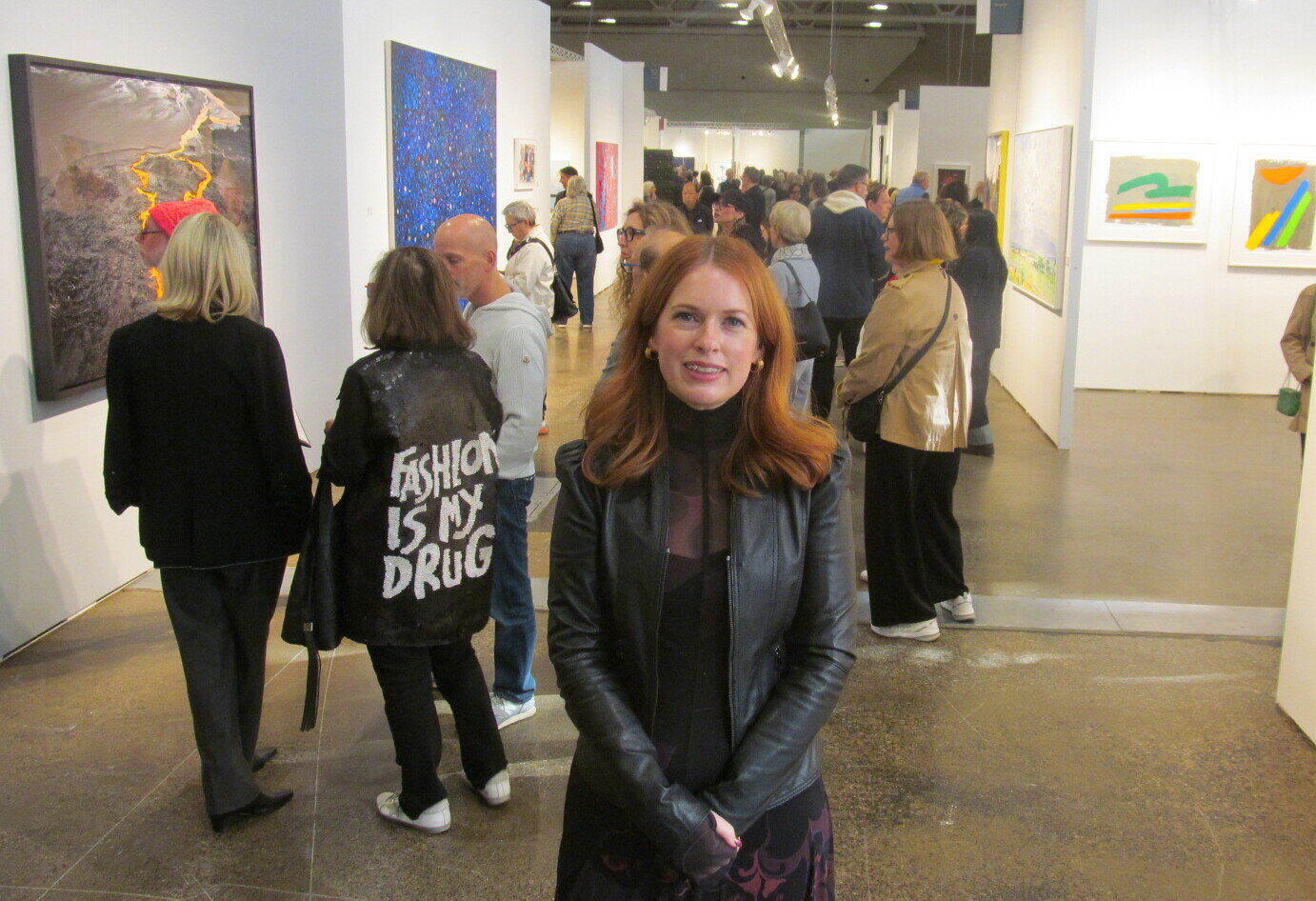
    New Director of Art Toronto Emily-Jean Alexander

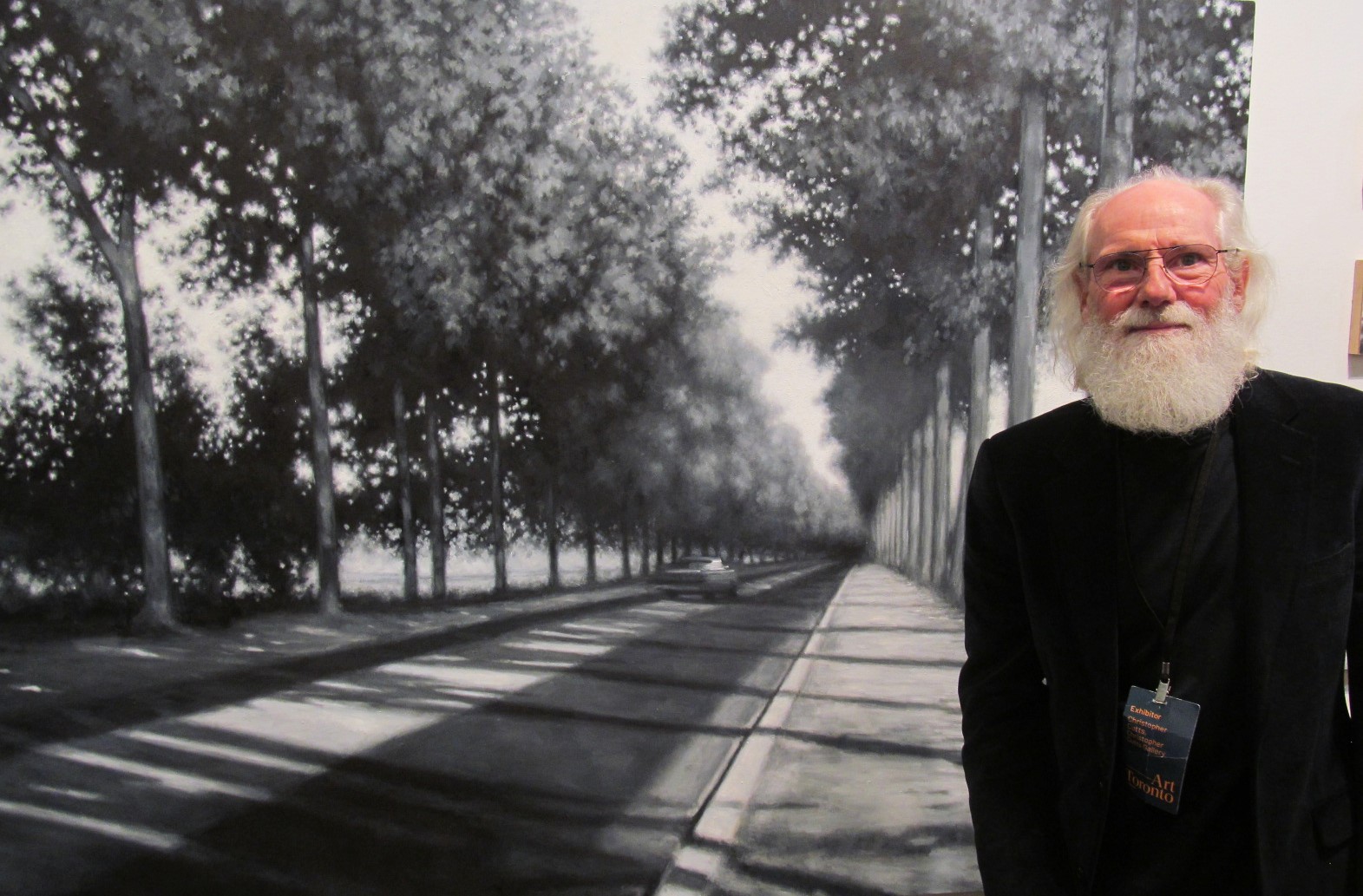
    Christopher Cutts was happy guiding clients around his booth and posed in front one of his artists John Abrams new work The Road to Paris. Abrams uses film classics as subject for his wonderful paintings. Lots of other artists represented here such as Ron Martin and Rae Johnson to name but a few. Cutts has been in the art business for 40 years and the Cutts booth had a good assortment of top artists.

    Christopher Cutts in front of John Abrams new work, The Road to Paris

    Likewise, Patel Brown Gallery had lots of great artists on display like Shellie Zhang, Swaphaa Tamhane, Shary Boyle and Kim Dorland. Talking with the directors of some larger galleries at the Fair I asked them about the effect of tariffs on them travelling to Fairs like Miami. Some are fortunate to have represented artists living in the US so they could still get sales in the US. So, it was hurting Canadian artists looking for a larger market. Some galleries still look at Fairs in Europe to help them get the necessary sales.

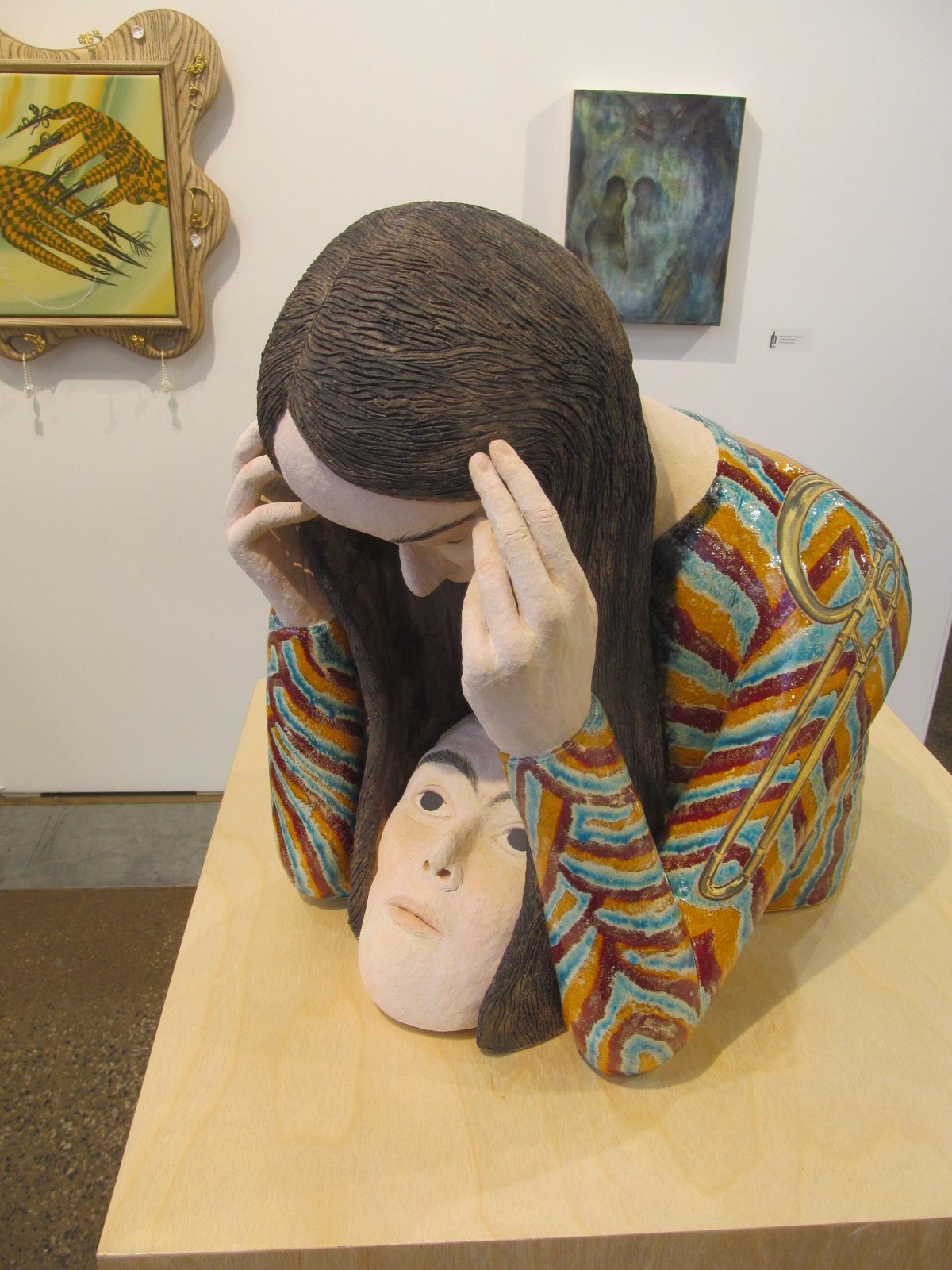
    Shary Boyle, Faces, 2024, stoneware glaze at Patel Brown Gallery

    Gallery owner Jane Corkin was ecstatic about this year’s fair and took time for a photo in front of one of her top selling artists Tom Campbell. He had just had two sales. Corkin has been busy for many years as well and represents a top rouser of artists. The Corkin Gallery has a forty-year history as well.

    Jane Corkin with Peter Campbell: Flowering Tree

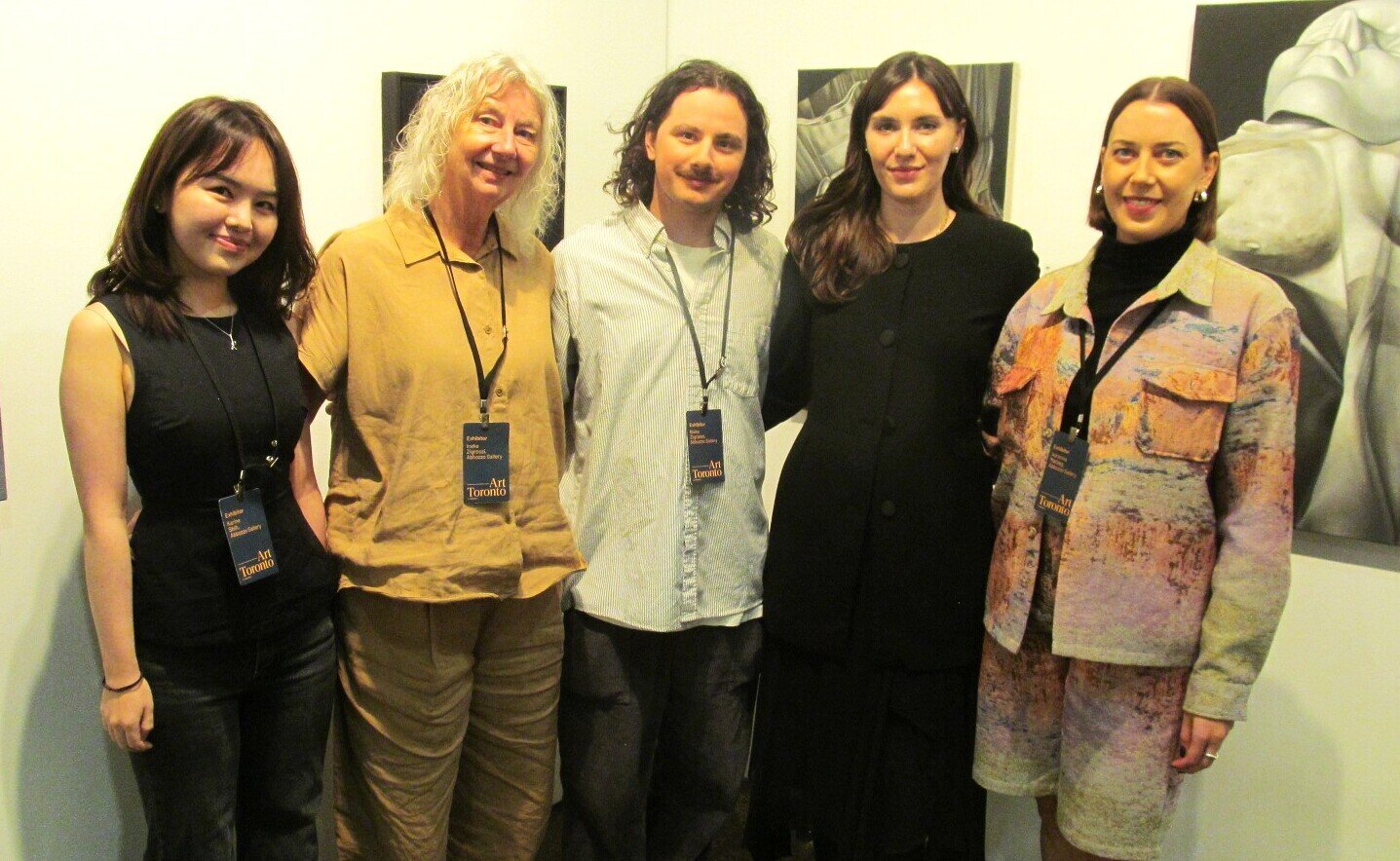
    I stopped by Abbozzo Gallery (Toronto) where I chatted with artists Adrienna Matzeg and Emily Pope who were both excited about the fair and having visitors see their work. I was then greeted by Director/Founder Ineke Zigrossi who chatted with me about the opportunities for galleries at the Fair and how important it was.

    Director, Staff and artists of ABBOZZO Gallery (Ineke Zigrossi is the second from left)

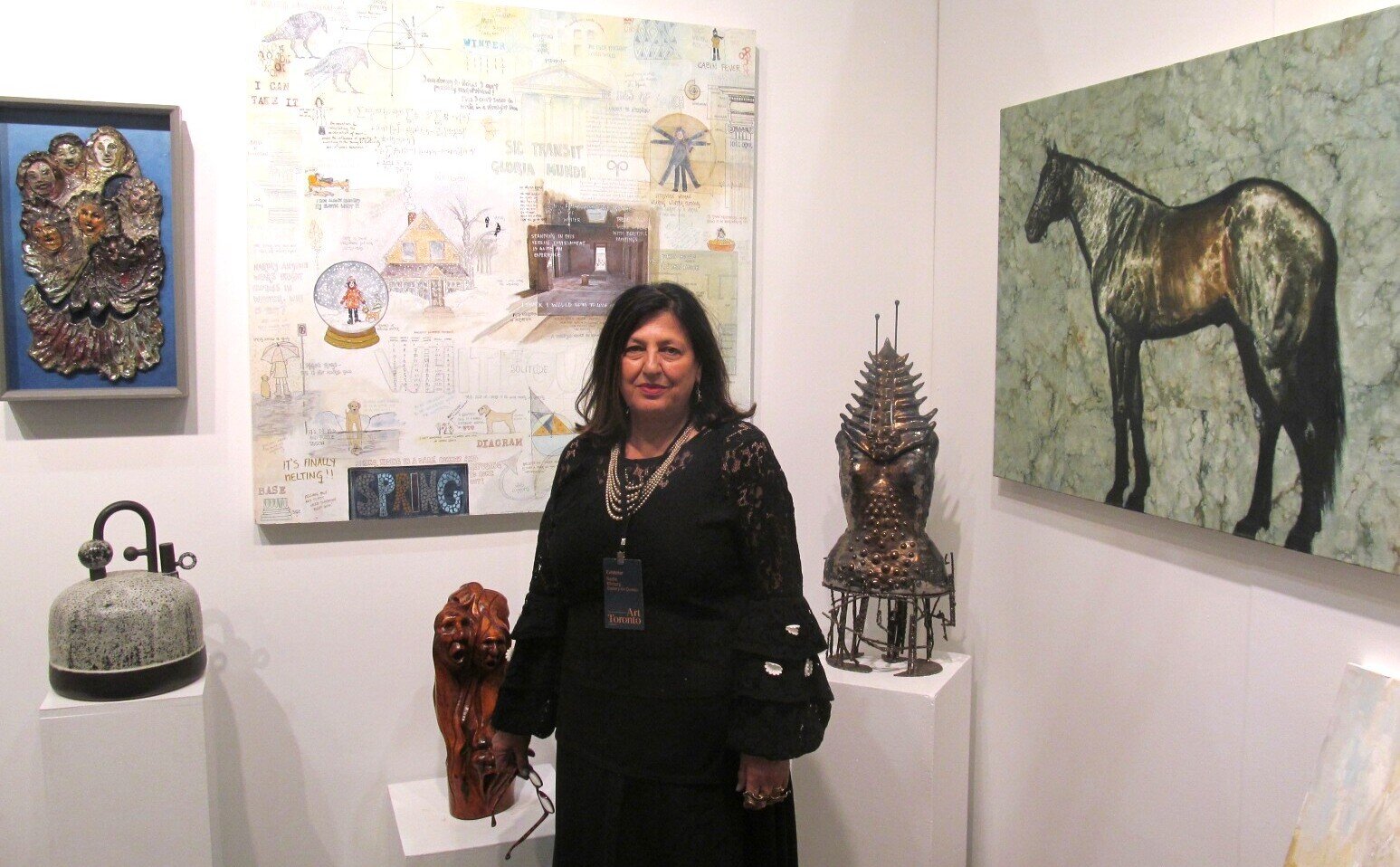
    Later I had a similar conversation with the Director of the Fredricton New Brunswick Gallery, Gallery on Queen Fine Art who had just sold a piece to the McMichael Gallery in Kleinburg for their Collection. Director Nadia Khoury was pleased about the sale and the opportunities for more visibility for the Gallery.

    Director Nadia Khoury, Gallery on Queen, Fredricton

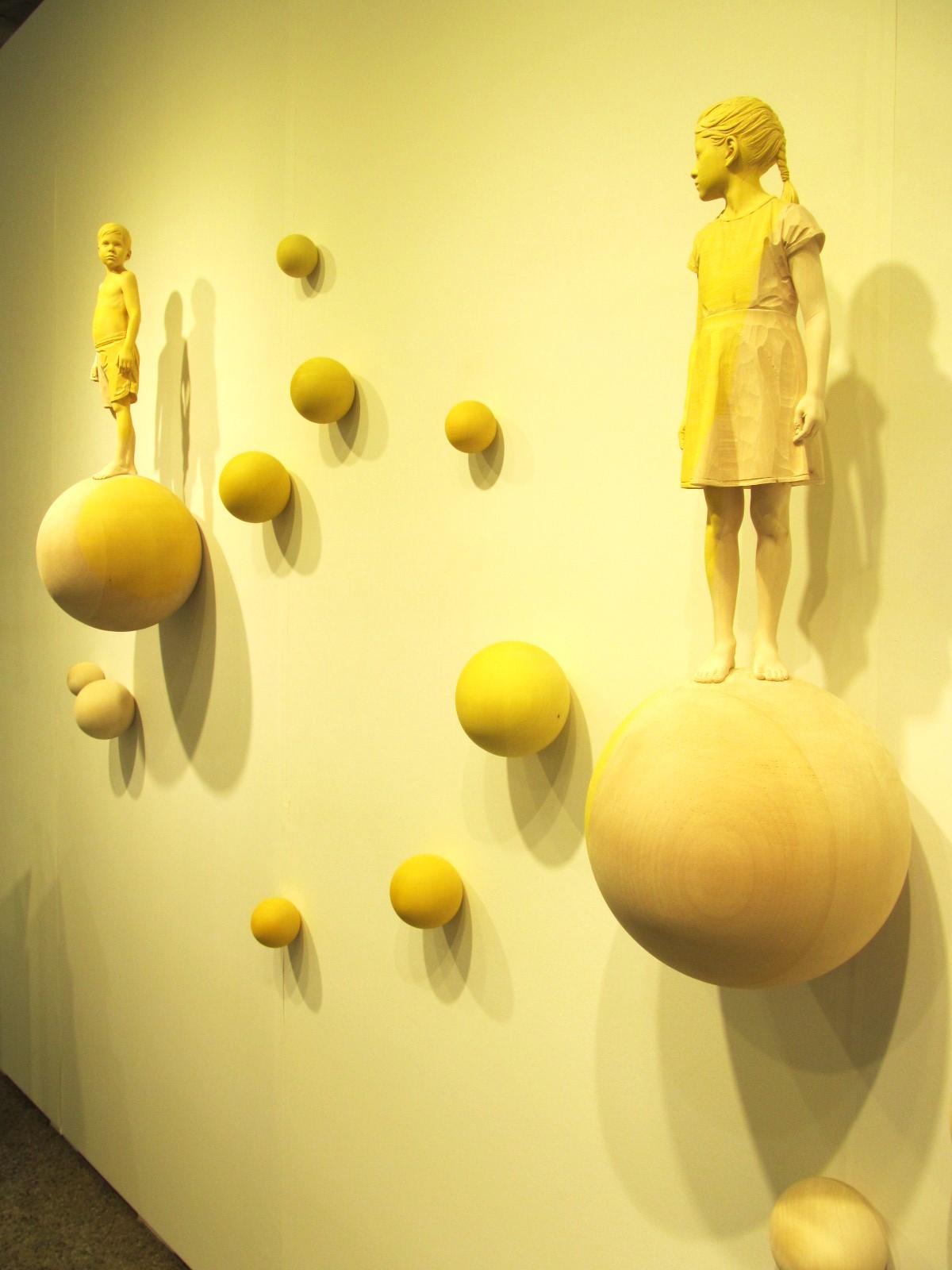
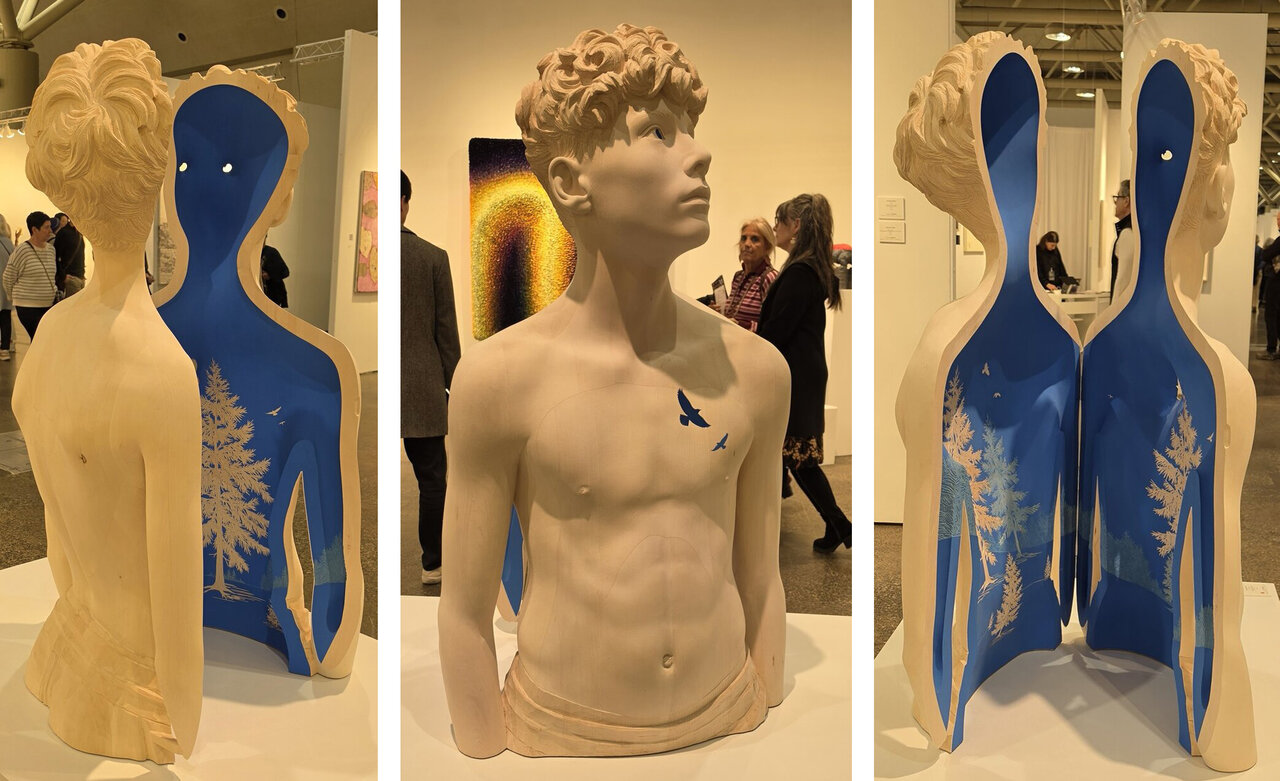
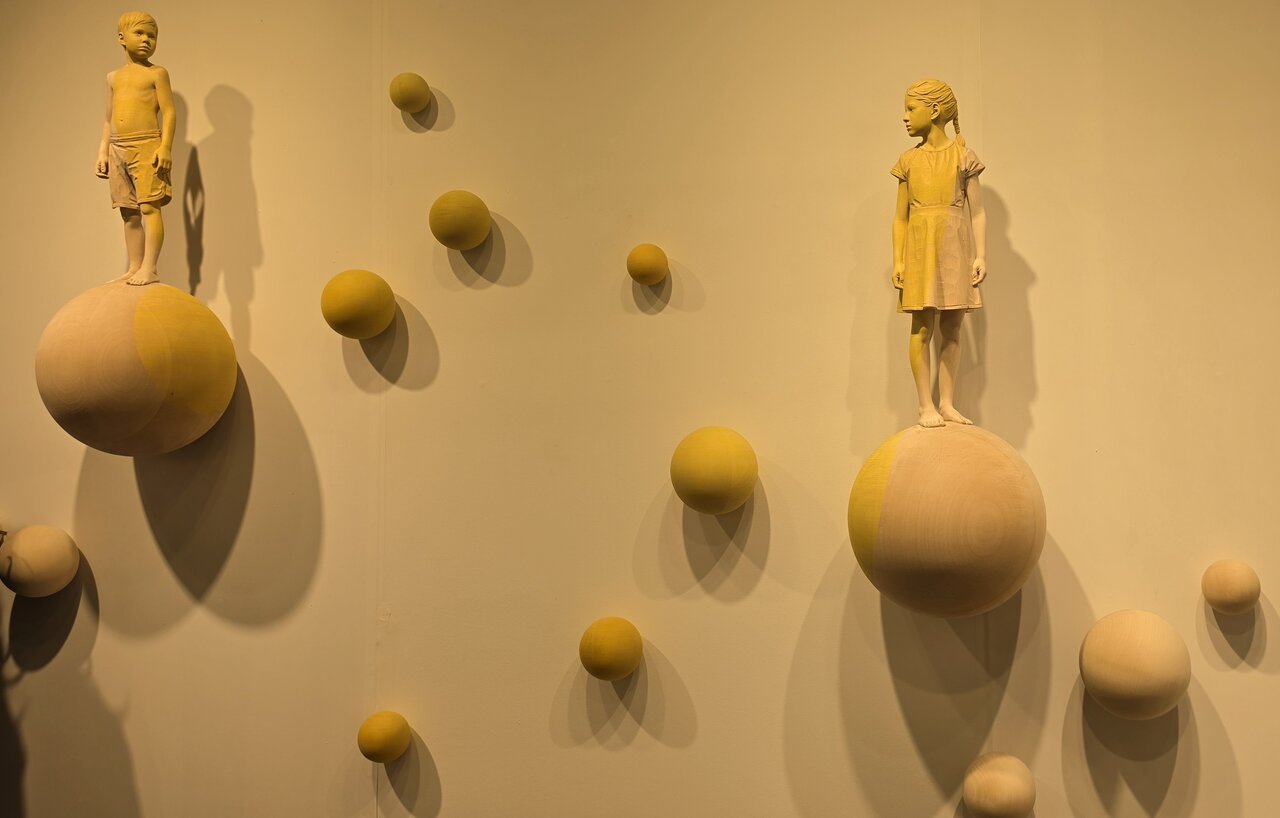
    My eye caught the work of artist Matthias Verginer, Space Siblings at Gallerie LeRoyer (Montreal and Toronto). There seemed to be lots of sculptural work throughout the Fair which worked well. Larger works like Matthias Verginer’s Intake Girl was sold for $31,800 from Galerie LeRoyer (Toronto, Montreal).

    Matthias Verginer, Space Siblings, linden wood, crayon, pencil

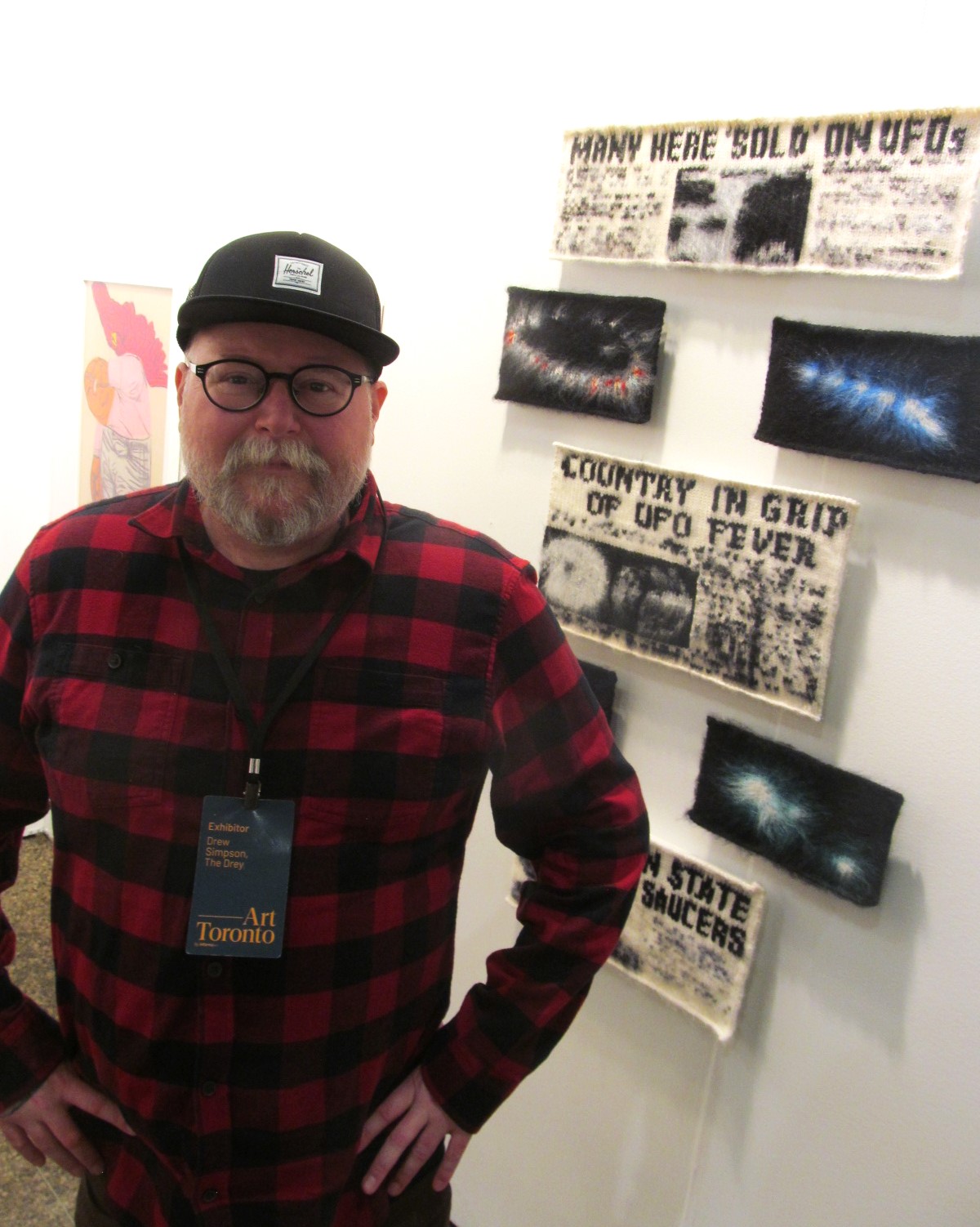
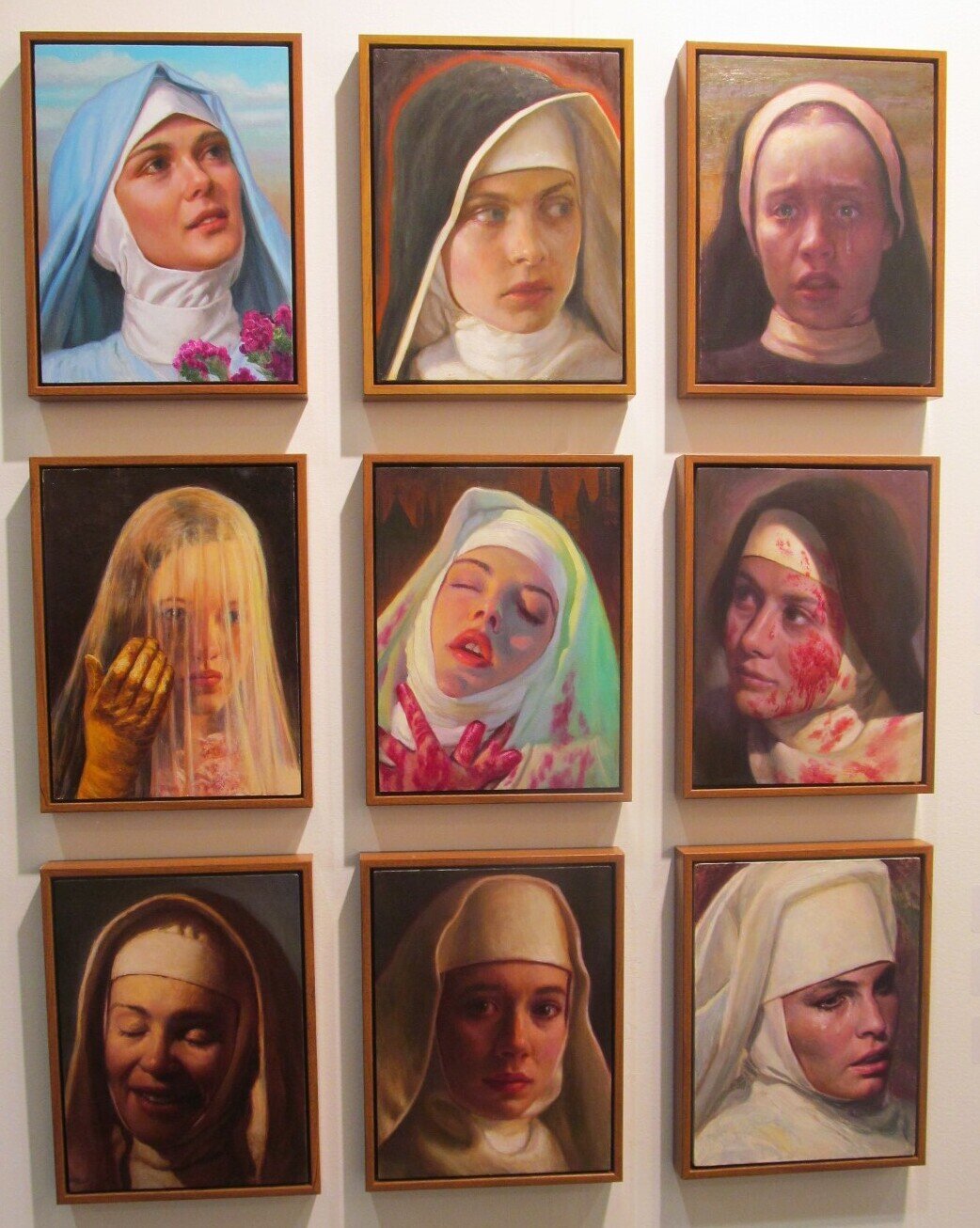
    I chatted briefly with Drew Simpson Director of the Drey Gallery in Toronto. His both was doing well with sales of John Nobrega’s Nun series oil on panel plus the textile works of Savanneh Garvin with her series of knit and stitched Mohair. Indeed, some galleries had works priced that were assessable to new collectors and art lovers.

    Drew Simpson Director of the Drey Gallery

    John Nobrega: Nun series, oil on panel

    de Montigny Contemporary in Ottawa specializes in the effects and influences of technology with art works. Indeed, with all the discussions on the effects on AI on the art world it seemed fitting to have such a gallery exploring technology and art. I chatted with Chantelle Fawcett and Bridget Phillipps of de Montigny about their participation in the Fair and they told me that the public reaction to the art was great.

    Chantelle Fawcett and Bridget Phillipps of de Montigny

    There were not a lot of international galleries at the Fair this year, but I did chat with Dr. Lesmeister of Galerie Isabelle Lesmeister of Regensburg, Germany, and she stressed the importance of them participating in the Fair. Likewise, Roya Khadjavi of Roya Khadjavi Gallery of New York had plenty of good things to say about their participation.

    Roya Khadjavi of Roya Khadjavi Gallery of New York

    Arte Sur had the participation of about a dozen galleries curated by Karen Huber and presenting artists from South and Central America as well as Mexico. There was also a daily tour of the sur galleries by Karen Huber.

    Art Toronto 2026 also had a variety of great installations spread through out the Fair which broke up some of the commercial context of the Fair. There were plenty of cafes, bistros and benches to take a much-needed rest for the feet and eyes after taking in so much colourful and wonderful thought-provoking art.

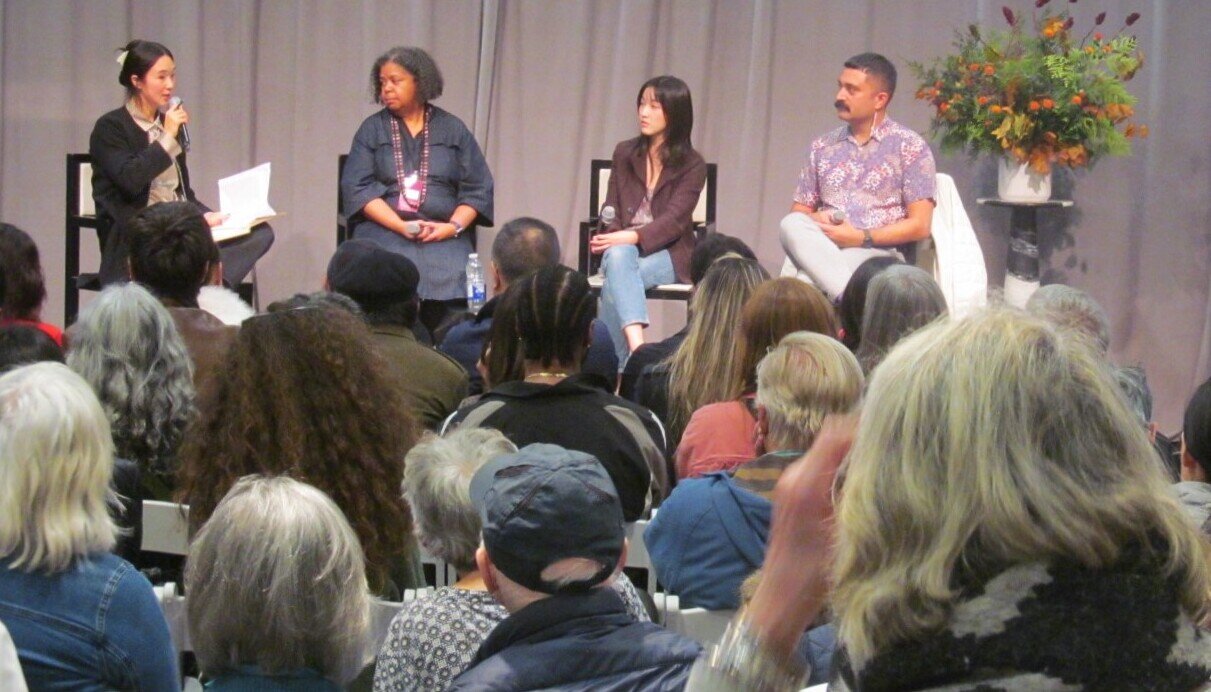
     The importance of art to community and keeping it accessible was just one of the conversations being held in one of the afternoon panel talks. Panelists all talked of the importance of staying relevant to their audience and attracting viewers to their galleries.

    Panel Talk

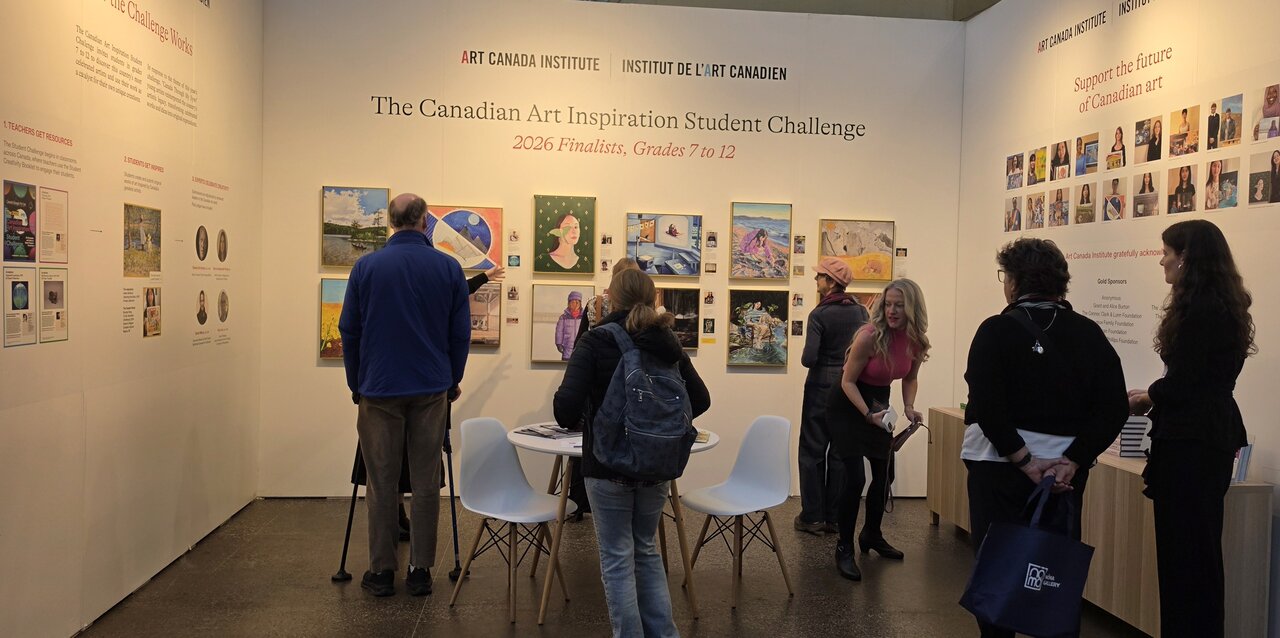
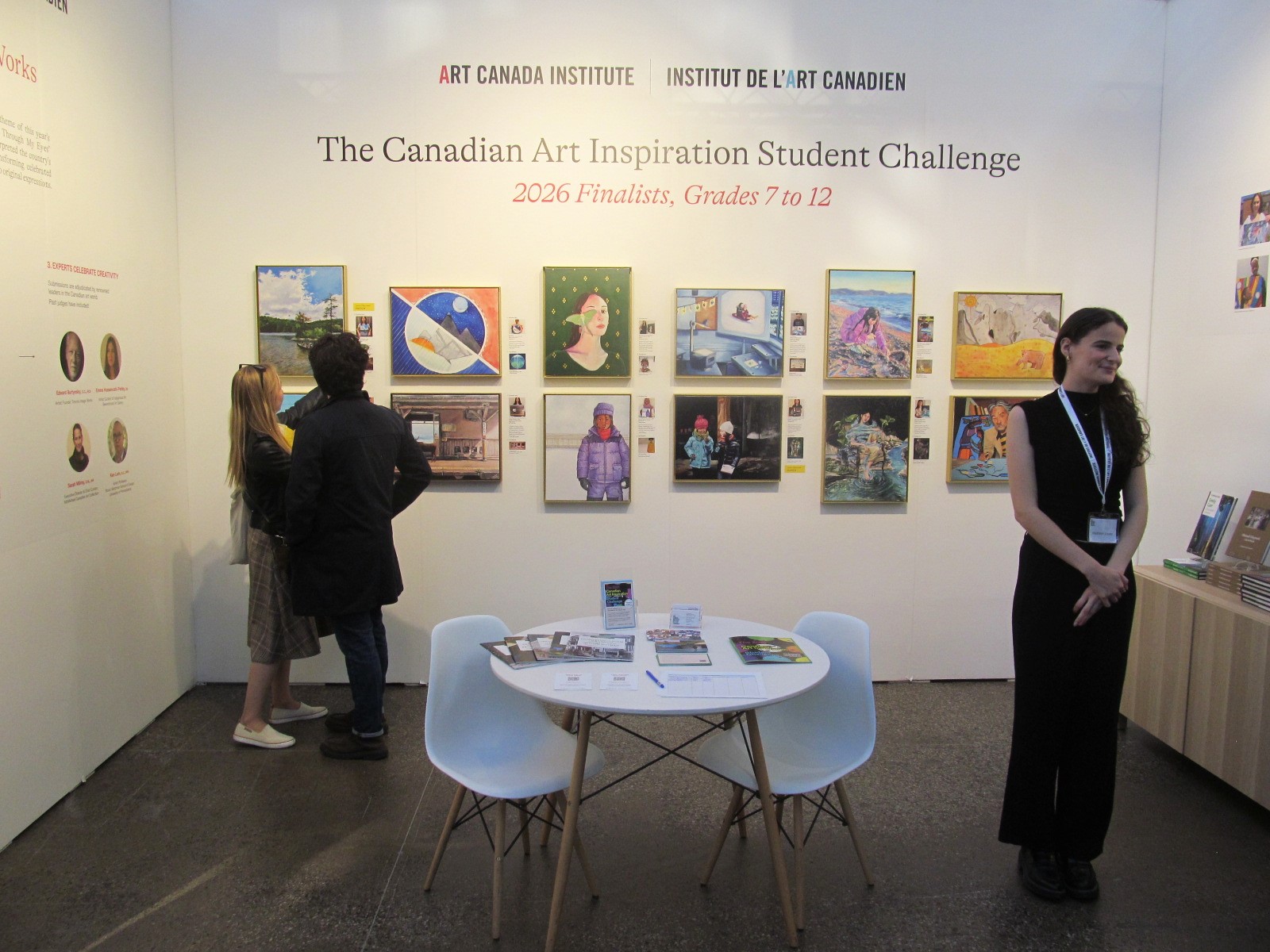
    On my way out from the Fair I stopped in a booth of the Art Canada Institute thar had a Canadian Art Inspiration Student Challenge yearly and now in its 7th year it invites students in Grades 7-12 from across the country to submit original works inspired by Canadian artists. They get cash prizes and the opportunity to get displayed at venues like the Art Toronto. Next deadline is November 18th. Seems like a great opportunity to nurture more interest in the arts.

    The booth of the Canadian Art Inspiration Student Challenge

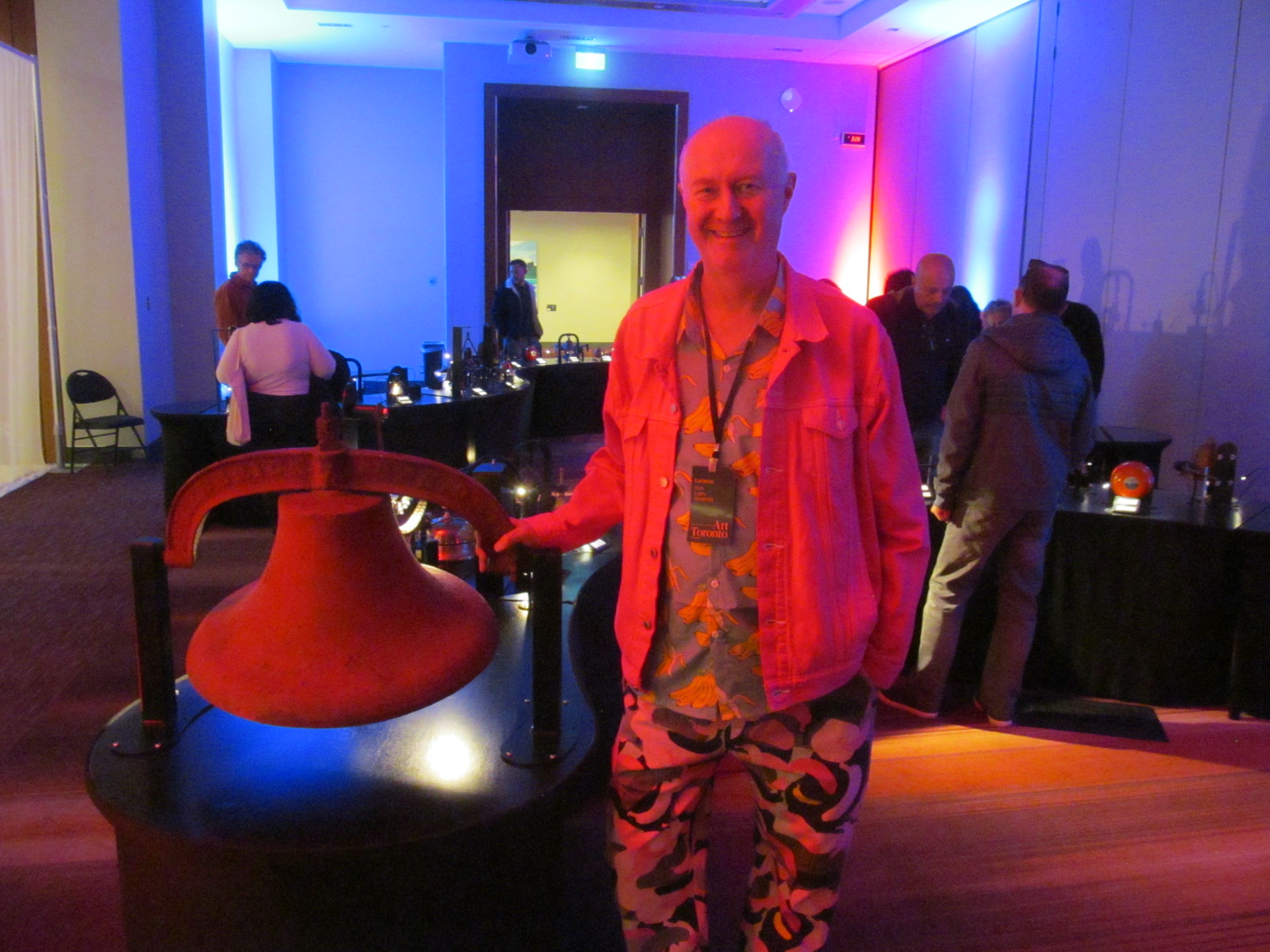
    Leaving the Fair I heard many bells. Indeed, there were many bells from around the world in this room an installation of bells, all set to ring at different intervals depending on each bell. They had different themes like the number of births in Canada in a day; a ring for each birth was set by a small computer. This incredible project which took four years was created by Rich Loen of Ottawa at his Salon Des Bananes. Loen had the help of many volunteers for this fascinating project.

    Rich Loen of Ottawa from Salon Des Bananes with his bell

    Emily-Jean Alexander and her team have managed to offer a great treat for eyes of visitors with this year’s 27th edition of Art Toronto. In a world with a shortage of hope, it brings a great break and a glimmer of wonder from all the creative spirit on display.

    Text and photo: Phil Anderson

    *Exhibition information: Art Toronto, October 29 – November 1, 2026, Metro Toronto Convention Centre, North Building, Exhibit Hall A & B, 255 Front Street West. Hours: Fri – Sat 12 – 8 pm, Sun 12 – 6 pm.
  • Visiting Art Toronto 2026

    Visiting Art Toronto 2026

    This year, Art Toronto brings together Canadian and international galleries across Main, Solo, Arte Sur, and other sections, offering encounters with art that explore human experience, cultural memory, and connections to the natural world.

    Among the presentations in Main, Galerie LeRoyer, offers a dynamic platform for curated exhibitions featuring Canadian and international artists. Here, two Italian artists explore human experience through linden-wood sculpture. Matthias Verginer balances realistic figures with a sense of estrangement, using pencil lines to accentuate their character and playful tensions between space and gravity to question how we perceive the world.

    Matthias Verginer, Siblings

    Christian Verginer, from northern Italy, combines linden wood with acrylic paint, placing human figures in dialogue with animals, trees, and everyday objects to envision a more sensitive relationship between humanity and nature, a future rooted in hope and peaceful coexistence.

    Christian Verginer, Inner Wilderness II, 2026

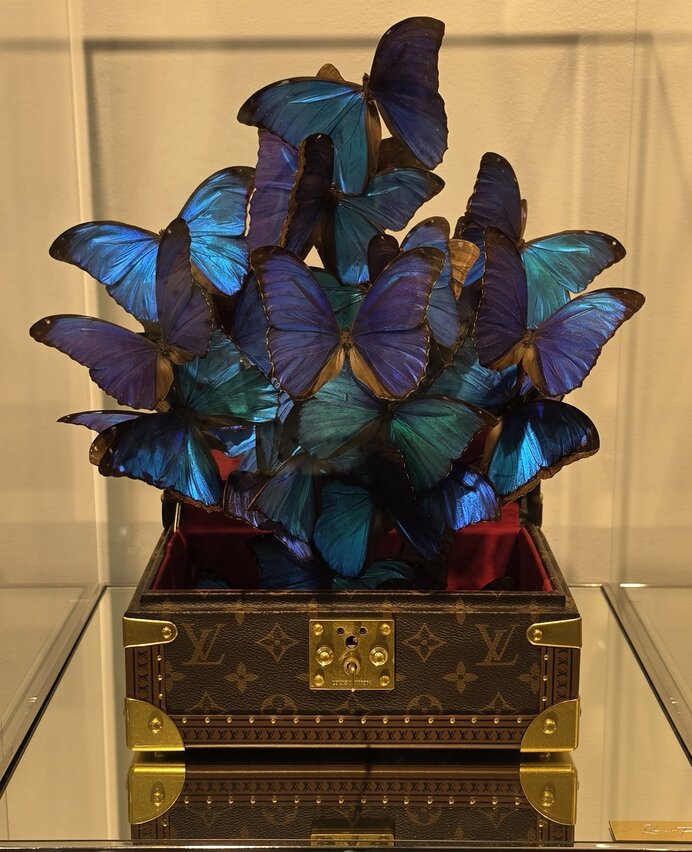
    Further exploring connections between human experience and the natural world, Galerie de Bellefeuille celebrates 46 years of bringing international art to Canada. Its presentation showcases Canadian and international artists, including Jane Waterous and Roman Feral. Canadian multidisciplinary artist Waterous captures human energy and collective joy through richly textured works that bridge painting and sculpture, with light animating their surfaces. Paris-born Feral brings luxury and nature into dialogue, pairing recognizable fashion icons with delicate butterflies arranged as if in flight. His compositions suggest perpetual movement, transforming a fleeting moment into an image of enduring beauty.

    Roman Feral, Louis Vuitton Azur II, 2023, made with rare natural butterfly

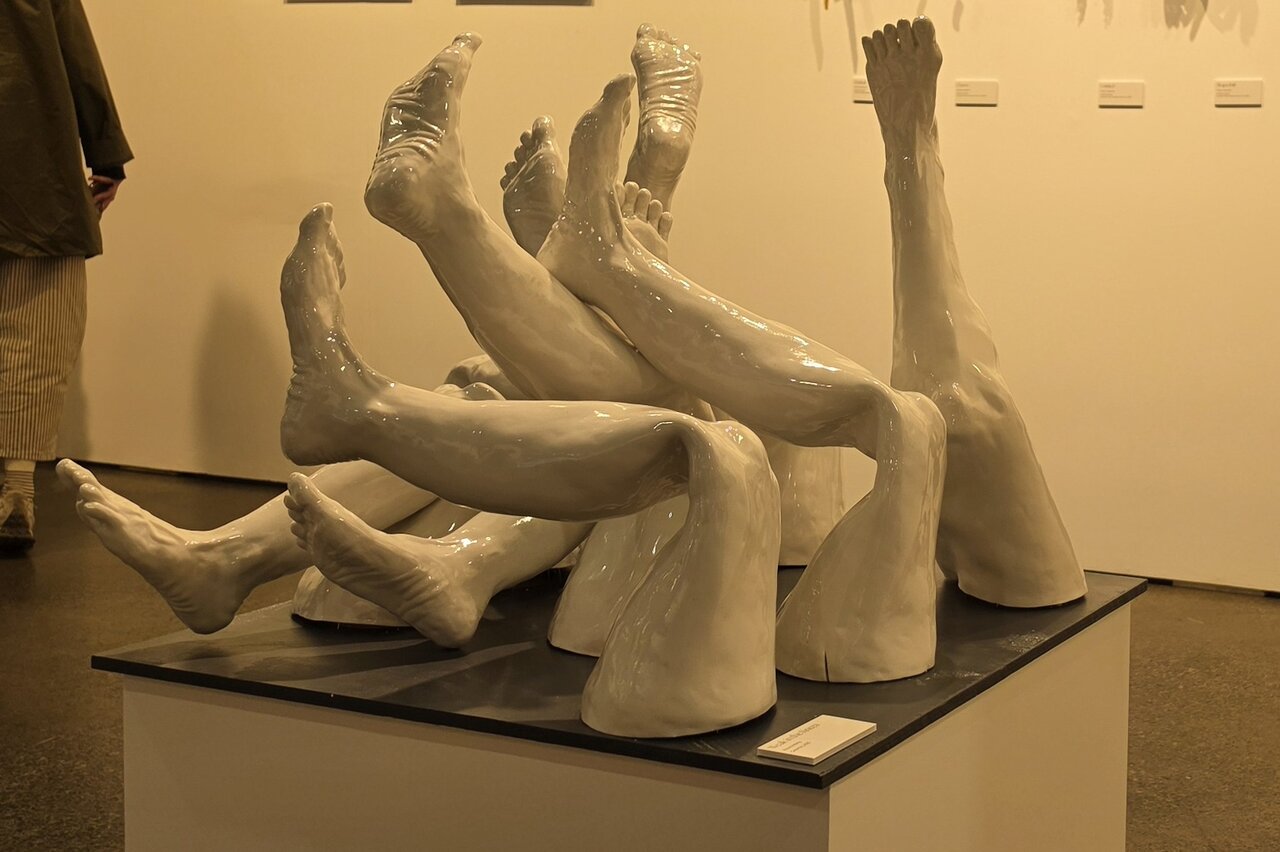
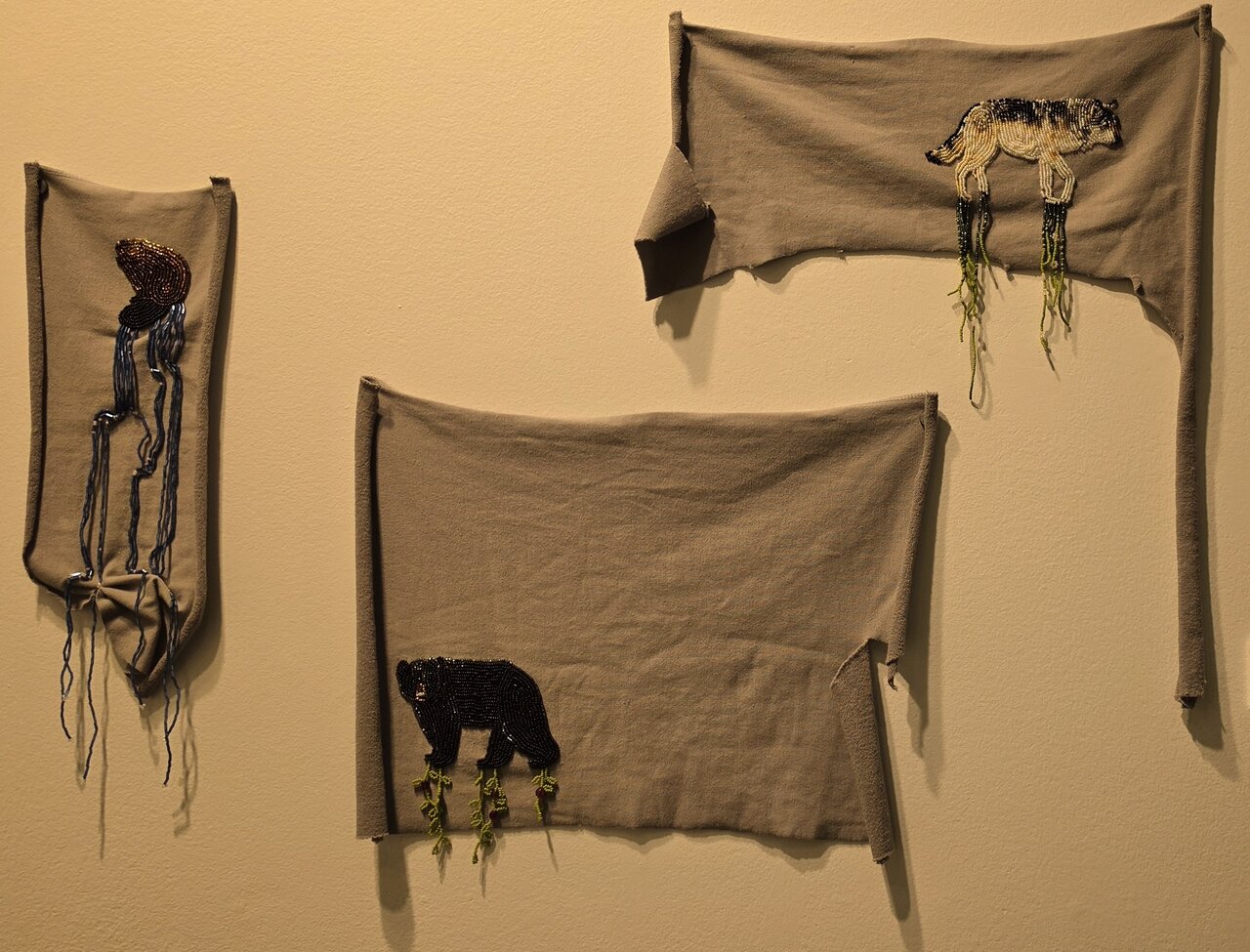
    Moving from gallery presentations to community-led initiatives, the Yellowknife Artist Run Community Centre makes its Art Toronto debut. The nonprofit organization supports the production and presentation of art from Yellowknife and the Northwest Territories. Its presentation includes Hana Steinward, whose beadwork explores ancestral connections and tradition, and Maura Meng, a multidisciplinary Canadian artist based in the Yellowknife area who focuses primarily on ceramic sculpture. Meng’s use of locally sourced clay and alternative firing techniques connects her practice to her off-grid life in a cabin in the Northwest Territories.

    Maura Meng, Weak in the Knees, 2025

    Hana Steinward, I dream of medicine, 2023

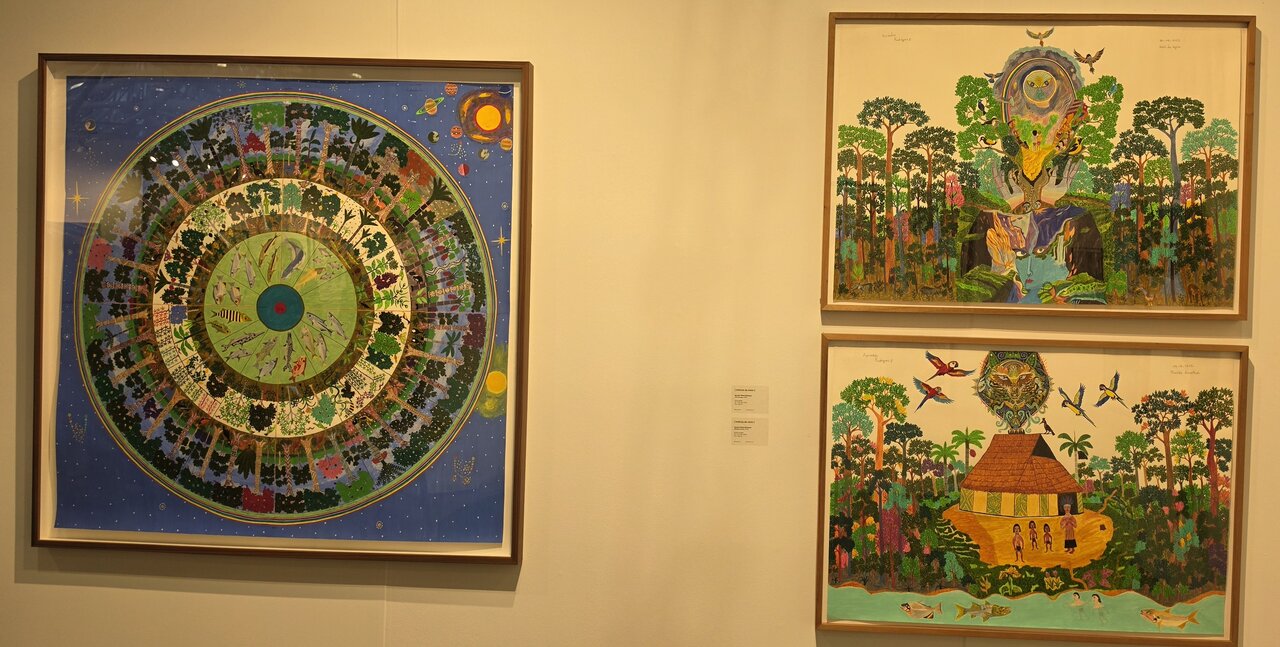
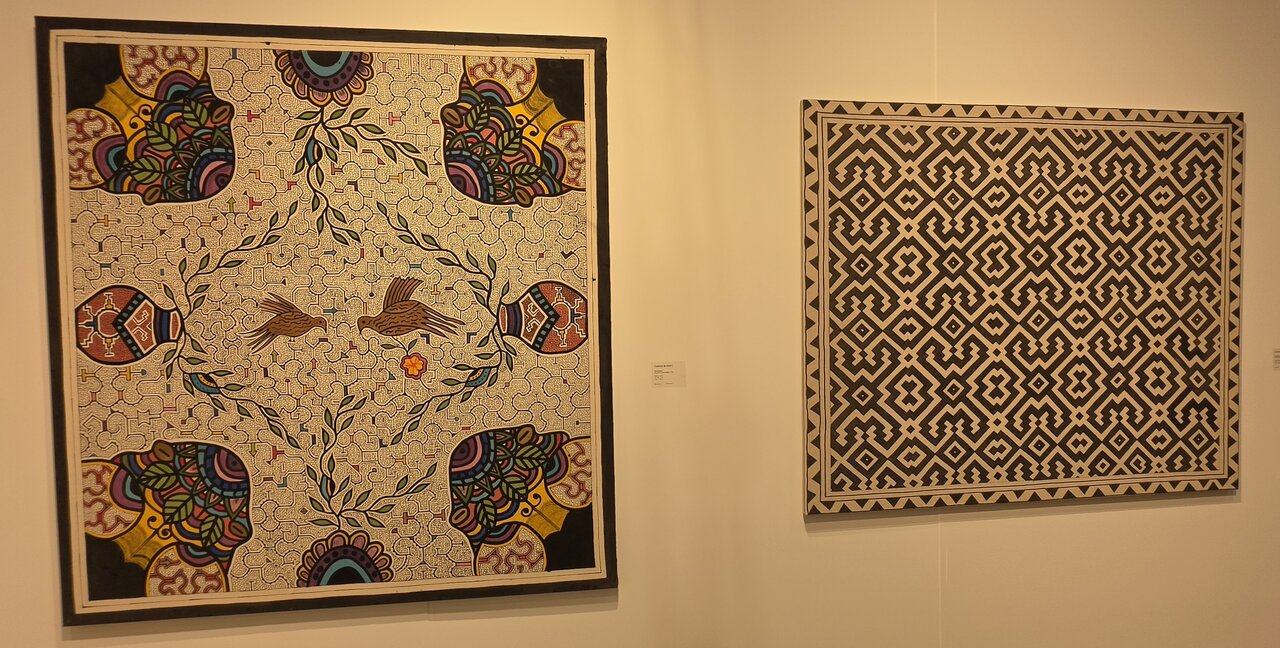
    Connections to place, history, and cultural knowledge continue in Arte Sur, where Instituto de Visión, a women-led conceptual art gallery in Bogotá, presents artists Aycoobo and Olinda Silvano. Their works carry histories and knowledge not readily accessible to outsiders. Colombian artist Aycoobo’s vividly coloured drawings draw on Amazonian plant knowledge and shamanic experience, exploring connections to ancestral territory and displacement.

    Aycoobo-Wilson Rodriguez, Arbo de agua 2026 (left) and Maloka ancestral, 2025 (right)

     Peruvian Shipibo-Konibo artist Silvano uses traditional kené designs to express spiritual relationships with plants and the forest, making her practice a form of activism against discrimination and in defence of the Amazon and its peoples.

    Olindo Silvano, Diseno de Anaconda, 2022 (left) and El poder de la planta mistico, 2024 (right)

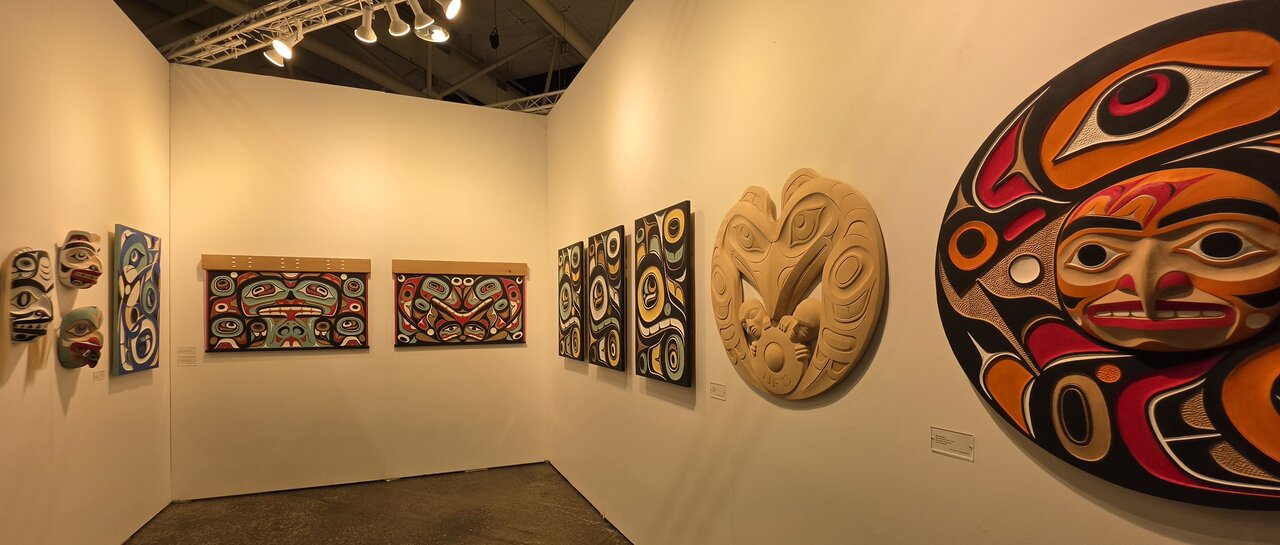
    There is more to discover in Solo, where Fazakas Gallery presents Don Yeomans, a celebrated Northwest Coast artist whose practice spans two-dimensional design, wood carving, and gold and silver jewellery. Recently commissioned to create a 15-foot totem pole, Yeomans has work in public and private collections worldwide, including UBC’s Museum of Anthropology and the Royal BC Museum.

    Don Yeomans art

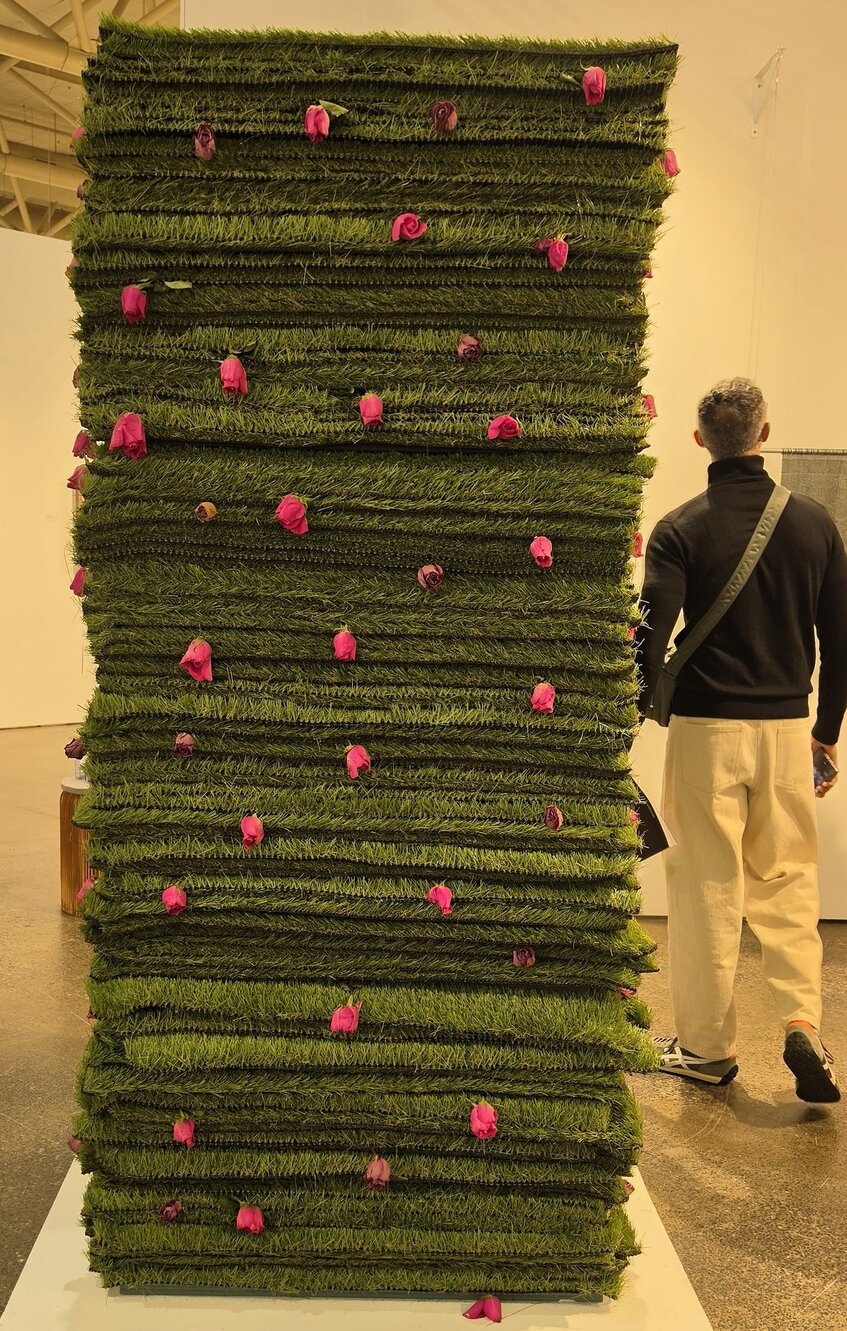
    Fazakas Gallery also presents a solo exhibition by Métis and Cree artist Audie Murray, whose practice explores material, memory, ancestry, and care through transformation. Central to the presentation is Rootless, an installation combining approximately 100 sheets of artificial grass with live roses that naturally decay throughout the fair. Murray will turn the collected roses into pigment for future works, treating decay as a beginning rather than an end. A drawing made with rose pigment from an earlier iteration accompanies the installation.

    Audie Murray, We are always Love & Rootless

    Extending these encounters beyond the gallery booths, Art Toronto offers talks, special events, and more. Artists, curators, collectors, and art advisors will lead tours throughout the weekend, while the Platform Talks series brings together voices from the Canadian and international art worlds, creating further opportunities to engage with the ideas behind the work.

    Text and photo: Nusrat Papia

    *Exhibition information: Art Toronto, October 29 – November 1, 2026, Metro Toronto Convention Centre, North Building, Exhibit Hall A & B, 255 Front Street West. Hours: Fri – Sat 12 – 8 pm, Sun 12 – 6 pm.
  • Art Toronto 2026

    Art Toronto 2026

    Installation view of Art Toronto, 2025. Photo: Phil Anderson

    October 29 – November 1, 2026 / METRO TORONTO CONVENTION CENTRE
    North Building, Exhibit Hall A & B, 255 Front Street West
    Hours: Fri – Sat 12 – 8 pm, Sun 12 – 6 pm

    In 2026, Art Toronto celebrates its 27th edition featuring an incredible range of galleries from across Canada and around the world, including the United States, Mexico, Chile, Colombia, Peru, Costa Rica, Guatemala, and Europe. Canada’s oldest and largest international art fair will host over 100 national and international galleries, installations, project spaces, and so much more!

    Arte Sur, a new section that debuted at Art Toronto 2025, celebrated the vibrant artistry of Latin America and was curated by the renowned Karen Huber.

    The programming involves:

    • Platform hosts insightful talks with leading voices in the art world.
    • Free guided tours are presented by experienced curators, collectors and artists.
    • Special projects, installations and the Focus exhibitions enrich your visit.

    For programming, ticketing and more information click here.

  • Steve Rockwell at modern.toronto

    Steve Rockwell at modern.toronto

    Previously I wrote about the work of Ron Shuebrook on display at modern.toronto, a recently opened space aimed at showcasing abstract paintings. I now turn to the work of Steve Rockwell, on display at the same time in the front half of the exhibition space. While his work complements Shuebrook’s it is quite distinct in nature. Rockwell’s practice might best be described as conceptual with a strong element of performance. But first we need to consider a bit of history behind it.

    Installation view of Steve Rockwell’s exhibition at the modern.toronto

    While we each undergo radical changes from birth to death, from infancy to old age, it is assumed we are the same person throughout. This assumption is largely premised on continuity. The changes across a lifetime are seldom abrupt, but rather gradually evolve. And so there is a path we can trace along the way. Who we are, our personal identity, is defined by this path – shaping our character, preferences, memories and so on. By this measure we cannot alter who we are by means of changing our name, disavowing our past and radically altering the course of our life. Who we each are is given to us, not created by us. Our identity is the grounds for our actions. Our actions do not shape our identity.

    Steve Rockwell, Tenet #1, 2026, 17 x 14 inches

    But perhaps this assumption is not entirely true. Insofar as an artist defines himself in terms of what he creates, it seems at least imaginable that he might create himself. He might become his own creation, so to speak. That in a sense is what Steve Rockwell has in fact done. While normally artists make work without inspecting their underlying identity, Rockwell has in essence used his artmaking to create the artist self-consciously – to deliberately develop his artistic persona. Born in Finland with the legal name Jouko Salomaa, when later in life he committed himself to developing art career he chose as his nom de plume, or stage name, ‘Steve Rockwell’. His use of this name is now so pervasive, he effectively has become that person.

    Steve Rockwell, Tenet #2, 2026, 17 x 14 inches

    Early in his career Rockwell – or Salomaa as he only known then – was mindful of the widespread belief that painting is dead. Yet he still felt an urge to paint. In response, his approach was to make painting a performance. Instead of putting brush to paper to express this or that he set out a method mark-making based on rule-following. To give an example, after arriving at his studio in the morning he performed a specific ritual, namely he sat down with a coffee and read the newspaper, always checking the weather report. After this he made his way up to the building’s rooftop. There he shaded in with pencil a blank sheet of paper that was a ‘reflection’ of the weather conditions around him. Then he painted a line across the middle of the paper. This he did everyday for a week. Crucially, the resulting images did not derive from direct observation, but rather it derived from a preconceived method and the interpretation of the results of it.
    Steve Rockwell, Tenet #3, 2026, 17 x 14 inches

    The results were essentially abstractions. This approach he has used in his most recent work on display here, namely his Tenet series. For each painting he laid out a grid of squares on the canvas. Then he traced a route from one square to the next with no predetermined direction. At each point he deliberated on where to move – up, down, across even jumping a square in the process.  At each point he recorded, as paint over the square, the resulting journey. Again the consequent painting is, as one might say, non-objective, that is, with no reference to the observable world. Rather, it is mediated by a rule-based method, a sort of algorithm – information-based – on the weather, momentary decisions and so on. These ‘algorithms’ are not, as is typical, executed mechanically. There is always a human element involved in their making. Indeed, it is this element that breathes life into his works, makes them relatable to the viewer.

     Steve Rockwell, Tenet #7, 2026, 17 x 14 inches

    Prima facie, nonetheless, these paintings are simple. But, what matters in most cases is the context. How and why a work is made is key. Few artworks, he claims, are valued primarily in virtue of their appearance. When you and I encounter some abstract painting, say by an anonymous artist, as a rule we pass over it. There is little for us to grasp.

    Steve Rockwell, Tenet #4, 2026, 17 x 14 inches

    The claim by Rockwell that the appreciation of art is dependent on context accords with the long established prevalence of today’s art practices generally. Ever since Marcel Duchamp’s ready-mades artists have increasingly come to the view that what matters when looking at an artwork is not its retinal qualities, as Duchamp put it, but the artist, the ideas and the historical context behind it. And this helps explain Rockwell’s artistic persona. Creating such a persona is a piece with the cultivation of context behind the work. He effectively has created his own legend, that is, an edifice made out of the material of his own life story, the historical developments in art and narratives around them. Indeed, his decades-long project of writing, editing and publishing dArt International Magazine can be understood as supporting this goal. In this respect Rockwell’s practice reminds me very much of that of Joseph Beuys.

    Hugh Alcock

    Images are courtesy of the artist.

    *Exhibition information: Tenet & four Trees on Brant Street, September 12 –27, 2026, The modern.toronto, 230 Niagara Street, Toronto. Gallery hours: Sat – Sun 12 – 5pm.

  • Chloe Chlumecky at Dianna Witte

    Chloe Chlumecky at Dianna Witte

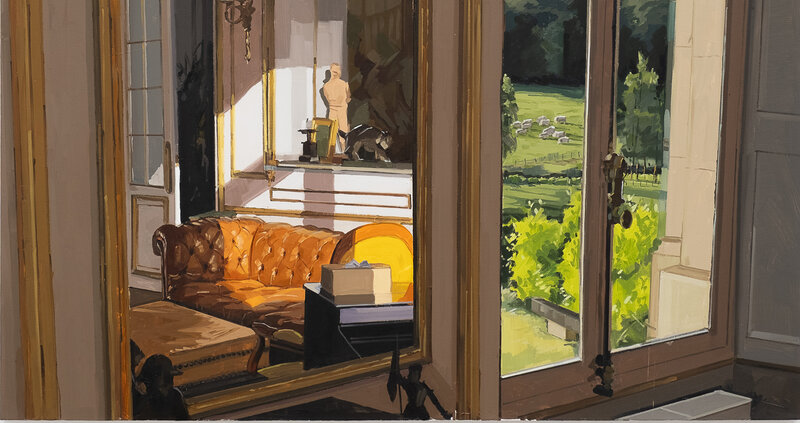
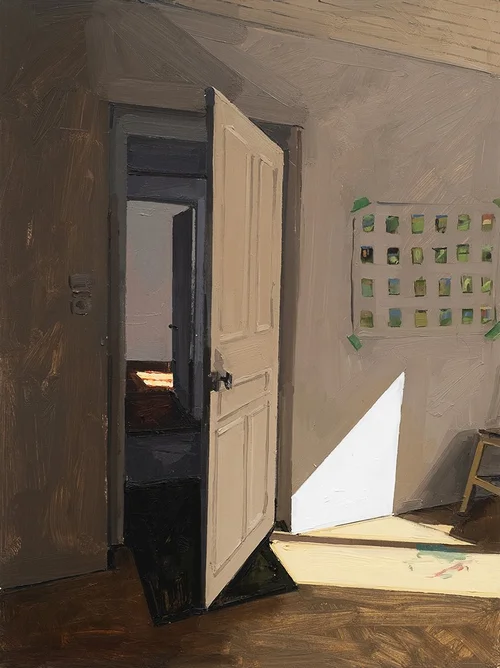
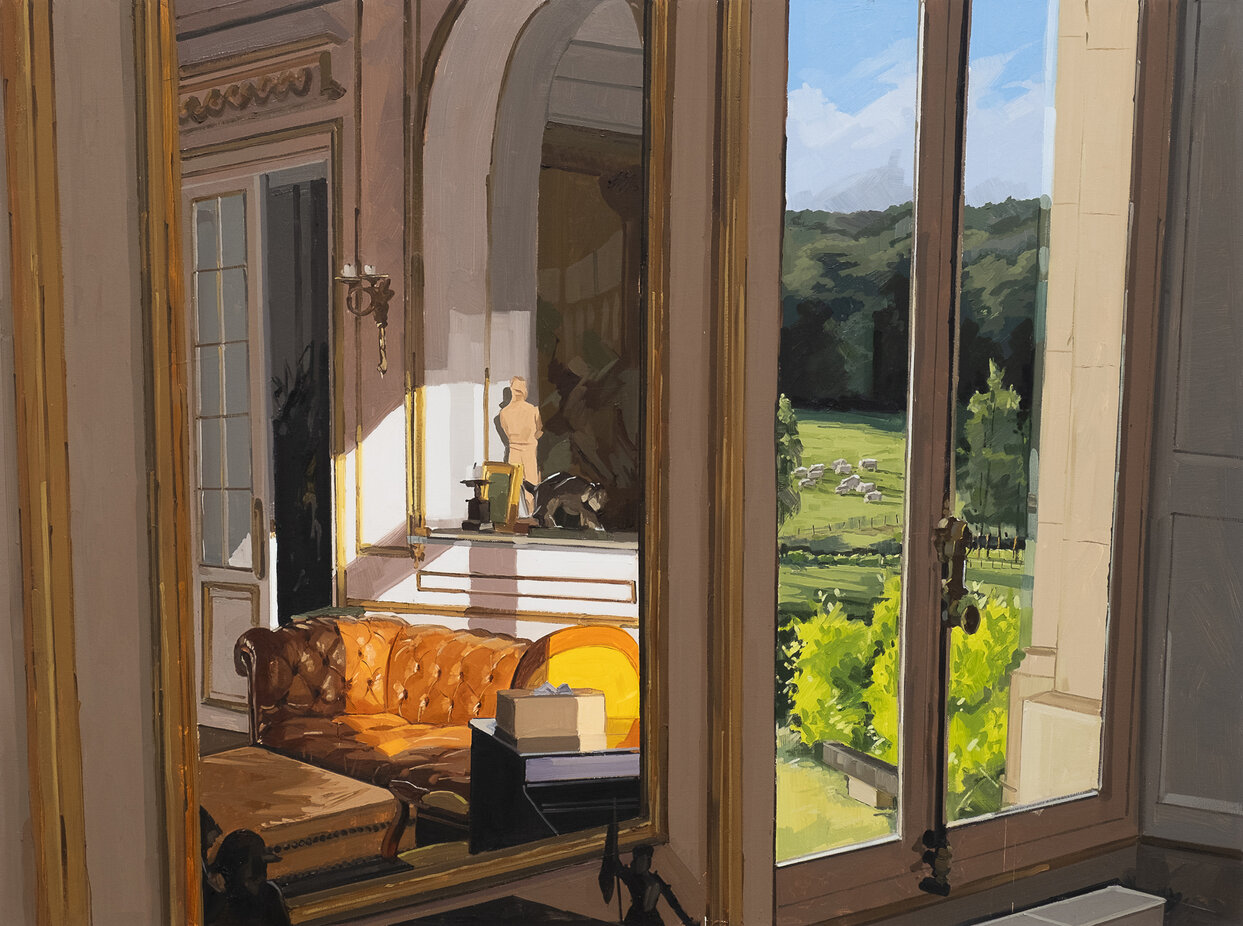
    With Chloe Chlumecky’s View from the Window exhibition, the outside and inside meet at the intersection of doorways, doors, and windows. This installation captures the universal experience of being somewhere new. In these works, the sun’s presence settles on nearly all interior surfaces, influencing inside spaces to become something spectacular.

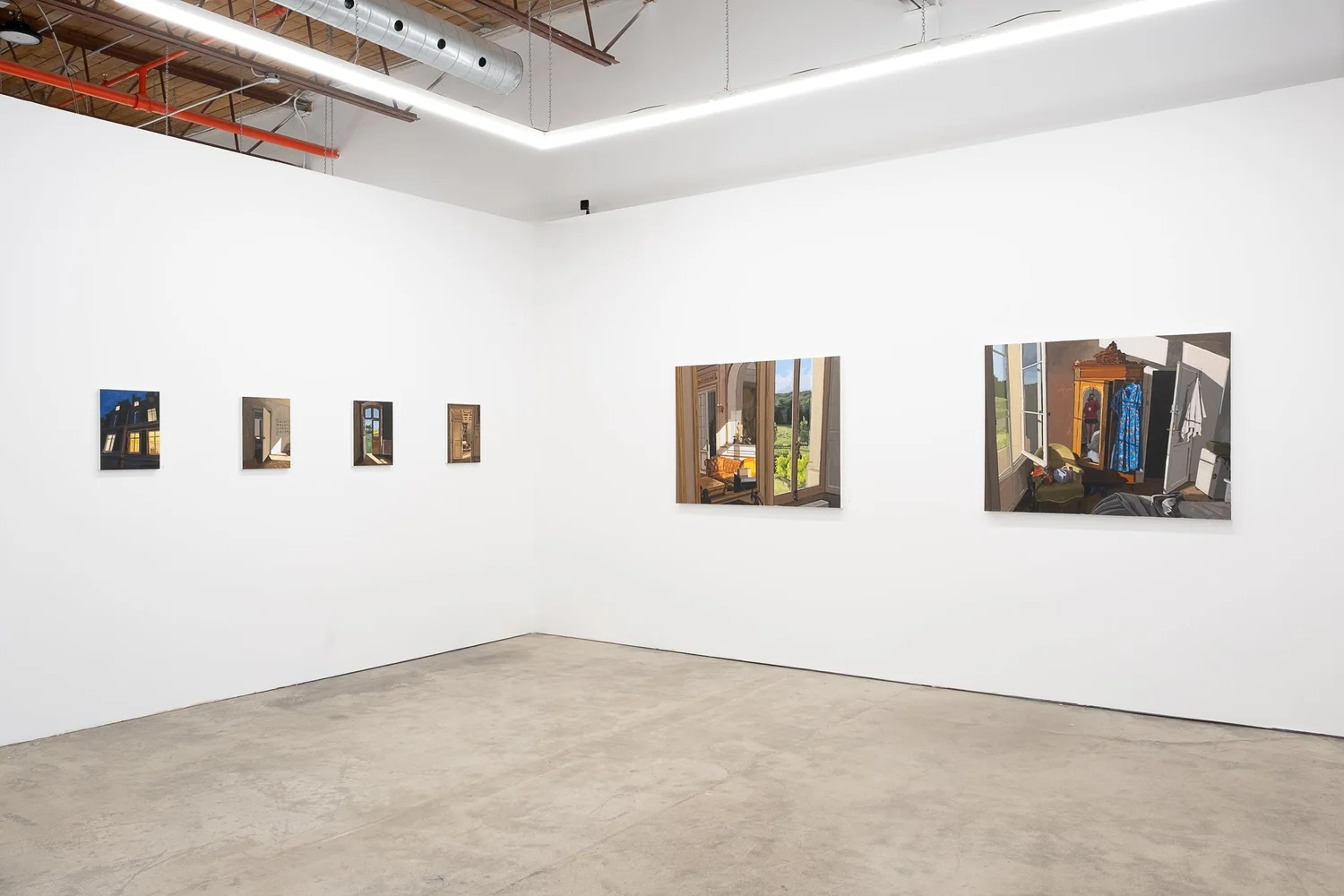
    When entering the Dianna Witte Gallery, I was immediately welcomed by the fourteen paintings that share Chlumesky’s summer memories. Every painting highlights the space and information shared through these openings between walls. A door, doorway, or window enables light and greenery to enter an interior space, and the rendering of such elements is done with precise consideration. Chloe Chlumecky’s artistic presence is deeply felt in every area she inhabited. As all the doors are depicted ajar, I feel invited into the scene and am curious to find out what is waiting in the next room. Every work provides a sense of the space within, as well as the space beyond. The use of sunlight, contrasting against shadows, is present on nearly every surface of the rooms and clearly demonstrates the powerful relationships seen between the outside and the inside. Overall, these works remind us that even when we are inside a house, we are constantly being touched and influenced by the outside environment.

    Installation view of Chloe Chlumecky’s View from the Window at the Dianna Witte Gallery

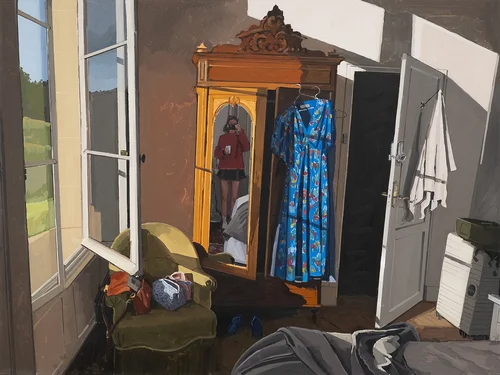
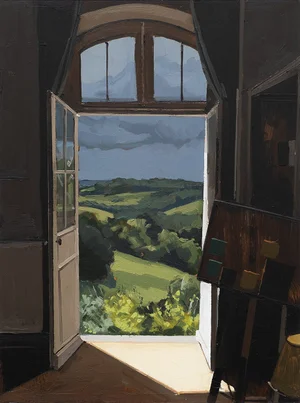
    Apart from the wonder that Chloe Chlumecky depicts through her paintings, the feeling of comfort is brought to life through her use of texture. In every painting I was able to notice the deliberate brushstrokes upon the canvas that adds definition. Photographs do not capture all the textures and brushstrokes of Chlumecky’s work; it is something you must experience in person. I was especially captivated by the gorgeous brushstrokes seen in her works: self- portrait in wardrobe, chateau after hours, morning in my bedroom, and my studio light.

    self-portrait in wardrobe, 2026, oil on canvas, 36 x 48 inches

    The carving of the doors, the landscapes, the window frames, and the drapery present in her paintings are organic and elegant. The elements of everyday life appear so familiar. While Chlumecky also provides close-ups of some scenes, no two works read the same because they all reveal new details about her spatial experiences. The more time I spent alongside the paintings, the more I felt fascinated by stories of adventures in the French countryside and the more I felt enveloped by a complete sense of curiosity and happiness.

    oquevaux view, 2026, oil on panel, 16 x 12 inches

    Capturing the impression of light in space is not easy. In this exhibition, each marking of sunlight adds an unexpected geometry to the room. The imprint of sun is time specific. These details, like depicting the transition of light from the outside to the inside walls and floors, show how graceful a special moment can be.

    my studio light, 2026, oil on panel, 16 x 12 inches

    Chlumecky’s paintings act as a window into her memories, and they tell her story through features that can often be overlooked. Windows and doors are not barriers to the outside, instead they are tools that allow us to bridge two worlds together. Nature and its influence is ever-present through all her works, reminding us how nature plays a big part in our lives. Through the French-style furniture, floor tiling, wardrobes, gold ornamentations, and displays of food, it was so easy to understand the joy of the artist’s experience in nature.

    view from the window, 2026, oil on canvas, 36 x 48 inches

    Chloe Chlumecky’s paintings celebrate being an artist and finding the striking beauty of one’s surroundings.

    Angie Ospina

    Images are courtesy of the Dianna Witte Gallery.

    *Exhibition information: Chloe Chlumecky, View from the Window, September 17 – October 10, 2026, Dianna Witte Gallery, 1122 Dundas St. East, Toronto. Gallery hours: Wed – Sat 12 – 6pm.

  • Ron Shuebrook at the modern.toronto

    Ron Shuebrook at the modern.toronto

    The city of Toronto has reason to celebrate with the recent opening of a beautiful new exhibition space downtown, called ‘the modern.toronto’. It is not a commercial gallery, but rather is funded independently. Indeed, it is more of a museum than a gallery. Its stated mission is to showcase non-objective abstract art, otherwise known as abstract expressionism. This genre, as their website points out, began soon after World War II. That is a long time ago now, prior to the living memory of all but a few. So one might ask: isn’t its mission somewhat anachronistic? I’ll get back to that presently.

    The gallery is spacious and light and is divided into two exhibition areas – one at the front of the building, and a larger space located at the back. Today I’ll talk about the works displayed in the rear space. These are ten abstract paintings by the venerable artist and educator Ron Shuebrook who, among many other roles, served as president of the Ontario College of Art and Design between 2000 and 2005. He currently resides in Guelph. For decades he has been represented by Olga Korper Gallery.

    L-R: Ron Shuebrook, Untitled (Contested Territories Series#2), Towards the Light and Black Mountain, Blue Monkeyrope, both 2021,  84 x 48 inches

    It would be hard to find a living artist with more of a pedigree that aligns with the modern.toronto’s mission. Born in Virginia Shuebrook studied visual arts and then for an M.Ed in art education at Kutztown University, Pennsylvania. From the mid-1960s to the early 1970s, through scholarships and a teaching assistanceship, he came into contact with many luminaries at the time, including Leon Golub, R.B. Kitaj, Robert Motherwell, Myron Stout and Fritz Bultman.

    Ron Shuebrook, Untitled, 2021, 84 x 48 inches

    Shuebrook’s accomplishments, in terms of where he has taught since moving to Canada and the number of public and private collections that have his work, are too numerous to list here. But what of his paintings themselves? The works on display were done in 2021, bar two works dating from 2015 and 2019 – distinguishable by their slightly smaller scale. Most are large, measuring seven feet high and four feet across. They are acrylic on canvas.

    L-R: Ron Shuebrook, Tower, Untitled and Untitled, both 2021, acrylic on canvas, 84 x 48 inches

    While all the paintings betray Shuebrook’s preoccupation with the formal qualities, with their emphasis on the division of the picture plane and colour, some appear to possess a narrative element. For example, his Tower (2021) suggests the tragedy of 9/11. Indeed, Shuebrook speaks of being influenced in another painting, for instance, by his reading of Melville’s Moby Dick. These large paintings, predominantly in blue and black, are compositionally complex and remind me in this respect of some of Richard Diebenkorn’s abstracted landscapes.

    Ron Shuebrook, Tower, 2021, 84 x 48 inches

    The tightest and most accomplished works in the show are his three grid paintings. Parsimonious in their palette, the edges become integral to their composition. In this regard, they are entirely self-contained. The combination of geometry and gestural brushwork is masterful. To the extent they are purely abstract they are paradigms of non-objective painting in the way originally championed by Wassily Kandinsky in the early twentieth century. Kandinsky saw reality as divided into two – the external material world and the spiritual inner world. In his theories and through his paintings he aimed to ‘paint music’, which he saw as the epitome of a spiritual artform. What I see in Shuebrook’s work is an attempt to paint, if not consciously or intentionally, music reminiscent of that of minimalists like Philip Glass and Steve Reich, who coincidentally are Americans of the same generation as Shuebrook. The grid paintings are repetitive, restrained and enchanting in the manner of Glass’s and Reich’s music.

    Ron Shuebrook, Untitled (black, grey, red, yellow), 2019. Acrylic on wood panel, 40 x 30 inches

    Kandinsky’s division between objective and non-objective art has been stressed in particular by American art theorist and critic Donald Kuspit, who indeed has written a brief endorsement of the modern.toronto and its mission, that appears at the bottom of its website’s homepage. Kuspit lays out his thesis in detail in his book The End of Art. There he essentially argues that commercialism and the growth of the entertainment industry have turned what we call ‘art’ into a consumer product – one that is devoid of spirituality, of any quality that transcends the banal material world. Further, non-objective art is by nature spiritual, and so is a genre that resists what Kuspit sees as the emptying of art, which is now best decribed as ‘postart’. The modern.toronto’s owner, Ben Woolfitt, in agreement with Kuspit, holds that there is an obligation to champion non-objective art, as the works of this genre still have genuine intrinsic worth, independent of any financial considerations.

    Installation view of Ron Shuebrook, Selected Paintings at the modern.toronto

    Finally, we come back to the question of whether the modern.toronto’s mission is anachronistic. In many respects abstract painting in general is flourishing. And abstract expressionism in the broadest sense is still practised by many artists, as the shows at modern.toronto attest. But one cannot help but notice that almost all these artists are senior, belonging to a generation that has grown up with abstract expressionism. It is less clear whether the genre will survive over the decades as these artists die out. Let’s hope it does.

    Hugh Alcock

    Images are courtesy of the modern.toronto

    *Exhibition information: Ron Shuebrook, Selected Paintings, September 12 – 27, 2026, the modern.toronto, 230 Niagara Street, Toronto. Gallery hours: Sat – Sun 12 – 5pm.

  • William Ronald Radical

    William Ronald Radical

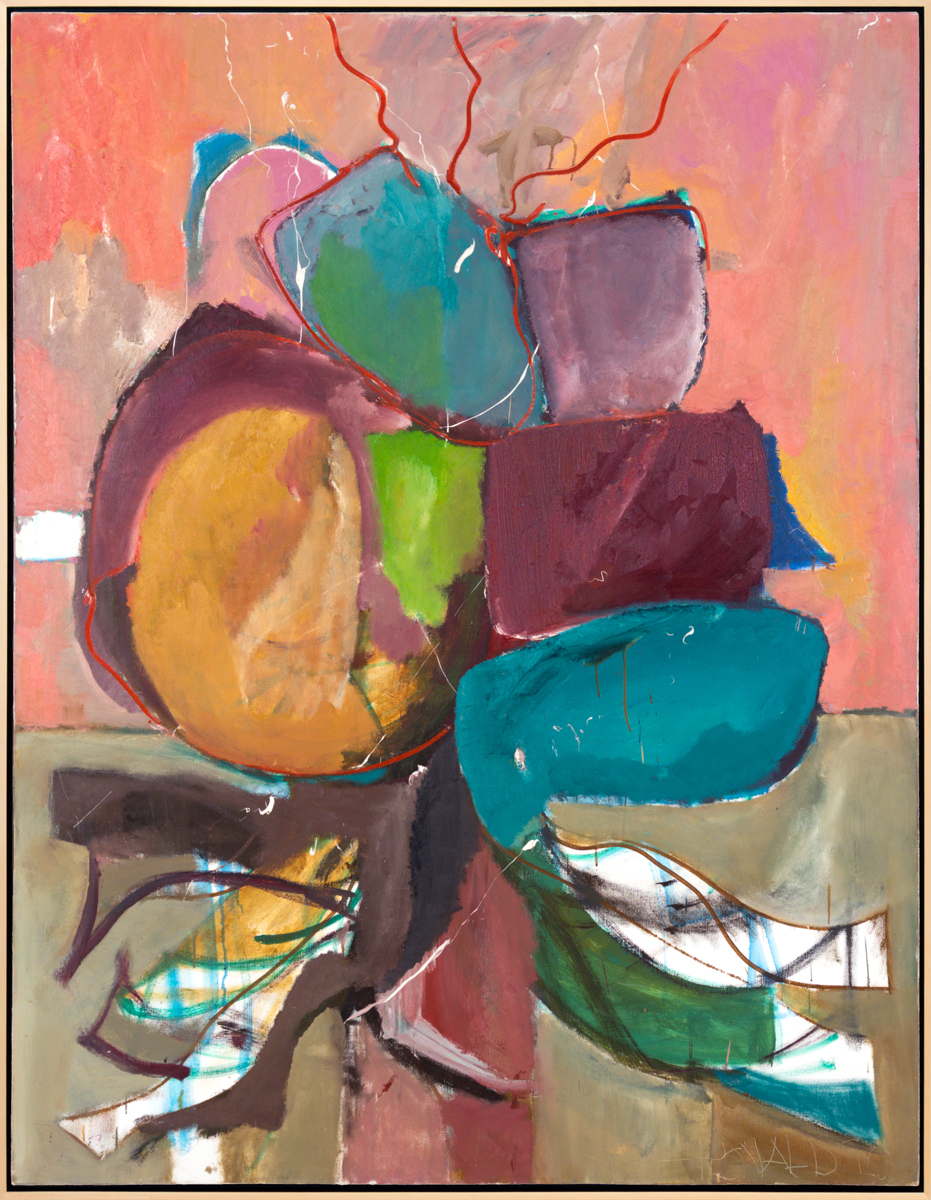
    William Ronald, a founding member of Painters 11, was a prominent Canadian abstract expressionist painter who would have celebrated his centenary this year. In honour of this milestone, the Christopher Cutts Gallery and the modern.toronto are hosting an exhibition showcasing his artwork to commemorate what would have been Ronald’s 100th birthday.

    Who is William Ronald and why is he so important to Canadian art?

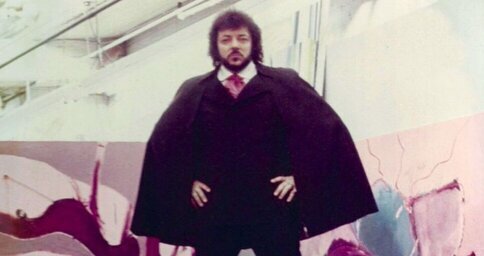
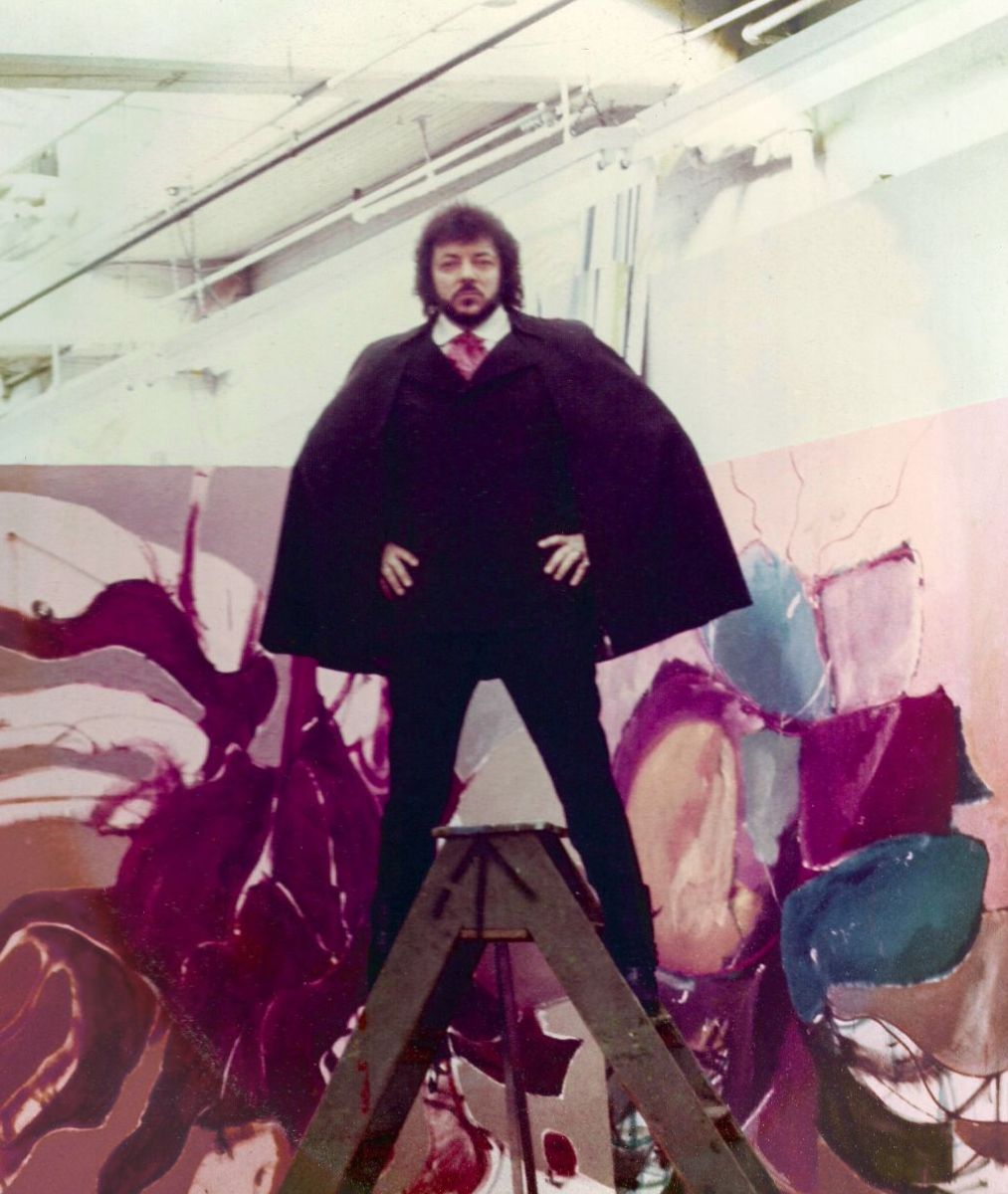
    William Ronald in his studio, 1970 in front of Altar, 1970, oil on canvas, 78 x 60 inches. Courtesy of the Christopher Cutts Gallery

    Many art historians, critics, and collectors alike call him one of Canada’s most critically acclaimed and internationally successful artists emerging in the 1950s. He was born William Ronald Smith in Stratford, Ontario in 1926.

    William Ronald, Opus No. 3, 1963, oil on canvas, 36 x 42 inches. Private collection

    Ronald graduated from the Ontario College of Art in 1951 and then went to New York to study with Abstract Expressionist Hans Hofmann. Upon his return to Toronto, in a landmark exhibition, Painters Eleven was formed in 1953.  The group was accredited with bringing avant-garde American abstract expressionism into the mainstream Canadian art scene.  Ronald is best known for the crucial role he played in establishing this highly influential group.

    William Ronald, Altar, 1970, oil on canvas, 78 x 60 inches. Courtesy of the Christopher Cutts Gallery

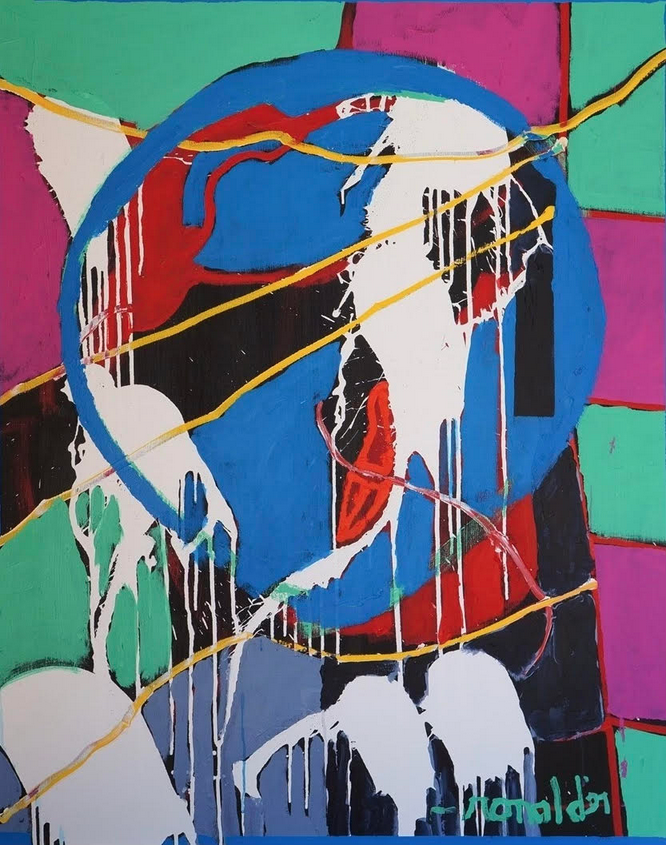
    Ronald was a flamboyant character with a love for the dramatic. He loved to paint in public, frequently hiring strippers and showgirls to dance around him as he painted. He was incredibly prolific creating large-scale, explosive abstract expressionist paintings that disrupted the traditional Canadian art market. His work evolved significantly over his career, shifting from raw, textured gestures into structured colour blocks, along with ambitious public murals. He became internationally famous for creating the central image style within abstract expressionism. Rather than scattering detail across the entire canvas, his paintings featured a singular, highly energetic focal point surrounded by aggressive brushstrokes.

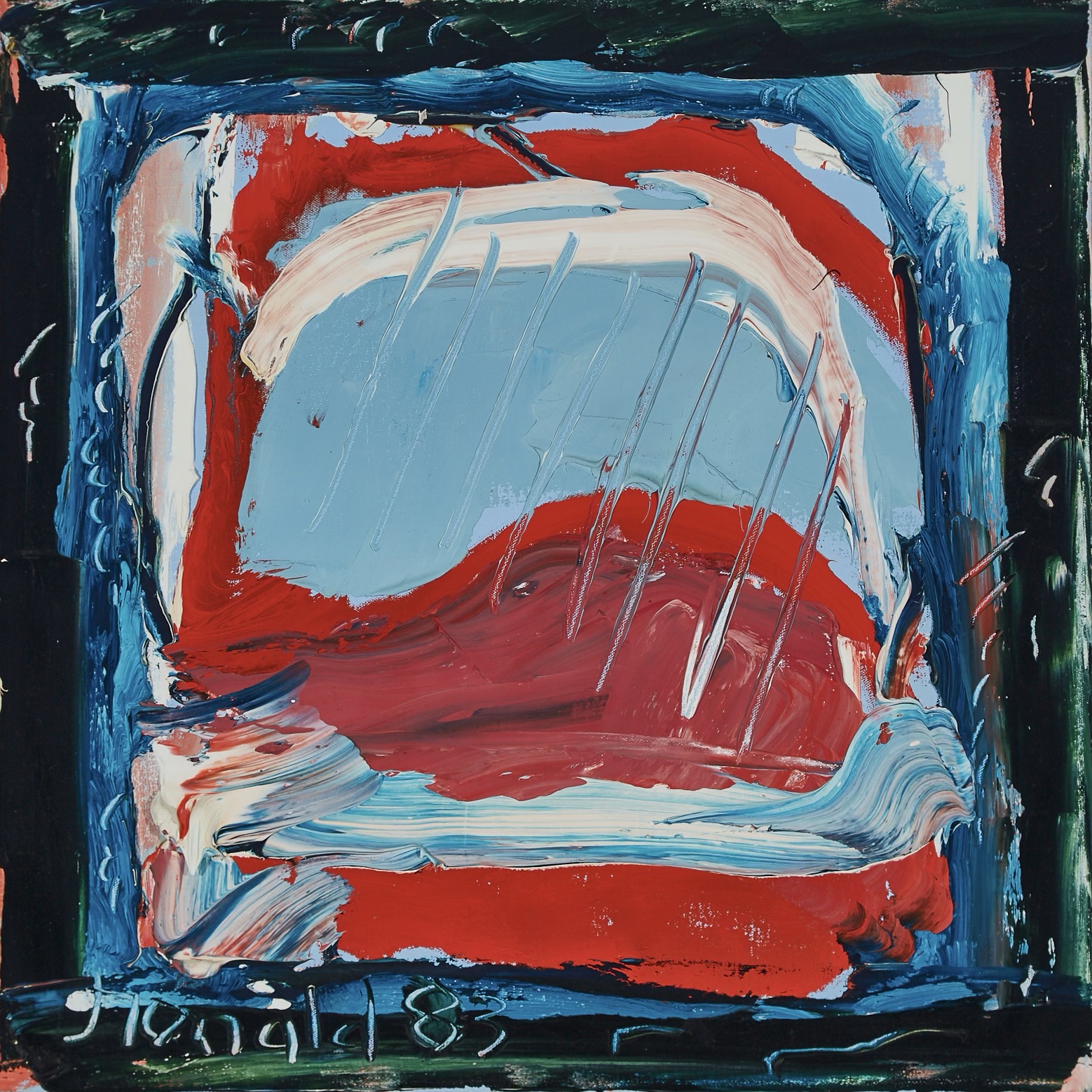
    William Ronald, Wellfleet Harbour, 1983, oil on canvas, 20 x 20 inches. Private collection

    Ronald moved back to NYC and eventually became an American citizen. He shared a studio with Frank Stella and joined the stable of artists at Manhattan’s Kootz Gallery. He was accepted by critics and collectors and enjoyed a period of success. Eventually, Ronald returned to Toronto and continued with his career that included work for CBC, CTV and CityTV as the host of a variety show. He continued to paint through the 1970s, ’80s and ’90s, moving to Montreal and then to Barrie, Ontario where he maintained an active studio.

    William Ronald, Jamine, 1997, acrylic on canvas, 48 x 36 inches, inscribed on verso “first painting executed at 21 Dunlop St. Barrie”. Private collection

    He continued to work until his death in 1998 when he suffered a heart attack while painting. However, he lived long enough to name the work Heart Attack.

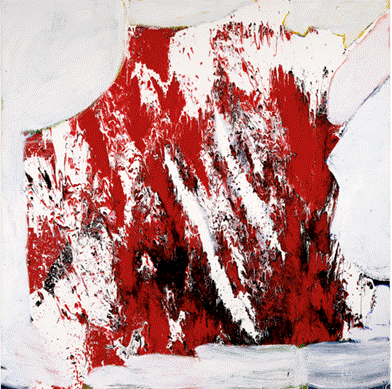
    William Ronald, Untitled, 1997, acrylic on canvas, 72 x72 inches. Recognized as one of Ronald’s final work. Courtesy of the Christopher Cutts Gallery

    Ronald won the International Guggenheim Awards, Canadian Section in 1956, and was part of the National Gallery of Canada’s Second Biennial of Canadian Painting in 1957.  In 1977, he was awarded a Canada Councils senior arts award to pursue his Prime Ministers project. He gained some notoriety for his portrait series of Canadian Prime Ministers, abstracted portrayals of heads of government opened by Prime Minister Pierre Trudeau in Toronto. The exhibition toured Canada. These works are in the permanent collection of the Kitchener-Waterloo Art Gallery in Kitchener, Ontario.

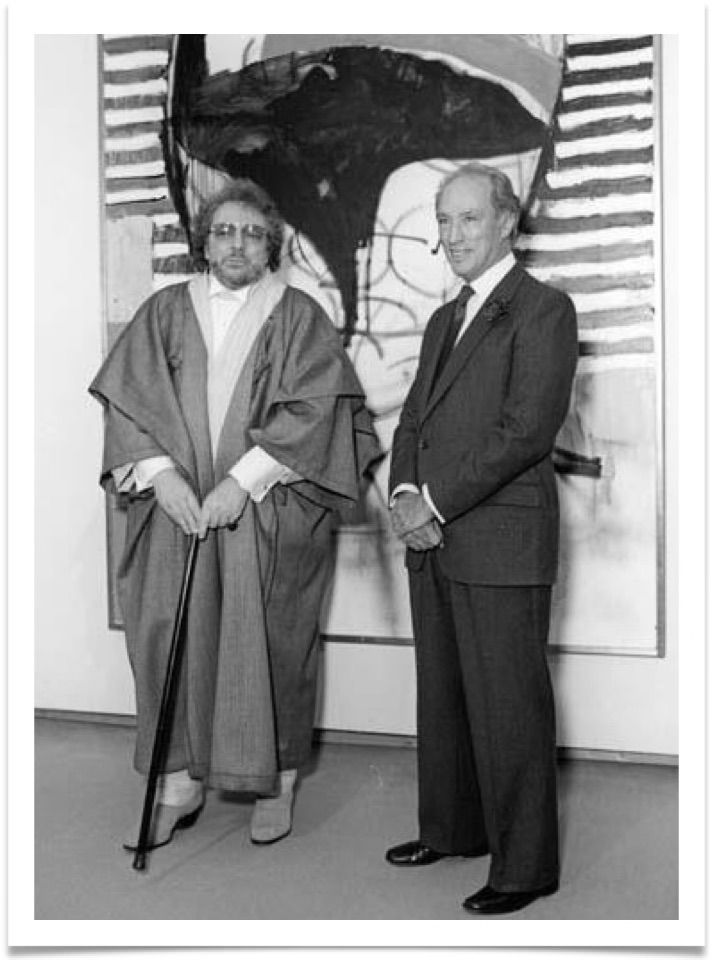
    1984 media photograph capturing Canadian abstract painter William Ronald standing alongside then-Prime Minister Pierre Elliott Trudeau in front of Ronald’s vibrant, non-representational portrait of the politician

    The Christopher Cutts Gallery is hosting the exhibition from September 10th to October 10th, showcasing a selection of works spanning from the 1950s to the 1990s, including one of the artist’s final pieces that encapsulates his extensive creative journey. Cutts’s connection with William Ronald began serendipitously when Ronald entered the gallery, acknowledging his status as a member of Painters 11 with the declaration, “I’m here.” This encounter led to Ronald being represented by the Cutts Gallery. Ronald is a significant figure in the art world, with his works featured in major museum collections across North America, including The Museum of Modern Art (MOMA), the Solomon R. Guggenheim Museum, and The Whitney Museum of American Art, as well as numerous Canadian institutions such as the National Gallery and the Art Gallery of Ontario. A standout piece in the exhibition is titled September, a 1961 oil on canvas from the Rockefeller collection, measuring 60×50 inches, which was acquired from the Kootz Gallery in New York City. Additionally, the exhibition will include an Untitled painting from 1997, an acrylic on canvas measuring 72×72 inches, recognized as Ronald’s final work.

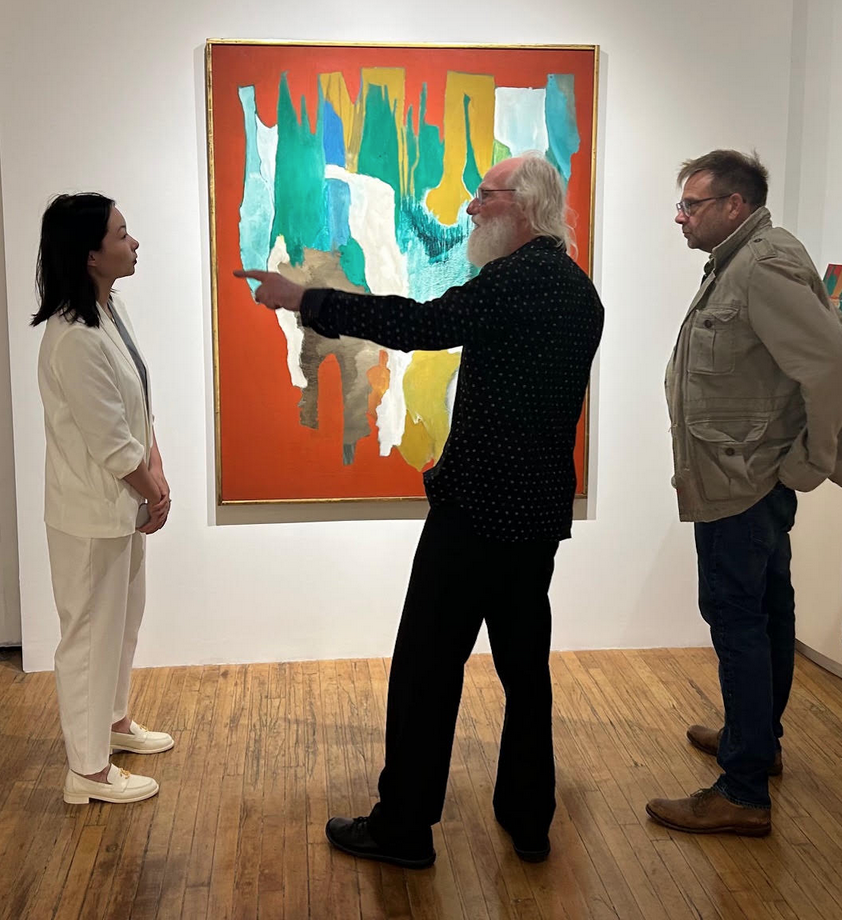
    Rayvin Chow, Christopher Cutts, and Michael Adamson are positioned before a 1961 oil on canvas 60 x 50 inches artwork entitled “September,” in conversation about the William Ronald paintings currently on display.

    The modern.toronto, will also host an exhibition commemorating the 100th anniversary of Ronald, showcasing works from private collections starting October 24th through to the end of November. This exhibition, curated by Lawrence Brissenden, who is currently cataloging Ronald’s extensive body of artwork. The William Ronald Authentic Inventory (WRAI), currently Version 5 catalogue raisonné project, highlights the artist’s remarkable contributions. Ronald, unquestionably the most flamboyant member of the Painters 11 group, produced a vast array of works, each accompanied by intriguing narratives from his life. Notably, he would often inscribe messages on the backs of his canvases, such as on his 1997 painting titled Jasmine, an acrylic on canvas measuring 48×36 inches where he inscribed “first painting executed at 21 Dunlop St. Barrie”. 

    Furthermore, Ronald will be historically acknowledged as one of Canada’s most prominent abstract expressionist artists, bringing abstraction to the forefront in the country. The exhibition at the Christopher Cutts Gallery, along with the forthcoming exhibition at the Modern Toronto Museum, represents a significant historical showcase, allowing viewers to experience a concentrated collection of works by the master William Ronald. These exhibitions are essential additions to any art enthusiast’s bucket list.

    Roy Bernardi and Jennifer Leskiw

    *Exhibition information: William Ronald “THE GREAT”, September 10 – October 10, 2026, Christopher Cutts Gallery, 21 Morrow Ave, Toronto. Gallery hours: Tue – Sat 12 – 6pm.

  • The Toronto Biennial of Art 2026

    The Toronto Biennial of Art 2026

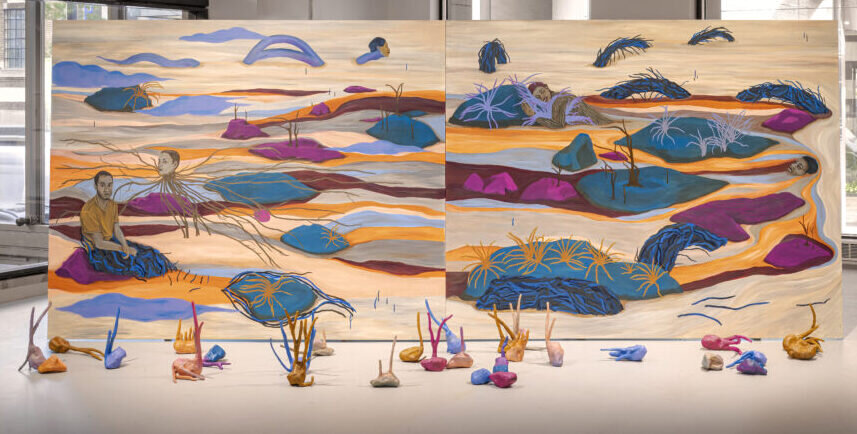
    Installation view of TBA with Tessa Mars, All Islands Touch, 2024. Photo: Toni Hafkenscheid

    The Toronto Biennial of Art (TBA), under the continued direction of Founding Executive Director Patrizia Libralato, opens with an extensive programming schedule for its fourth edition, titled Things Fall Apart. Running from September 26 to December 20,
    2026, the 12-week city-wide exhibition features works by over 30 artists and collectives, including 16 new commissions.

    Curated by Allison Glenn, Things Fall Apart is anchored by a central question: What can we learn from artists who explore rupture as an ontological tool or a way of understanding? Relying on the shared geographies of the Great Lakes as a place of departure, TBA 2026 also traces expansive, interconnected relationships between over twenty international waterways, trade routes, and voyages spanning five continents. The dialogue that emerges between these global waterways and trade networks expands upon an inquiry into waterways first seeded by the 2019 Biennial, which looked specifically at Toronto’s geographies.

    To explore these themes and geographical frameworks, the edition unfolds in three distinct parts: a central exhibition grounded in methodologies of collectivity, sovereignty, reflection, and refusal; a series of performances and artist-led programming that invites embodied engagement with these practices; and a collaboratively curated gathering in the form of a convening in three acts: An Arrival, A Grounding, A Departure. TBA 2026 opens with a weekend of performances and engagements, as well as the release of its exhibition catalogue, Things Fall Apart: Notes on Rupture.

    For more information please click here.