
Organized by the Orkid Gallery, artists, vendors, and musicians united at Avant Garde Gallery’s spacious halls over the weekend and reflected on what the Silk Road contributed to the culture of many Eurasian countries. The trade of silk and other goods heavily influenced the art of that time, creating a vibrant exchange not only of goods but artistic expressions and philosophical ideas. This two-day celebration continued the first two-day festival held November 9th, 2024.
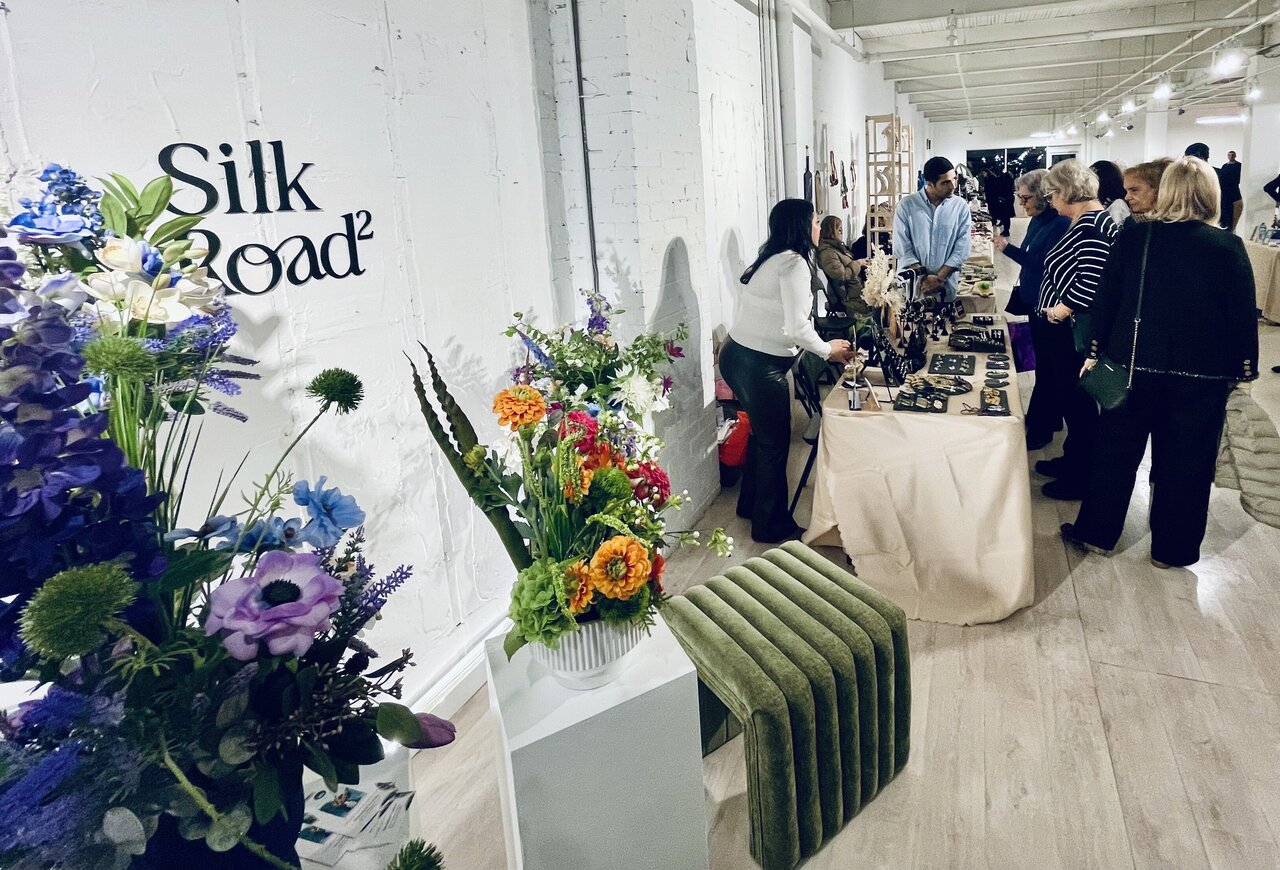
The Silk Road was a powerful engine of multicultural exchange, connecting the diverse civilizations of Persia, China, India, and Rome. Persian culture, situated strategically at the crossroads of these routes, served as a vital mediator, blending artistic styles, religious traditions, and technologies of Eurasia. This vibrant, cross-cultural heritage resulted in a dynamic synthesis, visible today in everything from shared artistic motifs and architectural styles to cuisine and shared linguistics.
The ceramic work, titled The Bearer of Peace and Friendship demonstrates the exhibition’s concept. Maryam Mirmohammad Khani’s design has a greater purpose than you might think. When used, it brings two people together (often warriors and kings) to drink from the same vessel cheek to cheek. The bull-shaped feature may suggest strength and authority, as in a strong unity of nations.
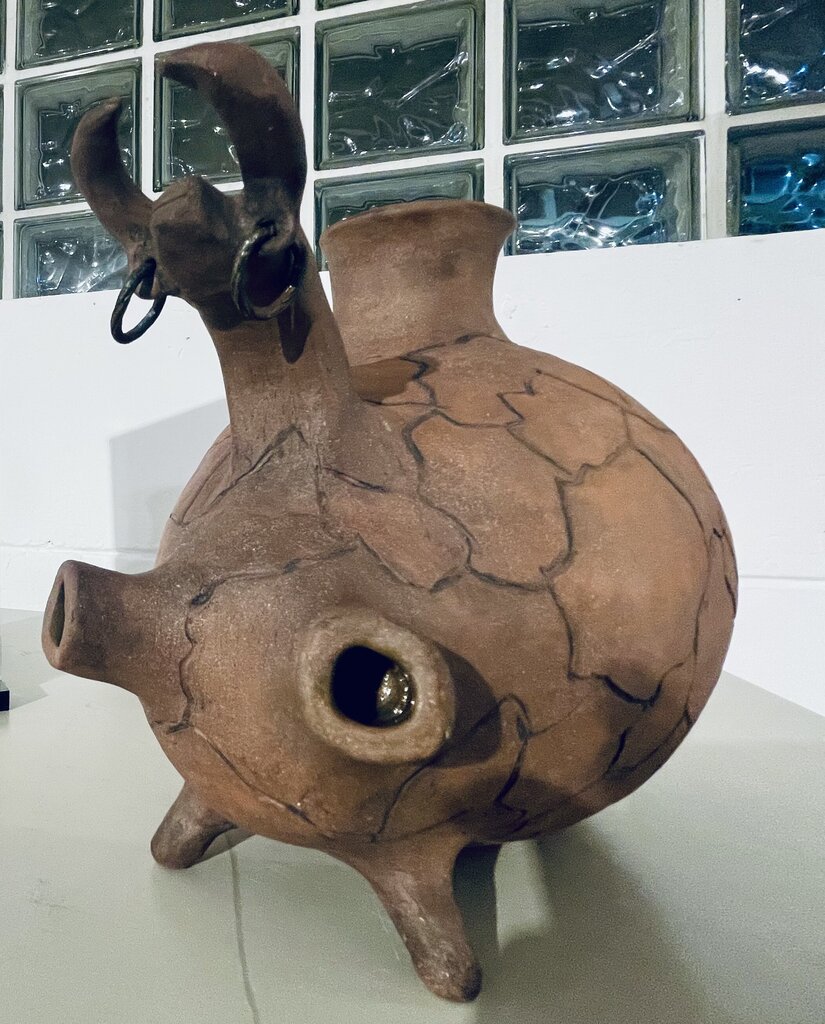
Maryam Mirmohammad Khani, The Bearer of Peace and Friendship, 2024, hand-built stoneware clay, kiln-fired, H 22 cm x W 18 cm x D 26 cm.
The bull has been a potent symbol of vitality in early civilizations. Bull-shaped vessels, or ceramics decorated with bull horns/heads, were often used as ritual objects, representing divine power and protection against enemies and evil spirits. The Silk Road was known to be dangerous and deadly. It was also a meeting place where peaceful nations shared their food and stories; a reminder that despite all the wars, people have always found calm days when they could connect to each other.
Vendors and artists have brought a diverse collection of ceramic works, filling the space with royal colours, ancient practices and decor. After all, ceramics were not just traded objects but a record of artistic and technological fusion, a fashionable always-in-season design.
Ebrin Bagheri’s works caught my eye and imagination. Writing about his piece Untitled, Bagheri posted on Instagram (translated), “This work can be a reflection of the condition of modern man; a man who appears masked in society trapped between his true nature and his visual image.” The ornate blue dress symbolizes the social compulsion for acceptance, while the unicorn head is used as a metaphor for dreams, imagination and secret identity.
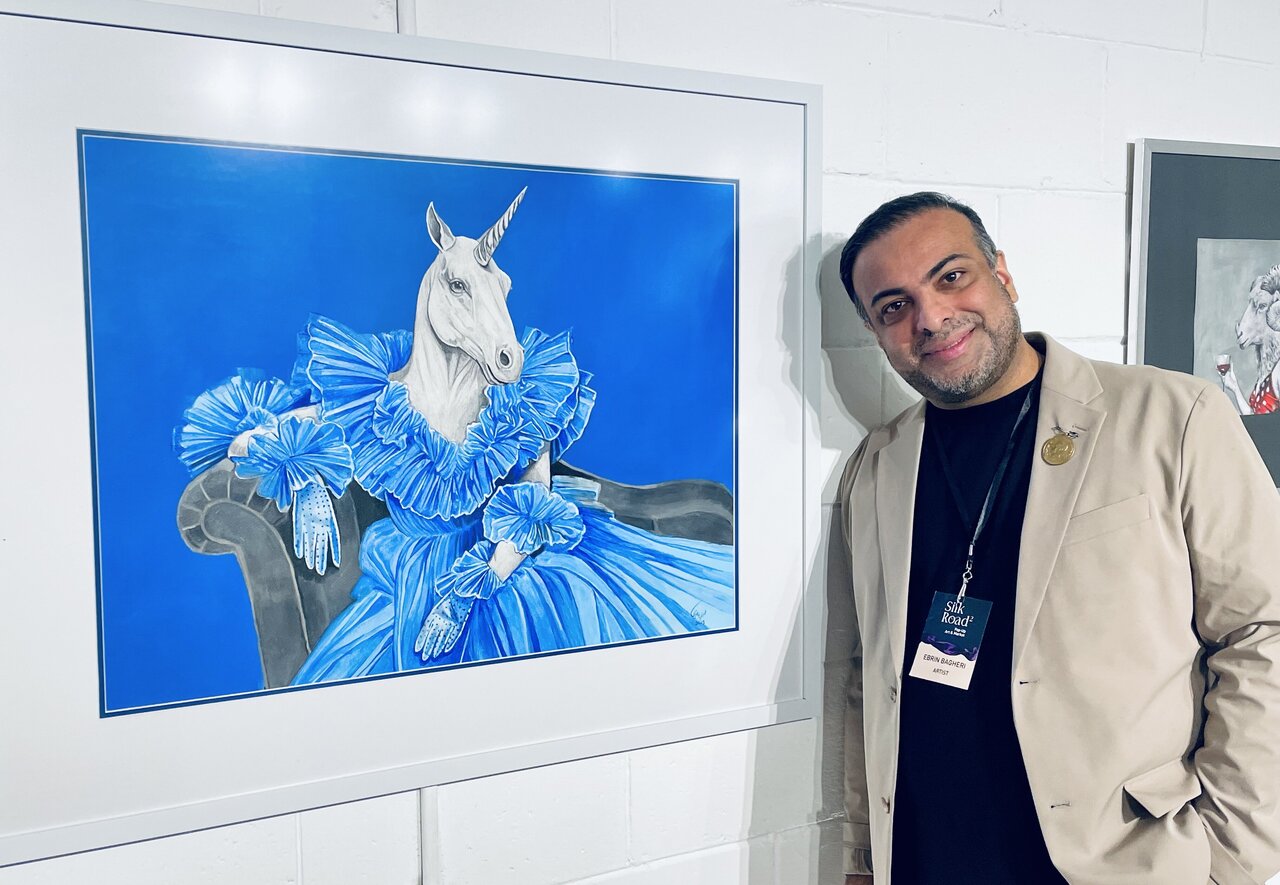
Ebrin Bagheri with his work, Untitled from the Inward series, 2025, 23 x 30 inches
Then Bagheri continues, “What is more real? What we show to the world or what we feel inside?” Bagheri sees his work as a poetic critique of the modern world, where appearance overcomes truth, and everyone is forced to hide his identity to survive. In another piece from his Inward Series, a ram’s head symbolizes a powerful combination of strength, struggle, and heroism. The headstrong and beautiful ram-headed woman wrapped in a red dress, suggests that, eventually, we can overcome everything.
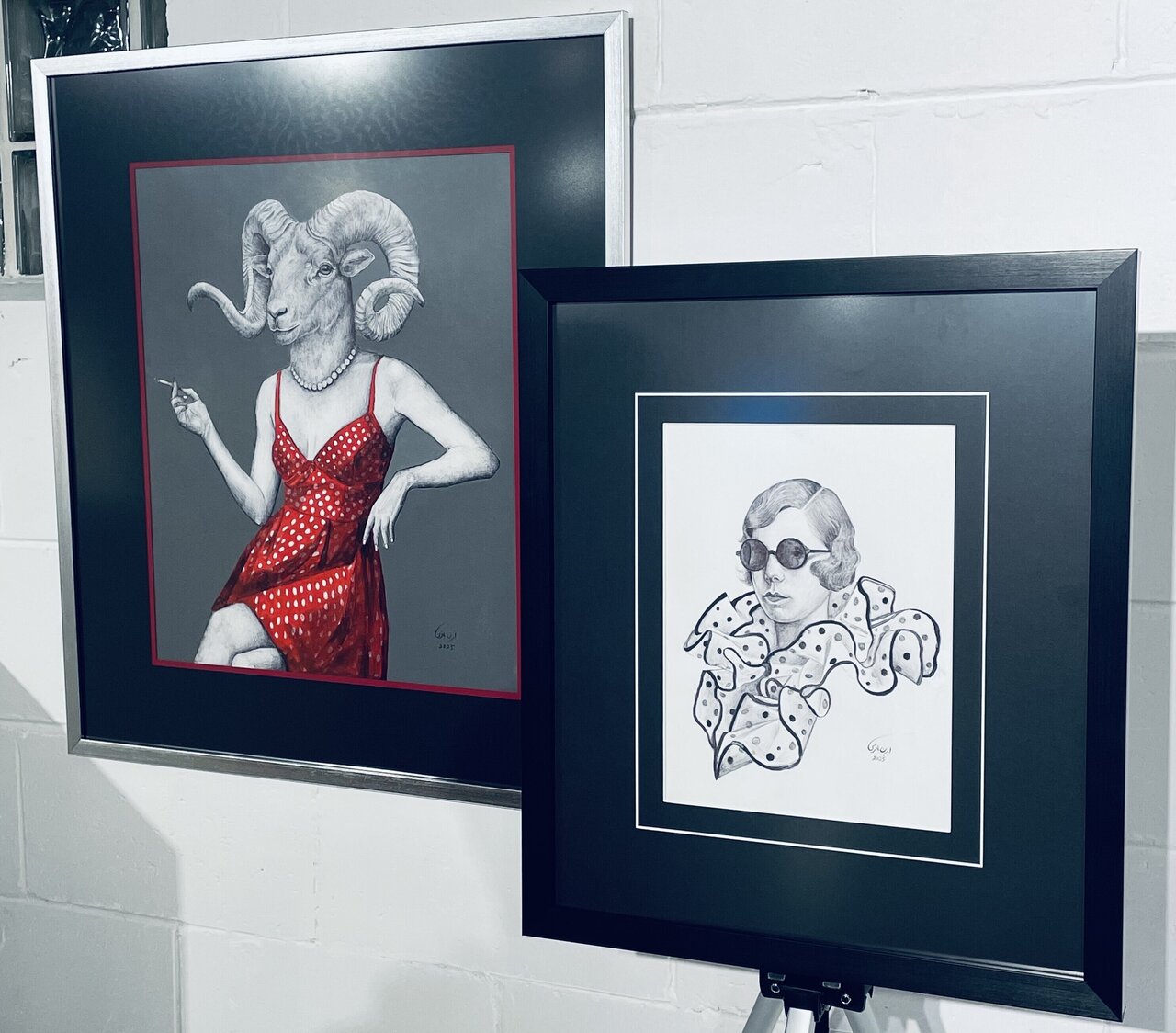
L- R: Ebrin Bagheri, Untitled from Inward Series, 2025, ballpoint pen, acrylic on Stonehenge paper, 18 x 24 inches; Untitled from Poke-a-dots Series, 2025, ballpoint pen on paper, 13 x 9 inches.
Text and photo: Polyna Alexseev
*Exhibition information: Silk Road 2 / Organized by Orkid Gallery, November 22–23, 2025, Avant Garde Gallery, 218 Merton St, Toronto.