
Slowness is the priority in Shelagh Keeley’s Film Notebooks; the films stimulate an unhurried and leisurely sense of appreciation. In a world that values immediacy, the patience and tranquility in Keeley’s film is both important and greatly appreciated. Keeley filmed a Zen Garden in Kyoto, Japan, The Colonial Garden in Lisbon, Portugal, a desert oasis in Las Vegas and the largest European zoological-botanical garden in Stuttgart. When I visited the gallery, I saw the Zen Garden and The Colonial Garden. While both films exude a different energy and story, they converge in the gentle demeanor of their exploration. As visitors approach the installation, they become engulfed in darkness as the video plays in front of them. The artist, the viewer, and the camera almost become one through this experience; in these moments of slowness, they all look through the same lens.
The sets of booklets that welcome visitors as they approach the screening rooms offer more information on Keeley’s process and story. They include sketches, books, notes, photographs, and paintings all related to the videos inside. It offers visitors insight into what happens prior to the creation of Keeley’s art.
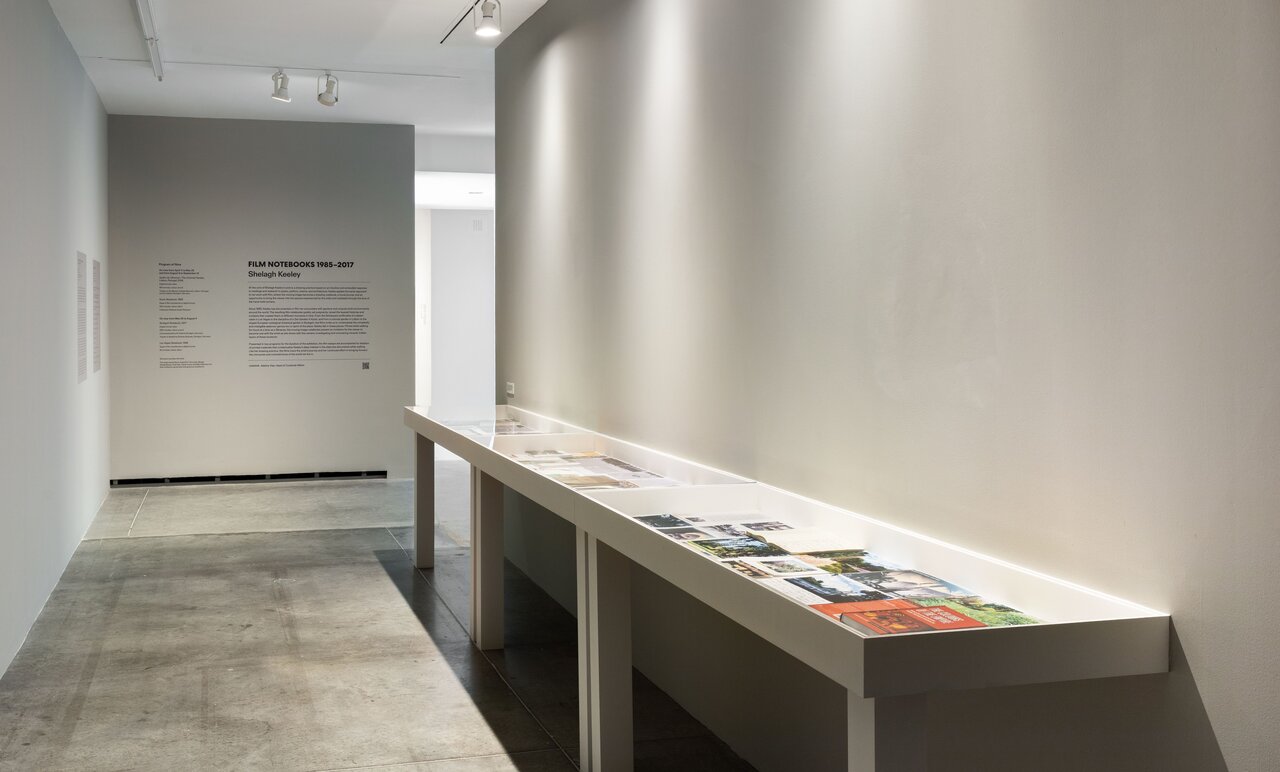
Shelagh Keeley, Film Notebooks 1985-2017, 2025. Installation view: The Power Plant, Toronto, 2025. Photo: LF Documentation.
The first of the two videos takes place in the Zen Garden in Kyoto, Japan. This is the first film Keeley ever shot. A sense of nostalgia floods the video. The film is full of a childlike wonder, marvelling and obsessing over all the small details of the garden. The camera travels through every texture and environmental elements found in the garden: rocks, soil, wood, plants and more.
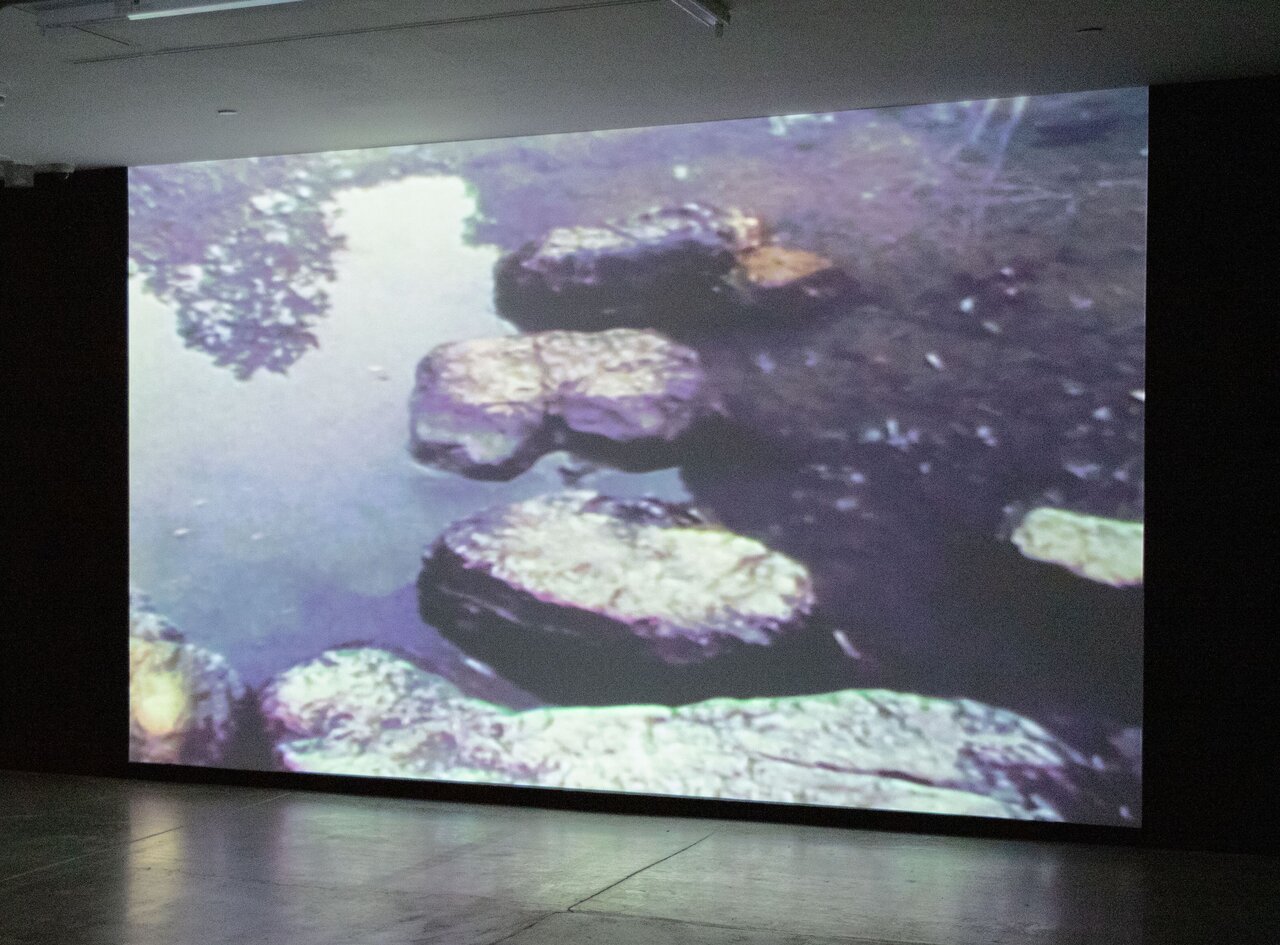
Shelagh Keeley, Kyoto Notebook, 1985. Super 8 film transferred to digital format. 108 minutes, colour, silent. Collection Peabody Essex Museum. Installation view: Film Notebooks 1985-2017, The Power Plant, Toronto, 2025. Photo: LF Documentation.
The work draws visitors into the garden. The film is quiet; the artist and the images are the only company we have. The camera moves slowly in and out of focus, it zooms in, zooms out, in and out; so viewers become entranced in this cycle. And at the end, a strong white light flashes us out of the calm and gentle garden. It is an experience that requires patience and attention. If you can give the artwork the time it needs, you are rewarded with a sense of culture involving luscious and tranquil spaces. It feels like an ephemeral moment in the Zen Garden.
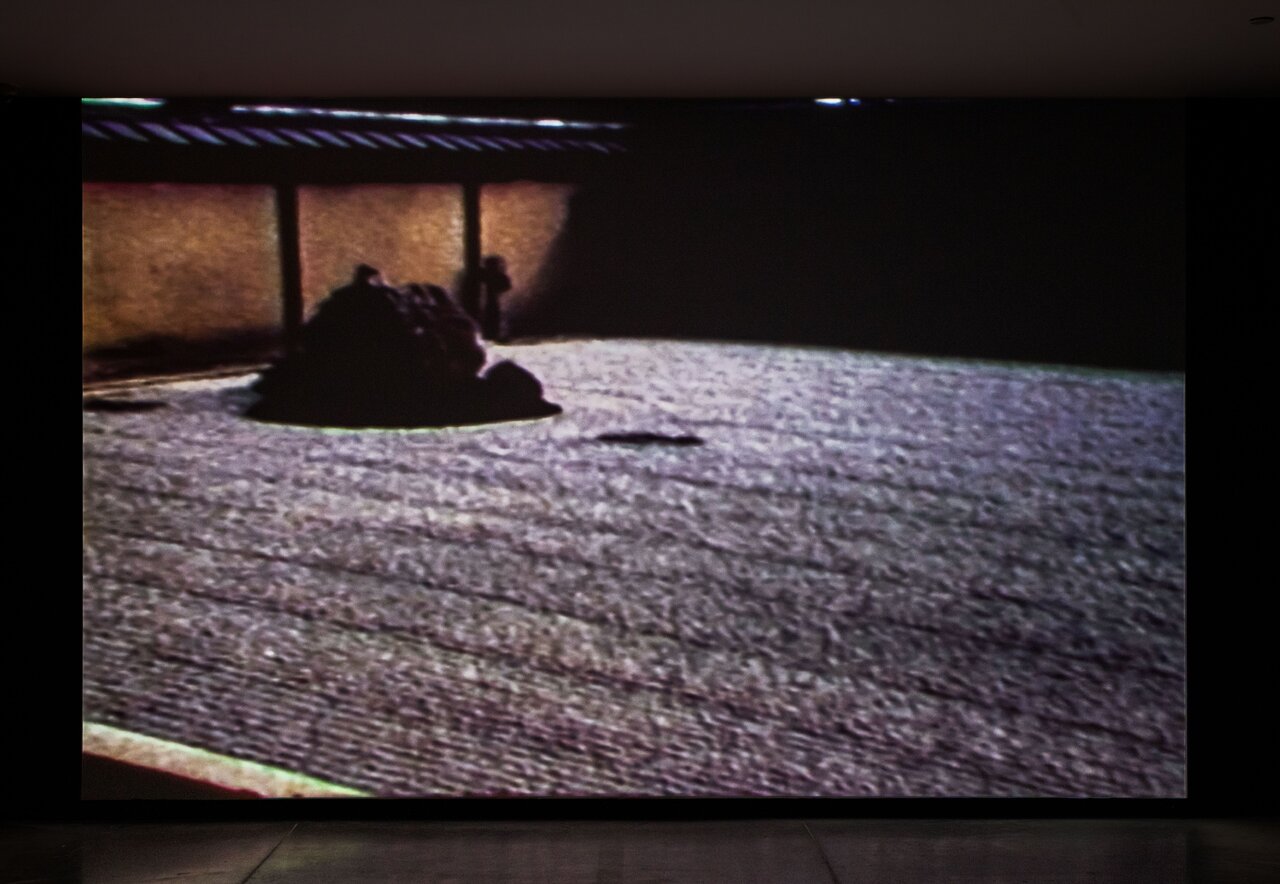
Shelagh Keeley, Kyoto Notebook, 1985. Super 8 film transferred to digital format. 108 minutes, colour, silent. Collection Peabody Essex Museum. Installation view: Film Notebooks 1985-2017, The Power Plant, Toronto, 2025. Photo: LF Documentation.
The second film transports visitors to The Colonial Garden in Lisbon, Portugal. The views are filled with beautiful nature spaces and dynamic colour contrasts. This film is less silent than its counterpart; you can appreciate the sound flooding over the trees, dancing in the wind, and birds chirping.
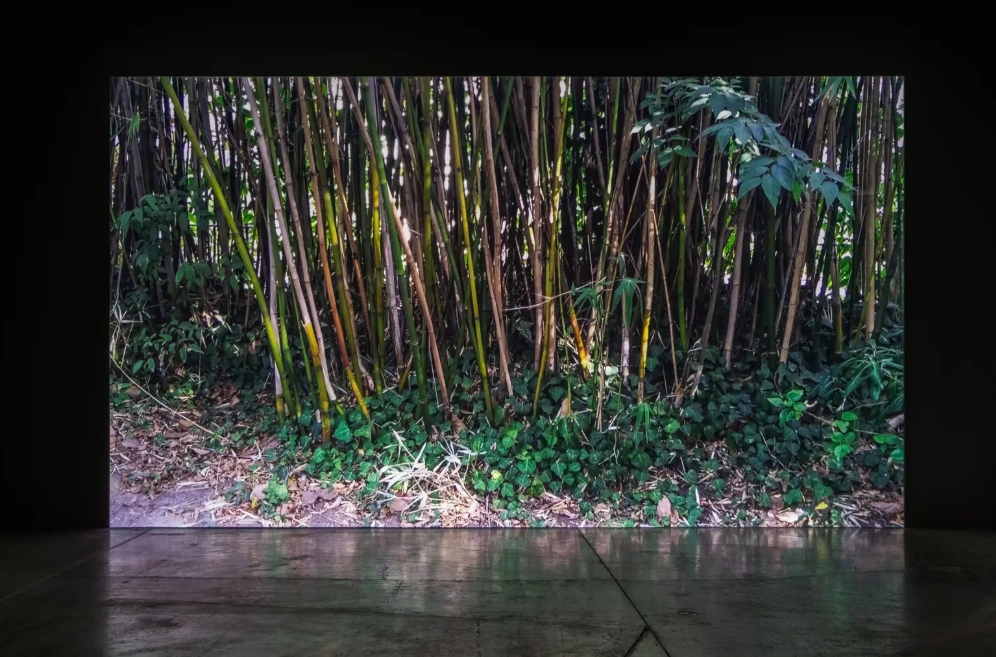
Shelagh Keeley, Jardim do Ultramar / The Colonial Garden, Lisbon, Portugal, 2016. Digital format video. 180 minutes, colour, sound. Thanks to the Museu Coleção Berardo, Lisbon, Portugal and ifa-Galerie Stuttgart, Germany. Courtesy the artist. Installation view: Film Notebooks 1985-2017, The Power Plant, Toronto, 2025. Photo: LF Documentation.
When walking through The Colonial Garden the focus is less on the textural experience and more on the experience of the space. The name itself suggests a tumultuous history, and Keeley is not one to ignore that. The garden was sponsored by Antonio de Oliveira Salazar, Portugal’s dictator during the early 20th century, and for some years it functioned as a “human zoo.” The narrative suggests that people from the colonies in Asia and Africa were exotic and a “different species” than the Portuguese. Instead of hiding the dark colonial and violent history of the space, Keeley highlights it, focusing the camera on various chest statues that represent people from the Portuguese colonies. The focus of the film allows visitors to question themselves and the everyday places they interact that may have similar, disturbing stories. Keeley’s work encourages viewers to reflect on people who walked in this space before.
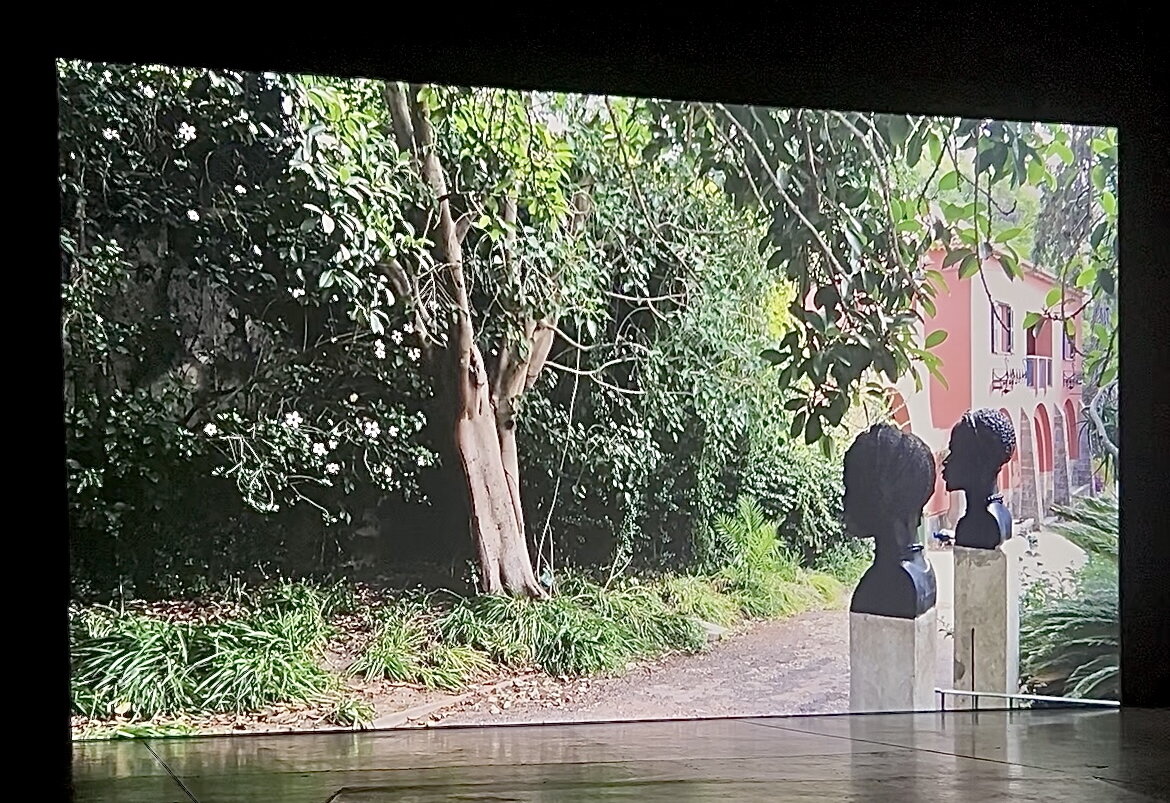
Shelagh Keeley, Jardim do Ultramar / The Colonial Garden, Lisbon, Portugal, 2016. Digital format video. 180 minutes, colour, sound. Photo: Sofia Diaz Aguilar
Keeley holds the camera with one hand and with the other she leads viewers through the spaces. She allows us to see the places through her eyes, her mind and her lens; she opens the perspective of what a garden can hold. In a slow, quiet, and tranquil experience, the rushed modern world slows down, allowing visitors to have a moment of calmness and reflection.
Sofia Diaz Aguilar
*Exhibition information: Shelagh Keeley, Film Notebooks 1985-2017, April 11 – September 21, 2025, The Power Plant, 231 Queens Quay West, Toronto. Gallery hours: Wednesday – Thursday & Saturday – Sunday 10am – 6pm. Friday 10am – 8pm.