
To Dream of Other Places / Emmanuel Osahor’s Nocturne of Beauty
In the quiet hush of The Power Plant’s Fleck Clerestory Gallery, a garden blooms against the dark. To Dream of Other Places is the first major solo exhibition of Emmanuel Osahor in his home city of Toronto. He invites us into this imagined night garden, where beauty is not a luxury but a lifeline, and where sanctuary and sorrow live side by side.
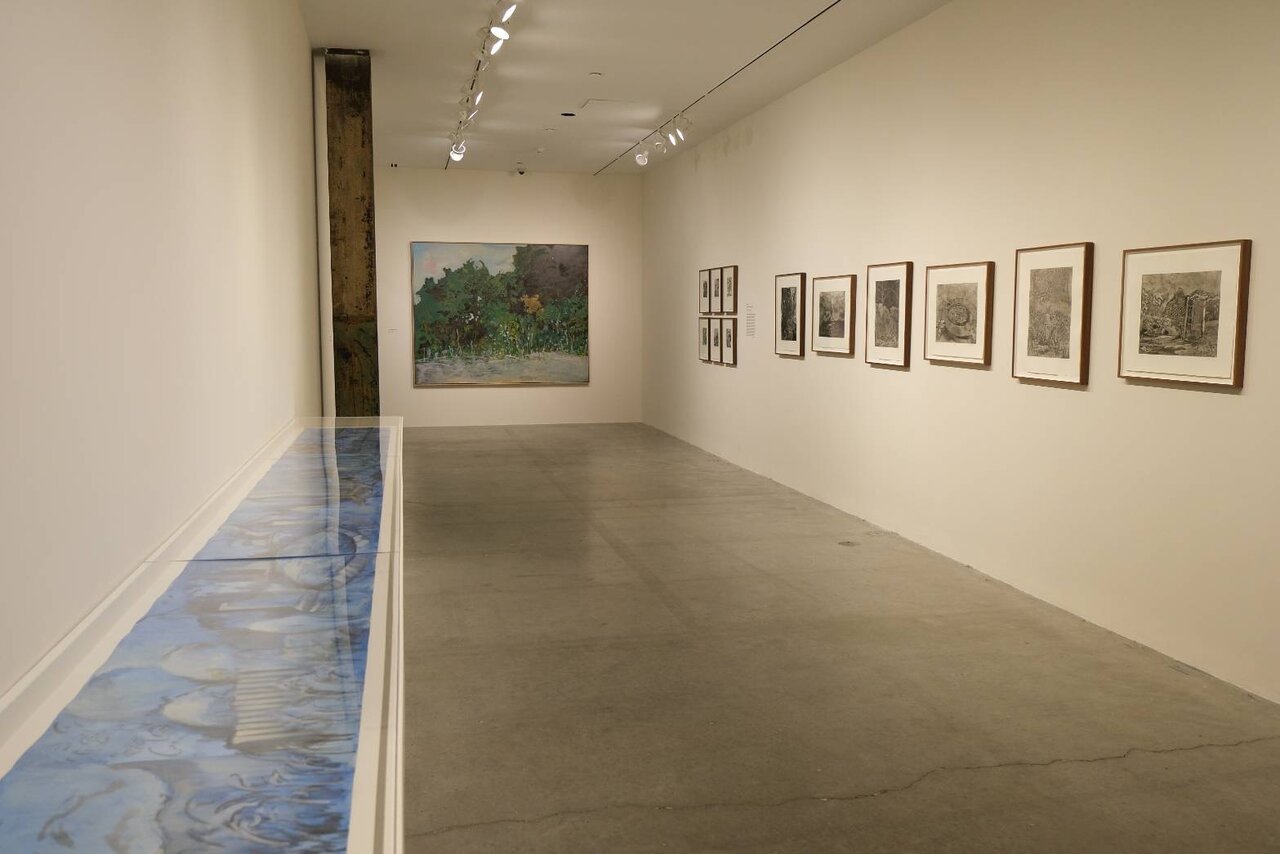
Installation view of Emmanuel Osahor, To Dream of Other Places, The Power Plant, 2025.
Long attuned to the politics and poetics of space, Osahor has developed a practice rooted in the belief that beauty matters, especially in a world marked by dislocation, erasure, and unrest. His landscapes, lush and layered, are sites of emotional, cultural, and ecological entanglement, far past aesthetic reveries. Whether rendered in paint, charcoal, ceramic, or photographic print, these gardens do not promise escape. Instead, they insist on presence, on slowing down, looking closely, and reminding us the possibilities of both flourishing and withering.
At the heart of the exhibition is the garden as metaphor: a cultivated space shaped by human desire and control, yet always tending toward unruliness. Osahor’s canvases, teeming with tangled greens and unexpected textures, evoke a sense of abundance tinged with unease. Brushstrokes shift between delicate and assertive, as if mimicking the push and pull between care and conquest. Edenic qualities give way to more complicated terrains, gardens shaped by the sediment of history, migration, labour, and longing, where beauty is inseparable from the forces that have marked the land.
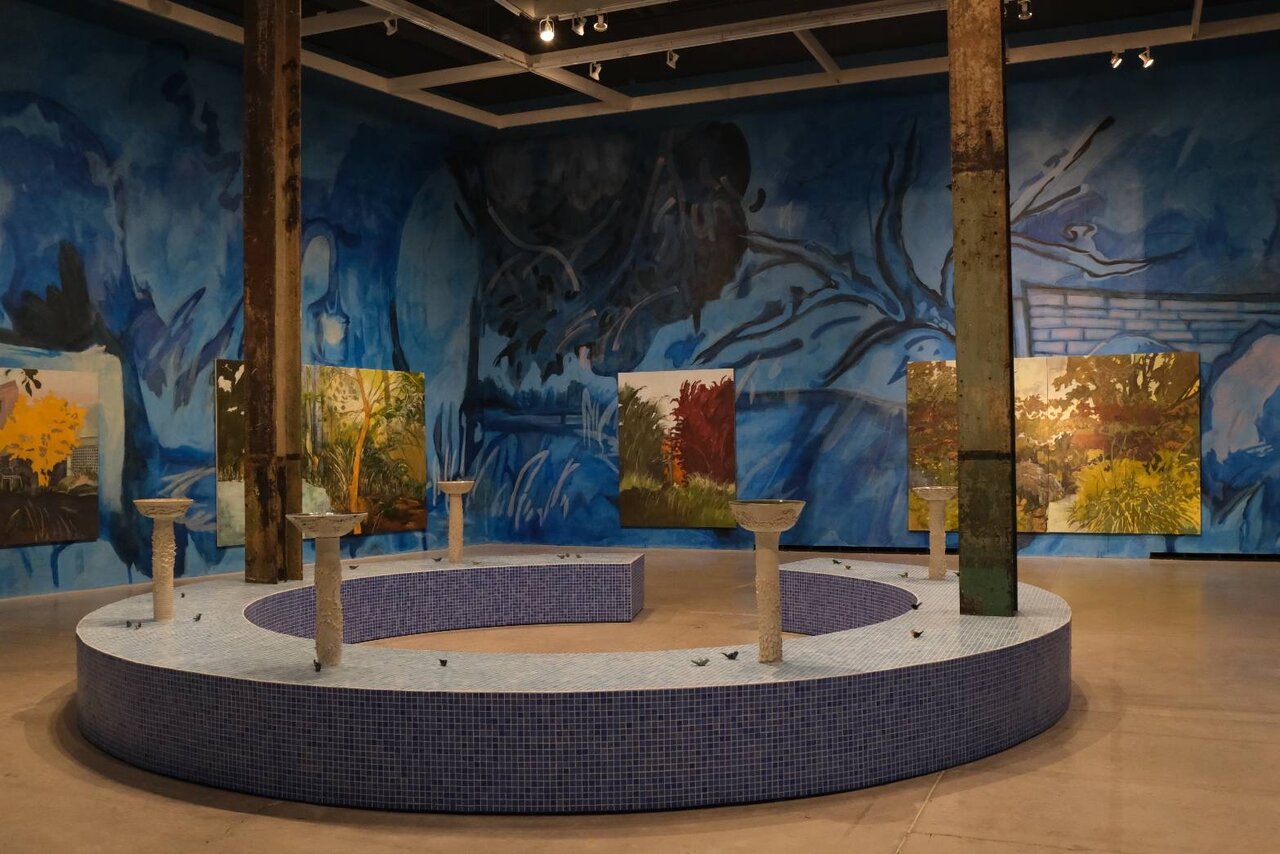
Installation view of Emmanuel Osahor, To Dream of Other Places, The Power Plant, 2025
In works that blur the line between real and imagined, Osahor conjures spaces that recall specific geographies while refusing strict definition. They are gardens remembered, projected, and mourned. Some draw from Toronto’s own urban ecology, where community gardens, parks, and neglected lots exist in uneasy proximity to gentrification and displacement. Others emerge from a more interior topography, emotional maps formed by the artist’s diasporic identity and lived experience. As viewers, we are invited not only to witness these spaces but to dwell within them, to feel their pulse.
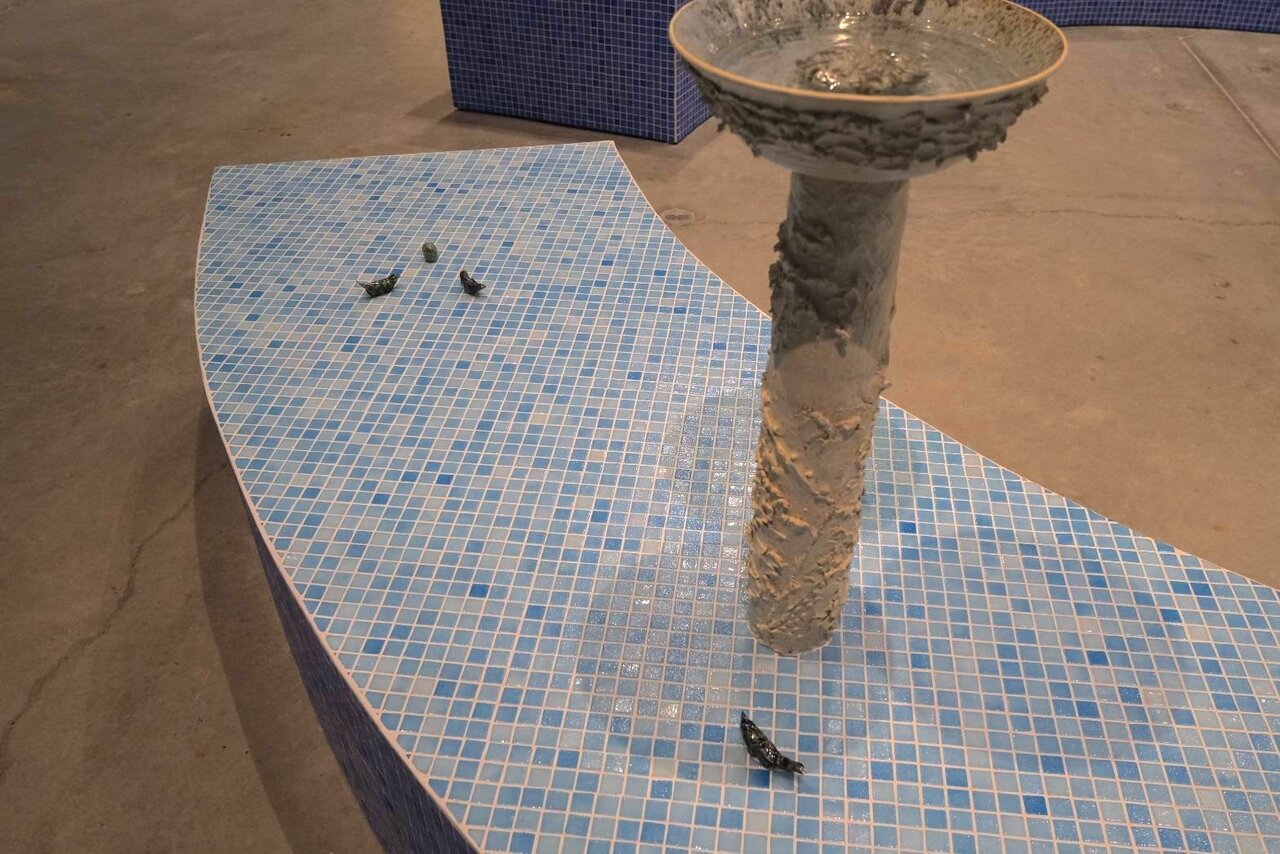
Installation view of Emmanuel Osahor, To Dream of Other Places, The Power Plant, 2025. Close-up shot on the ceramic base
The gallery itself becomes part of this immersive ecology. A site-specific photographic wallpaper transforms the Clerestory into a liminal zone of reflection, enveloping visitors in a rhythmic interplay of foliage, shadow, and ambient light. Osahor’s ceramic sculptures, hand-formed, organic, and quietly expressive, act as tactile counterpoints, grounding the exhibition. Together, these elements create a space that is not quite natural and not quite artificial, but something in between: a threshold where memory and matter meet.
Yet To Dream of Other Places is not only about aesthetics—it is about survival. In a time when global crises render beauty suspect or superfluous, Osahor insists on its necessity. His gardens offer no easy solace, but they do offer room—room to breathe, to grieve, to hope. They suggest that beauty can be both balm and provocation, both retreat and resistance. As the artist notes, nature’s regenerative power is not metaphorical but material: it teaches us how to begin again, how to make space for what has been uprooted.
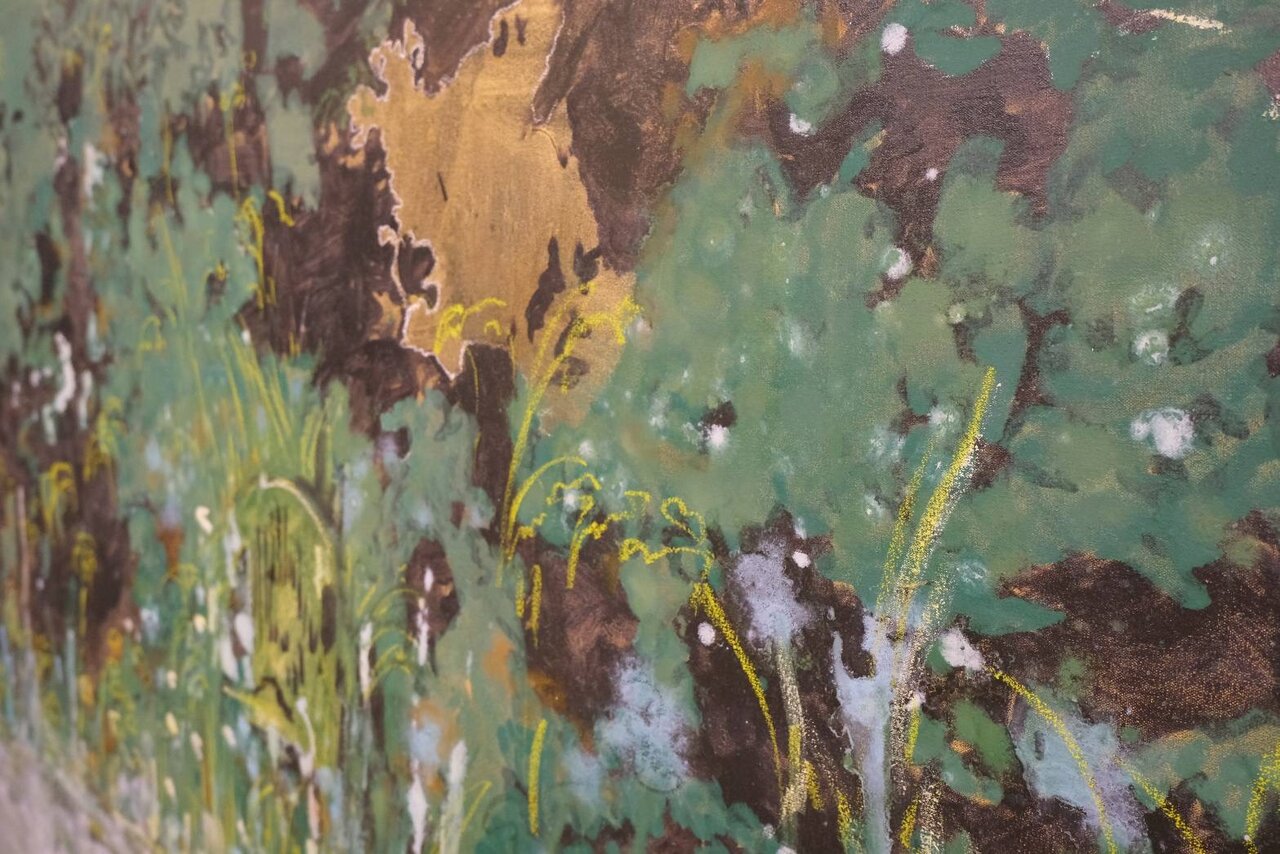
Emmanuel Osahor, For a moment, 2020, oil and acrylic on canvas, detail.
The exhibition’s title, with its gentle invocation of dreaming, suggests yearning for elsewhere, for otherwise, for a future not yet realized. But dreaming, in Osahor’s world, is not passive. It is a mode of consciousness, a way of paying attention. To dream of other places is also to reckon with the present: to ask what has been lost, what can be recovered, and what it means to cultivate care in the face of rupture.
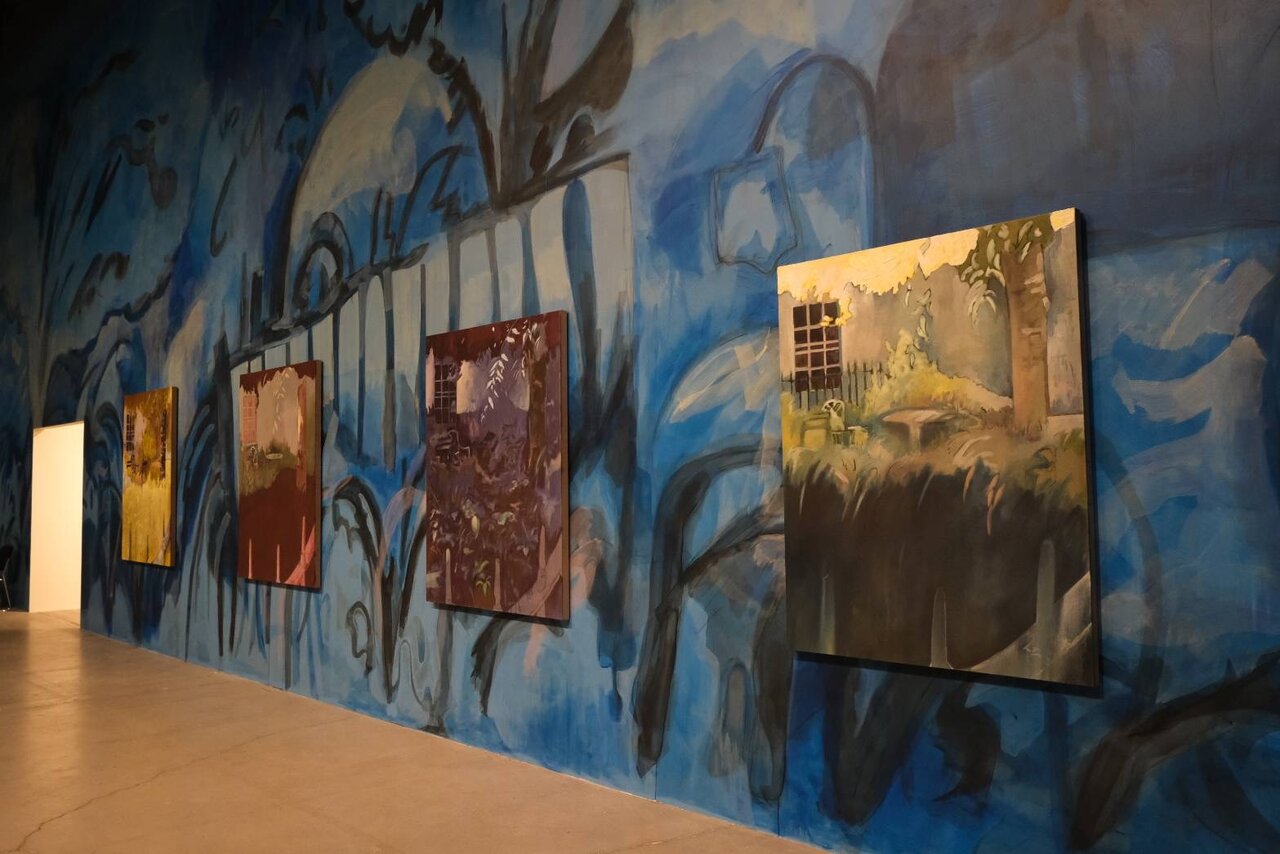
Installation view of Emmanuel Osahor, To Dream of Other Places, The Power Plant, 2025.
Osahor’s practice resonates not only within the lineage of landscape painting but within broader conversations about place, justice, and the role of the artist in times of fragmentation. His work does not offer closure but opens questions. What does it mean to make a garden in a world that burns? What forms of beauty emerge when survival is the ground from which we grow? How do we learn to live in the ruins while still dreaming of bloom?
Acting as a quiet, generative proposition, To Dream of Other Places invites us to consider the politics of beauty not as surface, but as sustenance. It asks us to enter the garden to listen, to be attentive to what the land remembers, to what the plants endure, and to what the quiet, persistent act of dreaming might yet restore.
Text and photo: Yehyun Lee
*Exhibition information: Emmanuel Osahor, To Dream of Other Places, April 11 – September 21, 2025, The Power Plant, 231 Queens Quay West, Toronto. Gallery hours: Wed – Sun 11 am – 6 pm, Fri 11 am – 8 pm.