
May 8 – 11, 2025
Better Living Centre, Exhibition Place
195 Princes’ Blvd, Toronto
Hours: May 9 & 10, 12 – 8 pm, May 11, 12 – 6 pm.
Nusrat Papia
Artist Project showcases thousands of artworks, large-scale installations, and unique opportunities to engage directly with artists. Whether you take home a piece that truly resonates with you or explore more deeply by visiting the artists’ individual websites, this event invites you to connect with art on a personal level.
Walking through the aisle, it’s hard to decide where to stop. Thousands of booths with beautifully projected art beckon from different directions. Artist Tommy Feiler presented his photographs quite humorously on huge canvases that couldn’t be overlooked. Six of the large-scale canvases on the focal wall featured portraits of chickens. He shared the story behind the photographs: he’s feared chickens since childhood, which motivated him to take pictures of them to study them in detail through photography. As his fear transformed into art, the chicken portraits explored the semiotic instability of language and image.
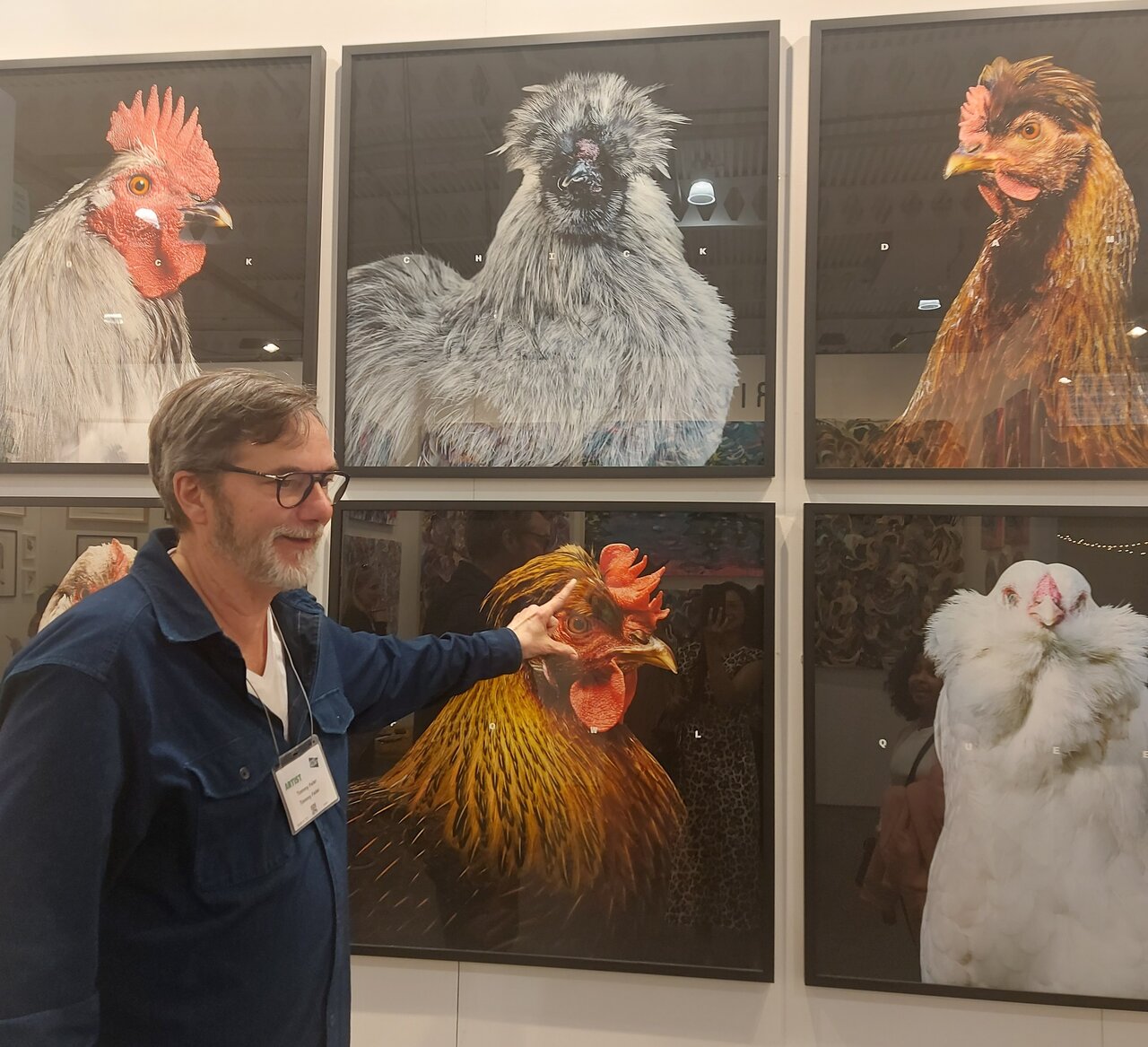
Tommy Feiler explaining his chicken photographs
Erik Mohr, a Toronto artist, captures the beauty in the mundane, elevating overlooked aspects of daily life into meaningful works of art that invite reflection and appreciation. Inspired by the tenebrist tradition, he uses oil on wood panel to paint contemporary scenes illuminated by smartphones and matches. These light sources not only cast physical light but also shape the mood, emotion, and narrative of the scene. The soft glow of light invites reflection, sparking a dialogue about solitude, presence, and the ways in which distractions shape our experiences. The light, whether from outside or from a device, can transport us to another world or leave us suspended in between, highlighting the complexities of modern life.
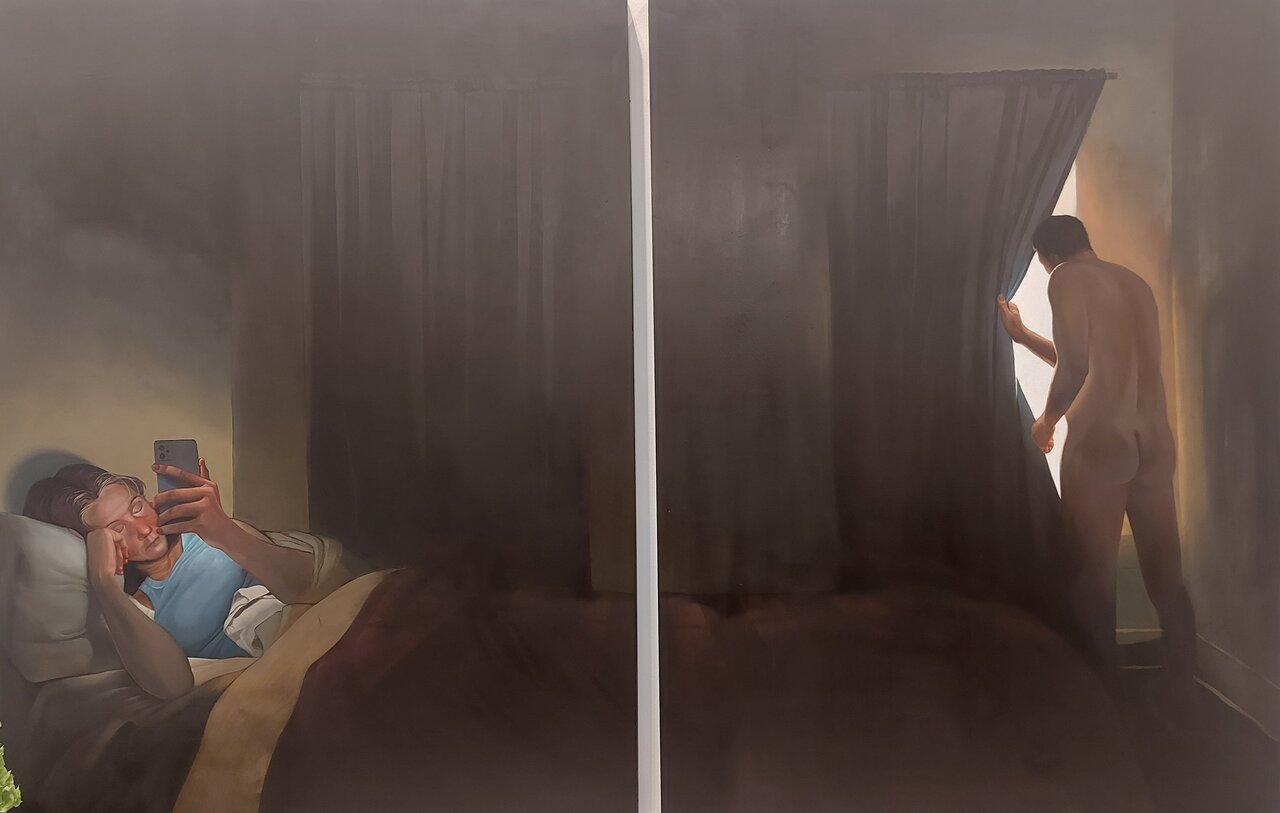
Paintings by Erik Mohr
Hélène McNicoll is a plant lover, so it’s not a surprise that through her art she projects the connection between nature and human. Her work explores the interconnectedness of human and natural, capturing the moments where these worlds intersect in urban and suburban spaces. Through her imprint technique, using leftover cotton from fabric indstry, she documents fleeting encounters between beings, blurring the lines between art and reality. In the world of distortion, she believes in sustainability and her art shows how we left our print in the world through industrial items. In the imprint she used material like industrial ware, electric little fan, plant, leaves, looks like fossil that found on earth.
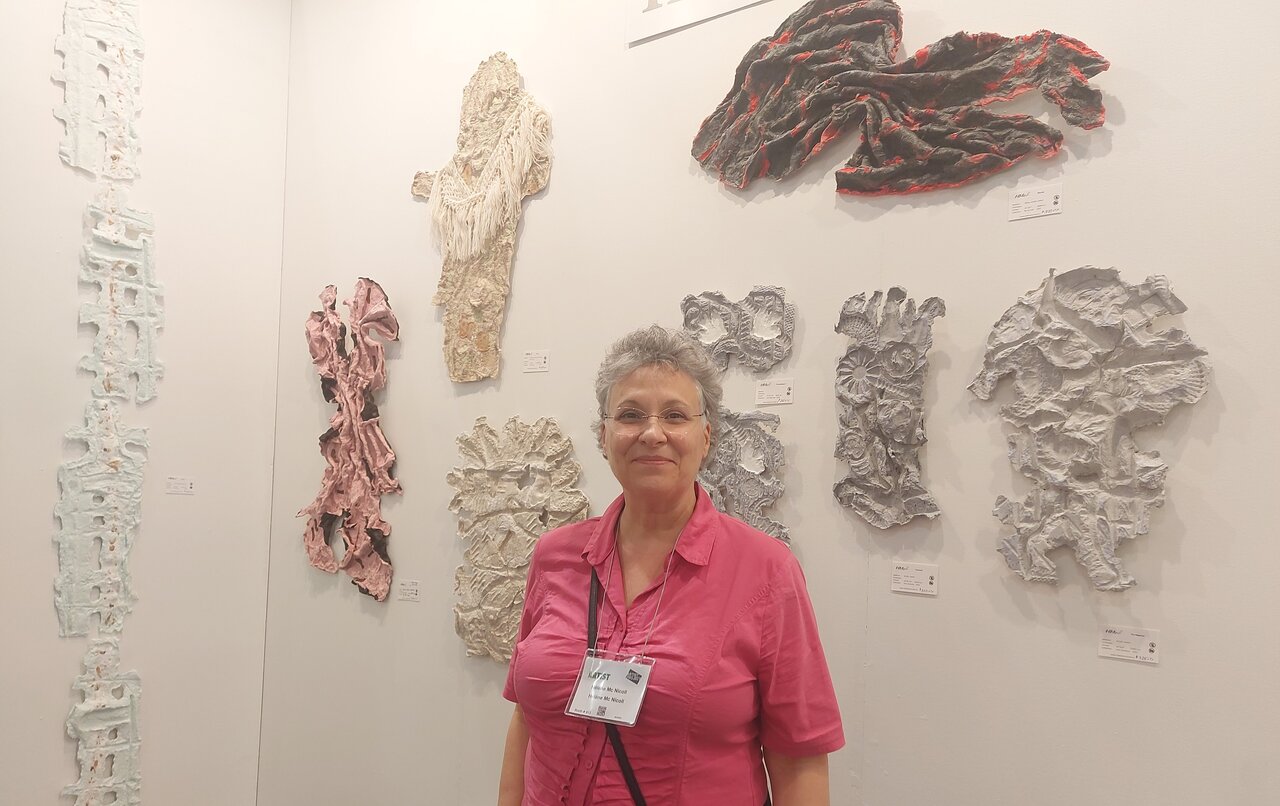
Hélène McNicoll in her booth
Born in Germany, Andreas Krätschmer studied cabinetmaking before focusing his studio practice on woodturning and sculpture. His work is deeply inspired by traditional craftsmanship, the cultural meaning of artifacts, and our connection to nature. He works with locally salvaged, freshly cut (“green”) wood, allowing it to dry and naturally warp, crack, and shift—embracing the unpredictable beauty of the material. This process mirrors nature’s transformations and reflects themes of resilience and vulnerability. One of his featured creations, Consumed’25, resembles a large candle holder and was inspired by wildfires. He described how, like a burning tree trunk—cracked yet still standing—it serves as a powerful reminder of nature’s strength and our responsibility to protect it.
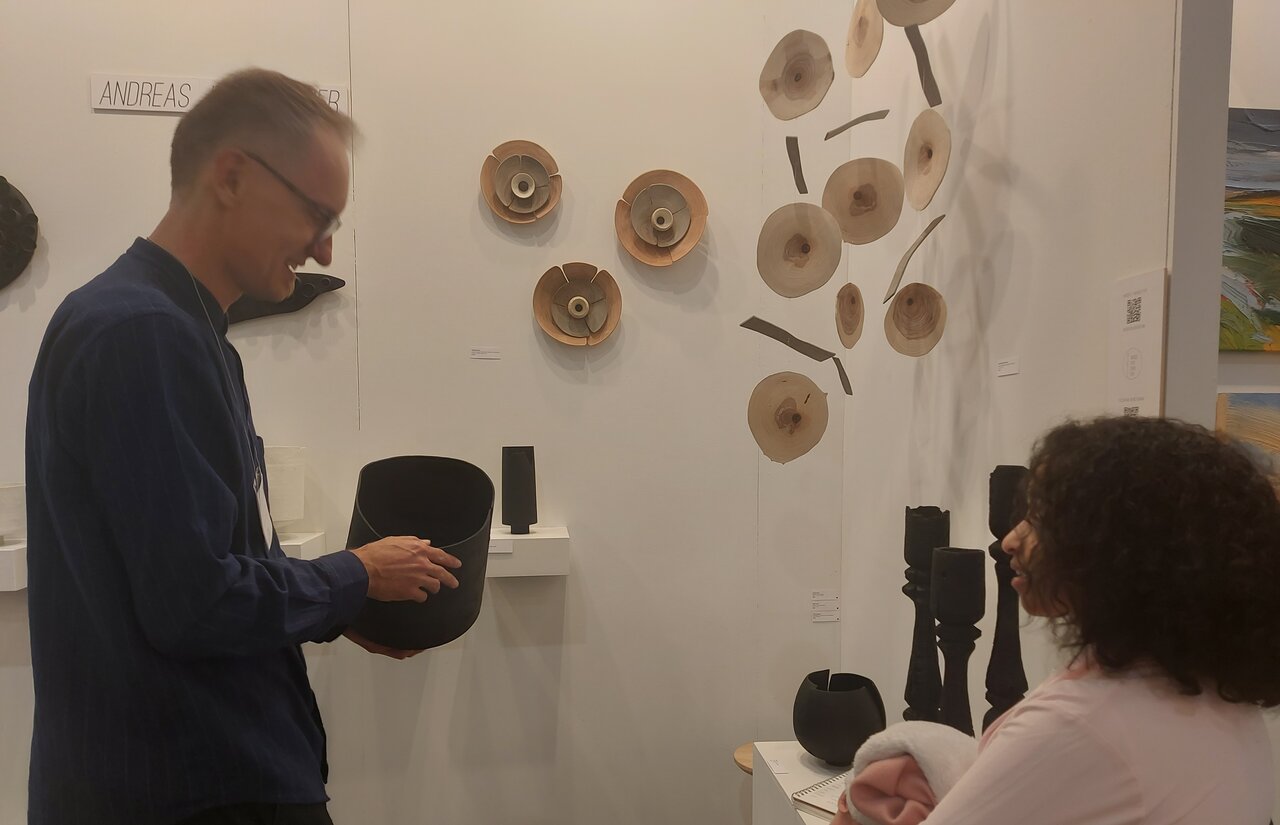
Andreas Krätschmer in conversation with a visitor
Hundreds of artists and their works cannot be fully described in just a few words or sentences. The emotional exchange between the artist and the viewer is both powerful and exciting, as each artwork opens a dialogue beyond language.
Text and photo: Nusrat Papia