
Ry Van Der Hout’s recent installation of works at Spadina Museum curated by Adrien Sun Hall is an active reimagination of the historical home’s many stories and the echoes of memories held within its ornate objects and spaces.
In Broken Light acts as a journey through time where Van Der Hout starts at the creation of the universe and grapples with stories of past, present and futures, leading to death and hopeful rebirth. As you move throughout the floors of Spadina House, the chronological journey of each work reflects the many tales that the museum holds, both through its historical occupants and its current historians. These artworks accompany the museum’s restored 1920’s decor and allow viewers to immerse themselves within the history of the site while actively interpreting its stories through the lens of contemporary art. Its use of light as a natural fixture of the home through its windows, mirrors and sunlit rooms ties seamlessly to Van Der Hout’s chosen material and its reflective properties.
Partly inspired by Hanya Yanagihara’s To Paradise and its storytelling of multiple timelines interconnected through a singular setting, this exhibition takes on the chronological stories of Spadina House’s inhabitants and pairs them within the contextual rooms of the house. Its conceptual approach is both a literal progression as the viewer travels upwards and a metaphorical reflection of real lived experiences, ones that fill the historical site with humanity and a sense of connection within disjointed narratives.
The exhibition begins in the basement where two works are tucked away in the archeological dig sites of the Museum’s fieldstone foundation. The Shattering and Orpheus, Twice are enclosed within dimly lit brick ruins where both pieces illuminate the space through shards of broken glass. The former captures the fragmentation of a disco ball; mimicking ideas of shattered vessels found in creation stories by reflecting fragments of light across the room. The latter continues ideas of fragmentation while incorporating one of the first historical stories of Spadina House, that of Robert and Eliza Baldwin’s tragic romance. Tackling themes of longing in death and physical devotions, Orpheus, Twice beautifully embodies the artistic process and its connection to mending what was once broken.
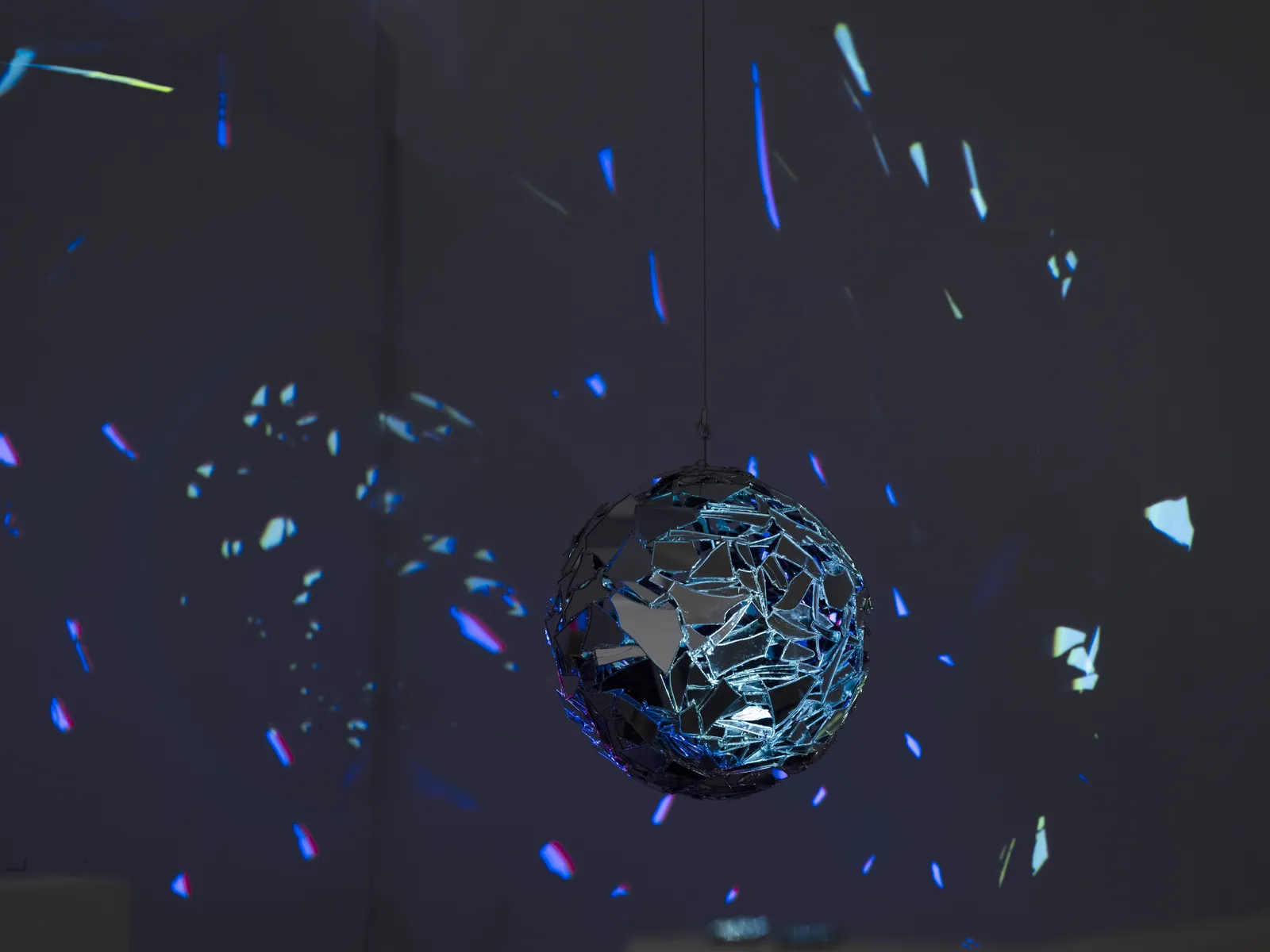
The Shattering, 2026, mirror, solder, copper, stainless steel, 28″ Diameter. Courtesy of the artist.
Led by a museum guide to the first floor of the home, we are educated about the Austin family and their stories as they occupied Spadina House for most of its existence. Among them being Albert Austin, who contracted tuberculosis and sadly died at a young age, bringing a looming emptiness to the family house. As the centerpiece of this floor After – Breath acts as a reliquary where shattered glass and decaying flowers reflect the body’s inability to withstand expectations, pondering the weight of both the body and of the social obligations that follow with living such a lavish lifestyle. Positioned near an ornate drawing room, this piece hauntingly reminds us of the fragility of our own physical core while embracing the ephemeral nature of the living.
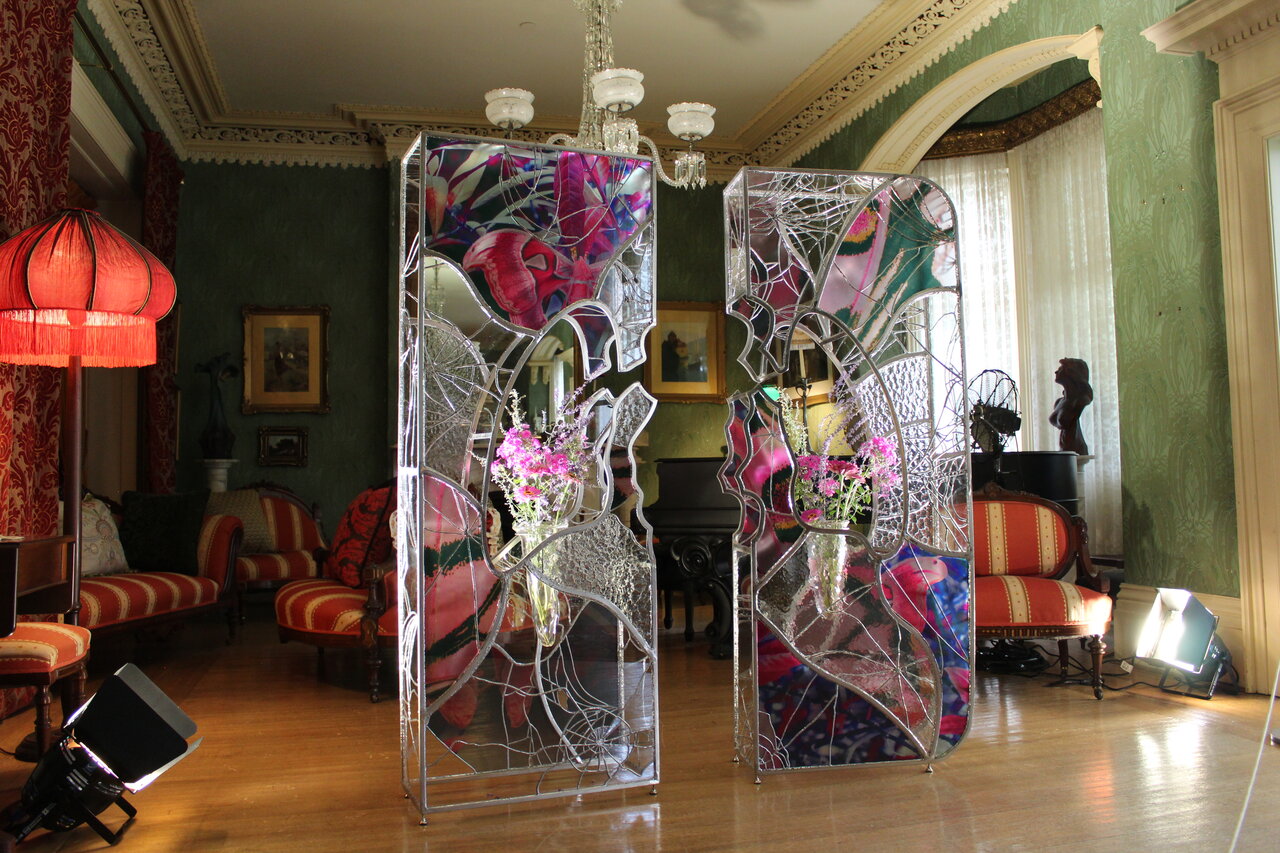
Installation view with After – Breath, 2026, Glass, Uv Print on Glass, Solder, Steel Tin Coating, Flowers, 71″x71″x 12″. Photo: Marina Diolaiti
Upon reaching the second floor, we instantly feel a sense of imposition as we are guided through the private bedrooms of past occupants. Tiber greets us in a small seating room near the main bedroom where its colourful shattered fragments reflect through the warmly lit window onto the quaint furniture, evoking the stained-glass techniques of gothic cathedrals. In this work, Van Der Hout flips the story of Narcissus into a tale of affirmation and reflection on one’s innermost self while telling the story of a contemporary historian who serendipitously found their way to the museum through an innate desire to collect old antiques. While the work is smaller in presence and tucked within the quiet atmosphere of the main lady’s bedroom, Tiber is a beautiful ode to the present and the many stories that Spadina Museum continues to create.
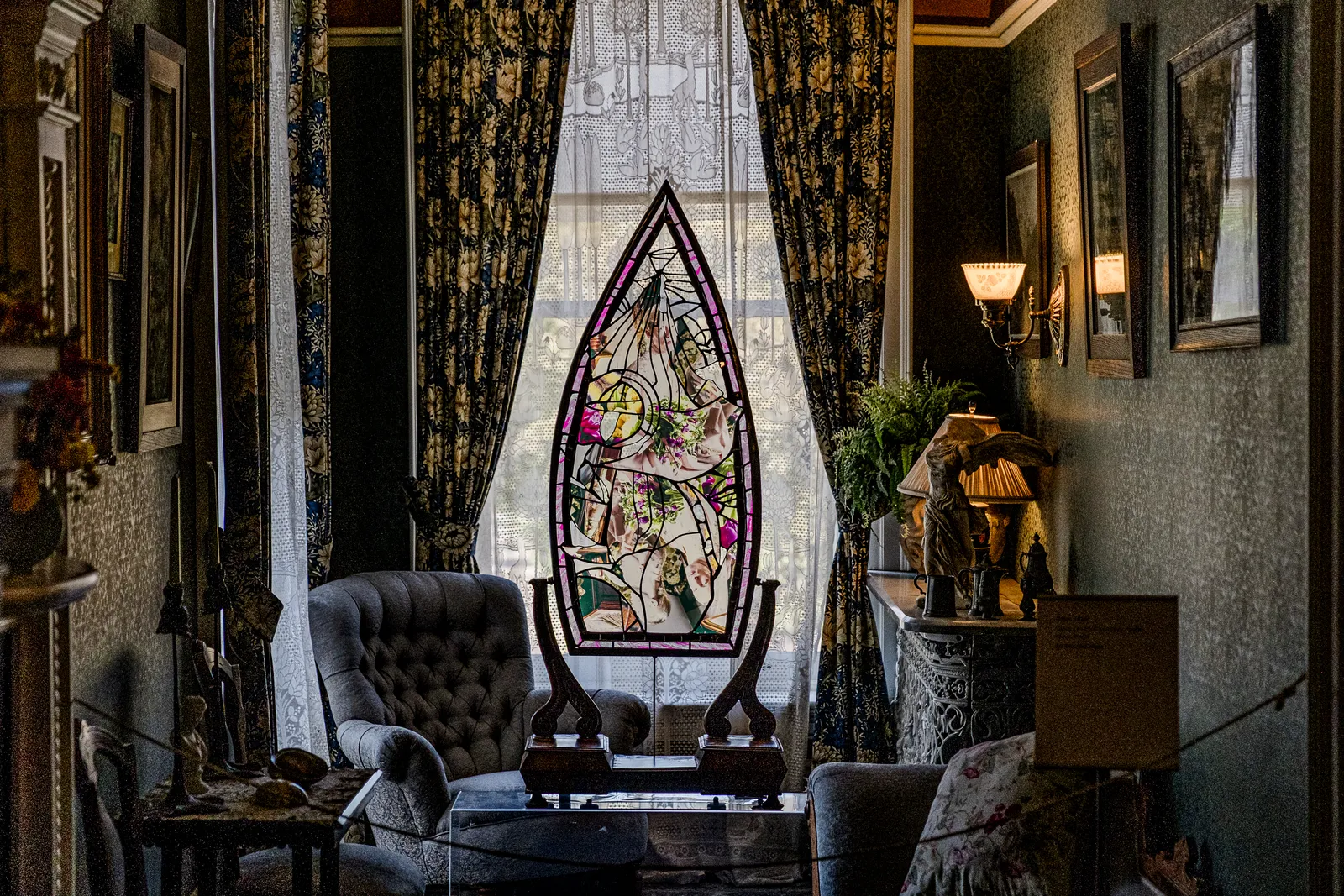
Tiber, 2026, UV Print on Glass, Steel, Antique Mirror, Solder, Copper, Wood, 16″ x 47″x 6″. Courtesy of the artist.
As we reach the third and last floor of the house, we enter the servants’ quarters and additional bedrooms, which all carry a sense of emptiness in the faded original wallpaper and in the antiquated practices of keeping household servants. As we discretely walk through each room, we are eventually faced with an empty sun filled space where Open Wing Death transports us through its reflective interior housed by hundreds of moths and butterflies. The hexagonal dome fully immerses us into Van Der Hout’s fictional future where organisms take over restoration efforts, completing the natural cycle of decay and rebirth. Through its reflections, the work immerses us within multiple perspectives of the family’s unrestored bedroom and acknowledges the temporality of such a fragile historical site.
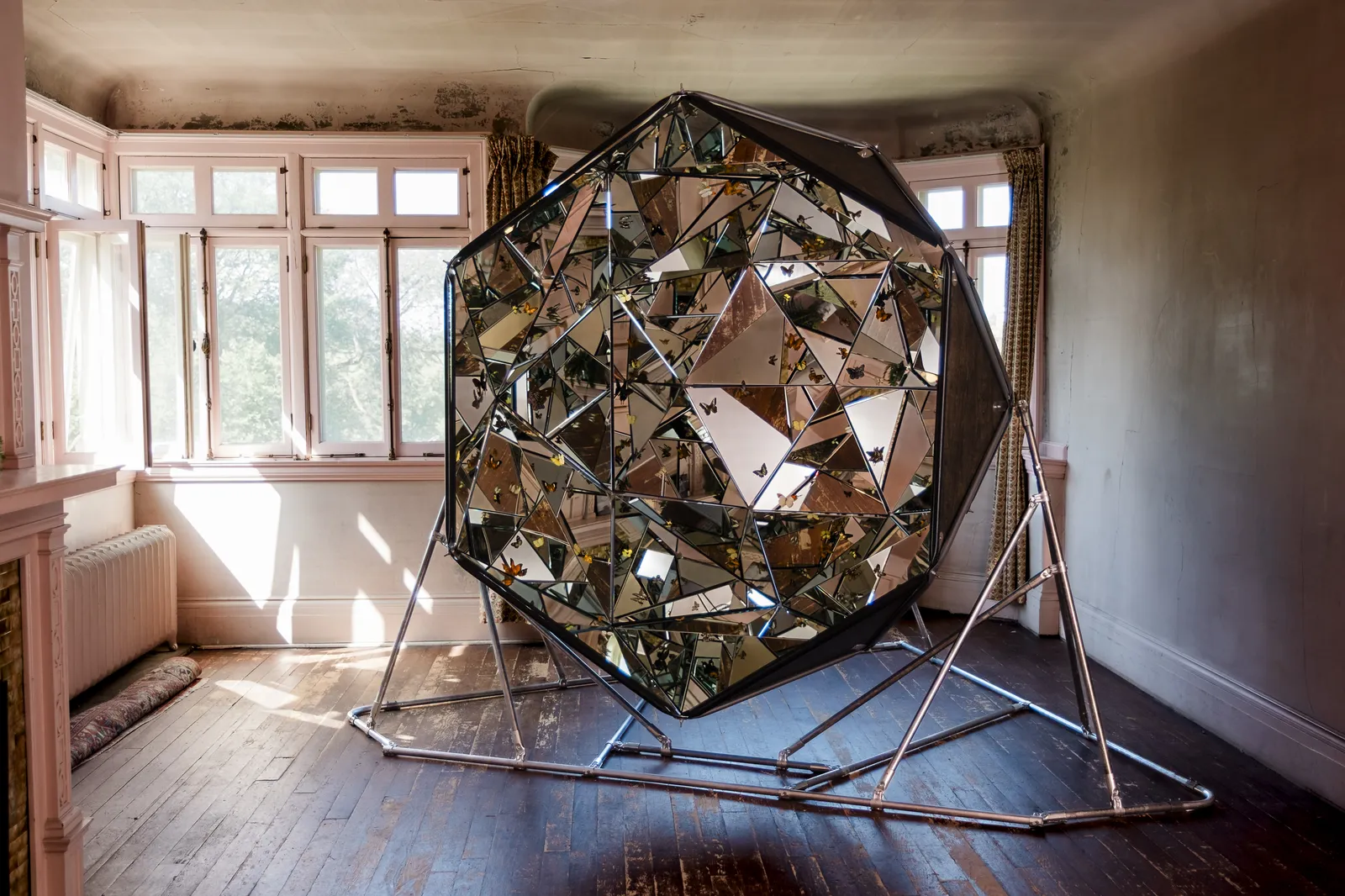
Open Wing Death, 2026, Moths, Butterflies, Mirror, Coated Steel, Wood, Silicone, 12′ x 9′ x 12′. Courtesy of the artist.
In Broken Light successfully delivers on the daunting task of reanimating a historical site while honouring its past, present and future stories through immersive contemporary art. While Spadina House already holds a storied history, it is through these artworks that we feel the space being thoughtfully revived by taking on new perspectives that reflect a critical approach to recollections of the past. The exhibition’s attentive curation of a rich historical home balances the need for contemporary voices while preserving the complexities that any historical site might undergo in nearly two hundred years. By uncovering these layers of history, Van Der Hout’s work centralizes the importance of objects embedded with experiences that reflect forgotten historical lineages and brings them back into the light.
Marina Diolaiti
*Exhibition information: Ry Van Der Hout, In Broken Light, August 26 – Oct 18, 2026, Spadina Museum, 285 Spadina Road, Toronto. Museum hours: Wed – Sun 11 am – 5 pm.