
Allen Ginsberg’s Photographic Elegy to Friendship, Youth, and the Emergence of the Beat Generation at the Thomas Fisher Library
At the Thomas Fisher Rare Book Library Allen Ginsberg: Friendship and Community: The Beat Generation on Film offers a compelling reconsideration of the visual culture surrounding the Beat Generation. Drawn from the Allen Ginsberg Photography Collection and presented as part of the 2026 CONTACT Photography Festival, the exhibition shifts attention away from the monumental literary reputations that later defined Allen Ginsberg, William S. Burroughs, and Jack Kerouac. In their place emerges a more intimate portrait of artistic formation, one grounded in companionship and the fragile social networks from which literary modernity often arises.
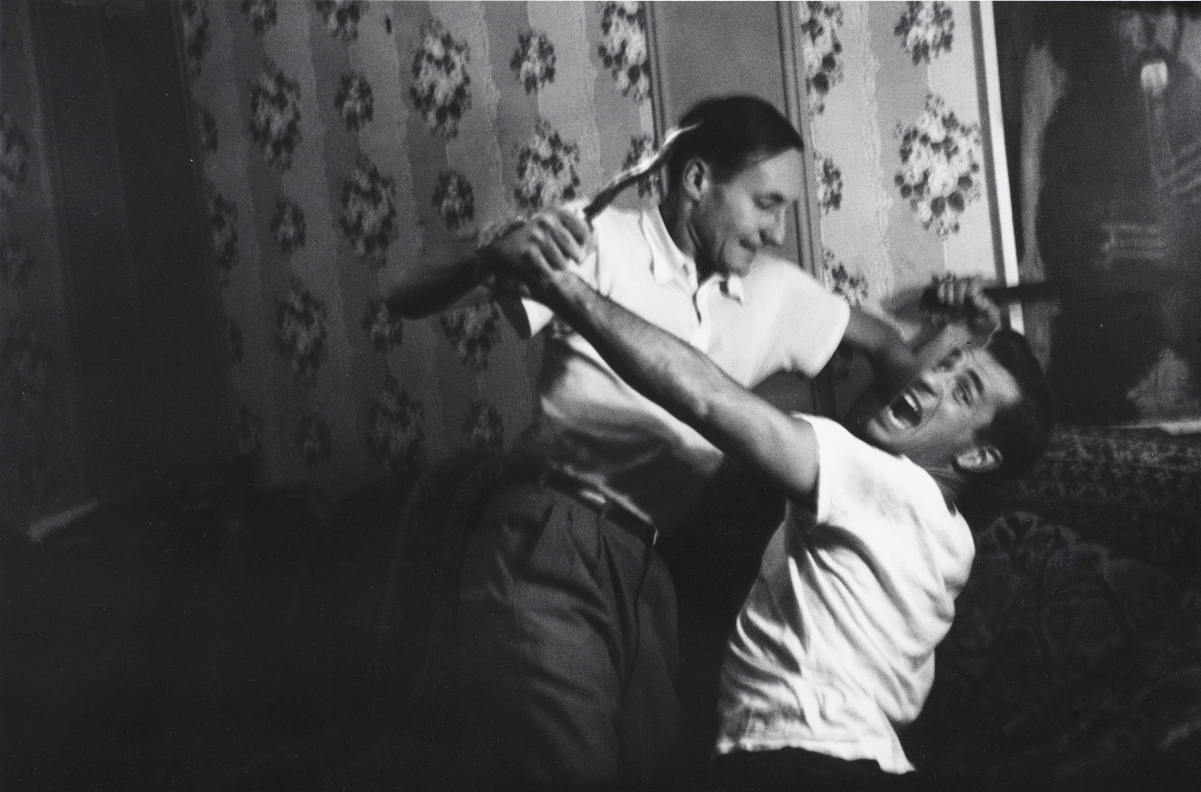
Allen Ginsberg, William Burroughs and Jack Kerouac mock fighting at 206 E 7th street apartment, 1953. Courtesy of CONTACT Photography Festival.
The exhibition’s central achievement lies in its resistance to retrospective grandeur. Visitors encounter these now canonical figures before the consolidation of their mythic identities, before publication transformed them into symbols of postwar rebellion and countercultural dissent. Ginsberg’s photographs return Burroughs and Kerouac to the realm of lived experience. They appear as friends in apartments, on streets, in moments of boredom, playfulness, and contemplation. Such images possess a rare documentary value precisely because they remain unconcerned with self-conscious historicization.
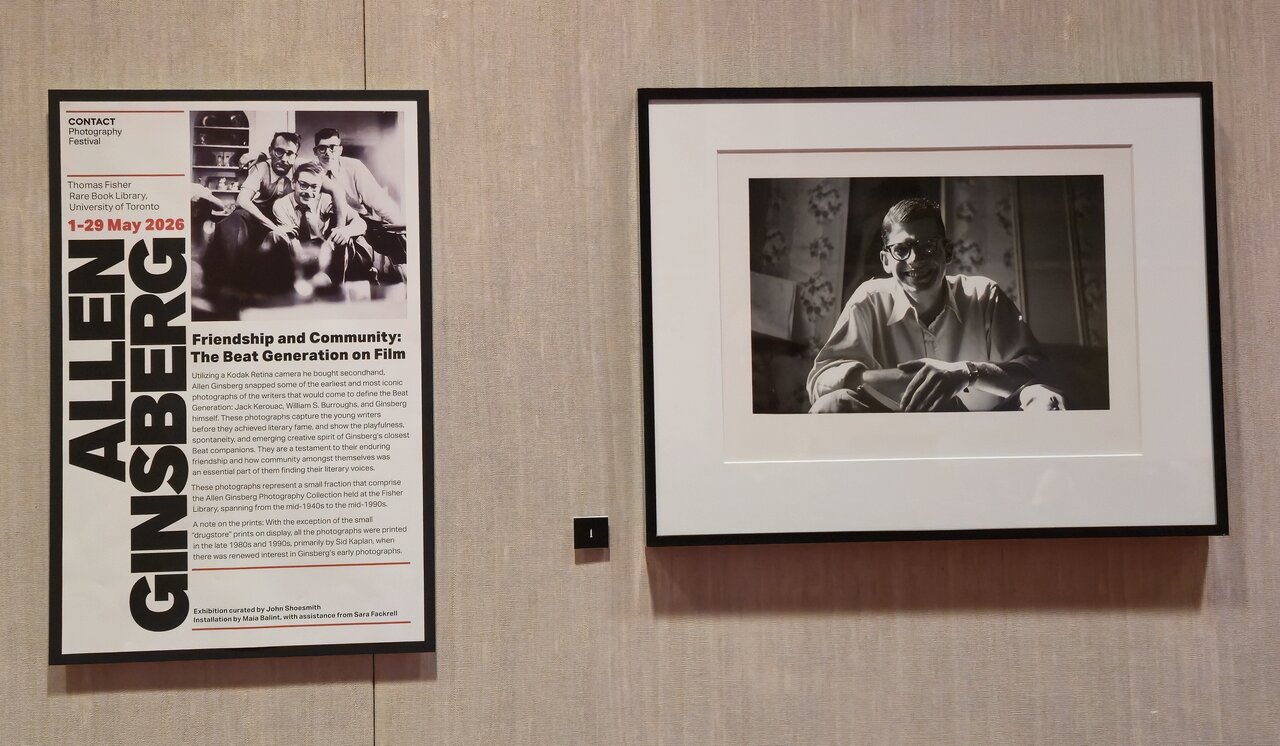
Installation view with Allen Ginsberg self portrait at 206 E 7th street apartment, (right) 1953.
Ginsberg’s role within this archive proves especially fascinating. Though remembered principally as a poet whose 1955 reading of Howl in San Francisco inaugurated a new literary movement, he appears here as an attentive observer of interpersonal life. His camera functions less as an instrument of aesthetic mastery than as a means of participation. The photographs rarely aspire toward formal polish; taken on a second-hand Kodak, their grain, spontaneity, and occasional compositional awkwardness contribute to their authenticity and power. One senses that the camera circulates naturally within the social environment it records. The resulting images thus seem to cultivate something pure and genuine, avoiding the distance often associated with documentary photography.
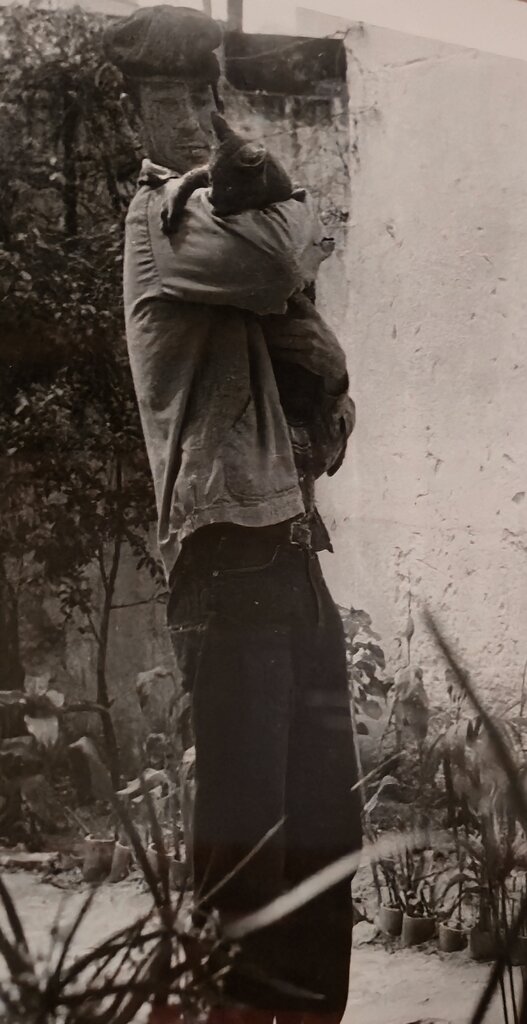
Allen Ginsberg, Jack Kerouac with cat in Tangier, original print and later reprint, detail, 1957.
This informality becomes crucial to the exhibition’s broader historical significance. Mid twentieth century photography frequently negotiated questions of authority, authorship, and objectivity. Ginsberg’s photographs indeed inhabit a different register, belonging to a vernacular mode of image making rooted in friendship rather than professional ambition. Yet within this apparent casualness resides an acute sensitivity to gesture and atmosphere. Ginsberg captures the texture of artistic life as something collective and provisional. Creativity is shown to emerge from shared living spaces, and mutual recognition. The exhibition, therefore, challenges overly individualized understandings of literary production by emphasizing the communal dimensions of artistic emergence.
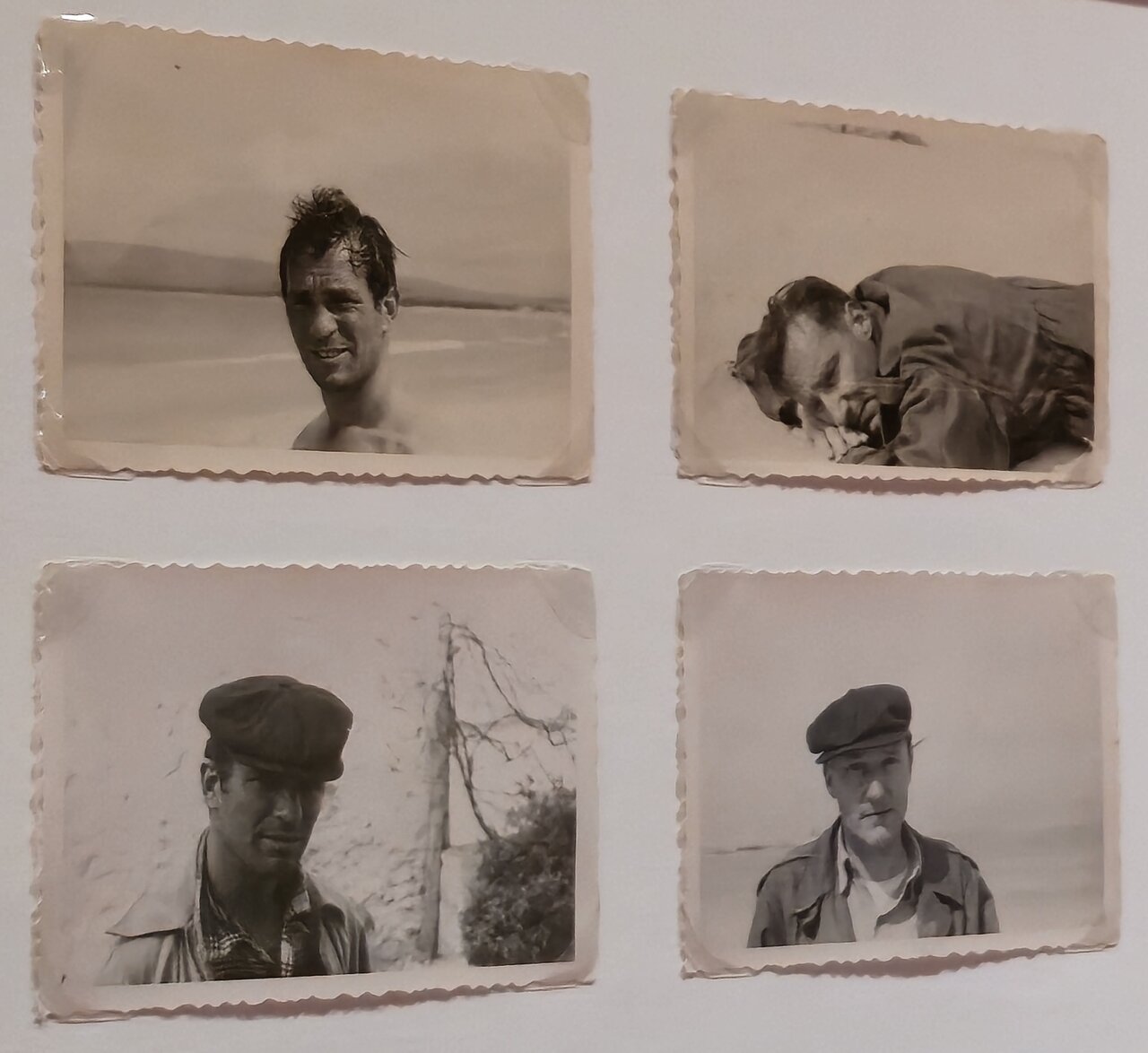
Installation view with Allen Ginsberg, Jack Kerouac and William Burroughs, Tangier, 1957.
Particularly striking are the photographs of Kerouac and Burroughs before the solidification of their public personas. Kerouac appears animated and youthful, often suspended between introspection and exuberance. Burroughs, later associated with cold intellectual detachment and experimental fragmentation, appears unexpectedly relaxed and accessible. These representations complicate familiar cultural narratives surrounding the Beats. Popular memory has often reduced the movement to stylized gestures of masculine freedom, restless travel, and spiritual rebellion. Ginsberg’s photographs reveal another dimension altogether: one marked by tenderness, vulnerability, and domestic intimacy.
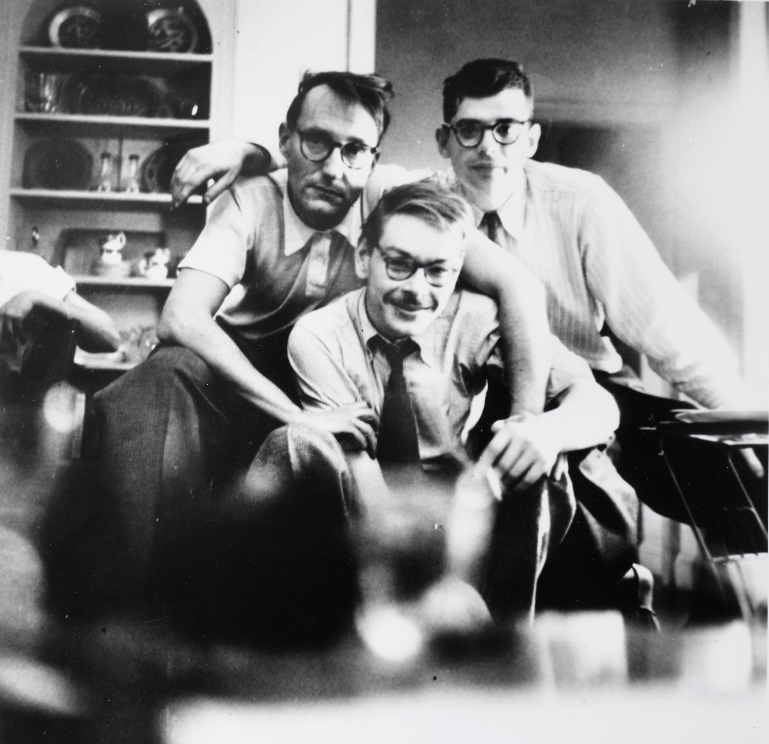
Allen Ginsberg, William Burroughs, Lucien Carr and Allen Ginsberg “selfie” at 206 E 7th street apartment, 1953. Courtesy of CONTACT Photography Festival.
The exhibition also invites reflection upon photography’s relationship to literary memory. The Beat Generation occupies a unique position as leading figures endlessly reproduced through biographies, films, and popular iconography. Such repetition risks transforming historical individuals into rigid archetypes – but Ginsberg’s photographs resist this flattening effect. Their value lies not merely in rarity but in their capacity to restore contingency to familiar narratives. The subjects remain unfinished, uncertain of their futures, still inhabiting the unstable threshold between aspiration and recognition. Seen more than eighty years after many of the photographs were taken, the images acquire an elegiac quality. They document youth while simultaneously anticipating loss, fame, addiction, and death. The viewer possesses knowledge unavailable to the figures within the frame. This temporal disjunction generating something profound that carries throughout the exhibition. The photographs become records of innocence before canonization, before the burdens of literary celebrity and cultural mythology settled upon their subjects.
The setting of the Thomas Fisher Rare Book Library also truly enriches the exhibition’s intellectual context. As an institution devoted to archival preservation and scholarly inquiry, the library provides an ideal environment for reconsidering the Beats beyond their popular mythologies. Their presence within the archive reiterates the importance of ephemeral materials in reconstructing cultural movements. Great artistic revolutions often leave behind fragile traces of snapshots, letters, notebooks, and moments of casual observation. The exhibition’s commemoration of the centenary of Ginsberg’s birth adds another layer of significance. Anniversaries frequently encourage monumental retrospectives that reinforce established reputations. “Friendship and Community” adopts a more nuanced approach. Rather than celebrating Ginsberg solely as a singular literary genius, it situates him within a network of relationships that shaped his artistic consciousness. This emphasis upon community feels especially meaningful in the present moment, when cultural discourse often privileges individual branding over collective creativity. Ultimately, Allen Ginsberg: Friendship and Community: The Beat Generation on Film succeeds in its expression because it reveals the Beats as young artists discovering themselves through one another. The exhibition restores warmth and complexity to figures too often trapped within the machinery of legend. Through Ginsberg’s unpretentious yet deeply attentive photographs, viewers encounter a generation before its canonization – art is held within the fragile immediacy of love and of friendship as a reminder that artistic movements begin beyond abstraction and in human connection.
Yehyun Lee
*Exhibition information: Allen Ginsberg: Friendship and Community: The Beat Generation on Film, May 1 – 31, 2026, Thomas Fisher Rare Book Library, University of Toronto, 120 St. George St Toronto. Hours: Tue – Fri 9am – 5pm. The exhibition is part of CONTACT Photography Festival 2026.