
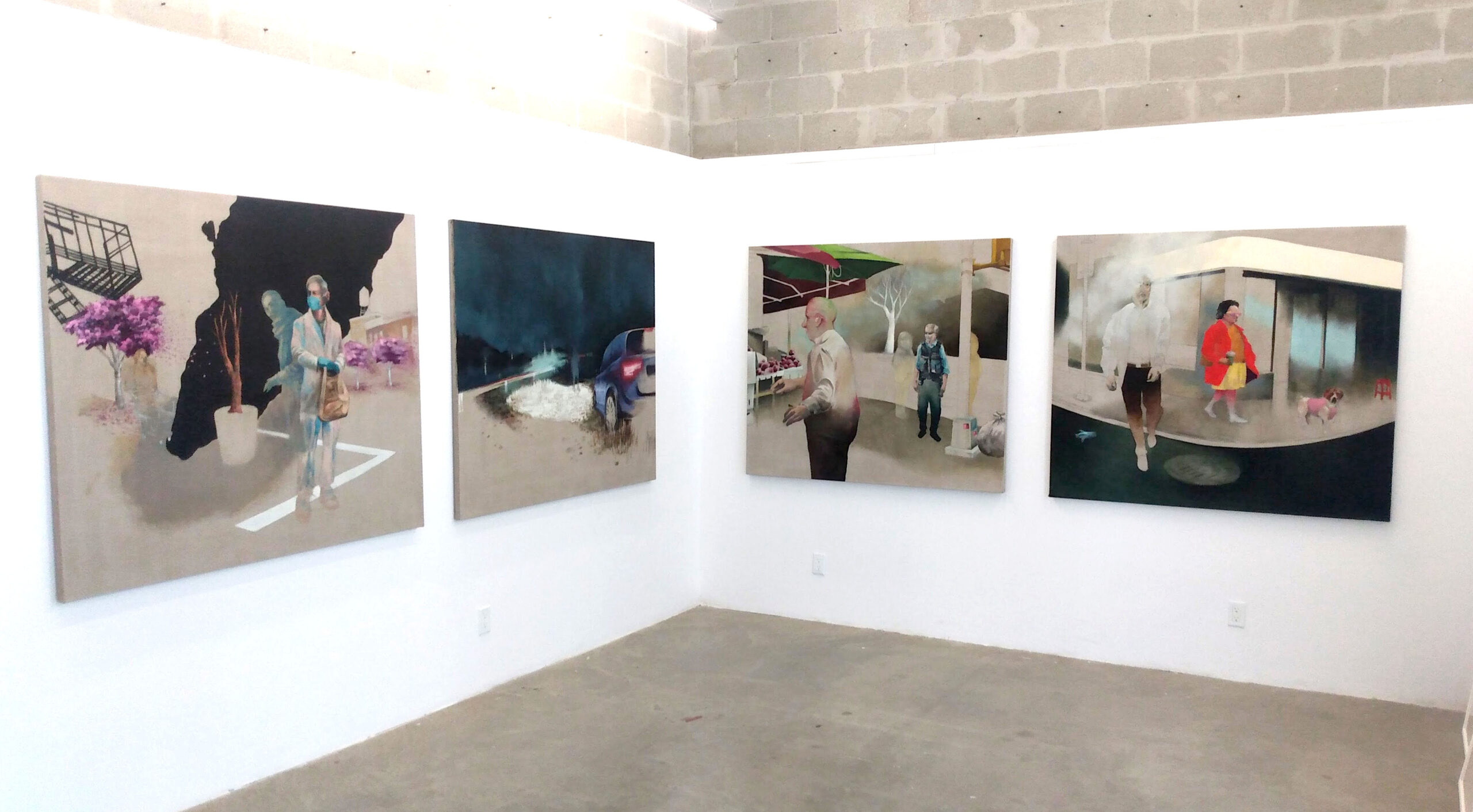
Pierre St-Jacques: People in the City, Station Independent Projects, Remote Gallery
When viewers first encounter St-Jacques’s arresting works displayed on the walls of Remote Gallery, they are likely struck by a sense of unease. Looking at them you feel as if you are looking at an event in medias res. This feeling is heightened by the fact that the artist has only painted the salient details – leaving the rest of the canvas bare. Each item that is included would seem to constitute an element of some unfolding event. And this editing of details is countenanced by the stark graphic contrasts St-Jacques uses.
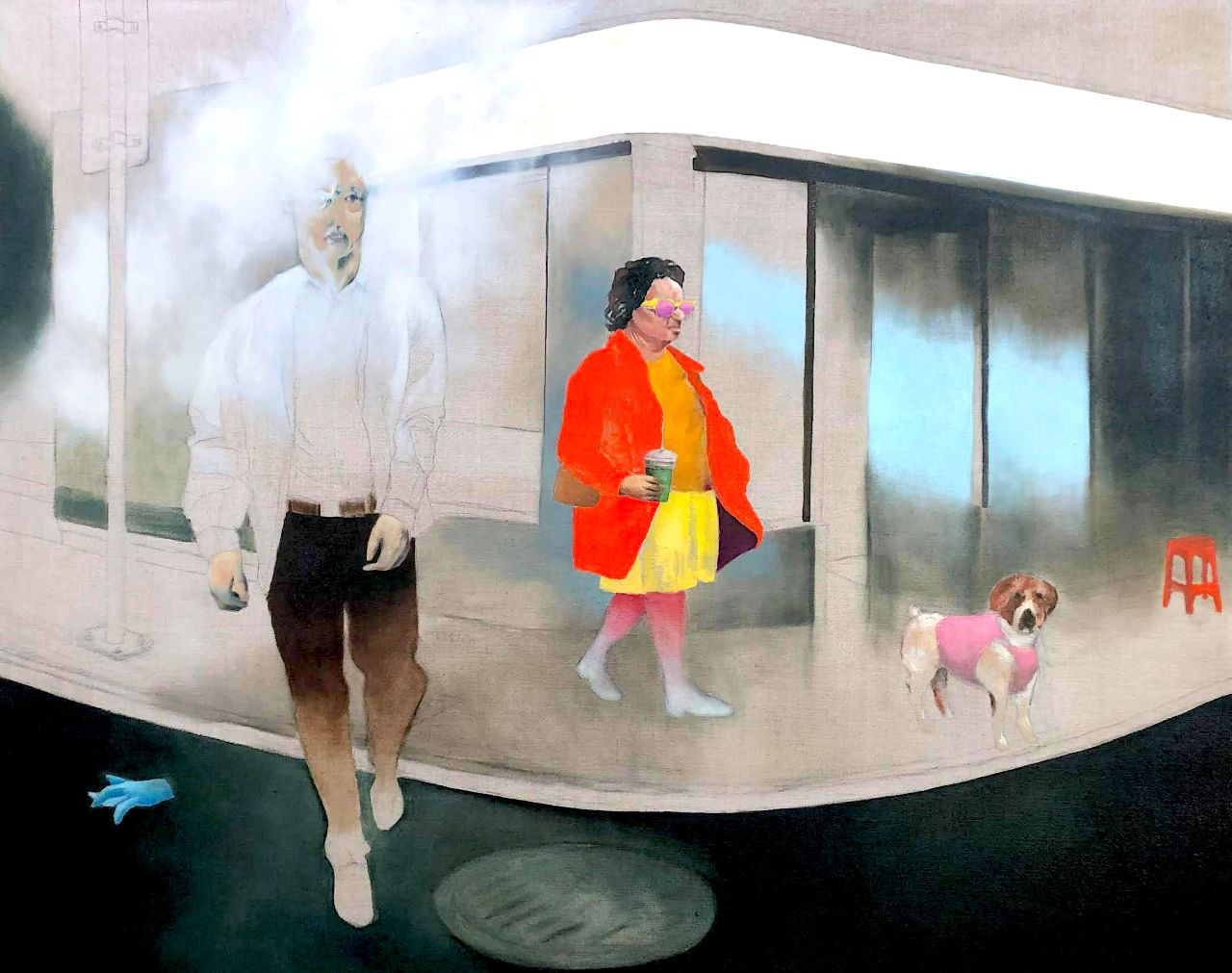
Untitled (Street Corner with Dog), 2025, oil on linen, 56” x 48”
Notably, the figures depicted in these oil paintings appear detached from one another. This is especially noticeable in the paintings described as Street Corner with Dog and Hearing Aid, in each of which the figures inhabit a non-place (Nicht-Ort). We all know these places – non-descript urban plazas and street corners, airport terminals, malls. Places where there is no room for stopping to breathe, where all traces of nature have been expunged. This is a visual rendering of disenchantment – a feeling of being disconnected in a very general sense, unable to find our way. St-Jacques describes it as ‘the unease of navigating a world we have meticulously constructed yet struggle to inhabit comfortably’. This off-kilter world he paints strikes me as a perfect visualisation of American novelist Don DeLillo’s postmodernist dystopia in his novel White Noise. A toxic cloud hangs over a town, imperceptibly perverting the lives of its population. Likewise, dark foreboding clouds appear on the horizons of St-Jacques’s ‘landscapes’, e.g., in his Forest Fire.
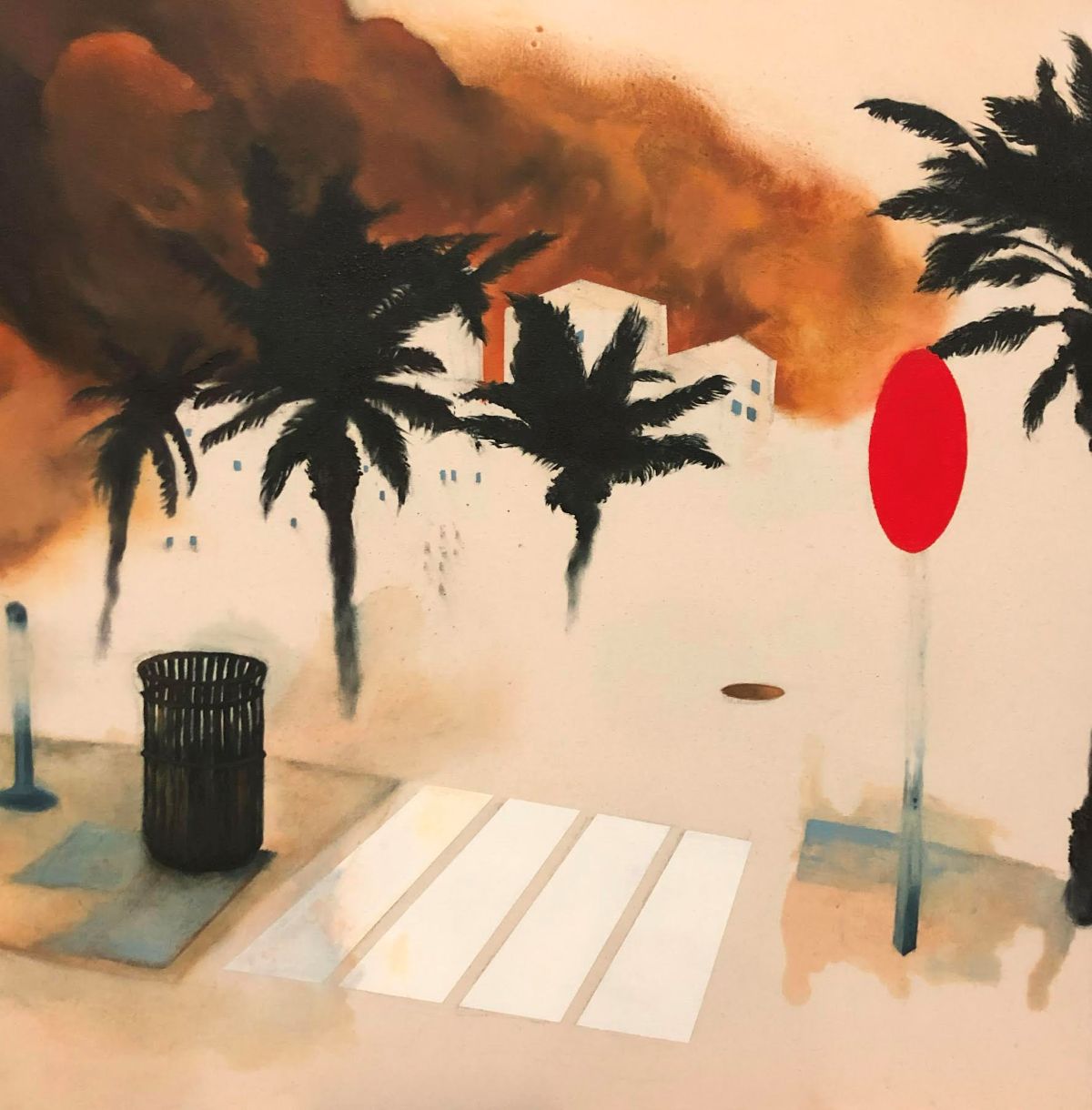
Untitled (Forest Fire), 2024, oil on linen, 36” x 36”
Originally St-Jacques thought of calling the exhibition ‘Angels in the Maze’, which seems apt given the feelings the paintings elicit as described above. But misgivings about the religious connotations of the word ‘angels’ led him instead to title it People in the City. This secularised title I find a little anaemic. Many of the figures he paints are suitably ethereal – like ghostly apparitions. Is the girl standing by the security guard in Hearing Aid fully present or momentarily visiting from another world? Hard to say. Indeed, these figures immediately reminded me of Toronto artist Rae Johnson’s paintings that, ironically, she called her Angel Series. In her works angels appear in bars, bath houses and on a lamplit street corner during a brawl.
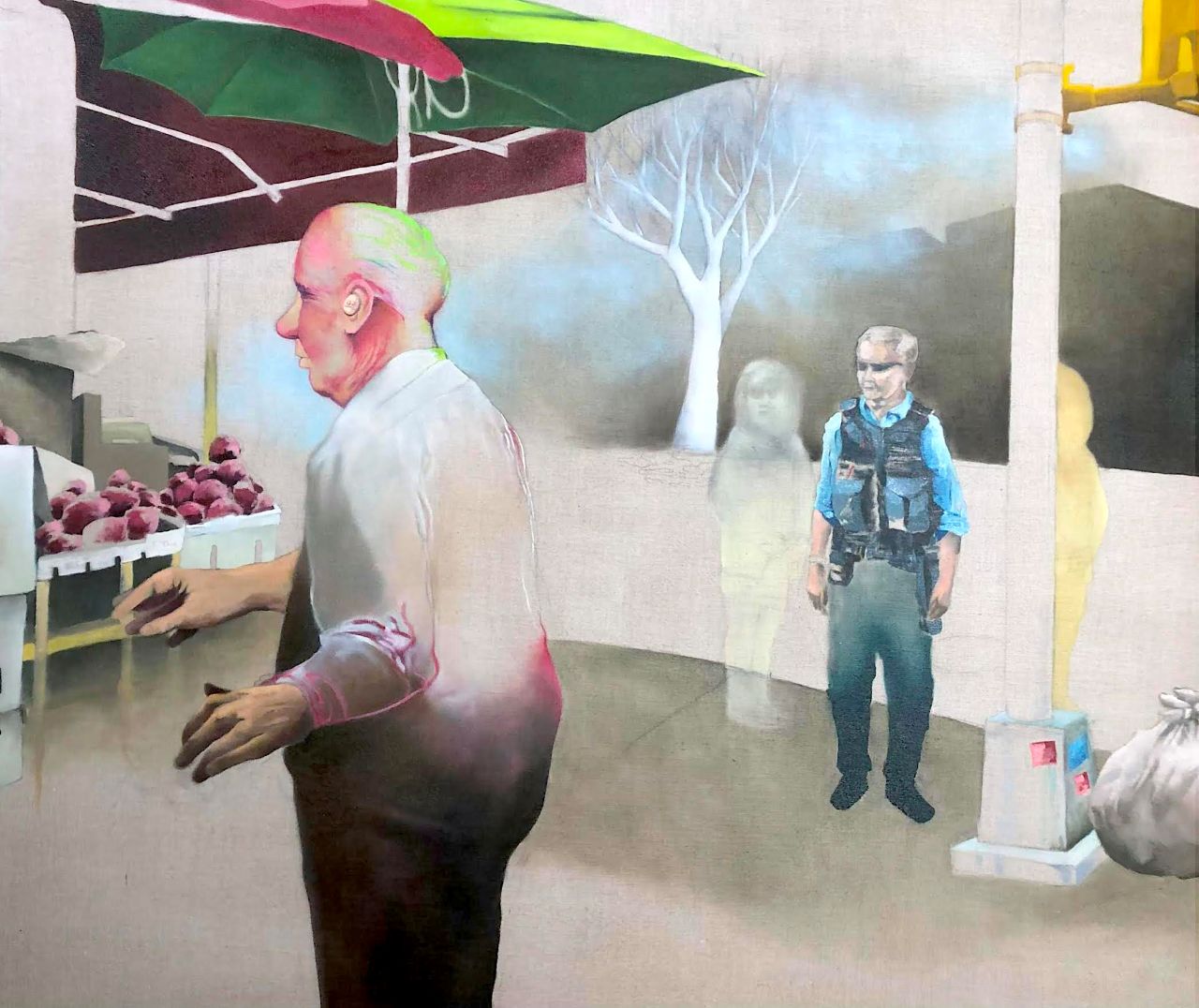
Untitled (Hearing Aid), 2025, oil on linen, 56” x 48”
In St-Jacques’s paintings there is the otherworldly presence which heightens the sense of alienation, contrasting the banal with the preternatural or, dare I say it, the divine. This admixture is evidenced in his Night Road. Here a hastily parked car, with its lights on, illuminates a man, presumably the driver or a passenger, standing against the background of a city in the distance across a bay. The man seems spectral – poised to merge magically with the night sky above him.
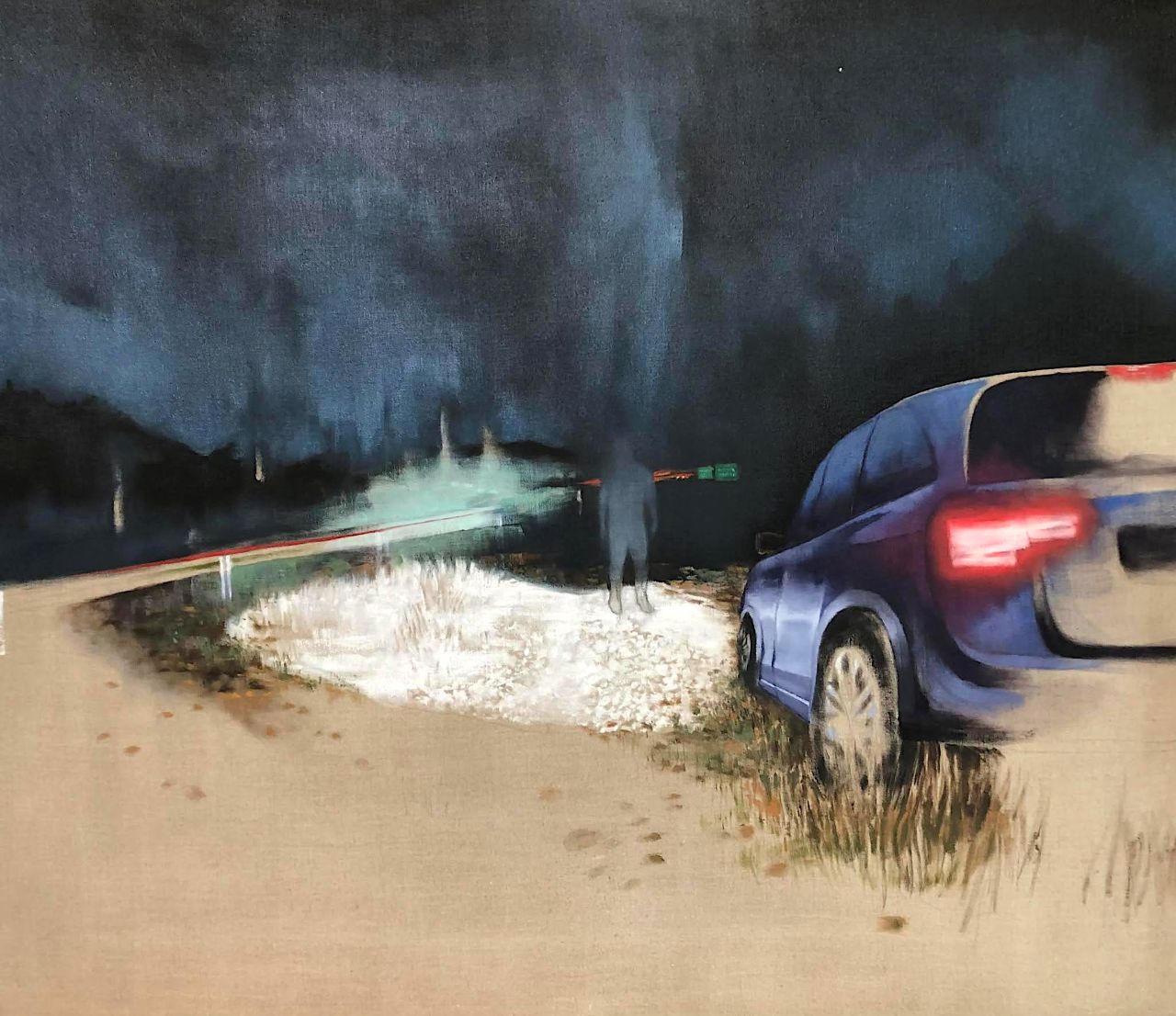
Untitled (Night Road), 2025, oil on linen, 56” x 48”
As noted, the figures in the large paintings in the exhibition seem to be caught in the middle of some event. This feeling is accentuated by a theatricality. More precisely, it is as if the canvas in each is a stage, with actors surrounded by improvised props – a dog, a pair of discarded rubber gloves, a parked car, a stool, a fire escape and so on – each added to produce an atmosphere rather than its happening to be there. There is little that is natural about the scenes he creates. And this feature of his work is doubtless a reflection of the fact that for many years St-Jacques has primarily produced videos. Thus, these paintings seem to mark a transition in his work from video to painting.
And if we think of this work as transitional, then we wonder about its evolution. Certain aspects of St-Jacques’s work strike me as especially successful. They feature in the paintings in which the human figures are indistinct, minimally present, if there at all, as for instance in his Night Road. Similarly, his smaller oil paintings Night Forest and Forest Fire are powerful because they hint at human presence and thus have a psychologically edgy atmosphere to them. It seems to me that St-Jacques is a master of the psychological in this respect. Here I am thinking of the traces of human presence, as so wonderfully rendered by David Hockney in his famous Splash paintings, where all we see is the immediate aftermath of a diver with no one otherwise around. Coincidentally, Hockney was investigating the stillness of painting and photography in terms of failing to capture movement – something that is central, on the other hand, to video.
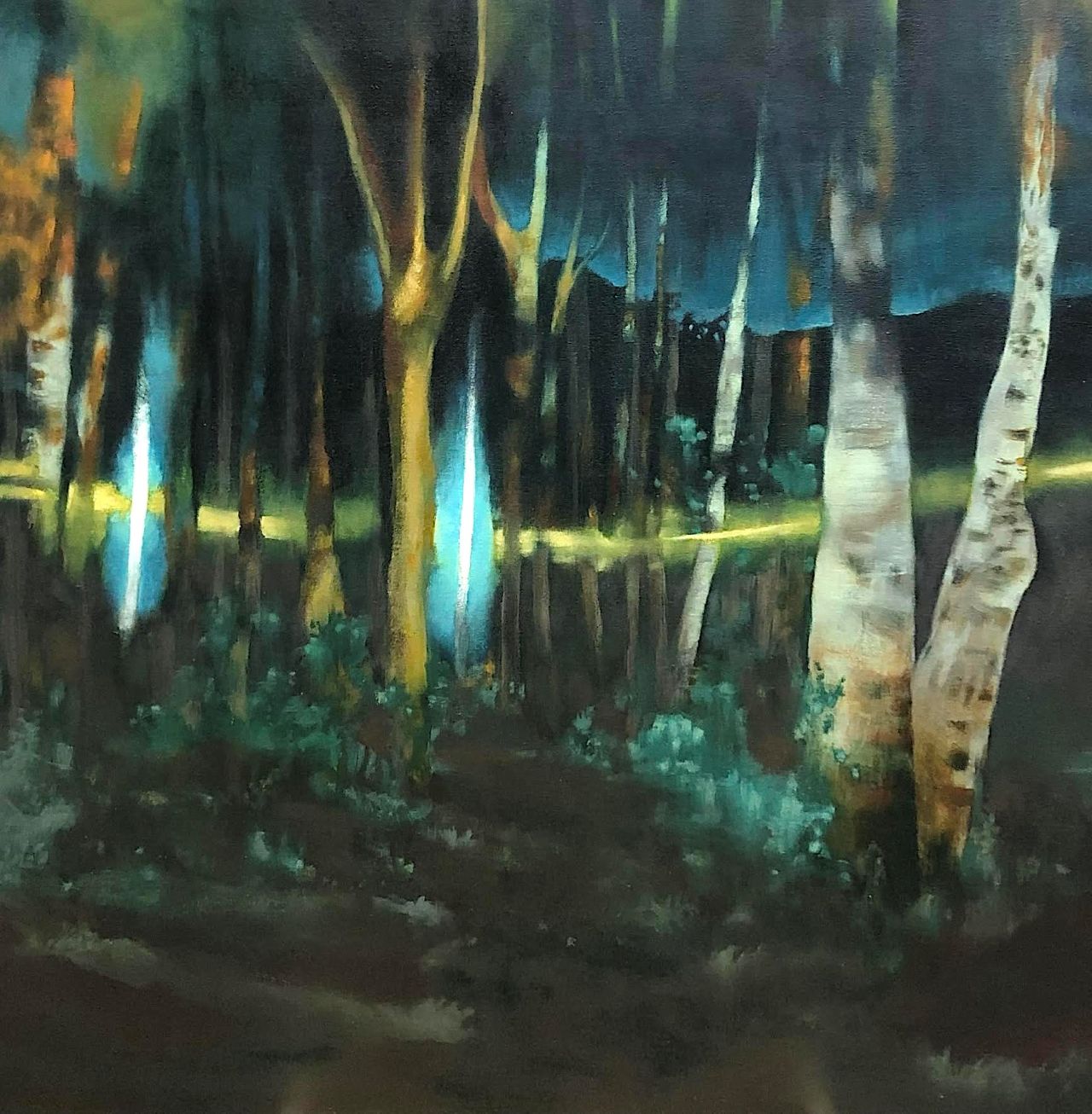
Untitled (Night Forest), 2024, oil on linen, 36” x 36”
Interestingly, also on display are a series of watercolour drawings of figures, clearly executed more spontaneously, less deliberatively than we find in the oil paintings. Particularly striking is his Disappearing Man, all yellow in his ephemerality.
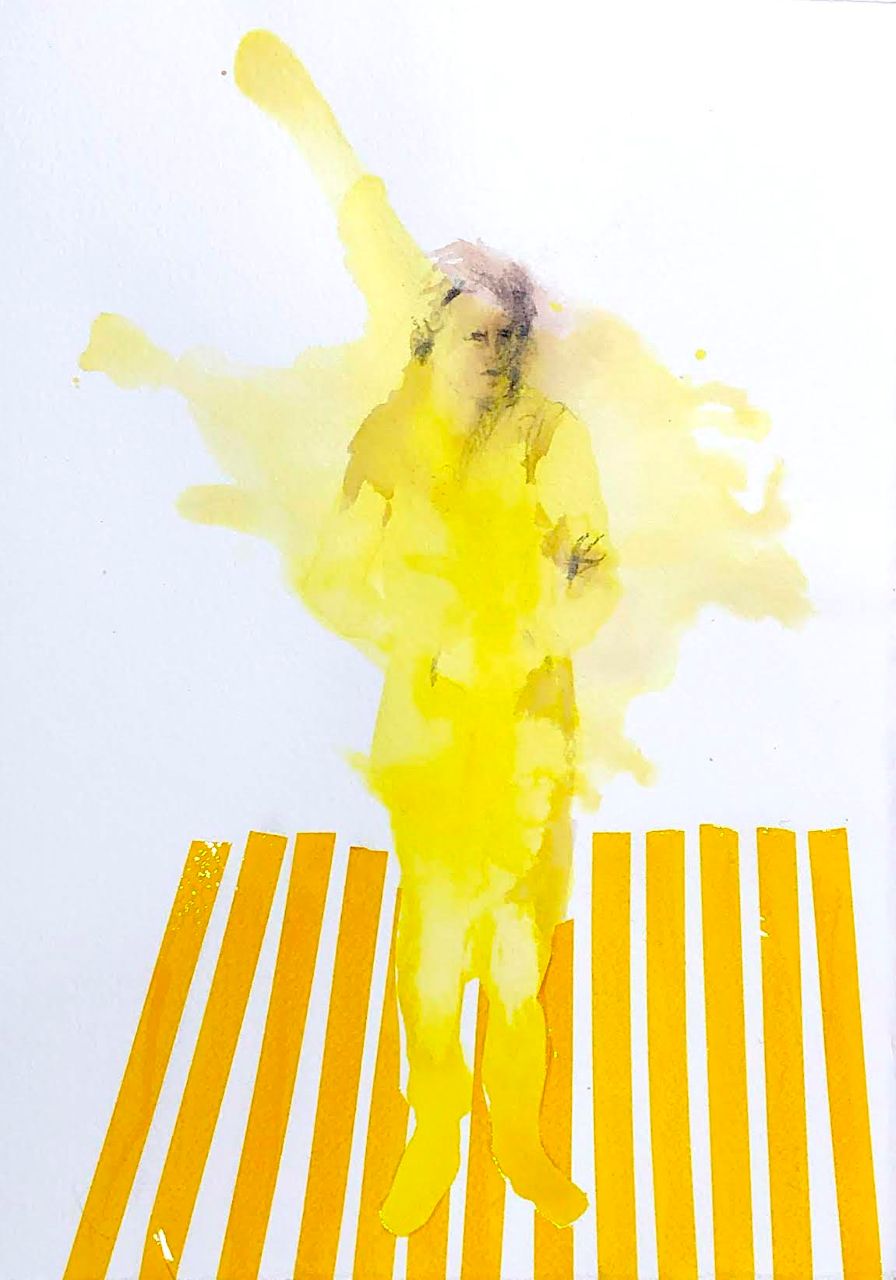
Untitled (Disappearing Man #11), 2026, ink on paper, 9” x 12.5”
As is often the case with artists, it is their drawings and sketches that are most revealing. Curator Nigel Greenwood once remarked that looking at drawings “is often a short cut to understanding an artist…And so often I can duck the grand gesture, the public rhetoric, and see what the artist really wants to say, doing what comes naturally (or unnaturally).” (The Hayward Annual, catalogue, 1985) And that is the case here.
Hugh Alcock
Images are courtesy of Station Independent Projects
*Exhibition information: Pierre St Jacques, People in the City, May 8 – 16, 2026, Station Independent Projects, Remote Gallery A, 568 Richmond St W., Toronto.