
Mehdi Dandi’s first solo exhibition at the Stephen Bulger Gallery is not a typical Photography exhibition. Mehdi, an Iranian born artist currently living and working in Toronto, is using photography in a unique way – not as an instrument of documentation, or of framing an image, but as a way of reflecting on the persistence of images over time. In his work photographs are transformed through a long and rigorous process creating an unstable image, much like the workings of memory.
Mehdi tells us that his work is informed by the experience of migration. He draws his source material from taking photographs on the city’s streets and then picks out the images that reflect to him something from his former life, before migration. The images are then transformed through an intricate process of assembling, transformation, and slow, deliberate destruction. He manipulates the photographs by hand, scans and reprints them. After that he places several layers on top of one another. Finally, he rips pieces off to expose the underlying layers. This ongoing act of constructing, reconstructing, and deconstructing gives the work a strong sense of process. The tearing is deliberate, leaving visible traces of each action.
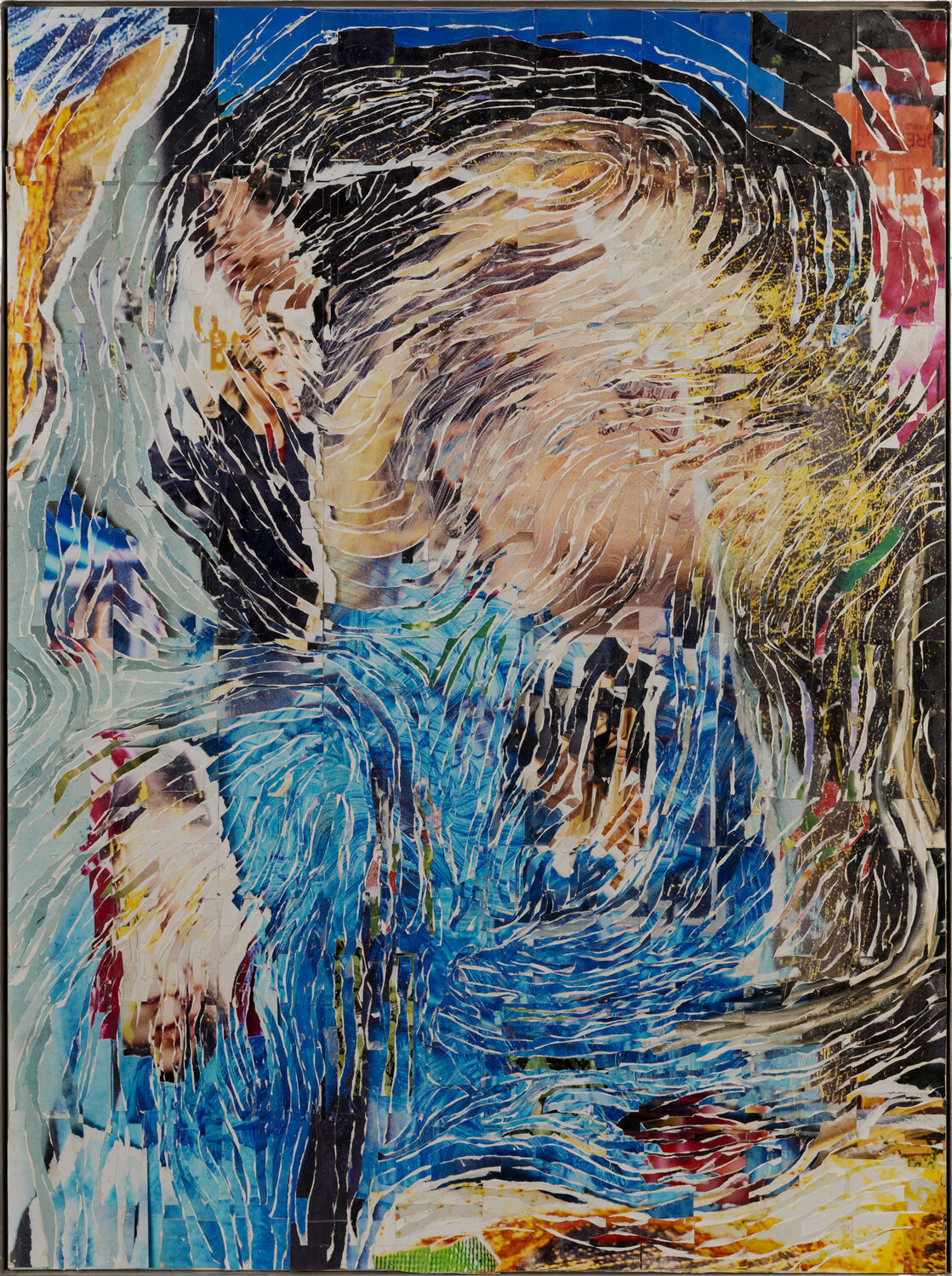
Chaos Secret, 2025 © Mehdi Dandi / courtesy Stephen Bulger Gallery
This layering produces an archaeological-like effect. As sections are removed, fragments of earlier images are exposed, suggesting a kind of visual history embedded within the surface. This is reminiscent of the bulletin boards found around the city, layered with posters and advertisements, where older layers become visible as posters are torn away. It brings to mind the decollage practices of artists such as Mimmo Rotella and Raymond Hains, associated with Nouveau Réalisme, and American artist Mark Bradford, creating works inspired by urban textures. But while their work often functioned more as a form of social commentary, Mehdi is motivated by more personal experiences. He reflects on his own history, memories, and experience as a migrant.
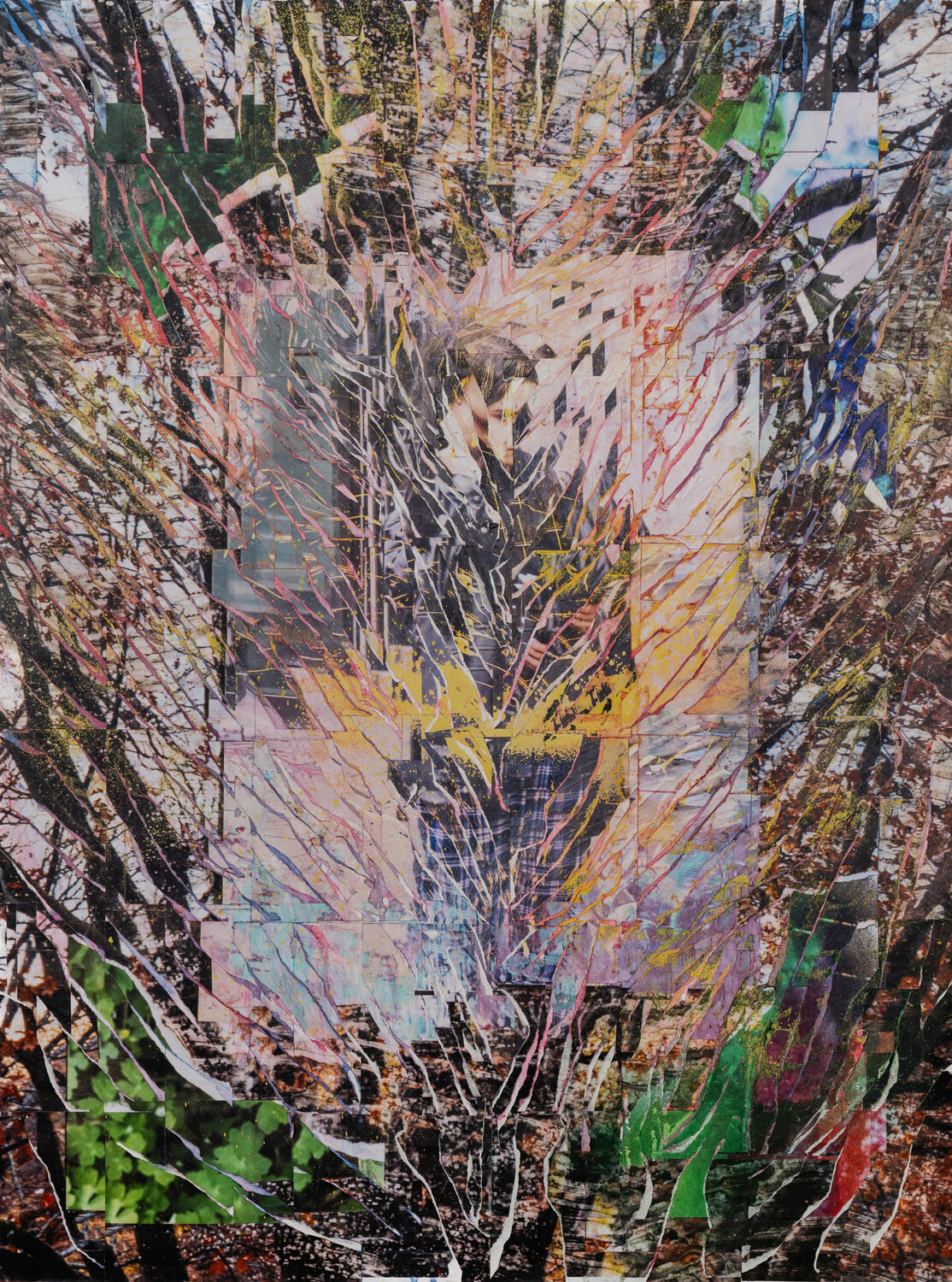
But You Said You’d Wait, 2024 © Mehdi Dandi / courtesy Stephen Bulger Gallery
In a sense, then, Mehdi’s works are not only physically layered, but also possess many layers of meaning, possible interpretations and associations. They are highly personal, while at the same time informed by many artistic and aesthetic influences. This makes different readings of the art possible, depending on one’s own interests and ways of relating to it. As noted, his work echoes the décollage practices of artists working with urban materials and street art aesthetic, as well as the flattened, spatially layered, compartmentalized compositions of Islamic and Persian miniatures. We also see echoes of European old masters as well as modernist painting.
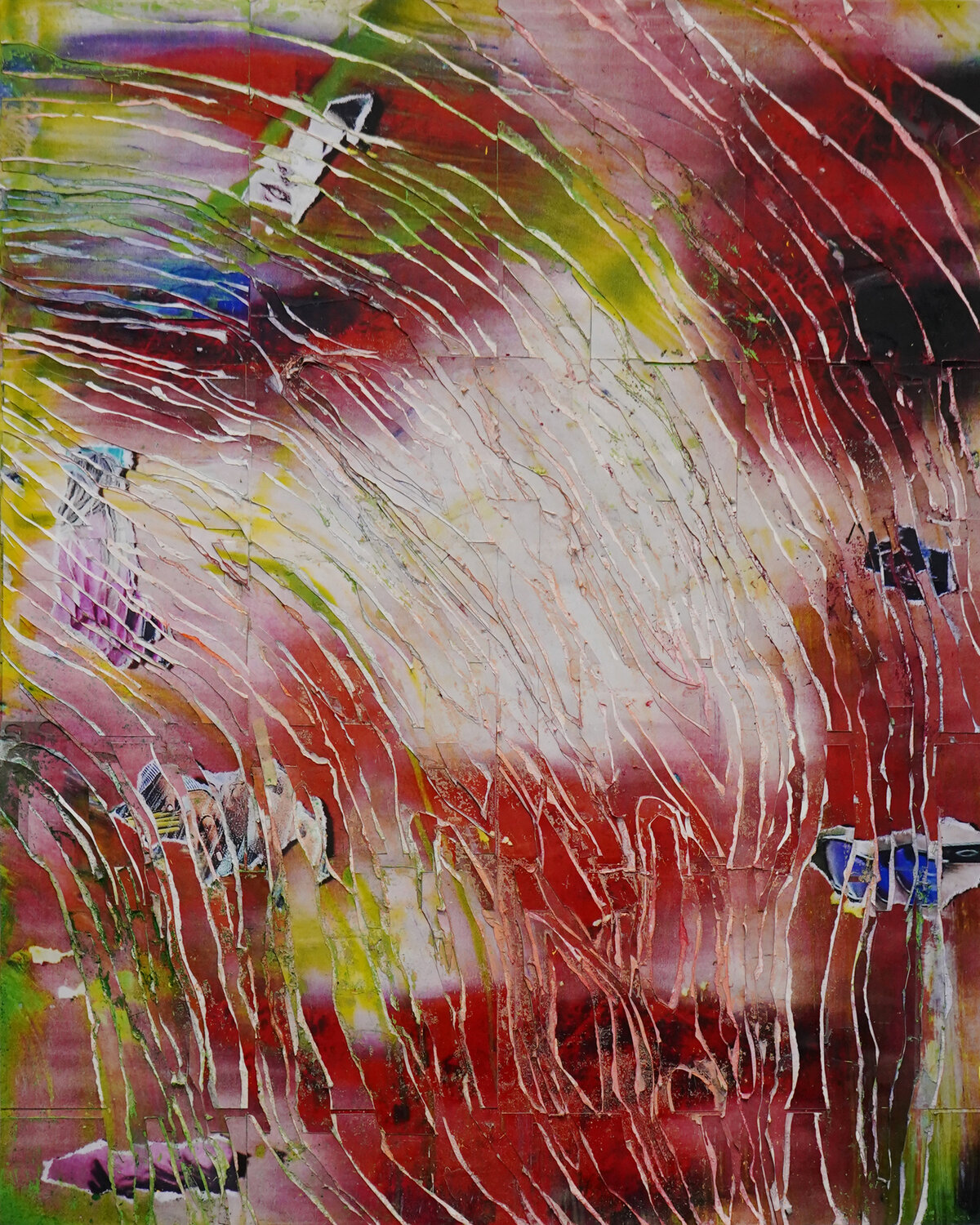
Never Seen Monalisa’s Smile, 2025 © Mehdi Dandi / courtesy Stephen Bulger Gallery
The physicality of the works and the emphasis on the process fit with ideas from abstract expressionism and action painting, where the trace of the artist’s gesture becomes a significant part of the experience, and the work seems almost to be happening in front of the viewer. Still, I can’t ignore the fact that this work evokes old master paintings as well. That makes it easy for us painters to claim Mehdi as our own. I am reminded of this, for instance, in his self-portrait series that shows portraits in a classic three-quarters view, with the face disappearing into overexposure. As light washes over the face and unites the surface, making the viewer complete the image herself. This division of the image into light and dark recalls painters such as Vermeer or Bellini. Here, the features themselves seem less important than the experience of light and shadow, while the torn surfaces echo the cracking patterns of aged oil paintings.
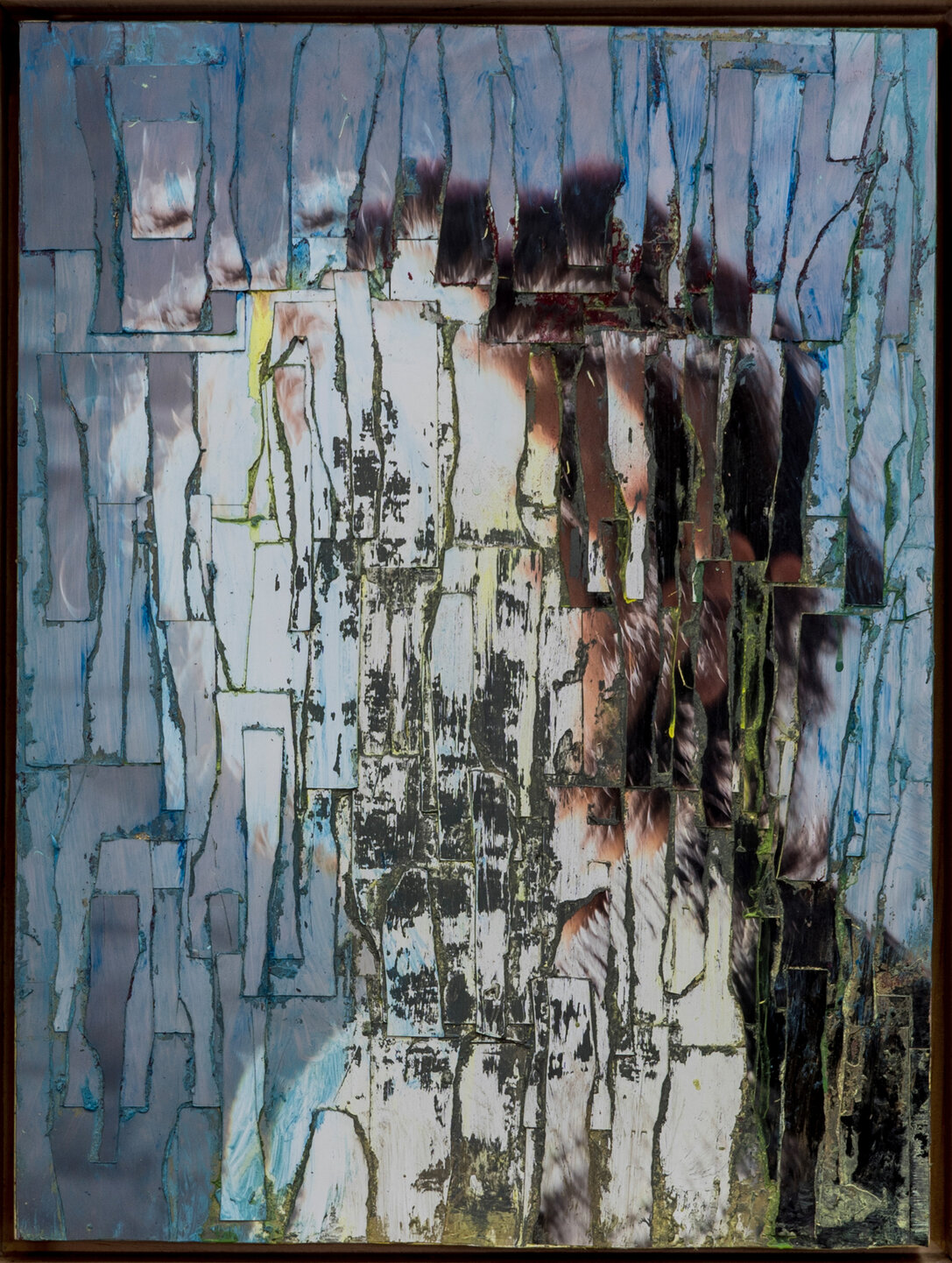
Self Portraits #4, 2024 © Mehdi Dandi / courtesy Stephen Bulger Gallery
Ultimately, these works exist in a space between photography and painting, construction and destruction, image and material. They do not present themselves all at once, but unfold gradually, asking the viewer to spend time with them. In doing so, they return to that initial question: what makes a work of art compelling? It is not immediately apprehensible, but rather it derives from being able to sustain attention, to keep opening up, and to continue the conversation.
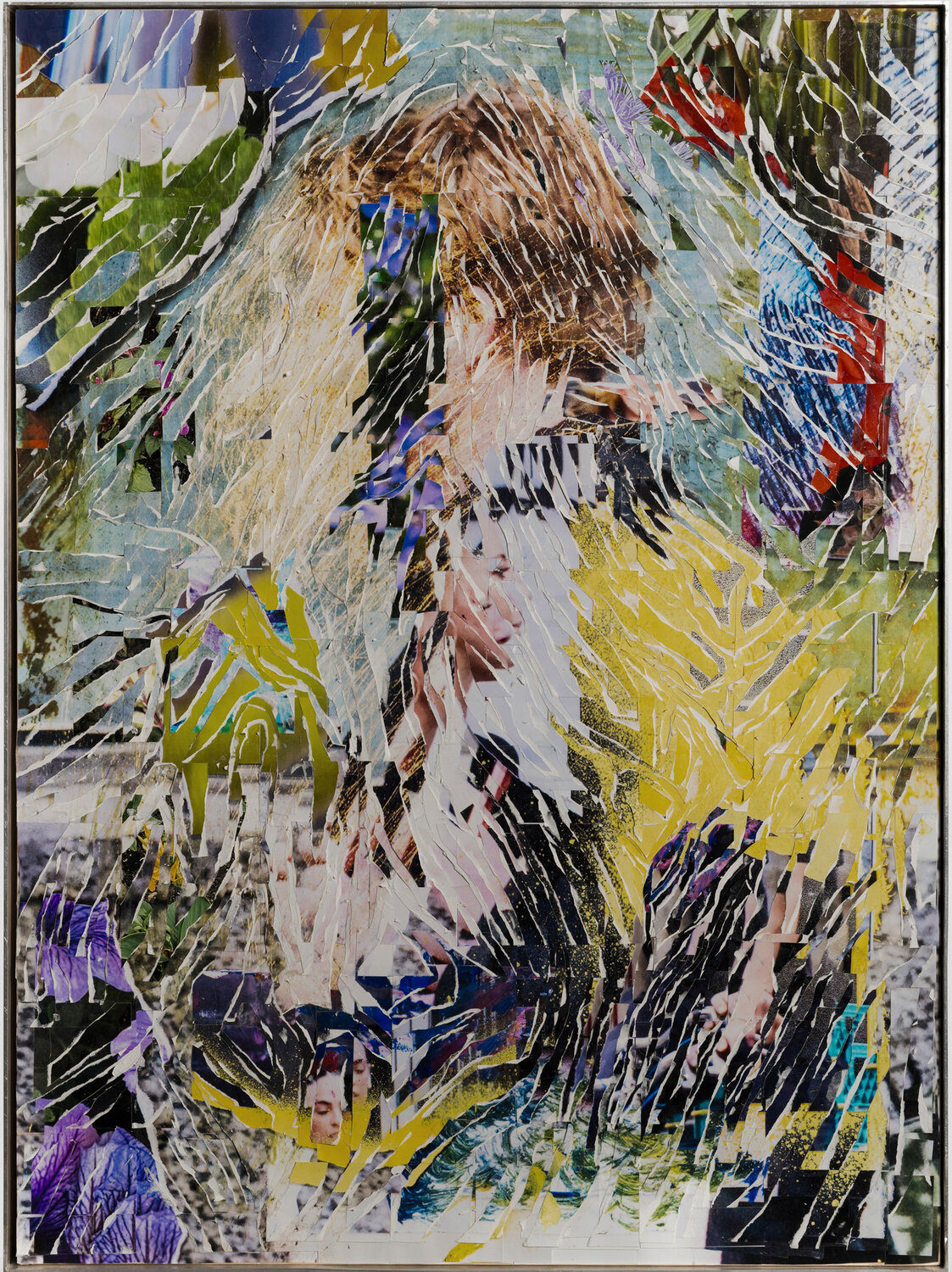
What I Saw That You Didn’t, 2024 © Mehdi Dandi / courtesy Stephen Bulger Gallery
For me, Mehdi’s works seem to be not only about memory, recollection or the experience of migration, but also about the sheer magic of image-making. They almost give the viewer a glimpse into the inner workings of this process, creating the sense that if we look closely enough, something will reveal itself, that we might come to understand this transformation. Mehdi assembles and disassembles images in a way that feels exploratory, almost like a child trying to understand how something works by taking it apart.
Lena Chermoshniuk
*Exhibition information: Mehdi Dandi, Afterimage, March 7 – April 25, 2026, Stephen Bulger Gallery, 1356 Dundas Street West, Toronto. Gallery hours: Tue – Sat 11am – 6pm.