
ECO ART 2026 thoughtfully addresses environmental issues, with each piece taking responsibility and accountability to highlight the destructive relationship between human-made materials and nature. However, it does so by using manufactured materials and human skill–a seemingly ironic approach considering that the artists aimed to emphasize how humans have jeopardized the future of our world. Yet, upon further reflection, their works convey a unified message that encourage viewers to ask: if we caused the damage, can we also repair it?
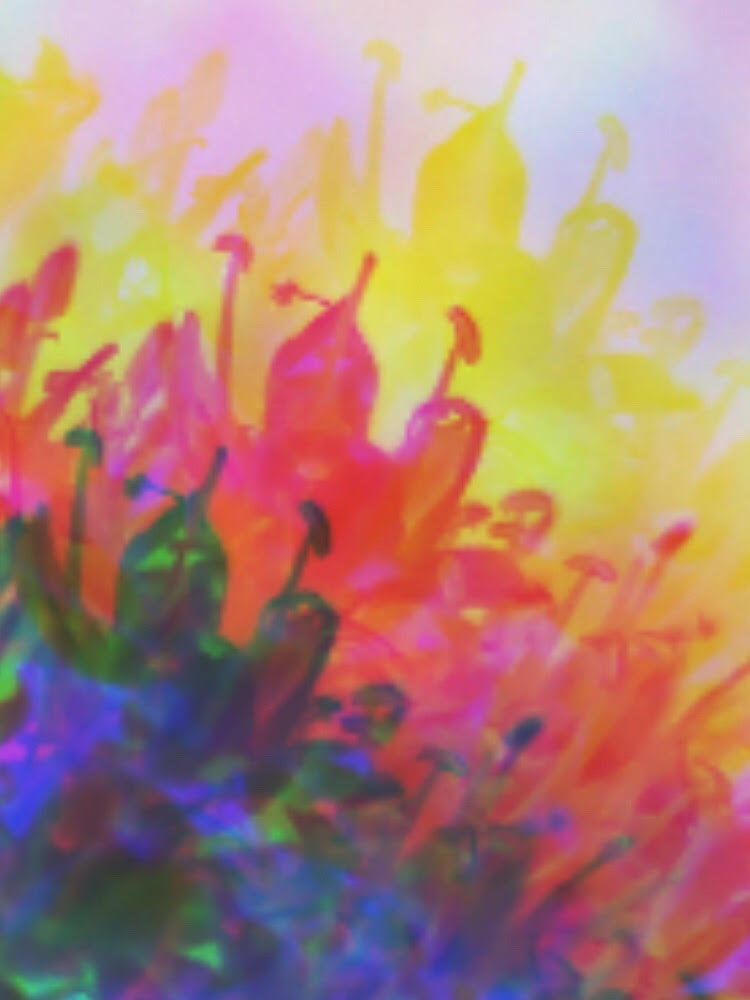
Shannon Wallace, Anemone for a mantis under the h20, digital edit of a photograph, 2020
This annual exhibit at Gallery 1313 has collaborated with environmental organizations such as TEA (Toronto Environmental Alliance) and The Green Belt Foundation to organize exhibitions on various environmental issues. The show features a diverse selection of works by both national and international artists, all sharing a common concern: the state of the environment. Phil Anderson considers this theme in the exhibition’s curation by presenting various interpretations of the sentiment through different styles, media, and perspectives.
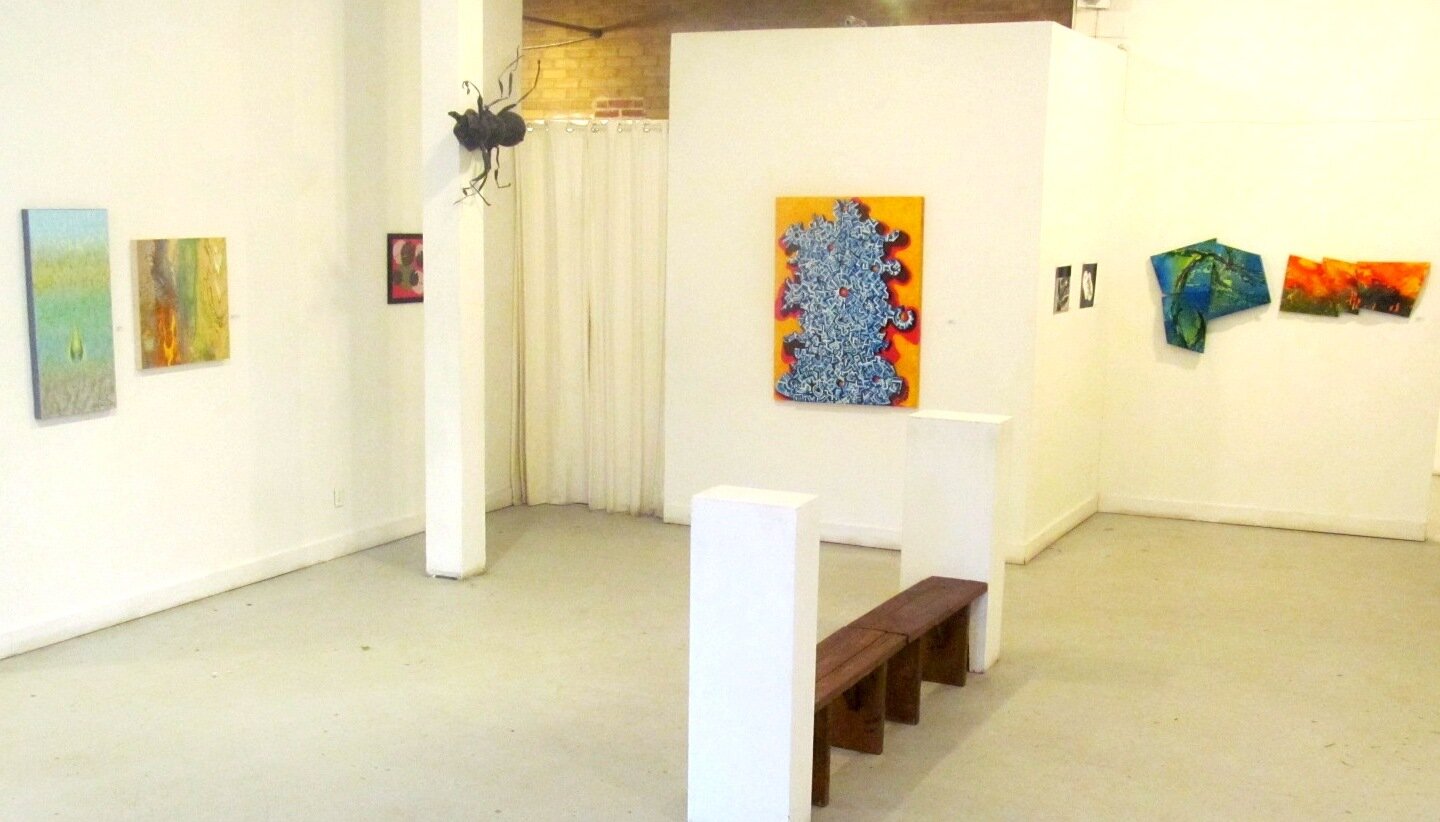
Installation view of ECO ART at Gallery 1313. Photo: Phil Anderson
Visitors walking in will likely be drawn first to Emily Pleasance’s imitation of a pond. I SPY, Terraforming (2024) was made from found natural objects, which the artist has composed in reference to the I SPY children’s book series. Pleasance’s pond invites viewers to peer over the low wooden table, to engage with nature from a childlike perspective, to simply contemplate its beauty. The work blurs the line between a close-up landscape and an entire planet, encouraging curiosity about our relationship with the natural world and the possibilities within it.
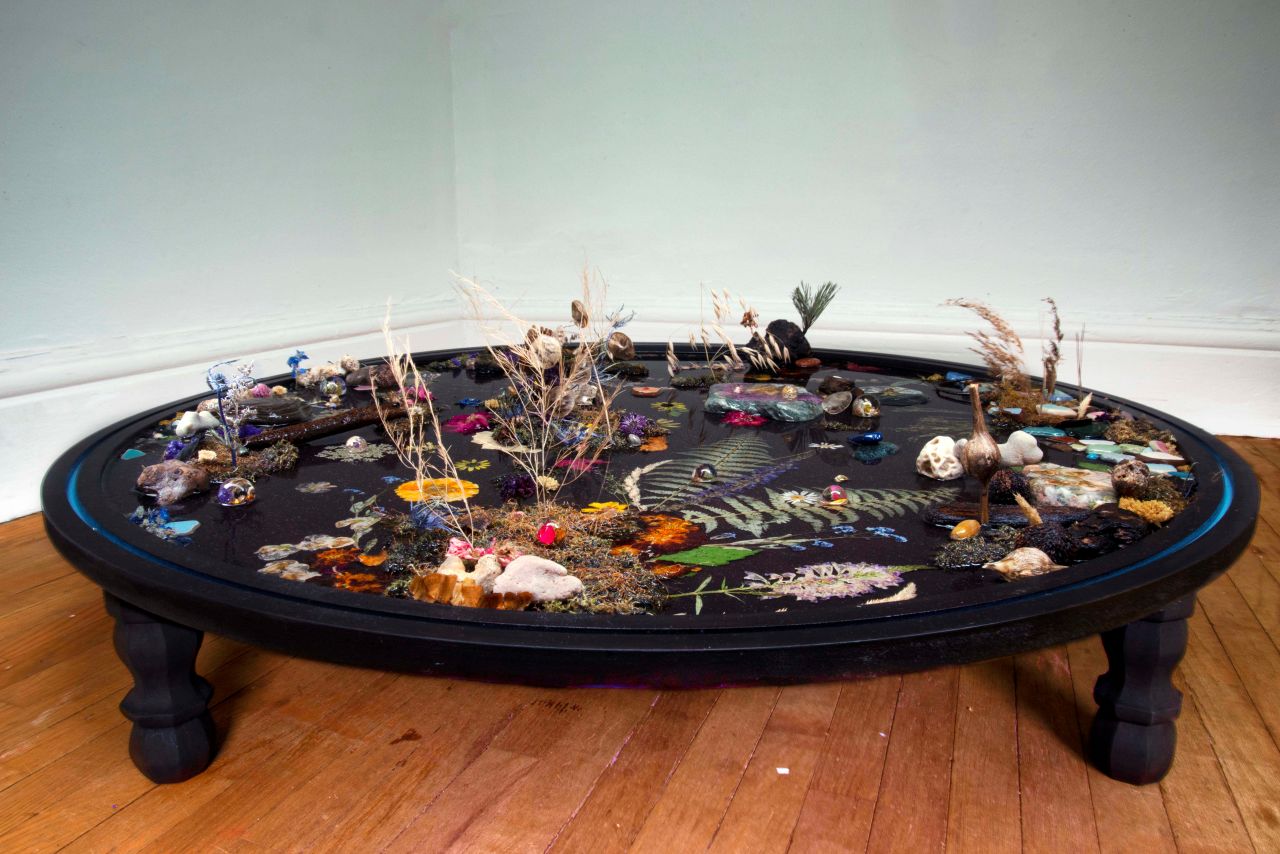
Emily Pleasance, SPY, Terraforming, 2024, found natural objects (unaltered), resin, wood, 48 x 48 x 8.50 inches
Dire Consequences (2024) by Patrizia Brasch similarly sets out to consciously imitate what we have lost, using a mix of natural and industrial materials such as glass, cement, quartz crystals, coloured sand, lava rock from Flagstaff, agate slices, nails, and other metals. The artist states that Dire Consequences symbolizes climate change caused by human-produced greenhouse gases. Its centerpiece depicts the polar regions and melting glaciers, illustrating how their disappearance leads to habitat destruction, droughts, and wildfires that threaten life on Earth. In this context, the work powerfully captures the urgency of the climate crisis, not only warning about the current state of our environment but also openly recognizing who is to blame– and the need for us to change.
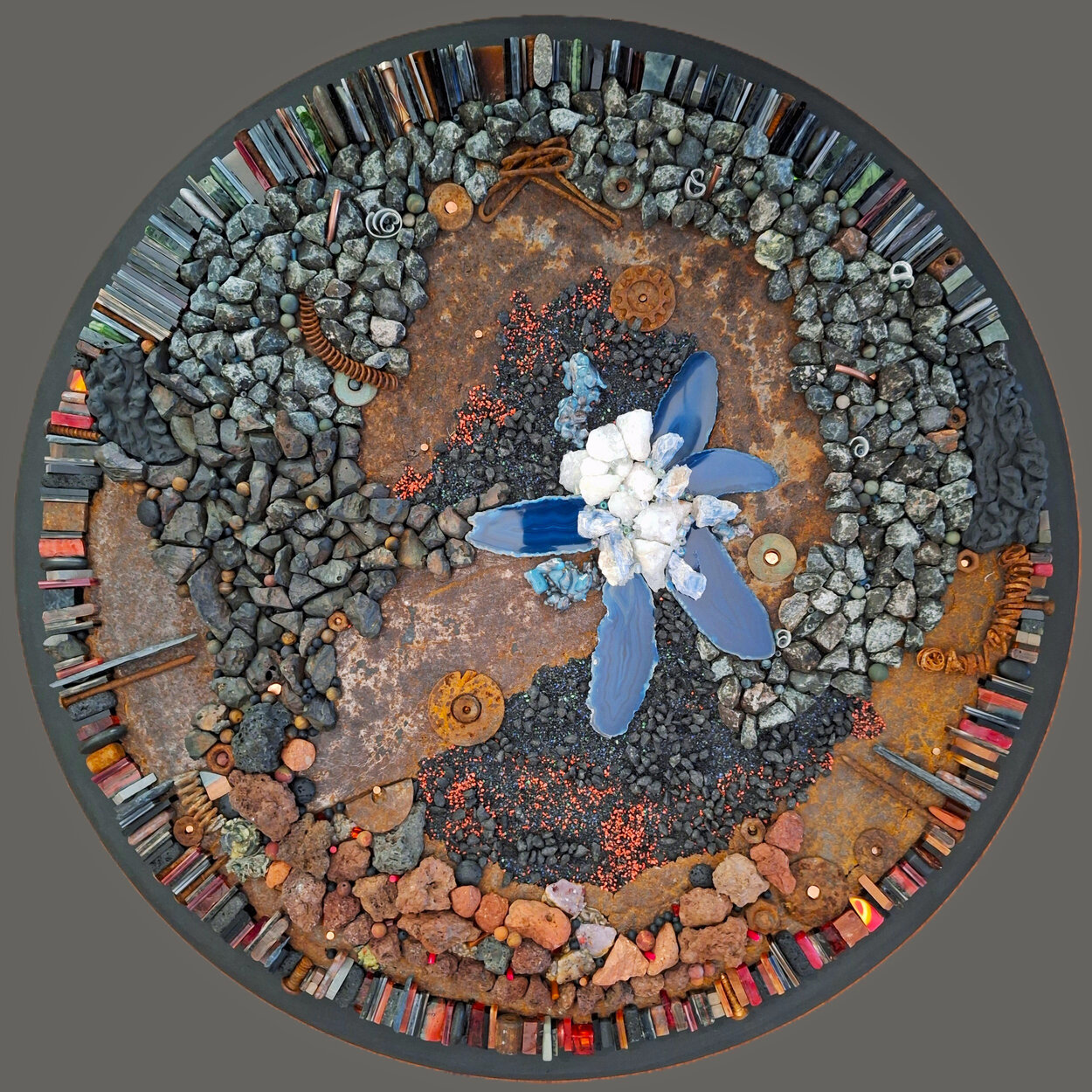
Patrizia Brasch, Dire Consequences, 2024,corroded metal including brake shields, washers, hex nuts, screws and nails, agate slices, quartz crystals, kyanite, asphalt pebbles from the streets around my house, lava rock from Flagstaff, slag from Sudbury*, jasper beads, lava beads, smalti, stained glass, metal shavings, copper nails, aquarium gravel, coloured sand, fused glass, and cement, diameter 18 inches
The insidious effects of climate change and human efforts are documented in Grace Vali’s Green Wash It Away (2024). Vali comments on the false advertising of biodegradable products, which exploit the desire of consumers to be environmentally conscious, but many of these items will never actually decay–this is called greenwashing. The play on words in the title, paired with the humorous yet chronologically significant fossils, shows just how long these items actually take to decompose. From another perspective, Vali’s piece also shows how the world records human life by collecting a cache of toxic artifacts. This idea raises a question about our lack of responsibility and contribution to environmental harm: why do we bother to forget about belongings? What makes us see them as no longer our responsibility to preserve or store? Like climate issues, taking accountability for what we create, own or leave behind is our problem to solve–not the Earth’s.
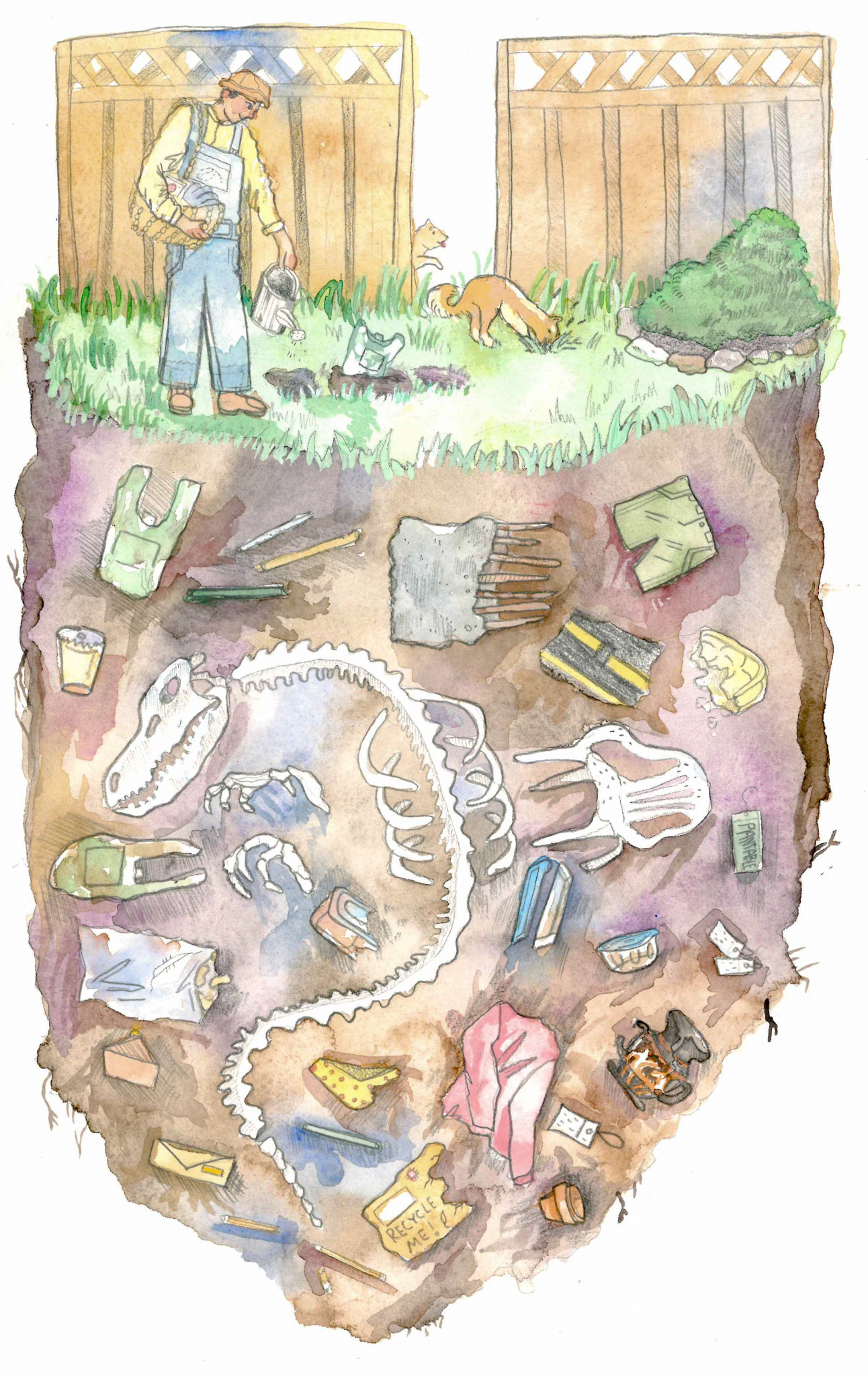
Grace Vali, Green Wash it Away, 2024, gouache on paper, 12 x 15 inches
The message of environmental awareness, particularly regarding human-made products, is conveyed through unique artistic approaches. For instance, Shannon Wallace uses digital editing and language to portray animals in the wild, blending anthropological and technological insights. Similarly, Paul Brandejs mimics the artistry of spider webs with wire, while Beverly Couse takes a strong stance on man destroying nature, which he is ultimately part of, in her painting Homage to Murdered Eco-Activists.
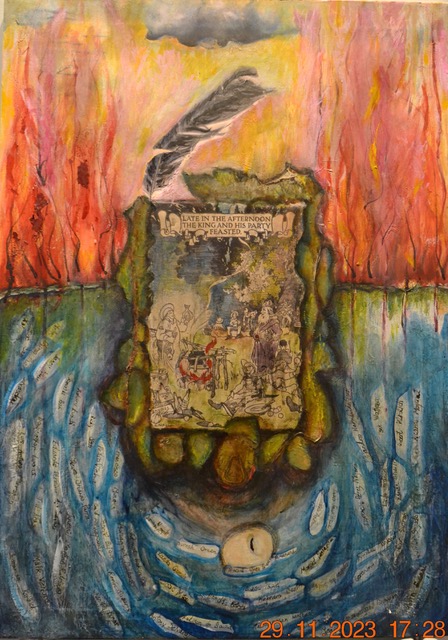
Beverly Couse, Homage to Murdered Eco-Activists, 24 x 34 inches
I recommend visiting the ECO ART 2026 exhibition at Gallery 1313, as it offered me valuable insights into my environmental impact—both positive and negative.
Text and photo: Antonella Pecora Ruiz
*Exhibition information: ECO ART, 2026, March 4 – 15, 2026, Gallery 1313, 1313 Queen St West, Toronto. Gallery hours: Wednesday – Saturday, 1 – 5 pm, Sunday 1 – 4 pm.