
Vanda sanderiana. Rafflesia arnoldii. Nepenthes. Each of these are examples of epiphytic plants: a kind of plant living on another plant, bolstering biodiversity without a parasitic relationship. This dynamic is explored in Marigold Santos’ Epiphytic Elucidations at Patel Brown, with representations of the aforementioned species, featured in amazing compositions.
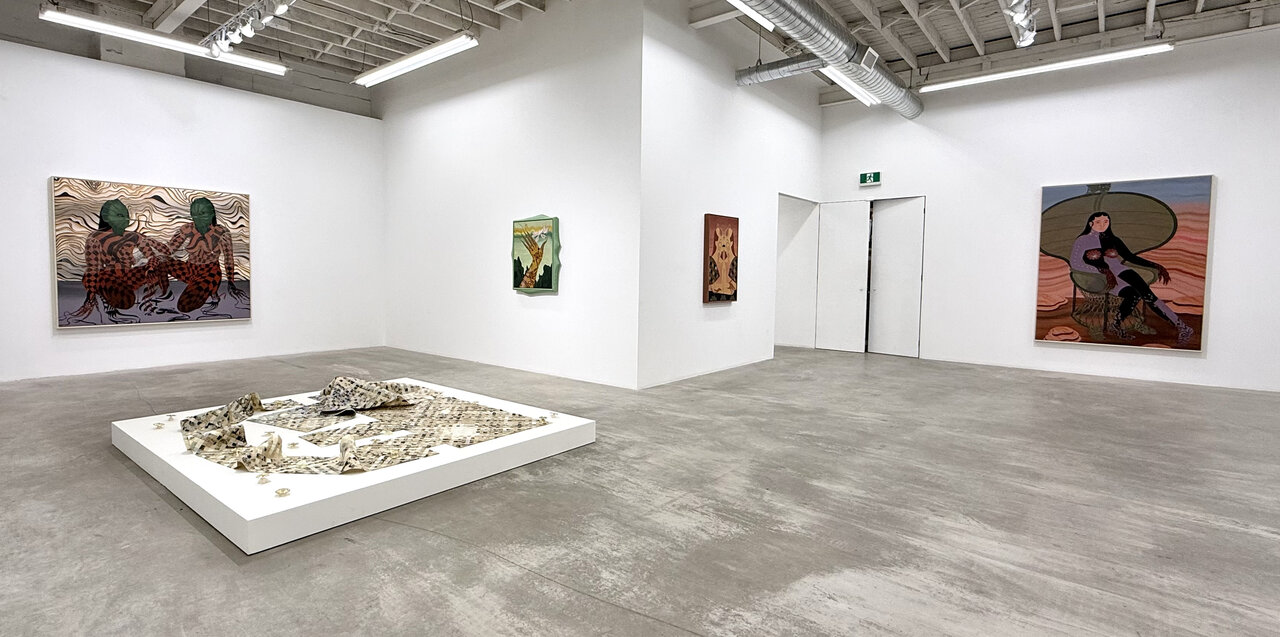
Exhibition view of Marigold Santos: Epiphytic Elucidations at Patel Brown Gallery
Santos’ use of these plants facilitates deeper contemplation of how we understand the species. Take for example, reverie study: rafflesia with mammary glands and eyes (2025). The Rafflesia arnoldii is also known as the corpse flower for its malodor. Pairing the anatomical drawing of mammary glands with the Rafflesia made me consider fertility. The drawings have the appearance of petals and pistils, yet, still exist in different contexts. Rafflesia is consumed as a tea after childbirth as part of the postpartum recovery in the Indigenous communities of Northern Borneo. The watching eyes seem to be a common element in several pieces in this exhibition: gazing at a distance, appearing on orchids, behind masks, or floating on their own.

Marigold Santos, reverie study: rafflesia with mammary glands and eyes, 2025, acrylic and coloured pencils on hand marbled paper, 15 x 11 inches
Within the iridescent sculptural work, nacre (2025), one can recognize the form of a ghost or multo, some kind of veiled figure. The surface of the veil is composed of lustrous fragments of Capiz shell. Atop its surface are brass flowers and three pairs of eyes. The flowers are small, each containing five petals, likely Ceratorstylis retiquama, an epiphytic Philippine orchid species. The six eyes are red or bloodshot, keeping true to the description of the aswang, a shape-shifting creature from Philippine folklore. Santos often returns to folklore in her artistic practice.
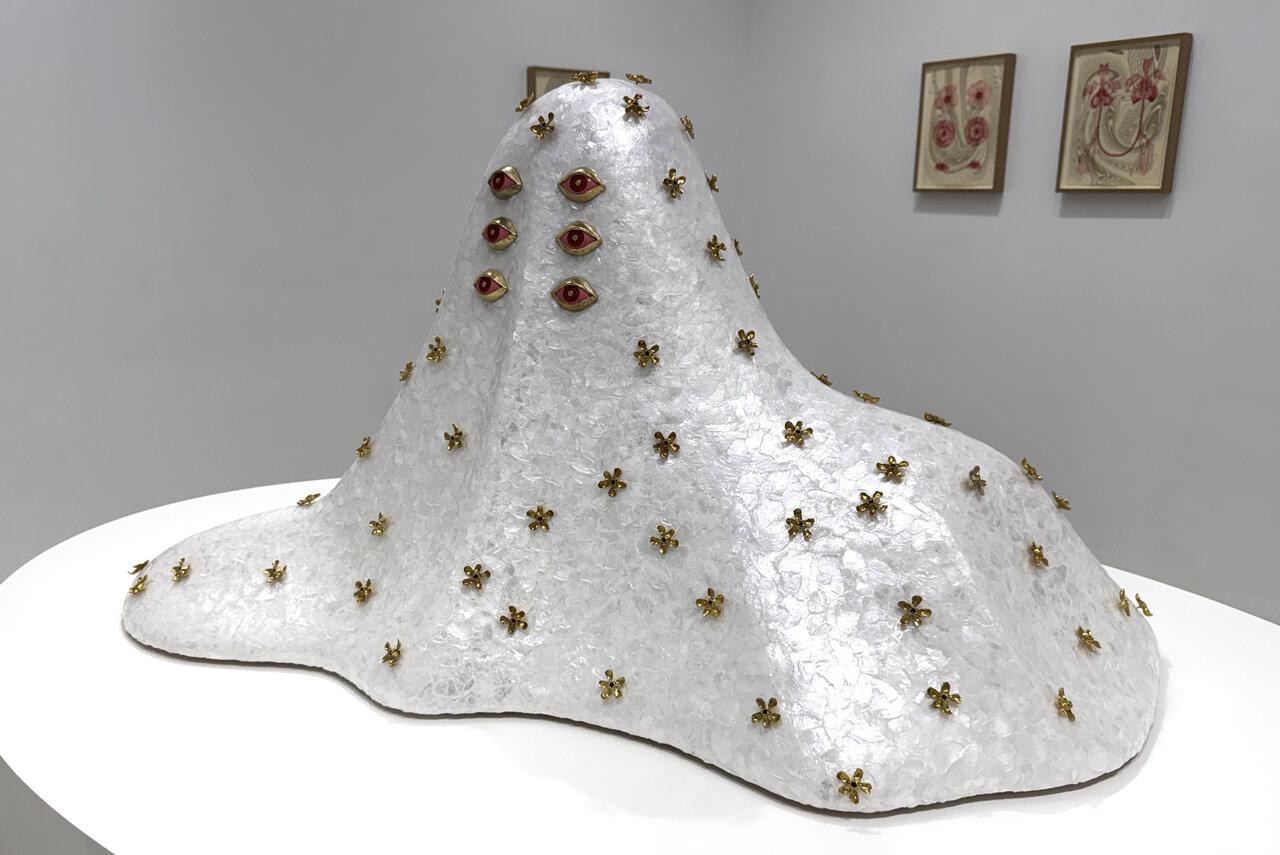
Marigold Santos, nacre, 2025, mixed media including Capiz shell, brass, enamel paint, resin, wood, 46 x 30 x 28 inches
These bloodshot eyes are also apparent in sibling shroud (lotus and balintawak) (2025). In the painting, the figures crouch next to one another, their bodies composed of woven ribbons of persimmon and black. Their hands and feet are not fully woven, instead the fibers drape along the ground and beyond the frame. The pair wear lotus masks, the stems at the base of the leaf appearing as a beak, each pointing to the other. They also seem to be wearing Filipiniana dress, as suggested by the butterfly sleeves and translucent fabric like piña silk with pearl detailing along the breast. The exhibition is rich in Filipino cultural and geographical references, such as the creatures from folklore, natural resources such as pearls and epiphytic plants, animals like the carabao, in addition to the depictions of rice terraces and chocolate hills.
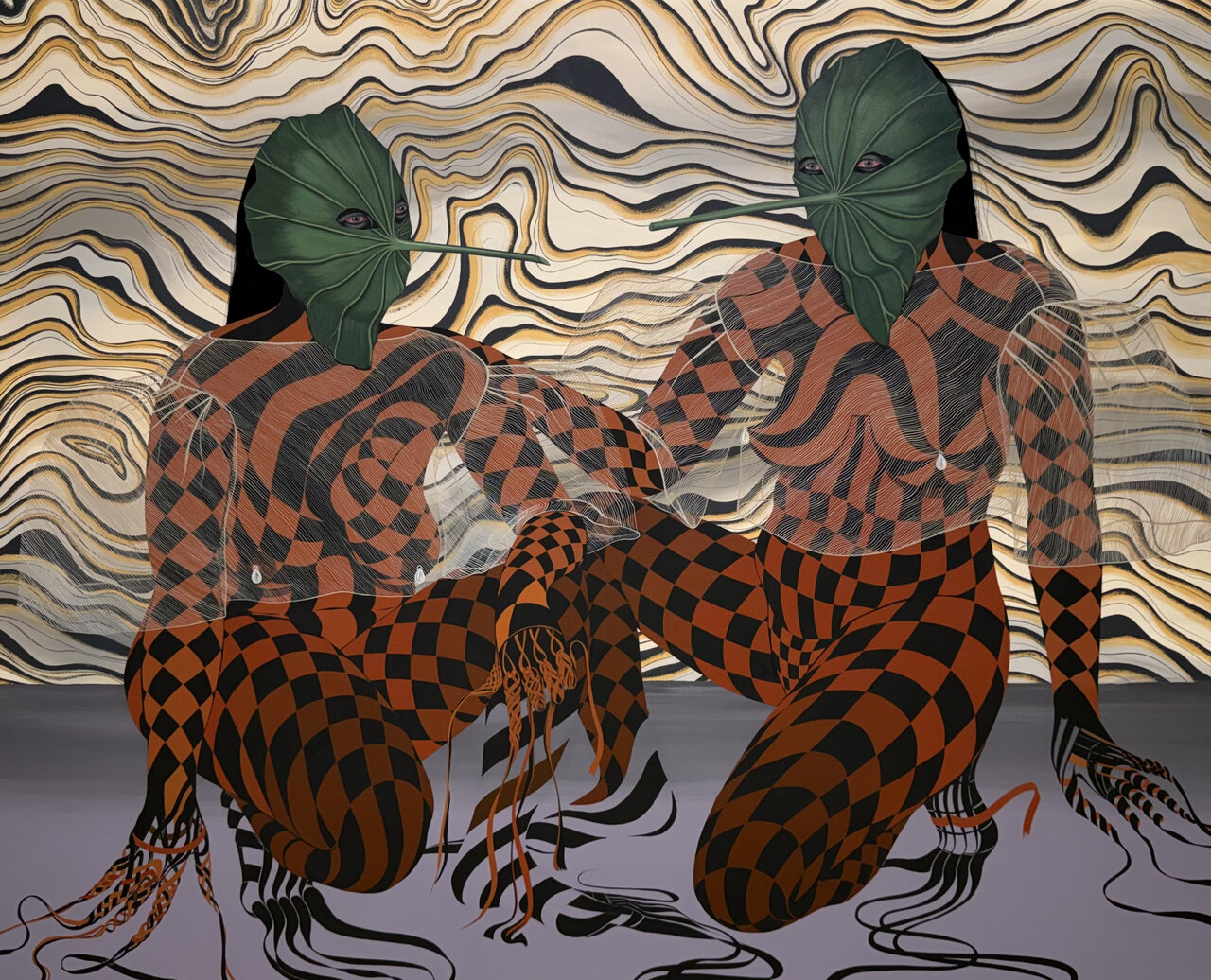
Marigold Santos, sibling shroud (lotus and balintawak), 2025, acrylic, pigment, gesso on canvas, 66 x 81 inches
The incorporation of cultural material can also be seen in the use of language, both in the titles of the works and in the use of text in the art. Several titles include Filipino terms: kalabaw, Bilibid, balintawak. Santos also has an element of play in paintings like waling, waling, walang hiya (2025). Waling-waling being the Vanda sanderiana, an epiphytic orchid species. Walang hiya is a Filipino expression of incredulity at shamelessness. Its meaning is modified in the artwork from its original harsh insult, to mean reclaimed, refusing to surrender to shame. The title’s rhythm of waling, waling, walang hiya feels playful. However, looking at the artwork, the expression of the orchid with its focused eyes gives a different impression. The figure’s face is composed of various orchids as a visage with a smile, and painted human-like eyes. The dorsal sepal and petals resemble pink tulle, with flecks of plum at the base of each. The plum colour is also present in the lateral sepals, appearing as leopard spots and veins. Though the orchid figure has a smile, it does not extend to the eyes as they remain in a neutral attitude. This gives the impression that the waling-waling is watching the viewer, daring an approach.

Marigold Santos, waling, waling, walang hiya, 2025, acrylic, pigment, gesso on canvas, 44 x 28 inches
Santos’ technical skills cannot be missed throughout the exhibition, integrating cultural weaving methods in painted form. Santos literally weaves painted paper in banig (5) archipelago (2025), recreating the traditional handwoven mats of the Philippines. Rather than having them placed on the floor of the gallery, the work is elevated on a plinth and decorated with cast brass resembling sand dollars and coral, combining the marine element with textile production. These components remind us of the Philippines and its seven thousand islands as an archipelagic nation.
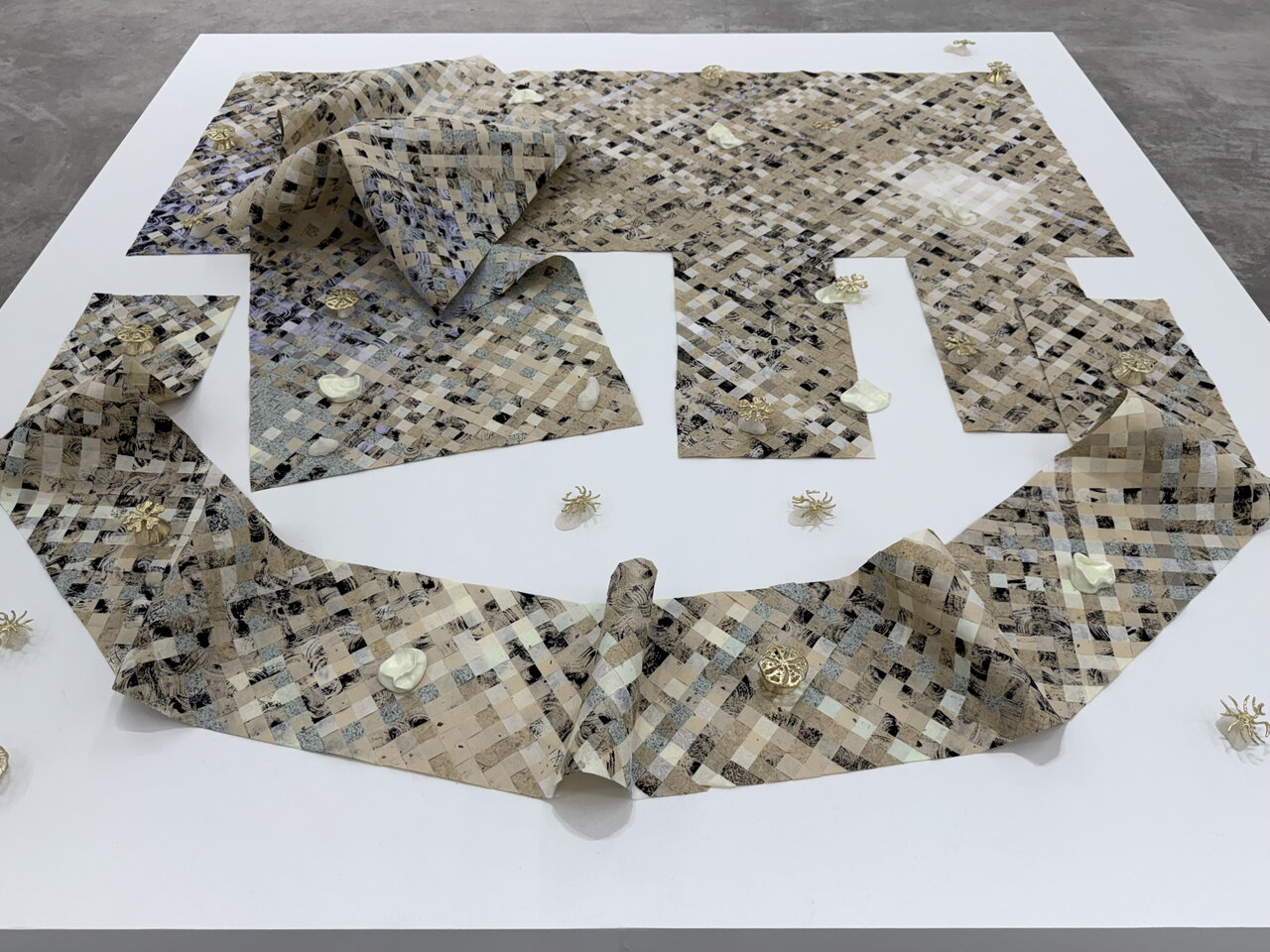
Marigold Santos. banig (5) archipelago, 2025, mixed media, acrylic on paper, cast brass, 96 x 96 inches
Within the painting shroud banig visage of and of flora (2025), Santos creates a hypnotic display of a face using the Ilocano patterning technique, binakul. The alternating blocks of heather and mulberry maintain the illusionistic quality of the weave, while carrying out the fullness of lips, the indent of the philtrum, and the rounded cheeks, cradled by elongated hands. Rather than picturing the eyes, Santos substitutes Orbea variegata, the carrion flower or starfish plant. Like the Rafflesia arnoldii, this epiphytic flower also emits an odor of rotting flesh. The death aspect is further emphasized through the ears as Nepenthes, or carnivorous pitcher plants. However the plants are not capturing prey in the painting, instead binakul flowers are growing out of the gourd and framing the face.

Marigold Santos, shroud banig visage of and of flora, 2025, acrylic, pigment, gesso on canvas, 44 x 28 inches
The Nepenthes are also present in the painting shroud sitter (nepenthes nurture) (2025). The figure is a blend of juniper and seaweed greens, highlighted in certain areas with olive and mottled with coral red. Upon following the sitter’s gaze, one sees shroud watcher (giant clam off the shores of Puerto Galera) (2025) with three pairs of eyes. Adorning the ears are sea anemones, their tentacles acting as a fringe. They are decorated with pins embellished with pearls, tucked along their hairlines. Once again Santos references the Philippines, a major producer of South Sea pearls, also called “Pearl of the Orient” by Spanish missionaries in the eighteenth century. The traces of Spanish colonization are ever-present in the show, whether it is the importing of the carabao or the persecution that led to the aswang as a figure to fear.
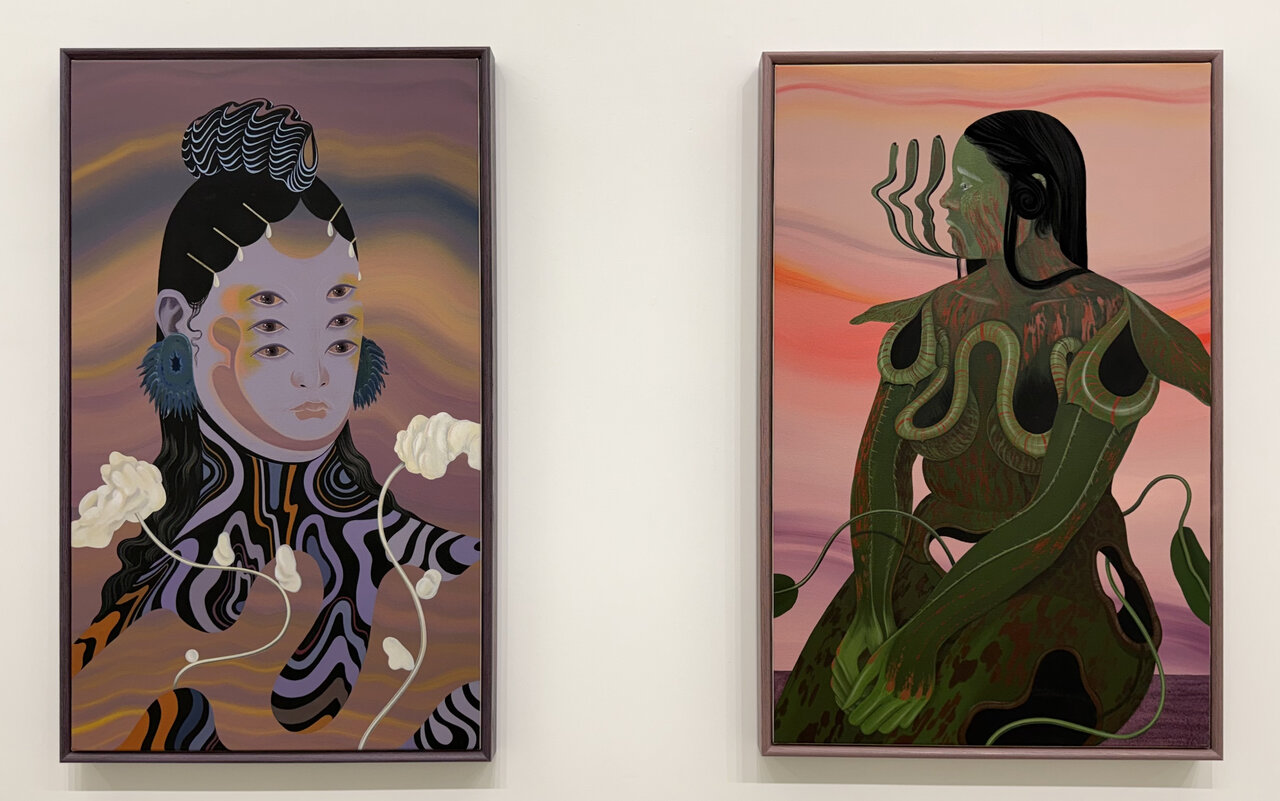
L-R: Marigold Santos. shroud watcher (giant clam off the shores of Puerto Galera), 2025, acrylic, pigment, gesso on canvas, 45 x 26.5 inches and shroud sitter (nepenthes nurture), 2025, acrylic, pigment, gesso on canvas, 44 x 28 inches
Santos’ Epiphytic Elucidations prompts one to consider ways in which we can see a similar epiphytic relationship in other aspects of our lives. Does language grow upon a people, contributing to the overall culture and adding a richness akin to biodiversity? How does the reproductive process relate to the propagation of plants? Santos’ engagement with folklore and the spiritual realm, supports the idea of an epiphytic relationship, recognizing that one realm can exist upon another. Santos facilitates interactions between her depicted figures and visitors—engaging with folklore, flora, and Philippine culture simultaneously, creating a sort of biodiverse gallery environment.
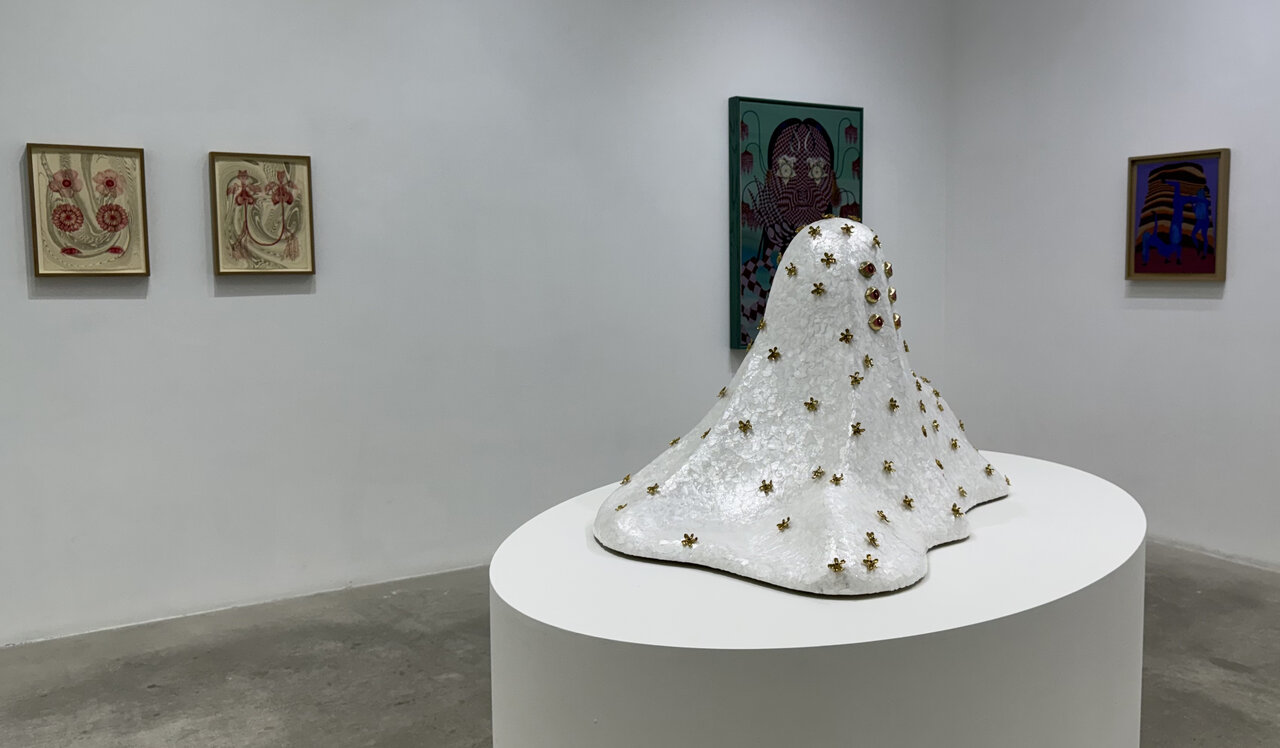
Exhibition view of Marigold Santos, Epiphytic Elucidations at Patel Brown Gallery
Text and photo: Rashana Youtzy
*Exhibition information: Marigold Santos, Epiphytic Elucidations, January 17 – February 28, 2026, Patel Brown Gallery, 21 Wade Avenue Unit 2, Toronto. Gallery hours: Tuesday – Saturday 10 am – 6 pm.