
What does water remember? We can trace its persistence breaking down boulders into rocks. We witness water forging a path, eroding the land to make its way. Despite the extent of human intervention, the land, the water, and the Earth persist. The content of Lucy Raven’s Murderers Bar is a reminder of the ever-enduring tenacity of nature.
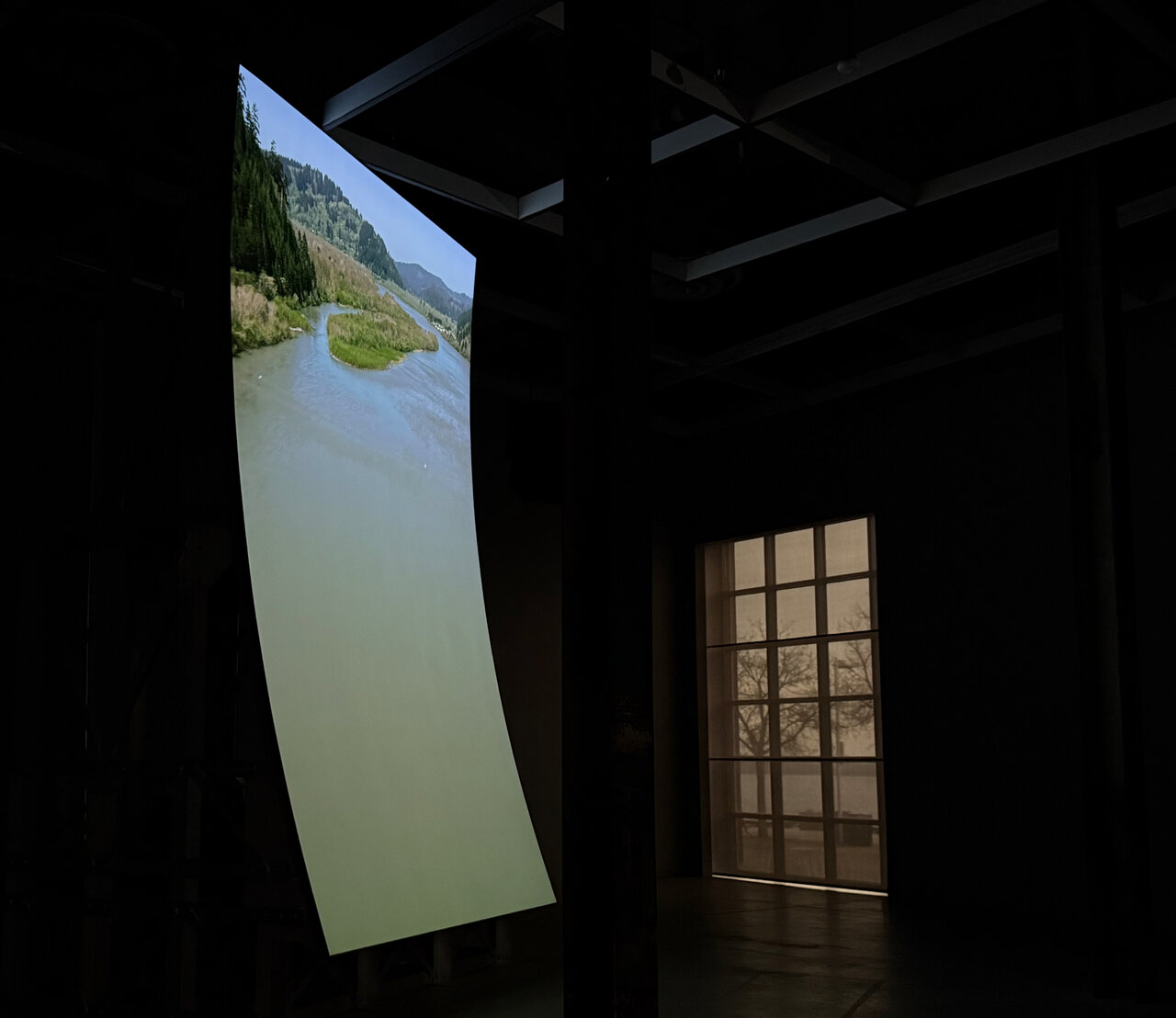
Murderers Bar utilizes a mixture of drone footage, digital renders, and material from body-cameras in the video. The shifting types of footage present a multifaceted understanding of the land and water. The aerial perspective is akin to that of a bird, gliding and dipping with freedom. The body-camera footage is from those working directly within the environment of the site, a dam on the Klamath River in Northern California. Meanwhile, digital renderings provide an alternative presentation of land in the form of animations. In terms of the latter, the environment is reduced to renders such as topographical surveys and detached from the organic elements of the Klamath River. In turn, it presents the land as a site of extraction and industry. Incorporating these varying perspectives strengthens the work and our appreciation of the natural world with its beauty and verdant abundance. Consequently, we also experience the environment being reduced to renders, as the land and water turns grey and lifeless where it once was brimming with life.
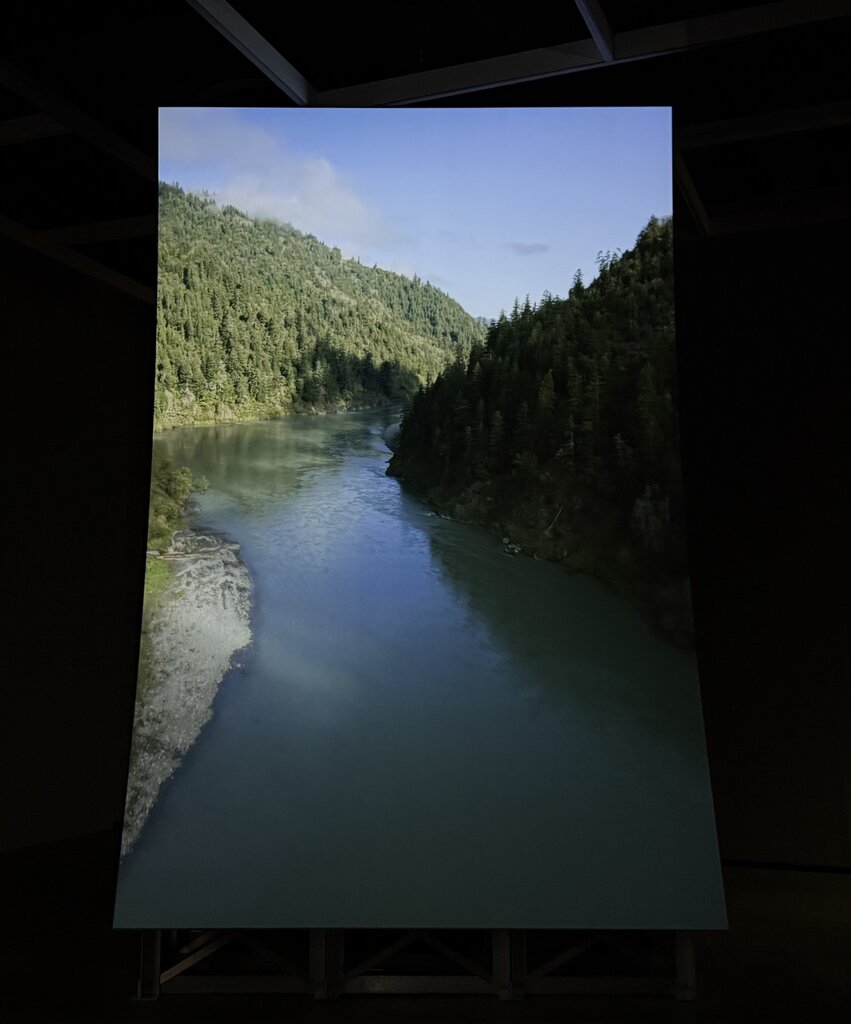
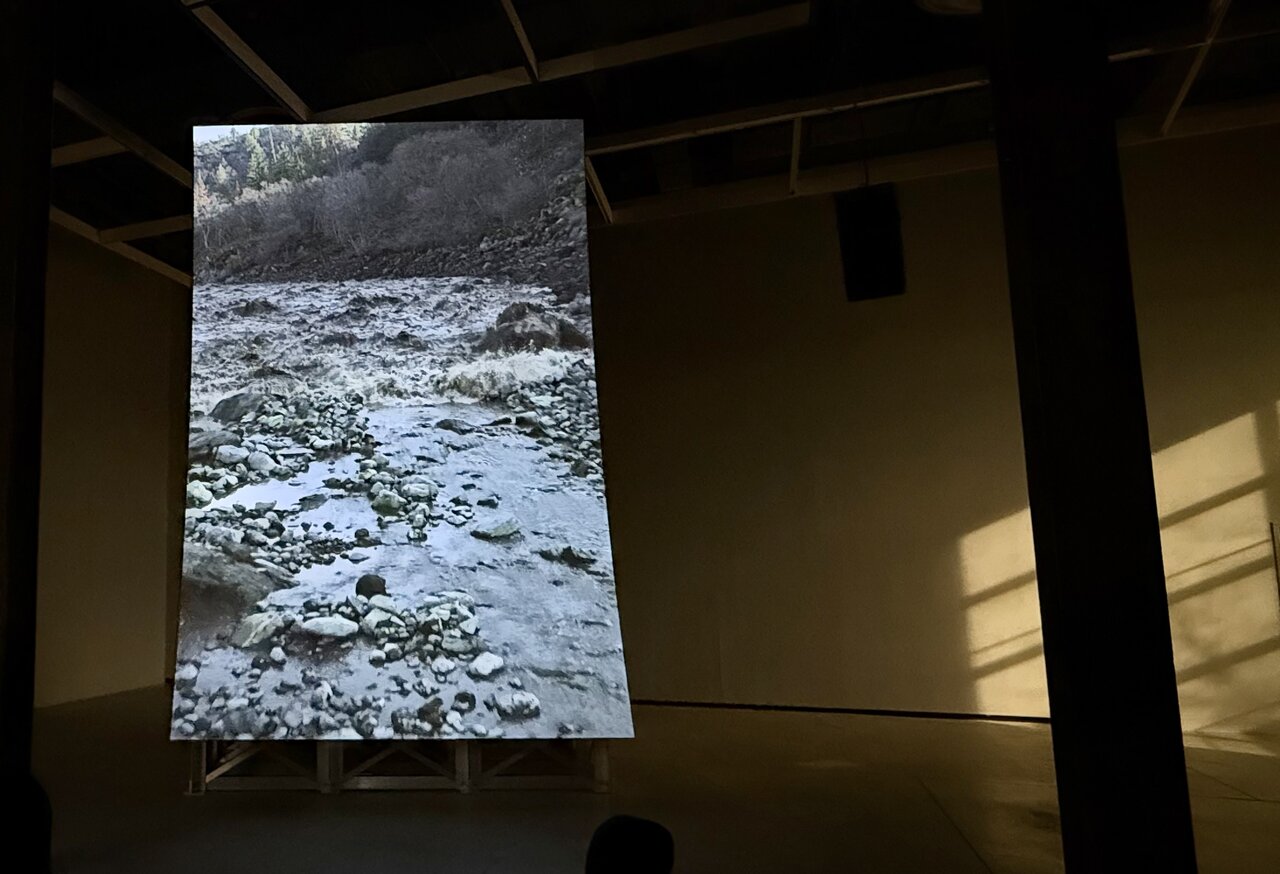
It’s difficult to discern the exact start of Murderers Bar, a video installation (41:47min) with a sound component and a set of aluminum bleachers for seating. The video plays out on a freestanding concave structure, with speakers spread throughout the space and foam panels along the corridor entering the gallery. I considered the vista view the beginning, one in which a winding river can be seen from above. Waterfowl glide along the gusts blowing through the conifers framing the waterway. The audio component contains the calls of gulls and other natural sounds wooshing by, as if viewers are traversing in real time.
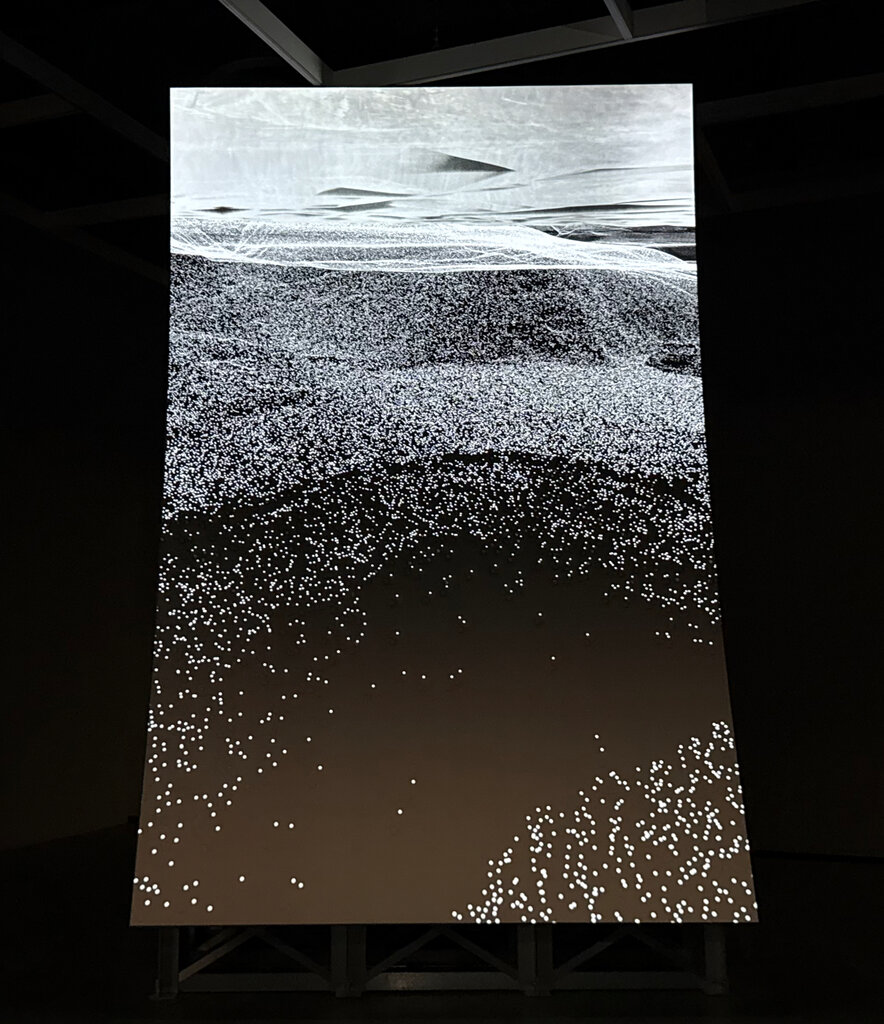
As the footage progresses through the landscape, the water winds its way among the ridges and trees. Eventually, an overlay of a radar image appears on the screen. With this the camera submerges, crashing and battered by the sediment. The audio amplifies the anxiety and chaos of being underwater. The sound is muffled by the aquatic cushion, with intermittent clarity when the camera breaks the surface of the water. Within the periods of the camera being submerged, one can see topographical renderings of the basin making up the reservoir within the Klamath River. Though visually disrupting, it does provide a perspective that is not otherwise readily experienced by the human eye. The industrial aspect of human-environment relations is explored more deeply in the subsequent section of the video.
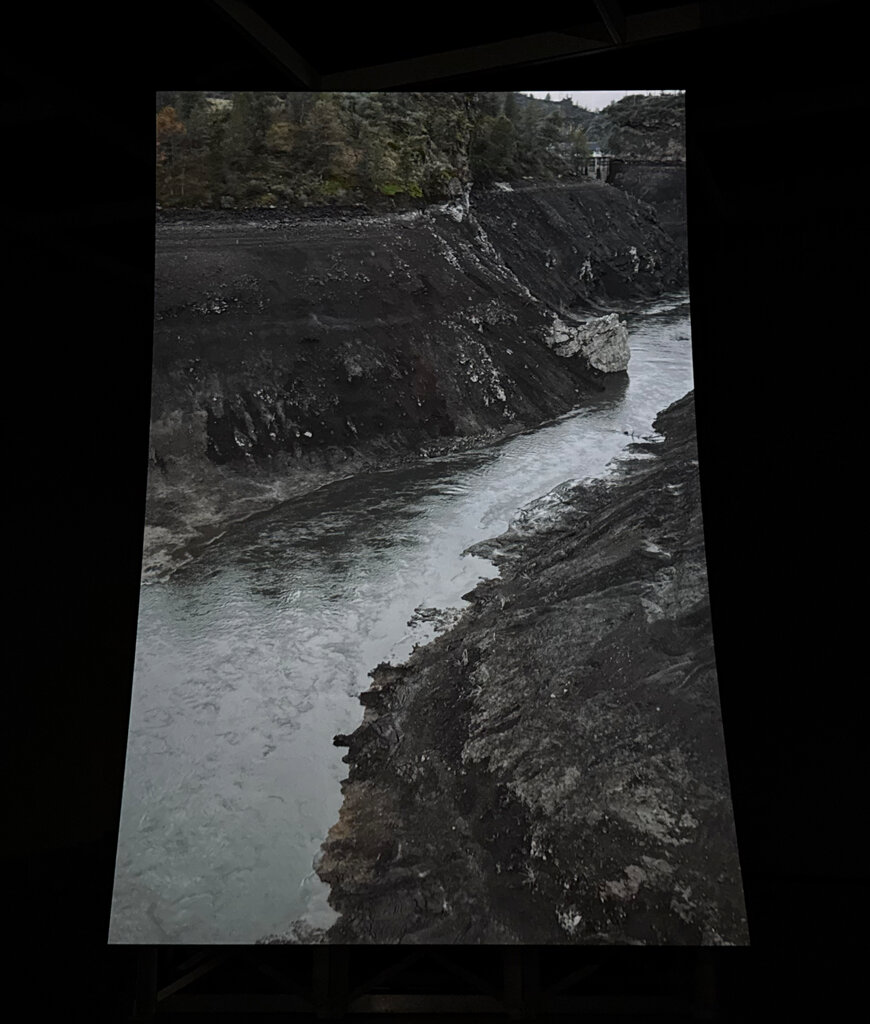
The drone makes its way to the dam, the area appearing barren of colour and life. Where the water and land were once saturated with deep greens and warmth, now it takes on tones of slate, charcoal, stone. Viewers experience a closer look at the dam, from the body-camera footage of a worker at the service entrance. Here we witness the claustrophobic space, trudging through the water with supplies. Eventually, a cavity is reached, and dynamite is inserted in drilled pockets within the cavernous area. As the perspective shifts once more, the video records the exterior of the dam. The camera pans downward to the ground, with workers walking along the surface.
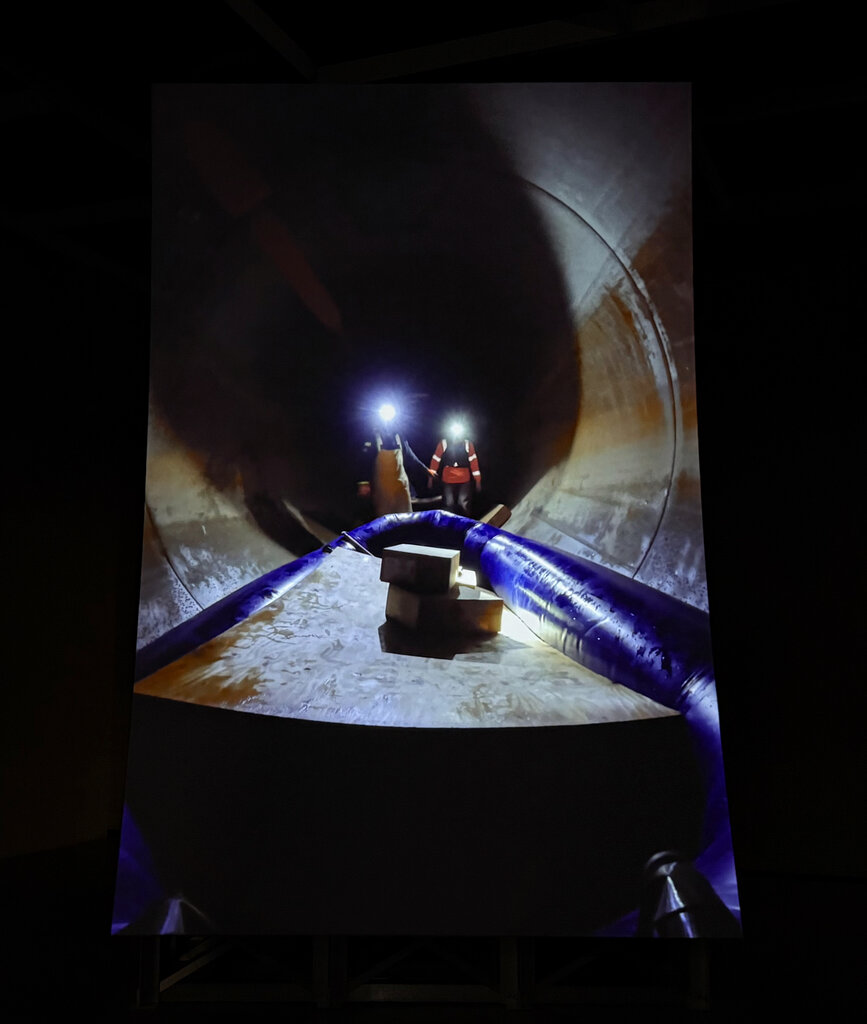
As the footage focuses on the base of the dam, there’s an explosion. The boom of the detonation reverberates in the aluminum bleachers used as seating in the gallery, another reminder of industrial extraction. The video continues showing the water bounding forth with such power, thrashing everything in its path. The water, free from its reservoir, returns to where it had once travelled, winding once more through the land. The final act of Murderers Bar includes similar footage to that of the beginning: verdant vistas, birds riding along the wind, shimmering waters carved through the land — but with the water returned to the landscape.
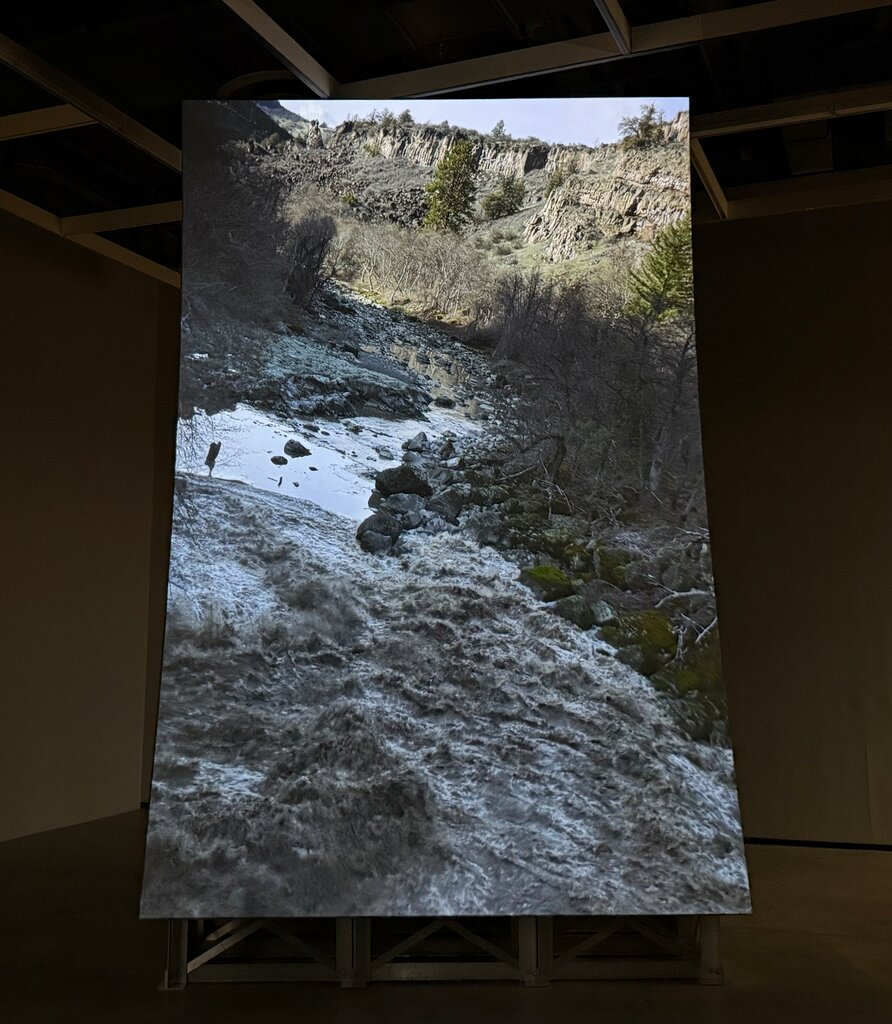
Recognizing that this work has travelled to The Power Plant in partnership with the Vancouver Art Gallery, I considered the labour of the video loop. The venturing for quality field recordings, use of a variety of technology for maximum coverage, and coordination across institutions. In addition, there is labour related to building the dam and its subsequent destruction, as well as nature’s recovery. While Murderers Bar does not showcase the protests, legislation, or an overt display of the peoples advocating for the dam’s destruction, the fruits of their labour are apparent. The site of focus, the Klamath River in Northern California, is a testimony to the stewardship of the Tribal Nations: Yurok Tribe, Karuk Tribe, Hoopa Valley Tribe, Klamath Tribes, and the Shasta Indian Nation. Due to their effort, a historic habitat can be restored. With Lucy Raven’s Murderers Bar, the collective labour can be recognized on a wider scale, invigorating communities further.
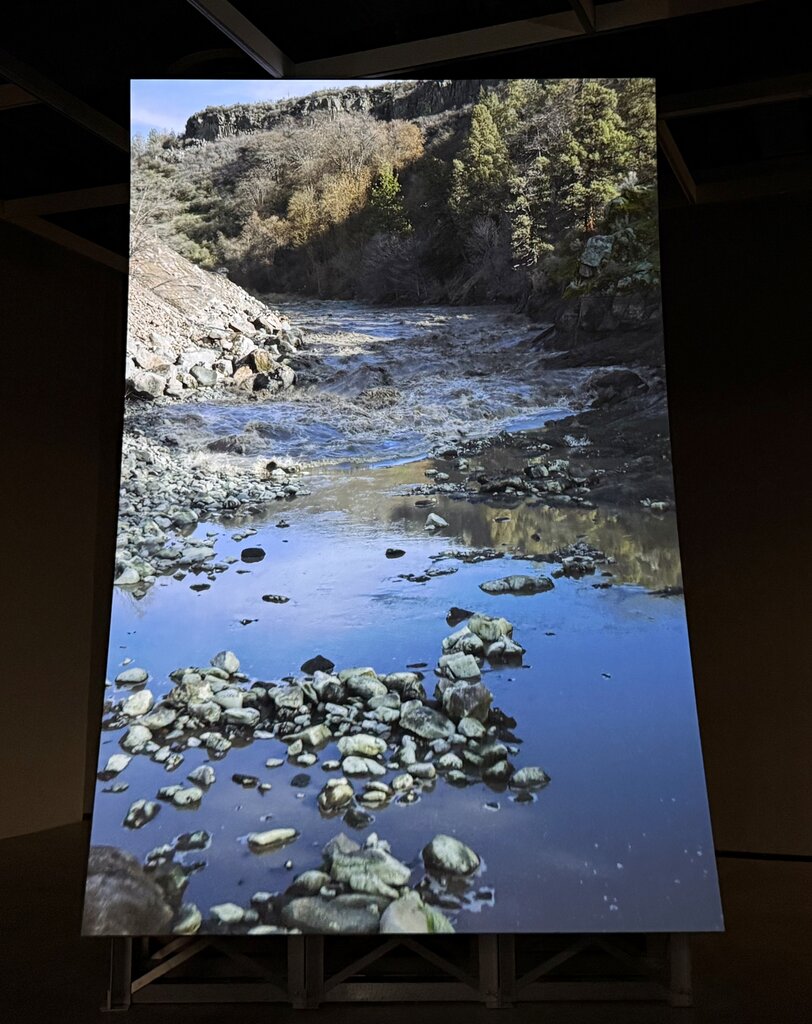
Lucy Raven’s Murderers Bar is a compelling display of the power of water being unconquerable, and the magnitude of human impact on the environment. The grand scale of the video and the booming audio envelopes the viewers. The expansive view and full-bodied sound within the space make for an immersive experience. In this way, one can feel the awe in a bird’s-eye view of a fertile land, or the crushing anxiety of being swept away in a current, gasping for breath. The relief is shared the moment the dam breaks and the water finds its way back. While my interpretation of the video may present the idea of nature recovering despite what humanity throws its way, it does not negate the reality of harm. Like the video loop, this cycle occurs again— awe of nature, dismay at intervention, relief of the return to the natural. As a result, Raven’s Murderers Bar creates an urgency to witness the land and water with which we interact. There is also gratitude in the ready access to the natural world within the immediate vicinity of The Power Plant.
This appreciation was felt upon walking out toward the waterfront following the exhibition— watching the gulls sweep atop the wind, or the ducks bobbing along the glistening water of Lake Ontario. Whether a moment of calm or chaos, nature is a force with which to reckon.
Text and photo: Rashana Youtzy
All images: Installation view of Lucy Raven, Murderers Bar at The Power Plant.
*Exhibition information: Lucy Raven, Murderers Bar, November 7, 2025 – March 22, 2026, co-commissioned and jointly acquired by The Vega Foundation and the Vancouver Art Gallery,The Power Plant, 231 Queens Quay W. Toronto. Museum hours: Wed & Fri – Sun 11am – 6pm, Thu 11am – 4pm.