
As an artist, one has a slightly different perspective at an art show than a collector. Beyond the pleasure of engaging with the work, an artist is also looking for new ideas and inspiration. And, perhaps most importantly, the artist wants to know: how is it made? With this in mind, I’ll focus on just a few artworks that might offer technical or process inspiration to other artists.
Inspired by Pixels
Pixels are a form of pointillism, and we saw a couple of artists playing with this idea. François Arès’s paintings have an unusual shimmer to them. Up close, you discover that they are made up of tiny dots of paint applied to transparent Plexiglas. The works are framed so that the dots cast tiny shadows on the surface behind them.
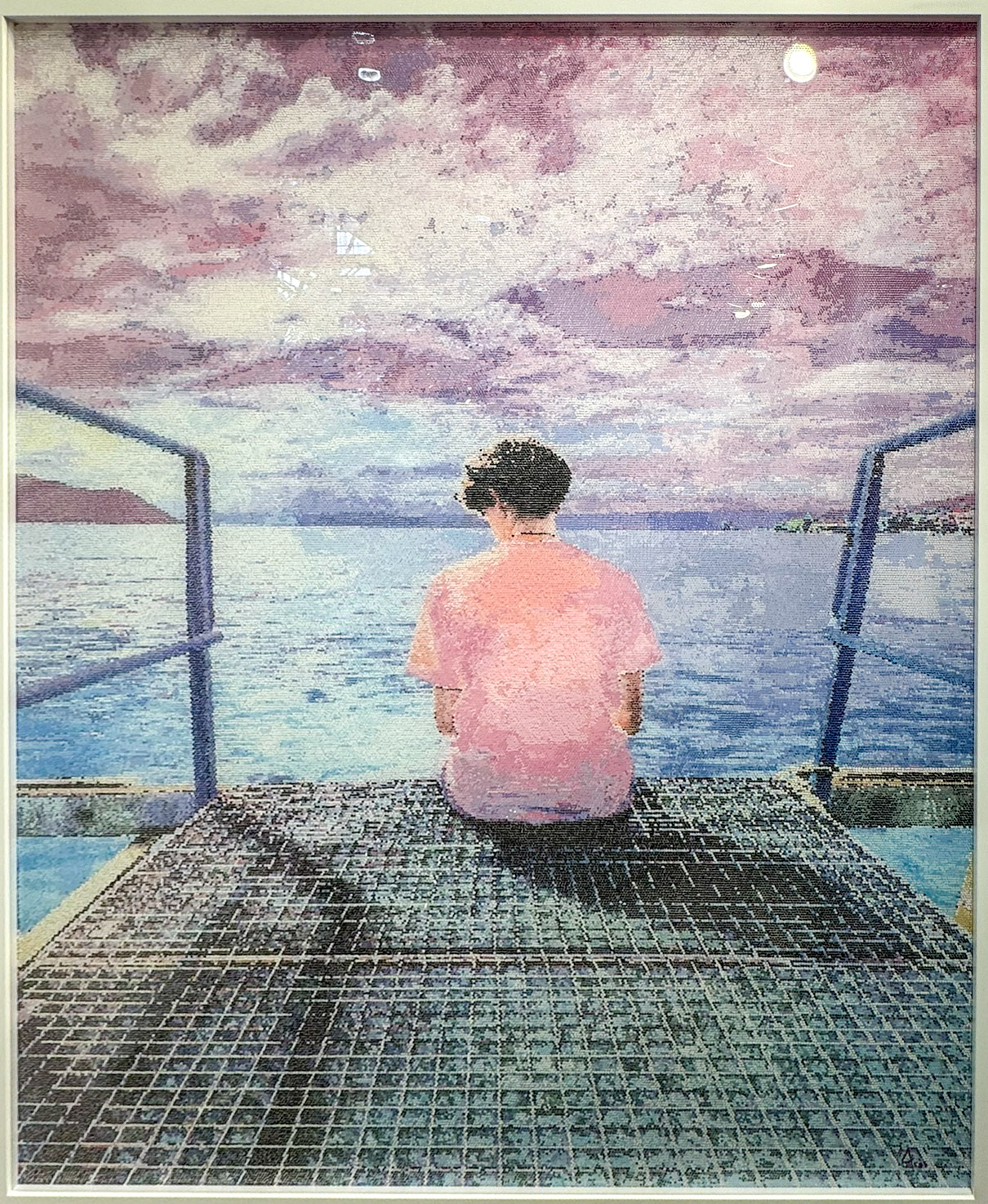
François Arès, Montreux, 2026, acrylic on plexiglas 64” x 68”, Galerie Robertson Arès
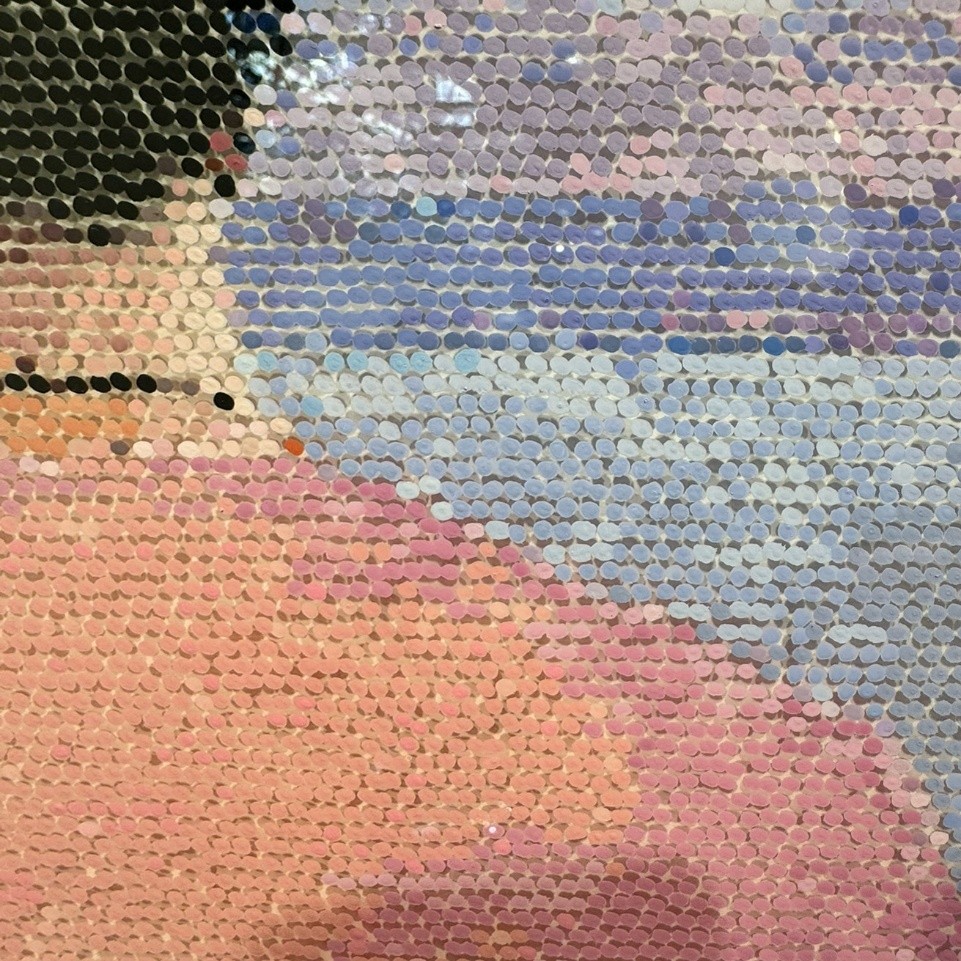
François Arès, Montreux, Detail
Brandon Dalmer also explores the idea of pixels in his work. His painting is reminiscent of an old colour television screen, where individual red, green and blue pixels were visible. A pattern of these three coloured shapes comes together to create an image when viewed from a distance but breaks down into its component pixels as you move closer.

Brandon A. Dalmer, Buck Lake, 2026, acrylic on panel, 60” x 36”, De Montigny Gallery
Filipe Lavin exploits the digital grid in a different way. At first glance, the work appears to be an abstract pattern of coloured vertical lines. Then you notice the legs and feet along the bottom edge. Lavin has taken a horizontal strip of pixels from around the middle of an image of a crowd and repeated, or stretched, it upwards to fill the rest of the composition.
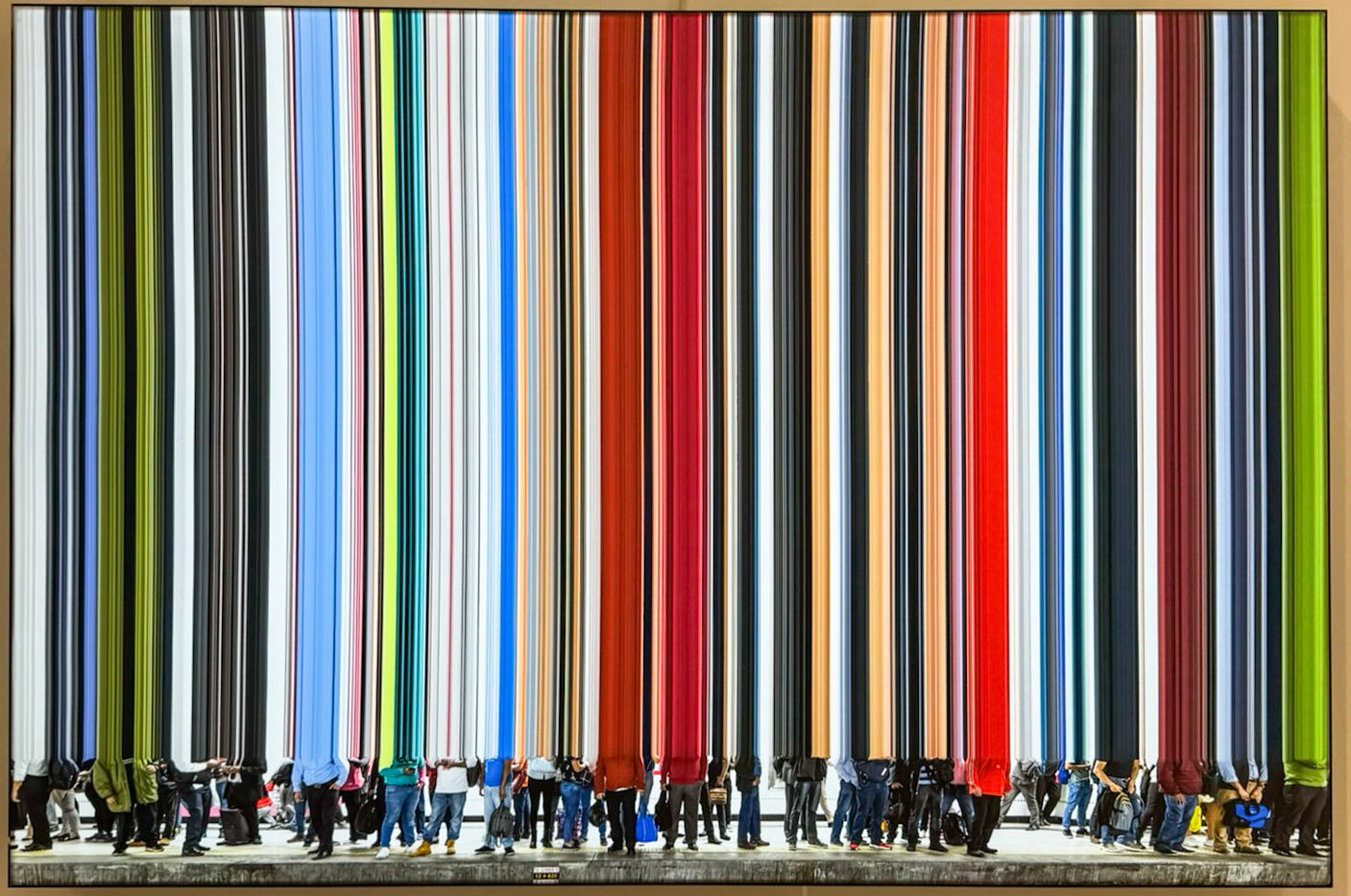
Felipe Lavin, Desvanecidos – CDMX XII, photomontage and lightbox, 40” x 60”, Galerie LeRoyer
Michael Stecky’s pieces initially look like digital static. Their three-dimensional quality is apparent, but it’s only when you look more closely that you discover what they’re made of: stacks of multi-coloured puzzle pieces. It’s a delightful surprise.
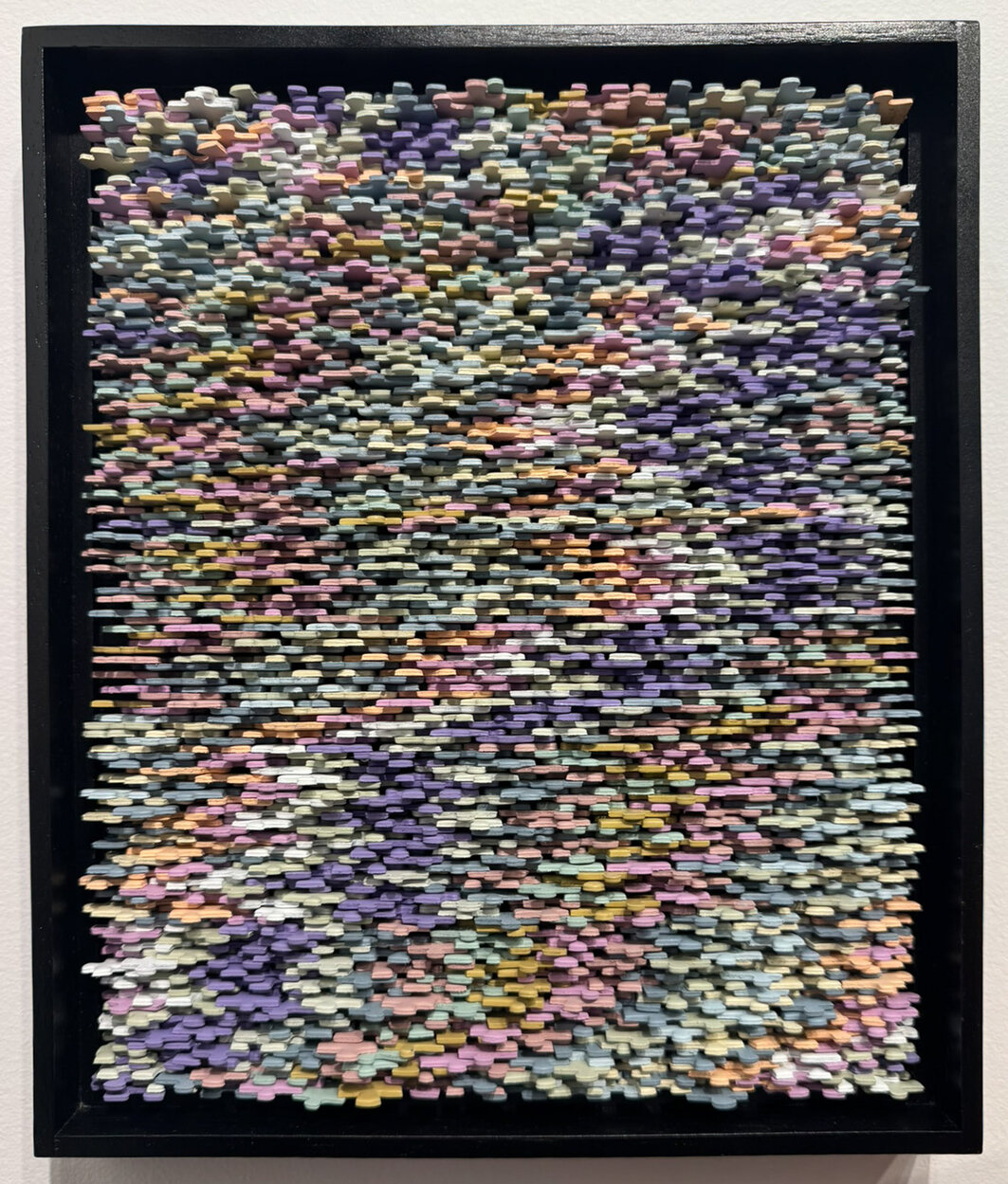
Michael Stecky, Satie Vexations #1, 11” x 13”, Drey Gallery,
Moves with You
We tend to think we can fully experience everything through a screen, but some artworks require your physical presence to be appreciated. You have to move closer, walk around them, and see how they change with your point of view.
Arturo Fermandois’s Aster X does not translate easily into photography. The image below looks static, but in person the work moves and shimmers. Graphics are printed on glass, with another pattern on paper behind it. As you move around the piece, different patterns emerge, creating an effect of movement and shifting light.
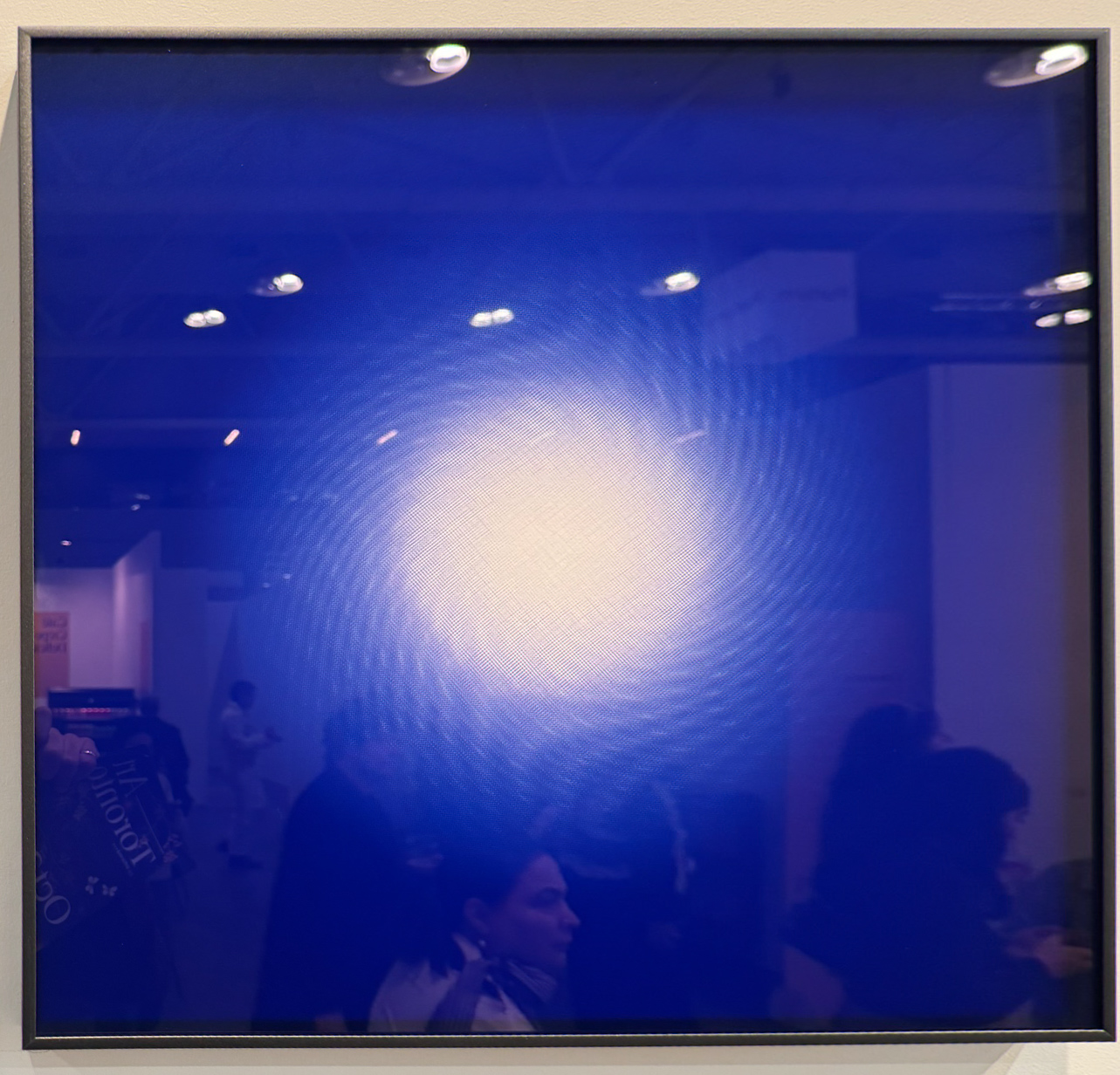
Arturo Fermandois, Aster X, UV print on glass, over paper print, 22” x 22”, Aninat Galería
J. Margulis’s Portholes also changes with your viewing angle. Seen straight on, the work appears to be nothing more than vertical lines of colour. But the lines are actually formed by a series of shaped fins. As you move around the piece, their three-dimensional geometry becomes apparent, and the image continually changes.
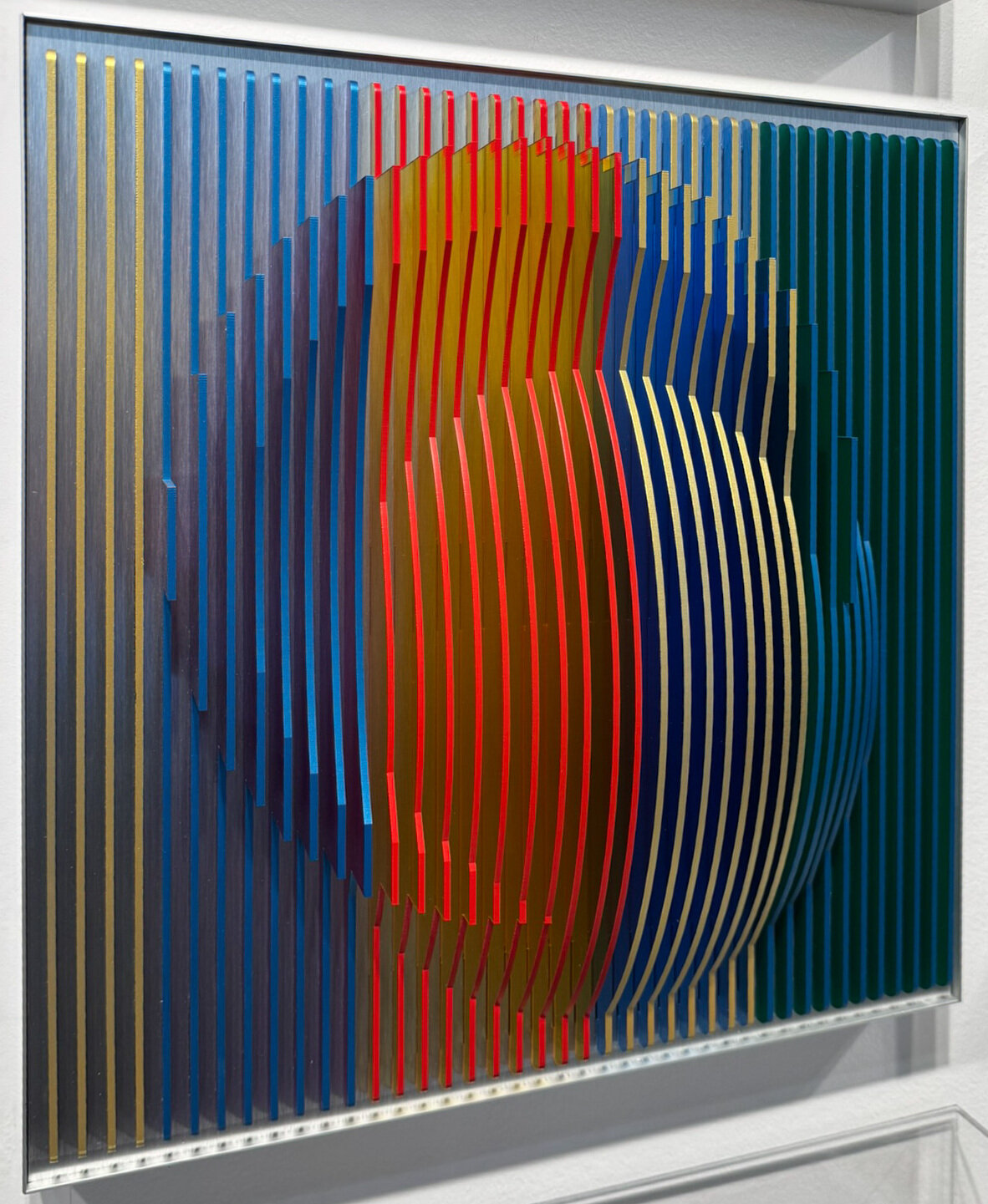
J. Margulis, Porthole, plexiglas, aluminum, automotive and acrylic paint, 16” x16” x 3”, Galerie de Bellefeuille
Patrick Rubenstein’s Les iris de Vincent changes dramatically depending on your viewing angle. The back surface carries a composite image of the portrait and flowers. In front, a series of vertical fins have been printed with one image on each side. Move to the left and you see the flowers; move to the right and the portrait appears. The two images alternate as you move around the work.
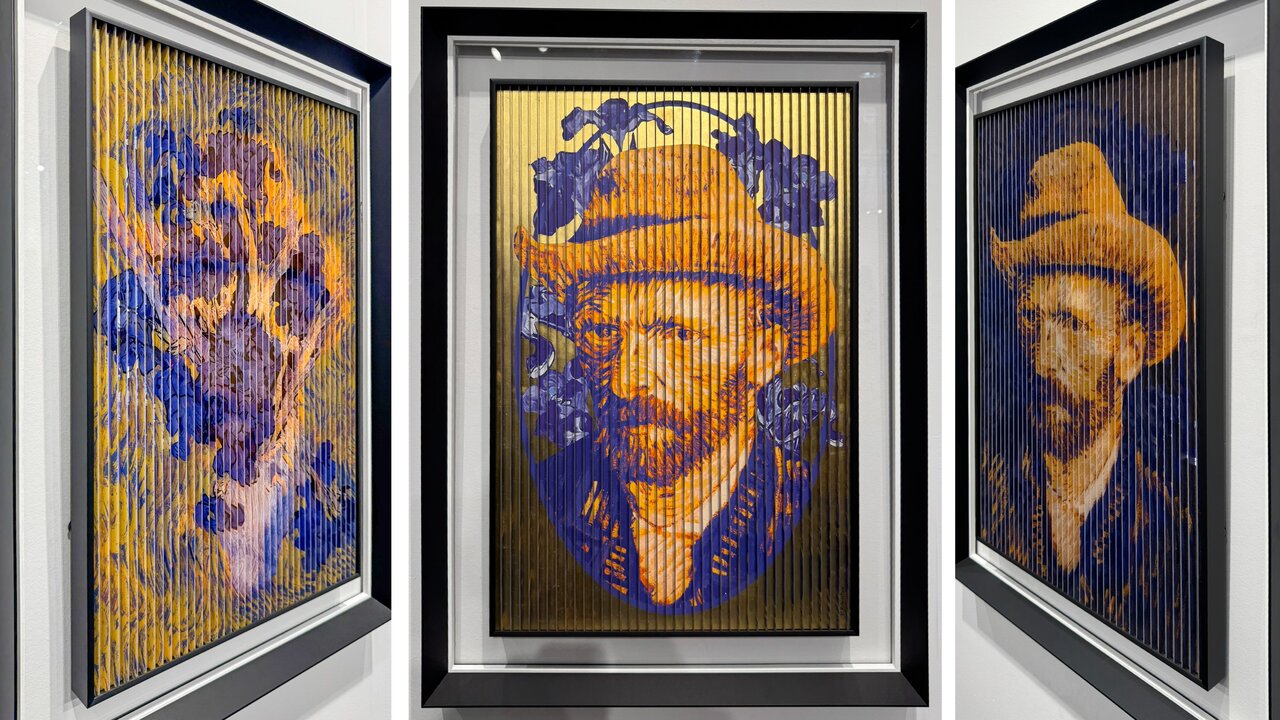
Patrick Rubenstein, Les iris de Vincent, gold leaf on mixed media, 30” x 19”, Galerie de Bellefeuille
In Reverse
Normally, you stretch the canvas before painting, but Malachi Wilson reverses the process. In Cave I, small sections of canvas are first printed with an inkjet, then stitched together and only afterwards mounted over a stretcher. The process creates interesting distortions in the image.
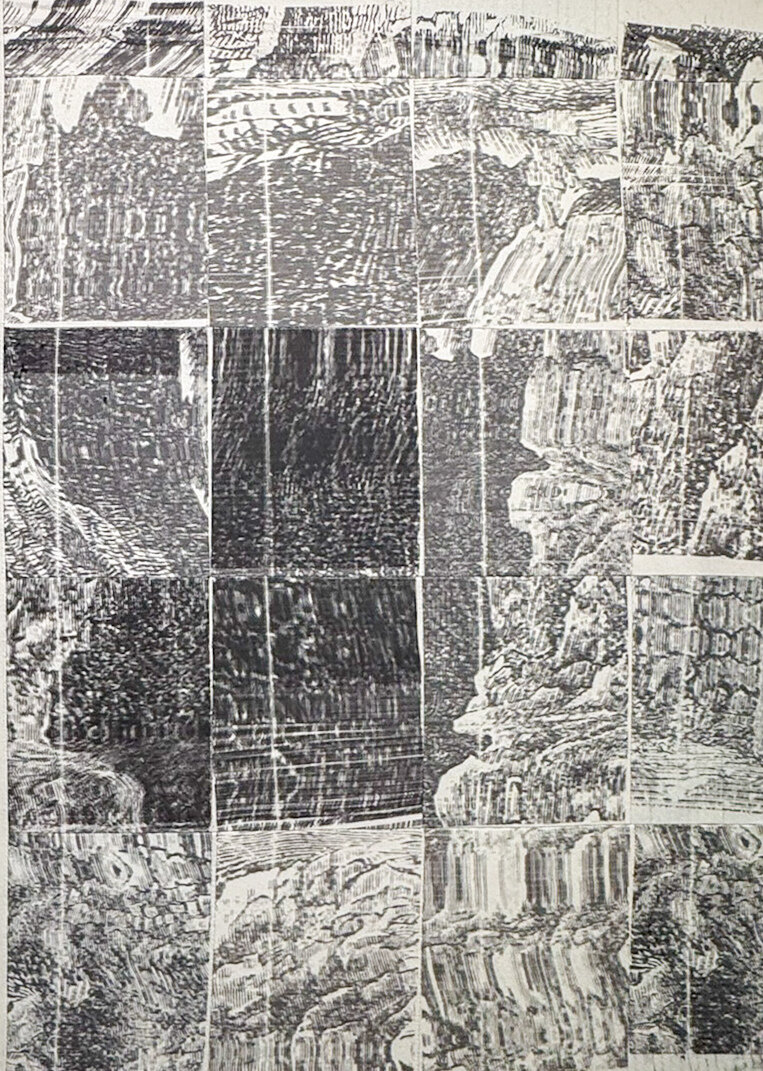
Malachi Wilson, Cave I, inkjet on canvas, 52” x 48”, Janey Gallery
Paul Hardy uses scrims and printed fabric to reveal the underlying structure of a painting. The frame and internal bracing become part of the composition, alongside the translucent prints and fabric. Rather than concealing the structure, Hardy makes it an integral part of the work.
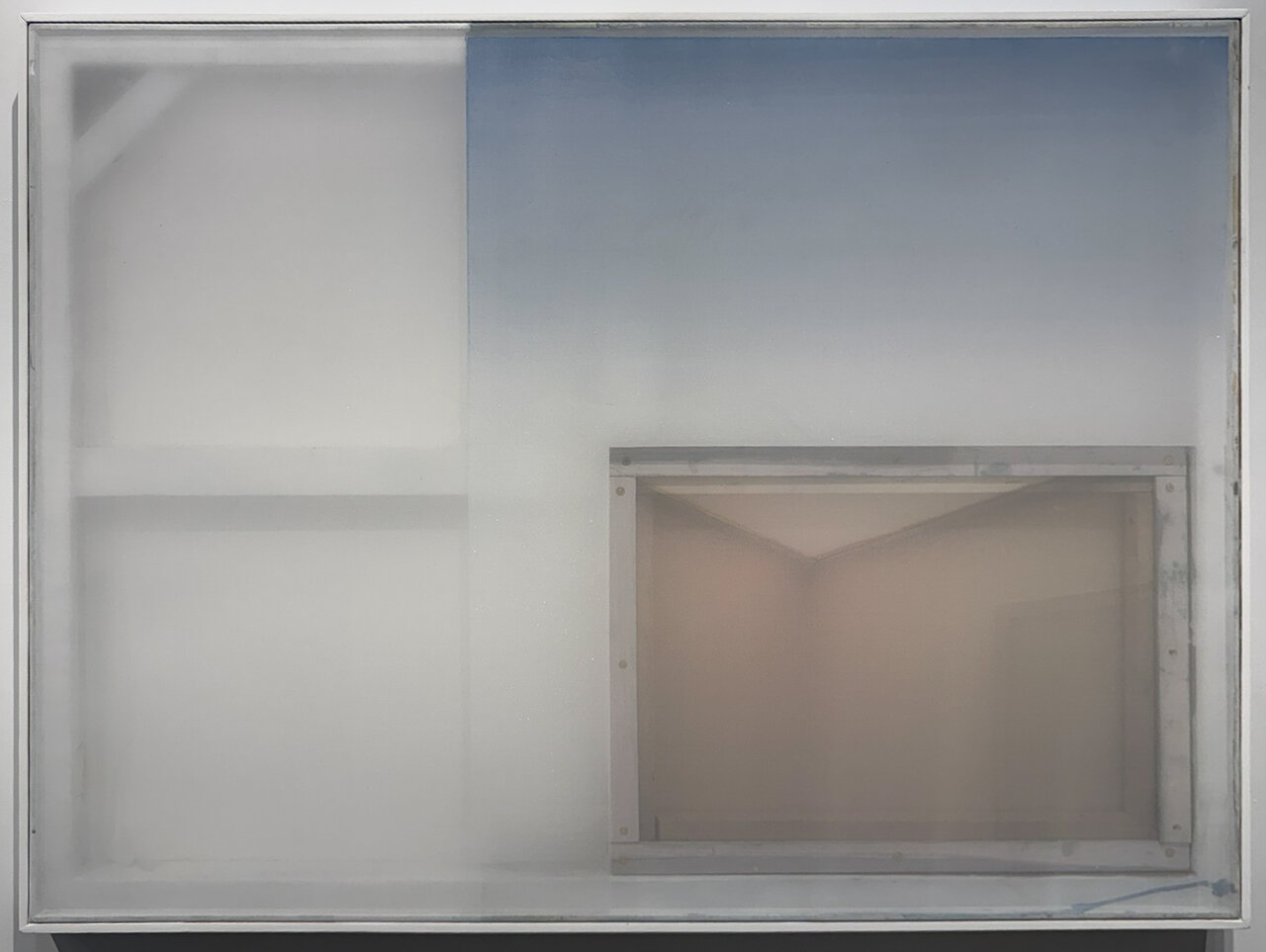
Paul Hardy, Untitled, Acrylic, oil, inkjet impression on fabrics, 76 x 102 cm, Galeries Bellemare Lambert
Doing It the Hard Way
Digital technology has made image-making so much easier. There are plenty of shortcuts available, but some artists prefer to take the more difficult path. There is something about the effort and labour involved that connects us to the work.
Adrianna Matzeg’s Pontocho Alley initially looks like a digital image of two lamps reflected on a gridded wall. But the beauty of the piece emerges when you discover that the image is created through the painstaking stitching of coloured cotton thread.
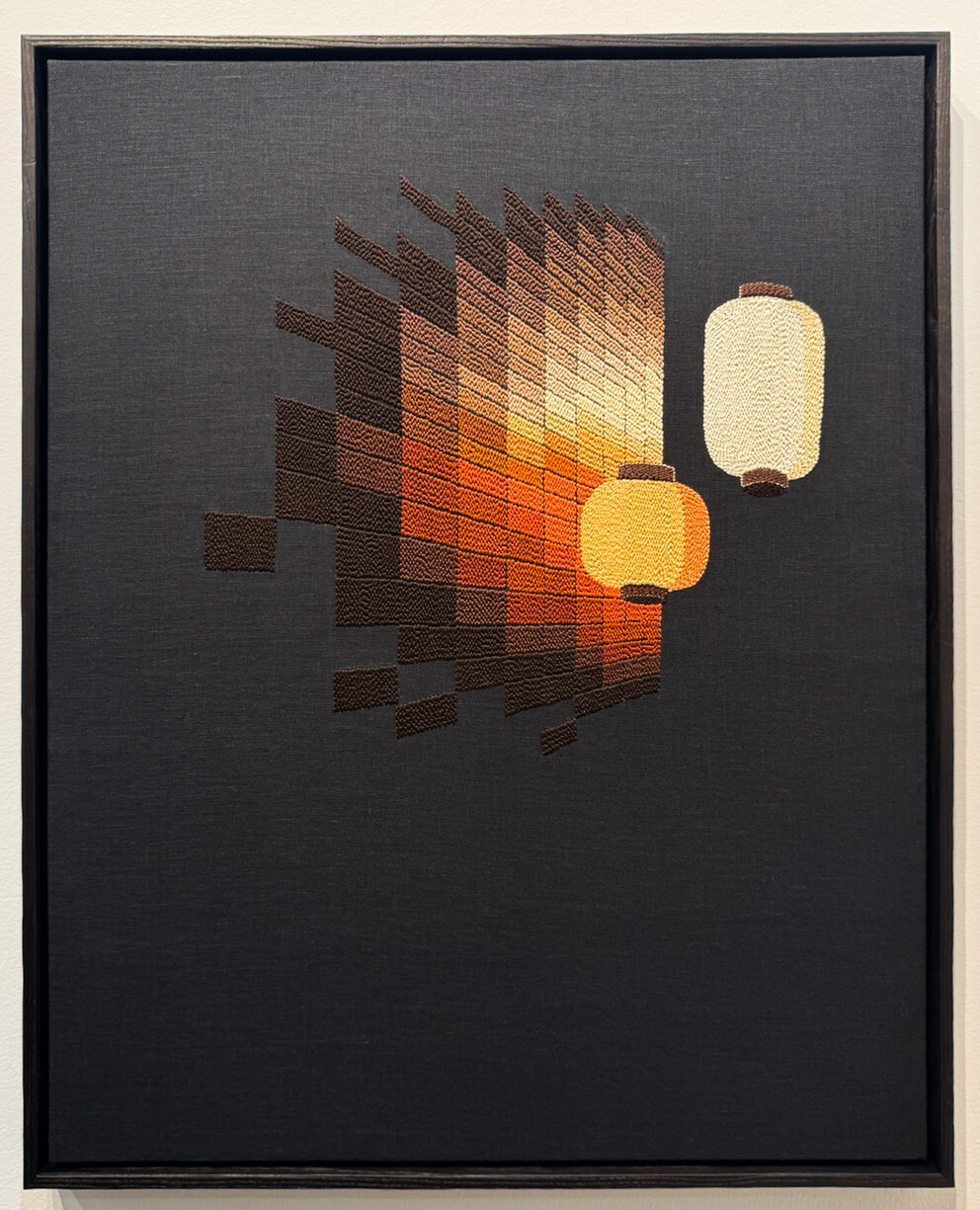
Adiranna Matzeg, Pontocho Alley, Cotton and linen, 24” x 30”, Abbozzo Gallery
James Nizam creates elegant geometric works that look digital but are entirely analogue. These desert landscapes are overlaid with abstract, floating geometries. They are made using a film camera, multiple exposures, and custom filters and masks that the artist creates and inserts into the camera in front of the film. In his large prints, Nizam has included the film frame to emphasize the analogue process. If there’s an easy way and a hard way to create an image, Nizam seems to choose the hard way!
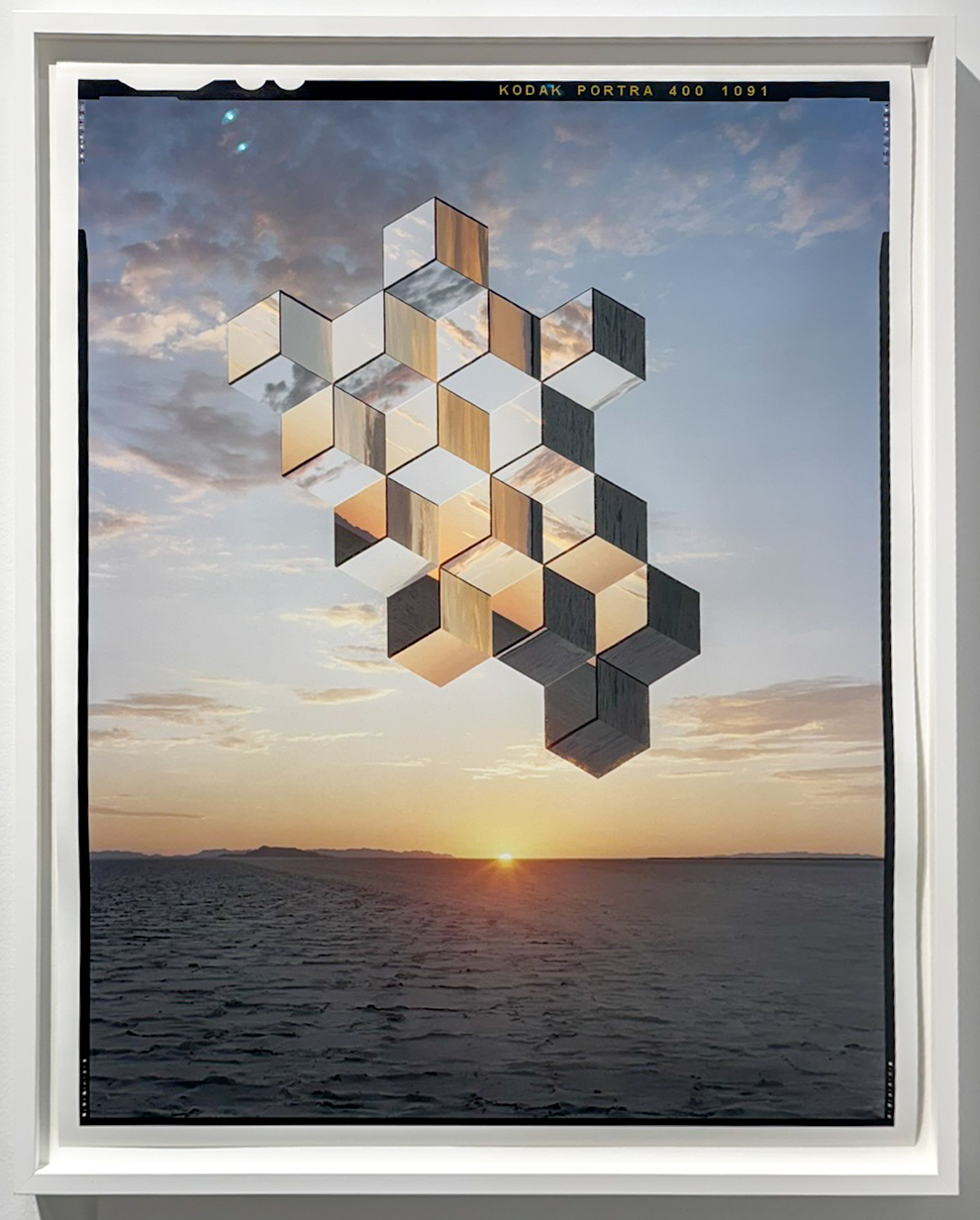
James Nizam, Sigil, photograph, 39.5” x 32”, Galley Jones
Ultimately, these works remind us that there is often much more to an artwork than meets the eye. What initially catches our attention may be the image, but looking more closely reveals the ingenuity of the process, the unexpected use of materials, or the way a work changes as we move around it. Understanding how something is made can add another dimension to our appreciation of it. And while photographs can give us a sense of what a work looks like, they can rarely convey the full experience of seeing it in person. Sometimes, the most interesting part of an artwork is discovering what lies beneath the surface.
Text and photo: Mikael Sandblom