
Previously I wrote about the work of Ron Shuebrook on display at modern.toronto, a recently opened space aimed at showcasing abstract paintings. I now turn to the work of Steve Rockwell, on display at the same time in the front half of the exhibition space. While his work complements Shuebrook’s it is quite distinct in nature. Rockwell’s practice might best be described as conceptual with a strong element of performance. But first we need to consider a bit of history behind it.
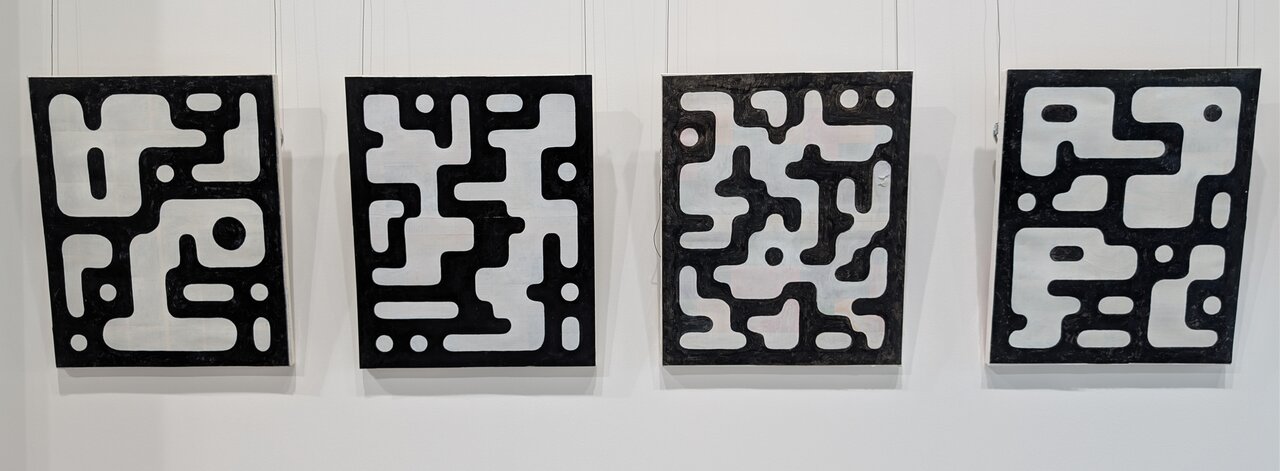
Installation view of Steve Rockwell’s exhibition at the modern.toronto
While we each undergo radical changes from birth to death, from infancy to old age, it is assumed we are the same person throughout. This assumption is largely premised on continuity. The changes across a lifetime are seldom abrupt, but rather gradually evolve. And so there is a path we can trace along the way. Who we are, our personal identity, is defined by this path – shaping our character, preferences, memories and so on. By this measure we cannot alter who we are by means of changing our name, disavowing our past and radically altering the course of our life. Who we each are is given to us, not created by us. Our identity is the grounds for our actions. Our actions do not shape our identity.
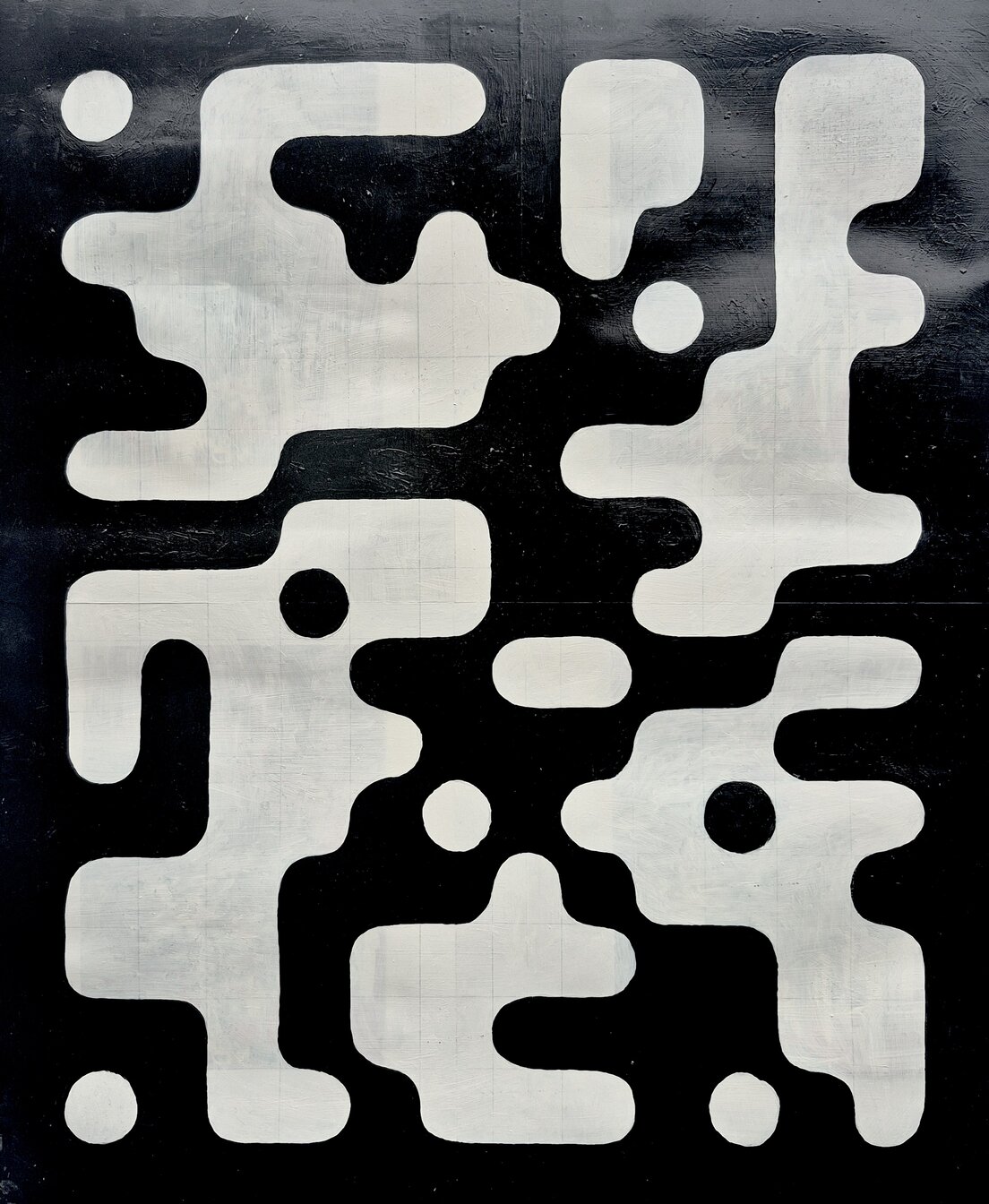
Steve Rockwell, Tenet #1, 2026, 17 x 14 inches
But perhaps this assumption is not entirely true. Insofar as an artist defines himself in terms of what he creates, it seems at least imaginable that he might create himself. He might become his own creation, so to speak. That in a sense is what Steve Rockwell has in fact done. While normally artists make work without inspecting their underlying identity, Rockwell has in essence used his artmaking to create the artist self-consciously – to deliberately develop his artistic persona. Born in Finland with the legal name Jouko Salomaa, when later in life he committed himself to developing art career he chose as his nom de plume, or stage name, ‘Steve Rockwell’. His use of this name is now so pervasive, he effectively has become that person.
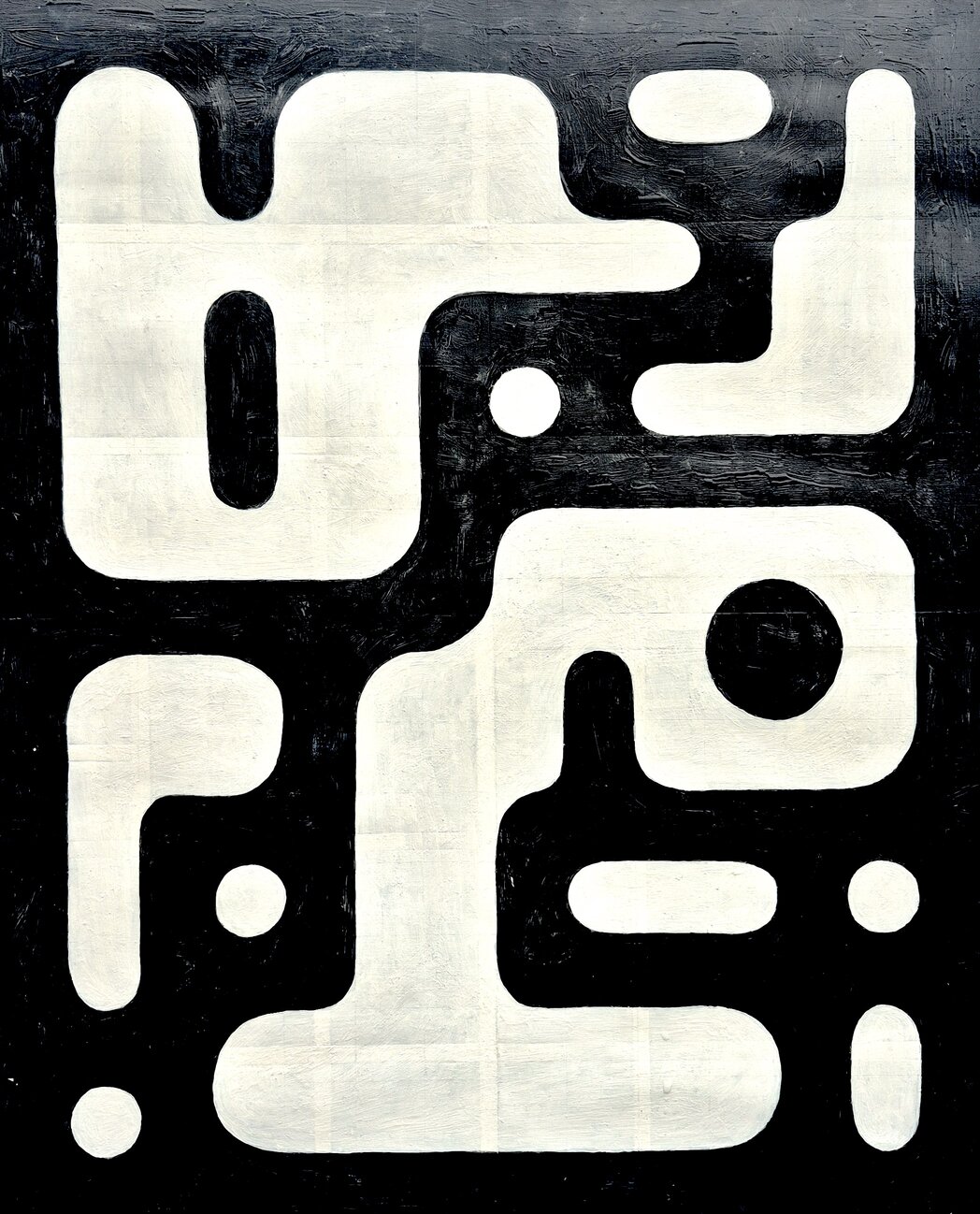
Steve Rockwell, Tenet #2, 2026, 17 x 14 inches
Early in his career Rockwell – or Salomaa as he only known then – was mindful of the widespread belief that painting is dead. Yet he still felt an urge to paint. In response, his approach was to make painting a performance. Instead of putting brush to paper to express this or that he set out a method mark-making based on rule-following. To give an example, after arriving at his studio in the morning he performed a specific ritual, namely he sat down with a coffee and read the newspaper, always checking the weather report. After this he made his way up to the building’s rooftop. There he shaded in with pencil a blank sheet of paper that was a ‘reflection’ of the weather conditions around him. Then he painted a line across the middle of the paper. This he did everyday for a week. Crucially, the resulting images did not derive from direct observation, but rather it derived from a preconceived method and the interpretation of the results of it.
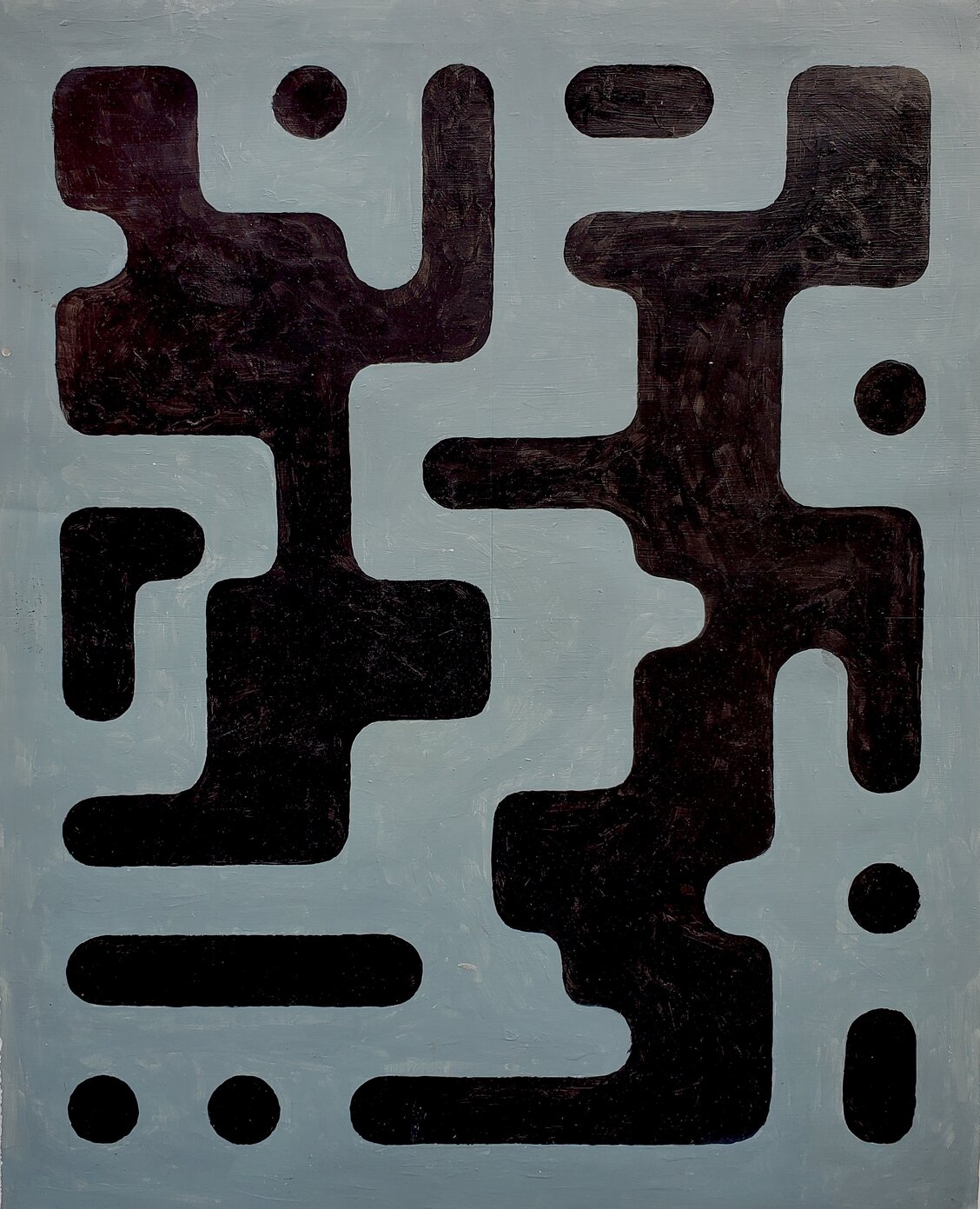
Steve Rockwell, Tenet #3, 2026, 17 x 14 inches
The results were essentially abstractions. This approach he has used in his most recent work on display here, namely his Tenet series. For each painting he laid out a grid of squares on the canvas. Then he traced a route from one square to the next with no predetermined direction. At each point he deliberated on where to move – up, down, across even jumping a square in the process. At each point he recorded, as paint over the square, the resulting journey. Again the consequent painting is, as one might say, non-objective, that is, with no reference to the observable world. Rather, it is mediated by a rule-based method, a sort of algorithm – information-based – on the weather, momentary decisions and so on. These ‘algorithms’ are not, as is typical, executed mechanically. There is always a human element involved in their making. Indeed, it is this element that breathes life into his works, makes them relatable to the viewer.
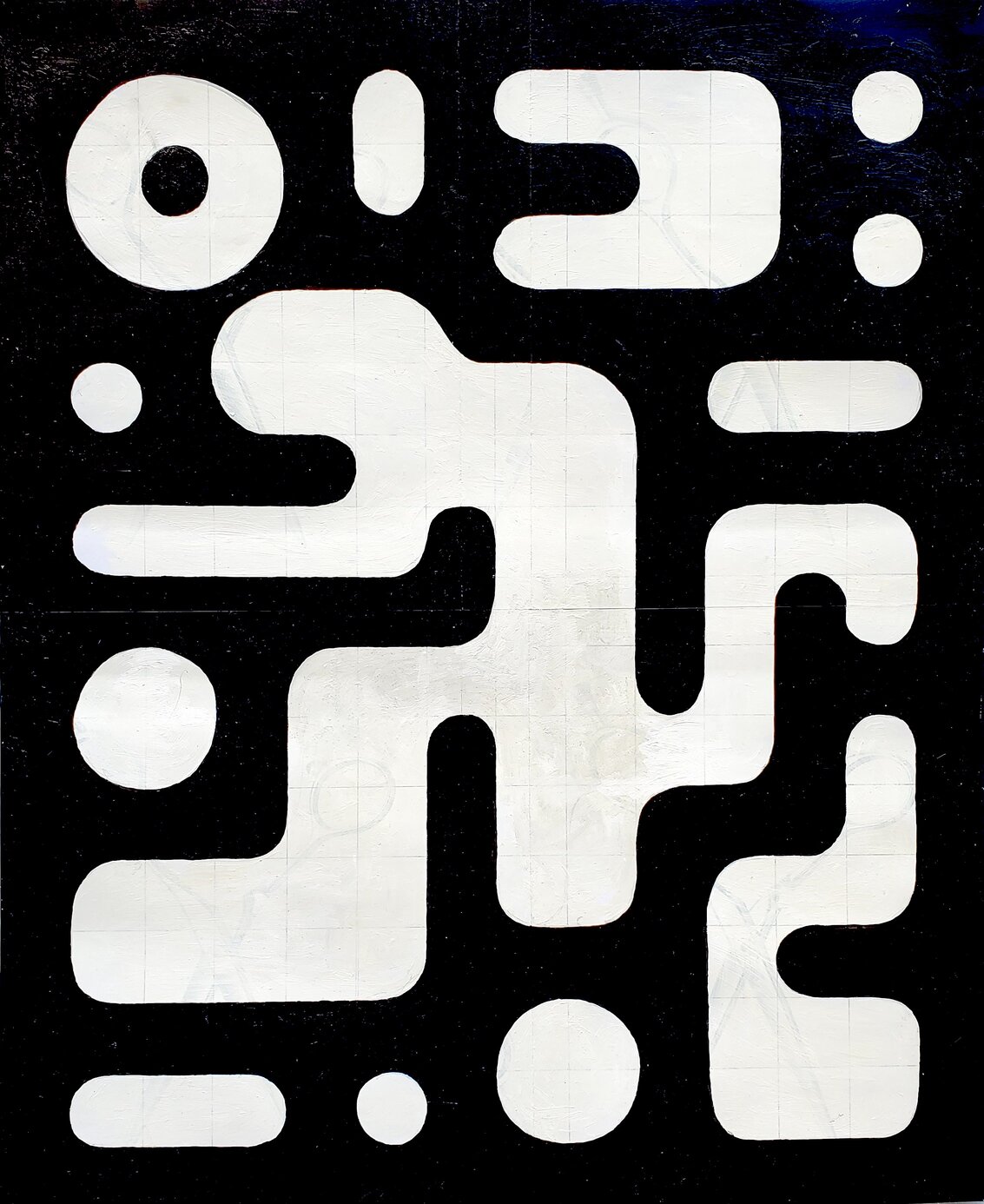
Steve Rockwell, Tenet #7, 2026, 17 x 14 inches
Prima facie, nonetheless, these paintings are simple. But, what matters in most cases is the context. How and why a work is made is key. Few artworks, he claims, are valued primarily in virtue of their appearance. When you and I encounter some abstract painting, say by an anonymous artist, as a rule we pass over it. There is little for us to grasp.
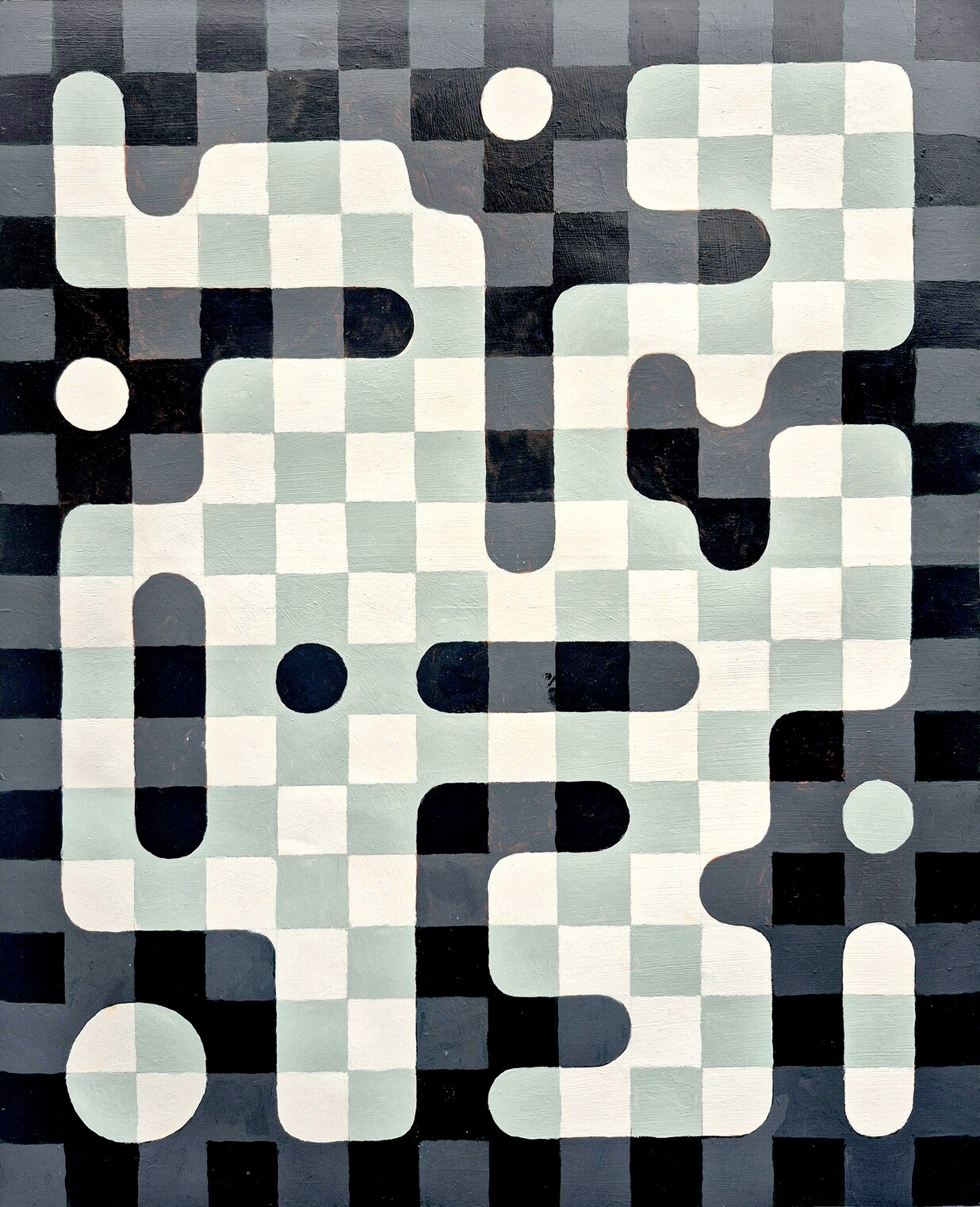
Steve Rockwell, Tenet #4, 2026, 17 x 14 inches
The claim by Rockwell that the appreciation of art is dependent on context accords with the long established prevalence of today’s art practices generally. Ever since Marcel Duchamp’s ready-mades artists have increasingly come to the view that what matters when looking at an artwork is not its retinal qualities, as Duchamp put it, but the artist, the ideas and the historical context behind it. And this helps explain Rockwell’s artistic persona. Creating such a persona is a piece with the cultivation of context behind the work. He effectively has created his own legend, that is, an edifice made out of the material of his own life story, the historical developments in art and narratives around them. Indeed, his decades-long project of writing, editing and publishing dArt International Magazine can be understood as supporting this goal. In this respect Rockwell’s practice reminds me very much of that of Joseph Beuys.
Hugh Alcock
Images are courtesy of the artist.
*Exhibition information: Tenet & four Trees on Brant Street, September 12 –27, 2026, The modern.toronto, 230 Niagara Street, Toronto. Gallery hours: Sat – Sun 12 – 5pm.