
The Red Head Gallery at 401 Richmond St, W is a relatively compact space, but for this show a surprising number of abstract paintings are on display. The works of the six artists are each hung one besides the other in turn, to surround the entire space. A major reason that so many paintings can be accommodated is that they cohere so well. And as their write-up states: “the works resonate through their common investment in colour, structure and the expressive potential of paint”. But these listed features are shared by such a variety of abstract painting that it hardly explains why this particular set of paintings fits together, why they resonate.
In one sense the artists selected one another after a process of showing at the common venue of the Carnegie Gallery, Hamilton, and most recently together at Joshua Farm Gallery, Oakville. They all hail from the Hamilton/Niagara region. They are peers who have each ‘had long-running practices’, as they put it. Several of them began their art educations in the late 1970s. That was a time when the mainstream was beginning to accept abstract art.
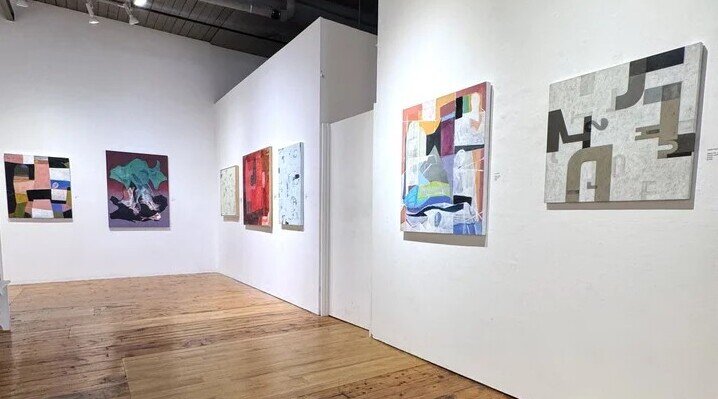
Installation view of Six Positions in Abstraction at Red Red Gallery. Courtesy of The Red Head Gallery
At the Ontario College of Art in the 1970s, for instance, a revolution of sorts took place when a power struggle among the faculty ultimately led to the overthrow of conservative traditional painting, to be replaced by the latest practices of the international art scene epitomised by the art of New York City. And so both Ian MacKay and Barry Coombs, who studied there at the end of the 1970s, were exposed to the celebrated abstract paintings of the expressionists, colour field painters and the post-minimalists. These movements epitomised the height of abstractionism in art. In other words, the six painters were part of the first generation who grew up with the grand abstract paintings at the end of the modernist era. It was the tradition they inherited.
Our six painters – Barry Coombs, Jody Joseph, Peter Kirkland, Janice Kovar, Ian Mackay and Marla Panko – have essentially kept faith with the modernist universalist agenda, that is, the view that art ought to concern itself with what is common to us all, notwithstanding the idealism and presumptions behind this view. As such there are no overt cultural or ethnic markers in their works. Their focus is exclusively on formal and emotional qualities using the medium of paint.
So in this show we have the works of a collection of painters who have a common artistic outlook. As a result their works share an agenda in a very loose sense – the aim, roughly, of exploring the formal and emotional qualities that painting licenses, and which are distilled and highlighted by abstraction in particular. Let’s briefly look at each of them in turn.
Throughout her long career Panko has experimented and produced an enormous variety of work, from collages to sculpture. In this show we encounter her sparest, almost minimalist works consisting of bold linear shapes rendered in black-and-white. She masterfully highlights, with a few lines, the illusionistic quality of space rendered on a two-dimensional surface.
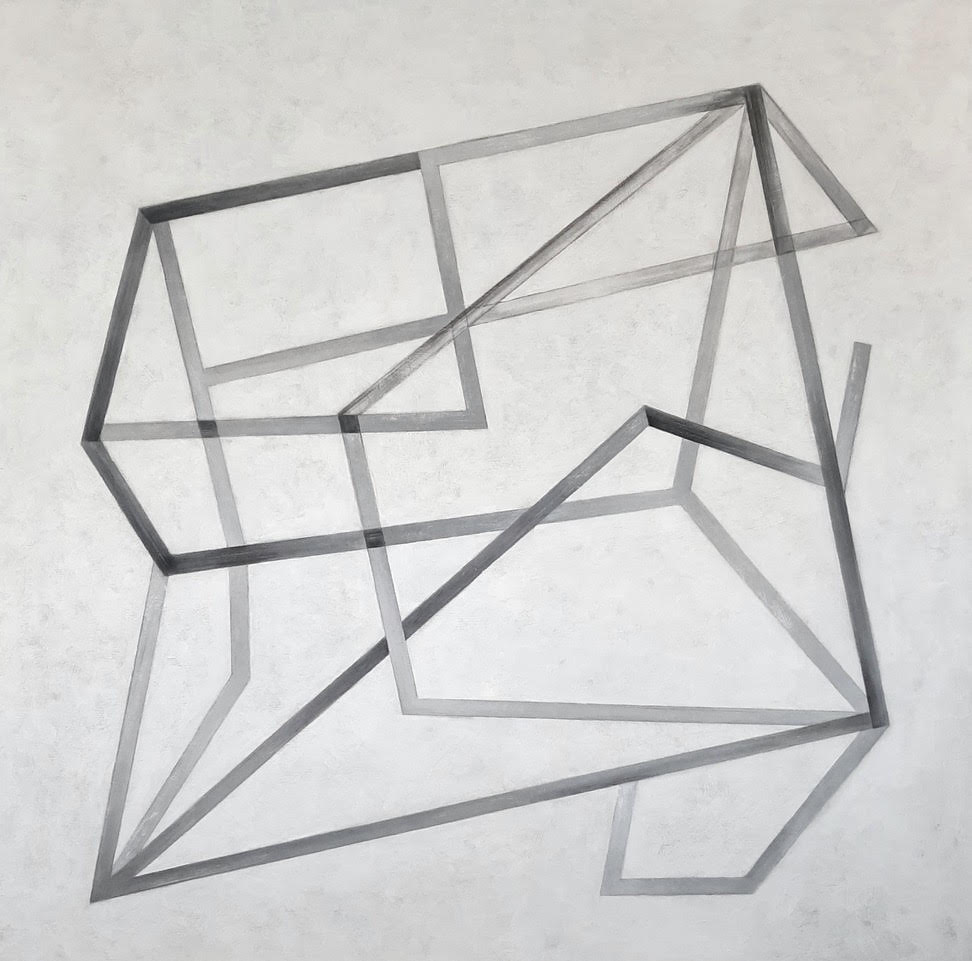
Marla Panko, Laocoön 2025, acrylic on wood, 36 x 36 inches
The two-dimensionality of painting is celebrated by Coombs and Mackay more literally. The works of both artists involve the division of the pictorial surface into shapes. The very act of doing this creates spatial illusion, but in this case the spotlight turns onto structure and colour themselves. For Coombs the division of the paintings’ surfaces is hard-edged, and consequently has a cerebral quality to it. His aim, he tells us, is to bring out the magical visual qualities at play in the mundane world, e.g., the way shadows are cast. And that he does wonderfully.
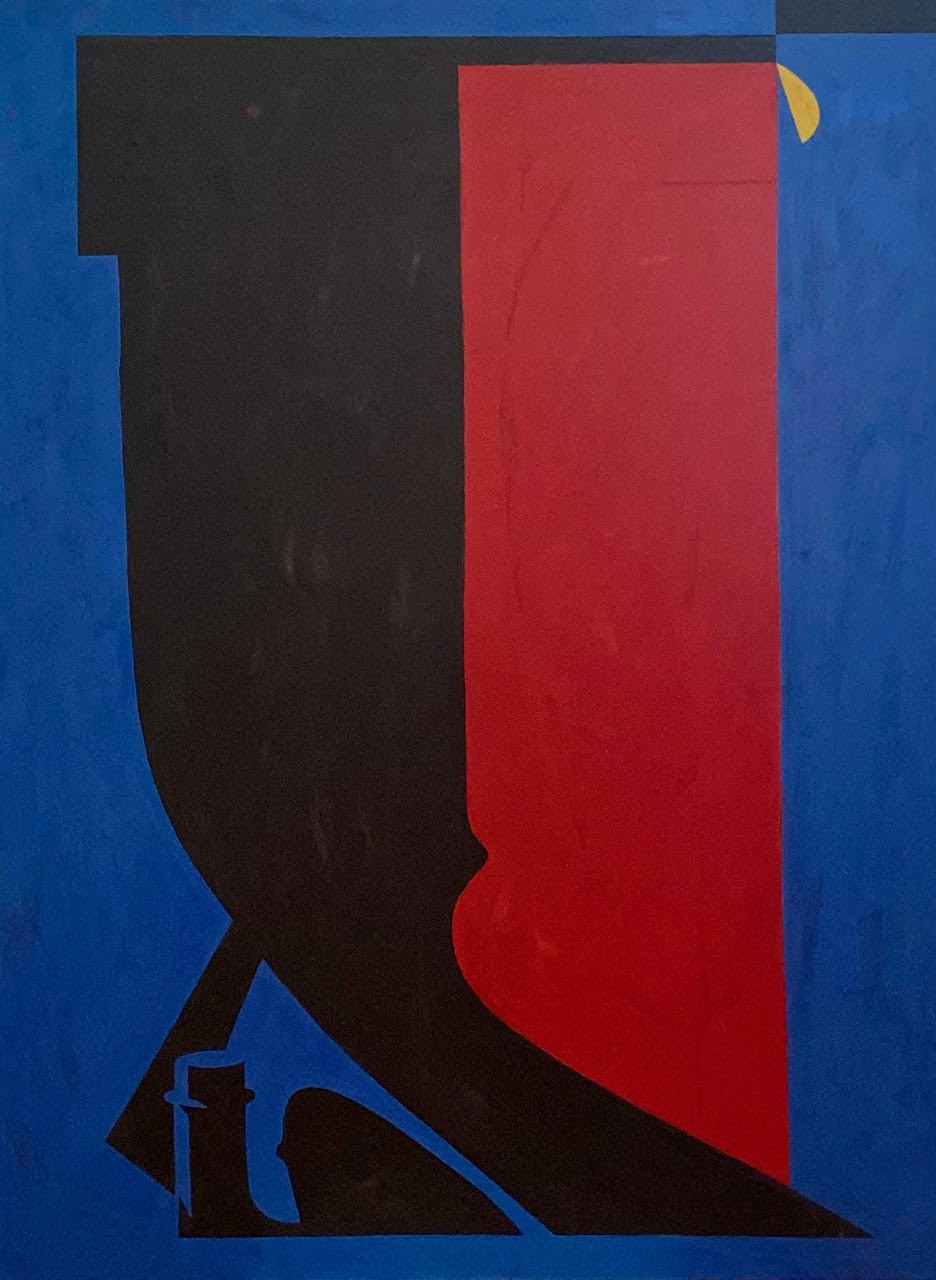
Barry Coombs, METER #1, 2026, acrylic on canvas, 48 x 36 inches
For Mackay, on the other hand, his looser rendering reflects a playfulness in his work. His paintings often sit on the edge of representationalism, in as much as some elements hint at the depiction of this or that object, or architectural detail perhaps. He has developed an assured touch that betrays a unquestionable mastery of abstraction.
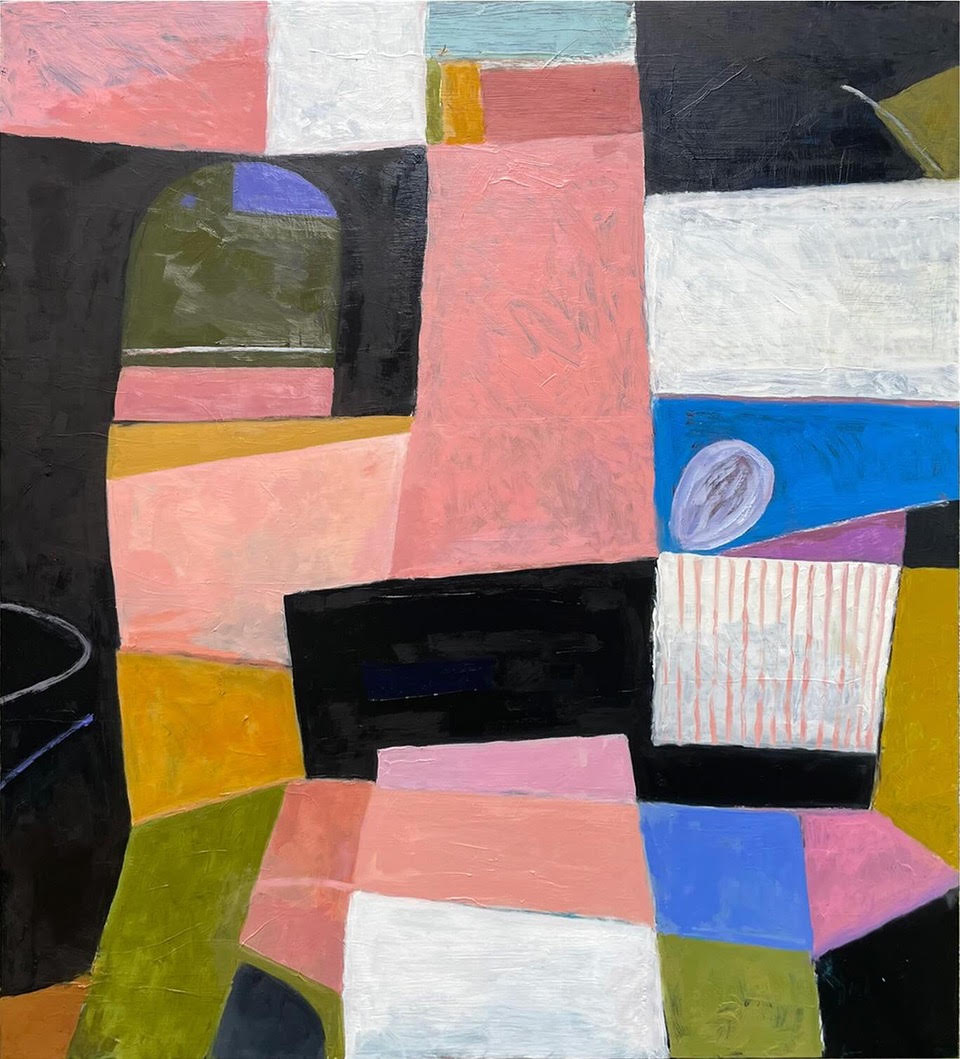
Ian Mackay, Templum, 2026, oil on wood, 36 x 30 inches
The works of Joseph and Kovar emphasize the physicality of paint. Both celebrate the material surface and the seductive qualities of paint itself. Every painter has felt its seductiveness, has fallen in love with it. That is especially true of abstractionists. Joseph has spent a great deal of time working in Italy, and that has influenced the pallette and compositions of her paintings. Indeed, she tells me that as well as painting abstracts she has long had a practice of painting the Italian landscape, and luscious Cézannesque still-lives.
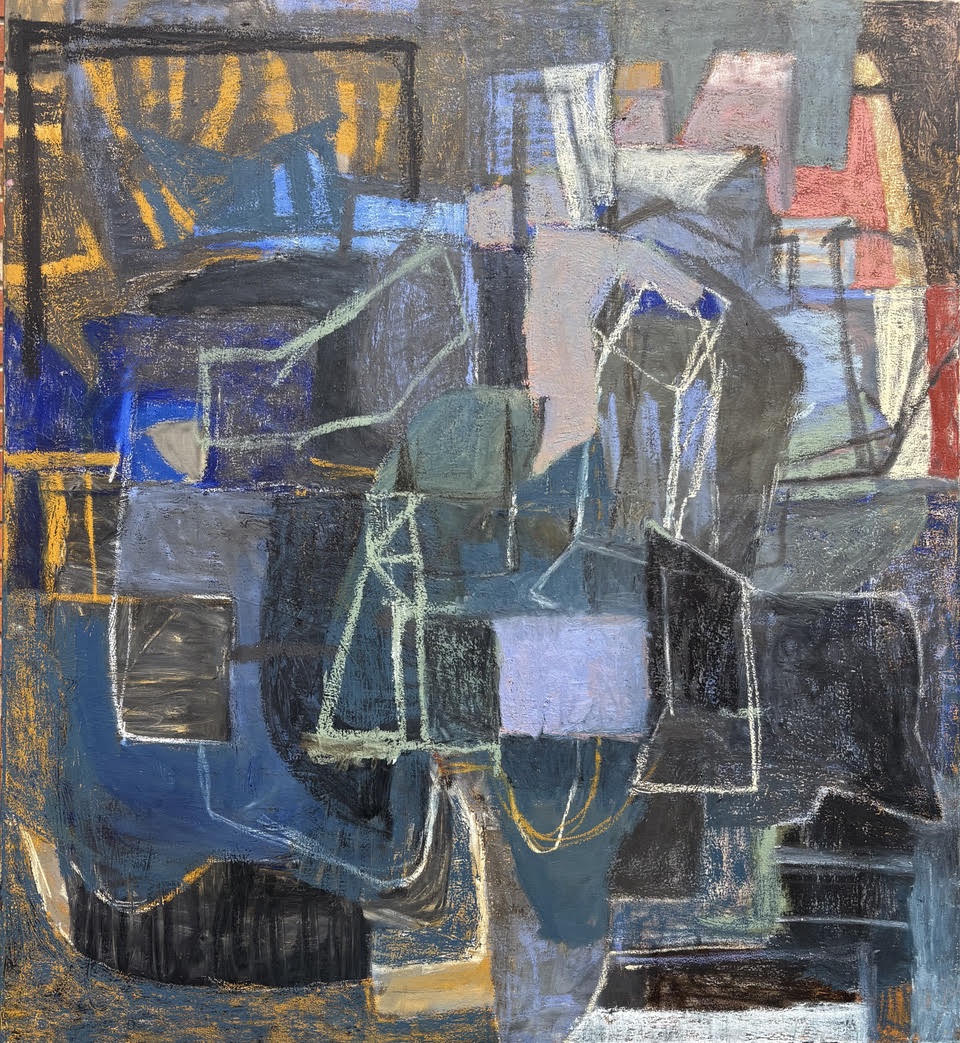
Jody Joseph, Montecastello, 2026, oil on canvas, 40 x 44 inches
The surfaces of Kovar’s paintings are truly mesmerizing. Using a combination of roughly blocked shapes and large gestural marks, within a limited pallette, Kovar’s surfaces sing. She sums up her approach as follows: “I’m drawn to that liminal space—the tension, overlap, and quiet transition between the built and the natural.”
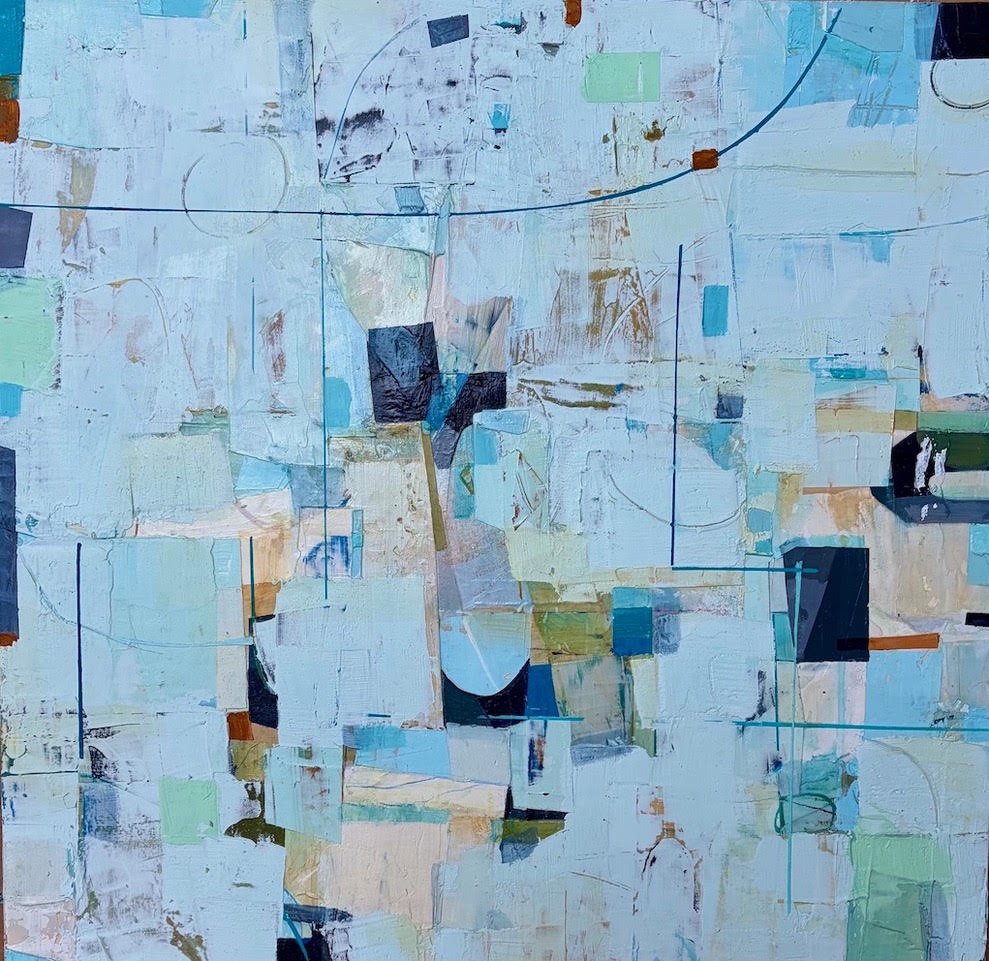
Janice Kovar, Threshold Blue, 2026, mixed media on cradled board, 30 x 30 inches
Finally, Kirkland’s images of organic shapes are not in fact derived from directly observing natural forms, as one might suspect. Rather, they are the result of ‘working the surface’ as he puts it. He layers and erases the paint in turn, sometimes scraping or sanding it. Emerging from this process are his magical ‘biomorphic forms’.
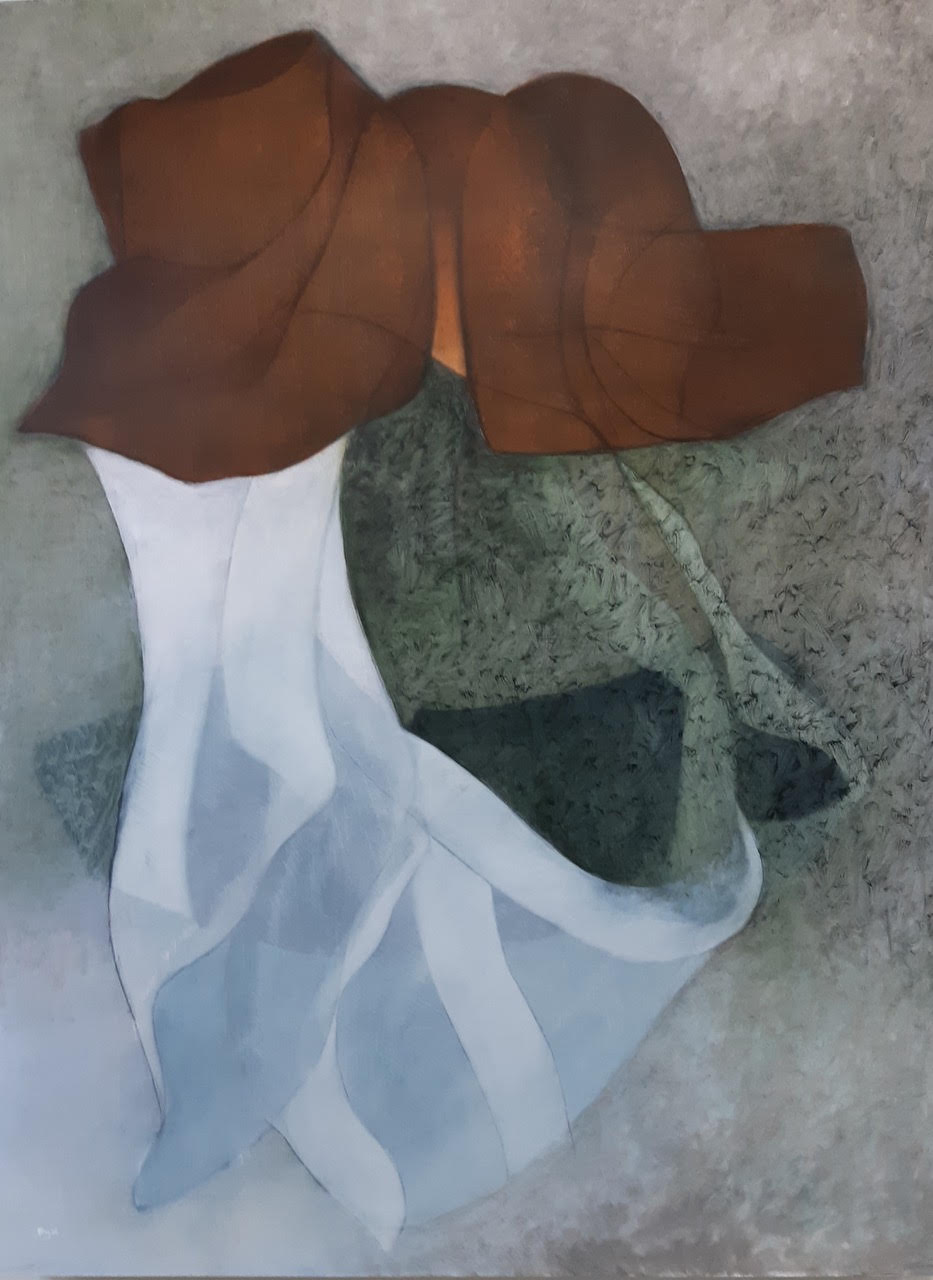
Peter Kirkland, “Painting 6/26 #1”, 2026, oil on wood, 40 x 30 inches
All of the painters in this show are modest in their ambition. Their works are neither cutting-edge nor candidates for display in the pavilions of the grand biennales, say. Nonetheless they are serious dedicated artists who have spent very many years immersed in their craft. And it shows. Abstractionism is a difficult genre to master. The competent abstractionist walks on the tightrope of producing compelling work, but always risks falling into the merely decorative. These are all compelling works. This show is a dazzling testament to the fact that the modernist tradition of abstraction is thriving, and has plenty of life in it.
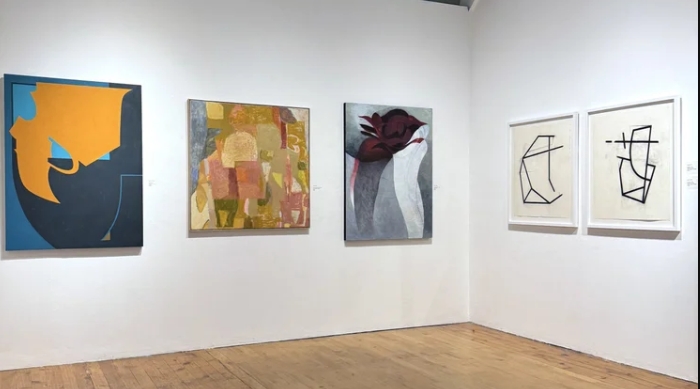
Installation view of Six Positions in Abstraction at Red Red Gallery. Courtesy of The Red Head Gallery
Hugh Alcock
Images are courtesy of the artists.
*Exhibition information: Six Positions in Abstraction, August 5 – 22, 2026, Red Head Gallery, 401 Richmond St W, #115, Toronto. Gallery hours: Wed – Sat 12 – 5 pm.